
Executive Overview
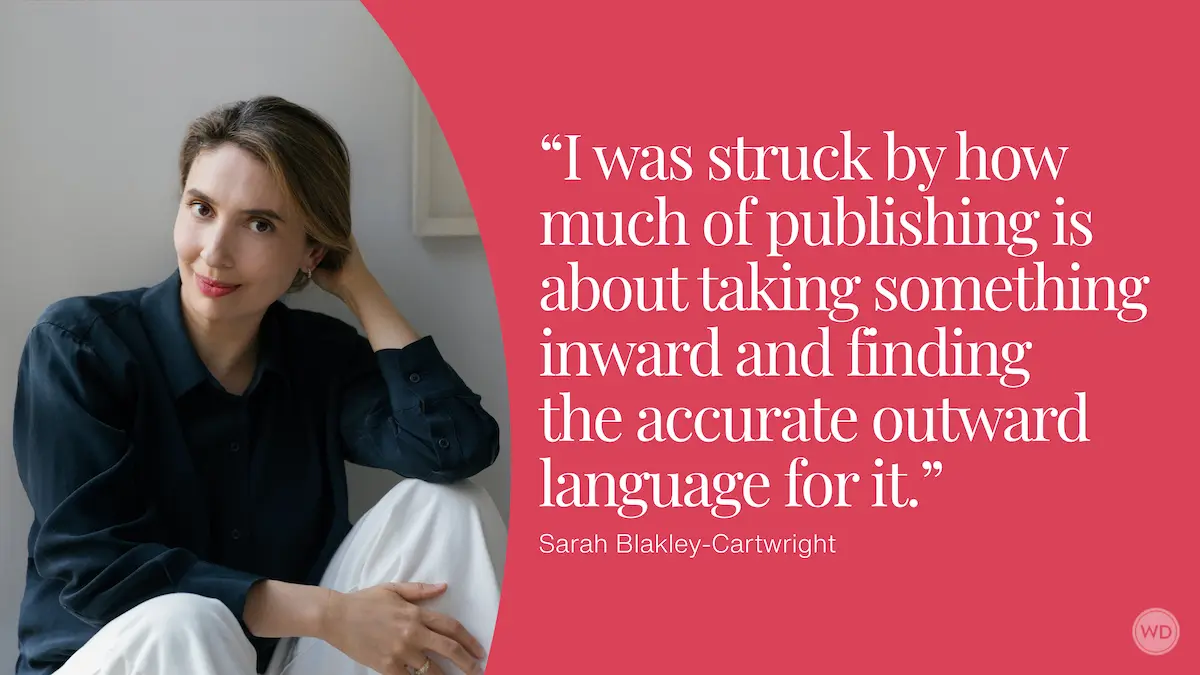
In the contemporary literary landscape, few themes resonate with as much persistent complexity as the construction of female identity under the gaze—and direct influence—of others. Acclaimed author, editor, and literary tastemaker Sarah Blakley-Cartwright is set to return this autumn with her highly anticipated third book, Heavy Cream, slated for publication by Simon Books (an imprint of Simon & Schuster) on September 29, 2026. Following her #1 New York Times bestseller Red Riding Hood and her celebrated sophomore novel Alice Sadie Celine, Blakley-Cartwright’s latest work of literary fiction dives headfirst into the dizzying, claustrophobic corridors of New York City’s high society.
At the narrative center of Heavy Cream is sixteen-year-old Geraldine. When her mother abruptly disappears, Geraldine is left untethered in an unforgiving world of elite social strata, rapidly falling under the sway of three distinct women. Each of these figures attempts to mold the adolescent protagonist into her own image, creating a high-stakes psychological tug-of-war over Geraldine’s emerging sense of self.
In this exclusive and expansive interview, Blakley-Cartwright unpacks the deeply personal origins of her latest novel, the rigorous three-year path from conceptualization to publication, the collaborative surprises of the editorial and design processes, and what she ultimately hopes readers will glean from Geraldine’s kaleidoscopic journey. Through a narrative exploring inheritance versus autonomy, Blakley-Cartwright cements her reputation as a vital voice in modern literary fiction—one capable of dissecting the delicate, often volatile architecture of female mentorship and maturation.
Read Also
Detailed Chronology: From Concept to the Fall 2026 Release
To understand the weight and polished precision of Heavy Cream, one must trace the trajectory of its creation. Unlike her debut novel, which gestated over the course of six agonizing years, Inhabiting the Page—as the author describes the genesis of her latest work—came together with a sharper, more urgent momentum.
Phase One: Conception and Personal Roots (2023–2024)
The foundation of Heavy Cream stems directly from Blakley-Cartwright’s own upbringing. Raised in an environment characterized by the intense, competing personalities of various women, the author became fascinated by a specific psychological phenomenon: What happens to a young woman who spends her formative years enclosed within a bubble of someone else’s overwhelming intensity, only to be suddenly thrust out into the open to assemble an identity of her own?
This central question birthed Geraldine and the kaleidoscope of mentors who populate her world. Blakley-Cartwright aimed to capture the visceral experience of a teenager moving rapidly through a succession of maternal and quasi-maternal figures, each offering a radically different blueprint for how a woman ought to live. The narrative challenge lay not merely in depicting these pressures, but in honoring the genuine power they exert on an impressionable mind.
Phase Two: Drafting and Structural Refinement (2024–2025)
Spanning roughly three years from early conception to a finalized manuscript, the writing process was defined by a steady sharpening of atmosphere into distinct psychological gravity.
In its earliest iterations, the scenes involving the three influential women were looser, more atmospheric vignettes. However, as revisions deepened, Blakley-Cartwright tightened the structural bolts. She forced the narrative to interrogate the exact mechanics of each relationship: What was each woman offering? And, crucially, what exact toll would they exact in return?
Despite these structural tightenings, the core emotional engine remained entirely intact throughout the drafts: a vulnerable girl pulled in conflicting directions by a well-meaning yet overwhelming collective of women.
Phase Three: Editorial Collaboration and Publishing Surprises (Late 2025–2026)
The transition from manuscript to published book introduced unexpected creative turns. Working alongside her editor at Simon Books, Olivia Taylor Smith, Blakley-Cartwright encountered a breathtaking narrative suggestion that fundamentally altered the book’s trajectory. Smith proposed a late-stage addition—a dramatic revelation unfolding within the walls of a Scottish castle—that caused everything preceding it to land with entirely new resonance. Initially hesitant about whether the twist could pull its weight, the author now counts it as one of her favorite narrative turns in the novel.
Concurrently, the cover design process provided a masterclass in how external perspectives can illuminate an author’s innermost themes. When renowned designer Na Kim presented initial concepts, one featuring a tight braid was flagged by the Simon Books sales team because it inadvertently signaled a genre or horror read rather than literary fiction.
Recognizing the validity of their critique, Kim pivoted to a striking final cover art featuring multiple female hands enclosing a young girl inside a corset. This imagery hit remarkably close to the thematic core of Heavy Cream, visually articulating the paradox of protection and restriction that defines Geraldine’s world.
Supporting Context & Metrics: A Literary Career of Distinction
To contextualize the arrival of Heavy Cream, one must examine the impressive institutional footprint and career trajectory of Sarah Blakley-Cartwright. Her work spans multiple genres, formats, and high-profile editorial platforms, establishing her as an influential force across the contemporary American literary ecosystem.
Literary Pedigree and Previous Works
- Red Riding Hood (Little, Brown Books for Young Readers): Blakley-Cartwright’s breakout publishing achievement. A massive international success, the young adult adaptation was published worldwide in an astounding 38 editions across 15 distinct languages, ultimately climbing to the coveted #1 spot on the New York Times bestseller list.
- Alice Sadie Celine (Simon Books / Simon & Schuster, November 28, 2023): Her acclaimed preceding novel, which further demonstrated her facility with sharp psychological observation, complex interpersonal dynamics, and character-driven literary fiction.
- Heavy Cream (Simon Books / Simon & Schuster, September 29, 2026): Her upcoming third book, marking her definitive step further into sophisticated literary fiction for a broader audience.
Editorial and Journalistic Leadership
Beyond her work as a novelist, Blakley-Cartwright maintains an active, hands-on role in shaping the broader literary conversation through prominent editorial positions:
- Publishing Director: Chicago Review of Books, where she helps steer contemporary critical discourse and independent publishing initiatives.
- Associate Editor: A Public Space, the celebrated independent literary magazine known for championing innovative fiction, poetry, and art.
- Editor, "The Artist’s Library": Published monthly in Hauser & Wirth’s Ursula magazine, this ongoing series features transcribed conversations with contemporary artists discussing their most beloved literary works. The series famously launched in March 2021 with artist Anj Smith discussing Vladimir Nabokov’s masterwork Speak, Memory.
Representation and Industry Positioning
Blakley-Cartwright is represented by literary agents Martha Wydysh and Ellen Levine of the prestigious Trident Media Group, ensuring that her works find a strategic, high-profile launch across domestic and international markets.
Official Statements & Insights from the Author
In an in-depth exchange regarding the thematic architecture of Heavy Cream, Blakley-Cartwright shared vital insights into her creative philosophy, her resistance to moral simplification, and her advice for emerging writers.
On Avoiding Moral Binaries in Character Construction
One of the most notable hurdles during the writing of Heavy Cream was the temptation to assign moral verdicts to the three women who influence Geraldine. Blakley-Cartwright initially worried that one figure might inadvertently emerge as definitively "right" or "wrong." However, the novel actively resisted this reductive impulse:
"I felt, initially, more aligned with one of the women than with the others. And I worried that, as I wrote, one of the women might emerge as more definitively ‘right’ or ‘wrong.’ But as I wrote, the novel refused that. Each of the women, if the book is successful, will seem to offer a valid way of life. The manuscript became a book I myself was more interested in writing once I allowed each of the women to be persuasive on her own terms, even when those terms were in conflict."
On the Intimate Paradox of Publishing
Reflecting on the collaborative machinery of bringing a book to market—from jacket copy to blurbs and cover design—Blakley-Cartwright expressed deep appreciation for the collective intelligence of her publishing team at Simon & Schuster:
"The process of cover selection, jacket copy, and blurb requesting each define the book in a slightly different way. The Simon Books team know exactly what they’re doing. As a writer, you are so grateful for those other hands (to continue the theme), as you are made to realize how many ways a book can be read before it’s even read."
On Readerly Resonance and the Art of Writing
When asked what she hopes audiences take away from the novel, Blakley-Cartwright emphasizes the quiet, profound comfort of literary recognition, paired with an enduring piece of craft advice for fellow creators:
"Of course, I hope my readers will experience that wonderful sense of recognition when something one has thought or experienced is brought to light in a new way by a complete stranger. Perhaps in this novel that would have to do with how identity is shaped in relation to others, and how difficult it can be to separate what has been inherited from one’s own choices. I also hope it is a good ride, the journey of the novel, as the narrator cycles through the kaleidoscope of women. Above all, I always hope my books make for good company, because that’s what I look for when I read."
Offering guidance to aspiring novelists, she adds:
"Stay with the material. The early, legible version of a story is often the least interesting one. Try to push past that toward what’s more contradictory, less resolved, and not so easy to name."
Future Outlook: What Heavy Cream Signals for Contemporary Literature
As the literary world looks toward the autumn of 2026, the publication of Heavy Cream on September 29 by Simon Books represents a major milestone in Sarah Blakley-Cartwright’s career. By shifting her narrative lens away from young adult fantasy adaptations and firmly into the nuanced, psychologically rich terrain of contemporary literary fiction, she continues to map the intricate fault lines of female autonomy.
In an era where discussions surrounding mentorship, generational influence, and the curation of identity dominate cultural discourse, Heavy Cream arrives as a timely and timeless examination of how women shape—and occasionally constrain—one another. Supported by a stellar editorial team, brilliant visual packaging, and the author’s unwavering commitment to narrative ambiguity over easy answers, the novel is positioned to be one of the most talked-about literary releases of the year.
Readers eager to follow Blakley-Cartwright’s ongoing literary endeavors can connect with her via her official author pages on Facebook and Instagram, while keeping a close eye out for her editorial dispatches in Ursula magazine and the Chicago Review of Books as the countdown to September 2026 continues.



Comments
Facebook App ID not configured. Please add it in the Customizer.