
Executive Overview
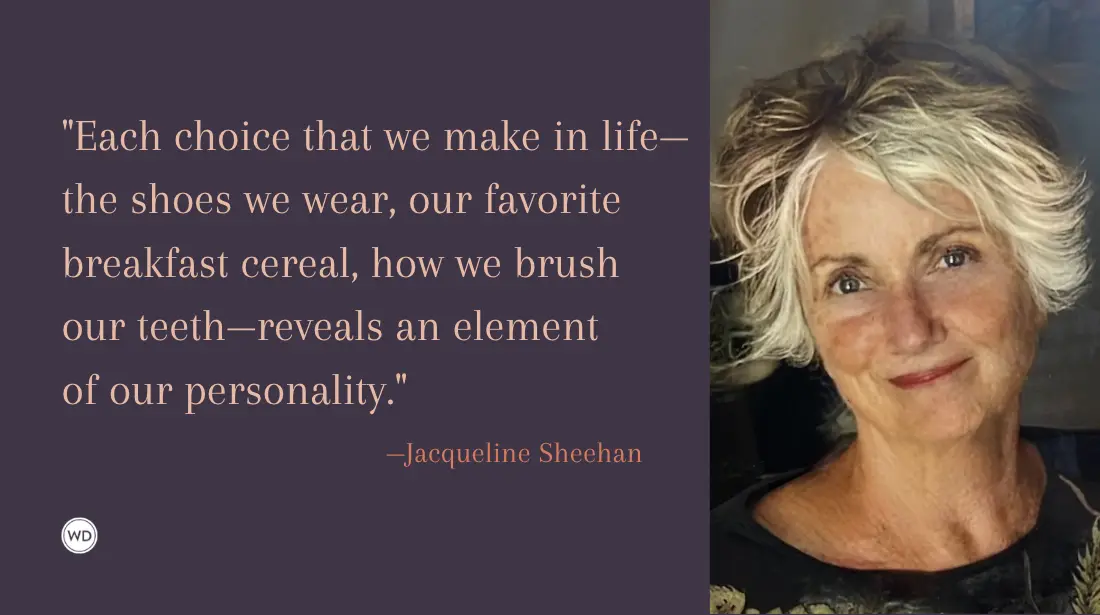
Every deliberate choice an author makes—from the brand of footwear a character prefers to the specific vintage of a vehicle parked outside a tenement—serves as a psychological blueprint. In the realm of literary fiction, zero elements are left to chance. Every sensory detail, from the ambient sounds of a bustling city street to the distinct olfactory notes of a setting, heightens the narrative tone and propels both character development and plot architecture.
For acclaimed novelist and former psychologist Jacqueline Sheehan, constructing the atmospheric backdrop of 1938 New England for her historical novel The Camp Muralist required a meticulous approach to world-building. Set against a dark, turbulent chapter of American history defined by the lingering devastation of the Great Depression and the insidious creeping influence of Nazism, the novel follows characters forced into extraordinary, paradigm-shifting choices.
At the center of this narrative web is Patrick, an ambitious journalist and the romantic partner of the novel’s protagonist, Emma Lundgren. Needing a mode of transport that matched Patrick’s aggressive pursuit of breaking news across New Haven and surrounding jurisdictions, Sheehan found herself vetting the automotive landscape of the late 1930s. Deliberately bypassing the ubiquitous Ford—notoriously associated with Henry Ford’s virulent antisemitism, which famously earned the industrialist admiration from Adolf Hitler—Sheehan arrived at a mechanical icon: the classic, American-engineered Indian Motorcycle.
Read Also
Yet, this choice was far from a simple aesthetic preference. For Sheehan, the gleaming, vermilion-fendered Indian Scout represented an emotional minefield. Having lost her first husband to a fatal crash on a Harley Davidson and having watched her second husband narrowly survive a catastrophic collision on a BMW, the introduction of a motorcycle into her fictional universe was an act of profound psychological exposure.
This article explores the intricate intersection of authorial intent, historical verisimilitude, and psychological self-archaeology. Through an examination of Sheehan’s creative process, we investigate how the act of writing functions as a therapeutic mechanism—allowing an artist to rewrite the unpredictable tragedies of real life through the omniscient control of fiction.
Detailed Chronology: The Evolution of The Camp Muralist
To understand the weight of the Indian Scout within the pages of The Camp Muralist, one must trace the evolutionary timeline of the novel’s conception, research, and eventual publication.
Phase 1: Conceptualization and Historical Framework
Set in 1938, The Camp Muralist captures a fragile America standing at a precipice. The Great Depression has battered the working class, leaving populations vulnerable to extremist ideologies. Into this volatile atmosphere steps Emma Lundgren—a nurse and artist—and her partner Patrick, a tenacious newspaperman.
Sheehan recognized early in the drafting process that Patrick required a vehicle that projected velocity, independence, and timeless grit. Rebuffing the common Ford models due to their association with Henry Ford’s dark sociopolitical footprint, Sheehan gravitated toward the motorcycle. Her selection was specific: the Indian Scout, celebrated for its nimble handling, lightweight frame, and striking aesthetic.
Phase 2: Field Research and Mechanical Immersion
To render Patrick’s world authentic, Sheehan’s commitment to historical accuracy extended beyond textbooks. She immersed herself in motorcycle culture, traveling to Springfield, Massachusetts—the historical birthplace of the Indian Motorcycle brand.
Engaging with local aficionados, historians, and vintage collectors, Sheehan conducted extensive interviews. She sat astride restored vintage models, visualizing not only Patrick’s hands on the handlebars, but also visualizing a critical, high-stakes narrative turning point where Emma—an unlikely rider—is forced to operate the machine independently during an emergency.
Mastering the mechanics of a 1930s vintage motorcycle required hours of meticulous, hands-on tutorials with specialized mechanics. Sheehan needed to understand every nuance: how the throttle responded, how the gears shifted, and, most crucially, the complex, archaic sequence of steps required to cold-start a vintage Indian Scout engine. This technical precision transformed the motorcycle from a static background prop into a dynamic, shifting entity that evolved alongside the characters.
Phase 3: The Subconscious Realization
Throughout the exhaustive drafting process, Sheehan’s conscious mind remained heavily occupied with the macro-elements of her narrative: managing the sprawling historical themes of rising fascism, economic despair, orphaned children, and localized acts of courage.
However, the true genesis of the motorcycle’s inclusion remained hidden from the author herself. It was not until the novel entered its final production stage—when the cover designer requested salient, defining imagery to brand the book—that Sheehan confronted her own subconscious motivations. Without hesitation, she stated: "The Indian Scout motorcycle."
Only upon completion of the manuscript did the profound personal symbolism sink in. The motorcycle was never merely a narrative convenience for Patrick; it was Sheehan’s subconscious tool to re-engineer personal history.
Supporting Context & Metrics: The Intersection of Trauma and Artistry
The psychological dimensions of Sheehan’s writing process shed light on a broader phenomenon among creatives who utilize fiction to process real-world trauma. Before transitioning to full-time authorship, Sheehan practiced as a psychologist. This background granted her deep insight into human motivations, irrational fears, and deeply buried yearnings—yet even her clinical expertise did not initially shield her from her own blind spots.
The Mathematics and Reality of Motorcycle Trauma
Statistically, motorcycles represent a disproportionate hazard on American roadways. According to historical and modern traffic safety data compiled by agencies like the National Highway Traffic Safety Administration (NHTSA):
- Per vehicle mile traveled, motorcyclists are approximately 28 times more likely to die in a crash than passenger car occupants.
- Head injuries remain the leading cause of death in motorcycle crashes, underscoring the lethal nature of high-speed collisions.
For Sheehan, these statistics were not abstract data points; they were etched into the personal ledger of her life.
- Tragedy One: Her first husband was killed in a devastating motorcycle accident along the rugged western slopes of the Rocky Mountains, leaving their daughter fatherless.
- Tragedy Two: Her second husband was critically injured in a high-impact highway collision when his BMW motorcycle was struck by an automobile many times its weight.
Given this history, standard behavioral avoidance patterns would suggest a total purge of motorcycles from her life and work. Yet, as Sheehan notes, characters within fiction frequently demand agency, overriding the author’s conscious reservations. By yielding to Patrick’s narrative requirements, Sheehan walked directly toward the source of her deepest grief.
Psychological Mechanisms: Omniscient Control vs. Real-World Helplessness
Psychologists often point to narrative exposure and creative re-authoring as powerful tools for trauma resolution. In reality, trauma strips individuals of control. Sudden accidents are characterized by chaos, finality, and helplessness.
In contrast, the novelist functions as an omniscient deity within their fictional universe. As Sheehan reflects:
"In life, I had no control over my partners and their penchant for motorcycles, but in my fictional world, I could make different choices for one of my characters."
By scripting the adventures, trials, and ultimate triumphs of the characters atop the vermilion Indian Scout, Sheehan achieved a form of psychological mastery. The motorcycle transformed from an instrument of death into a vessel of romance, resilience, and enduring love. By the time Emma preserves the motorcycle into her old age, the machine’s symbolism has fully matured—representing not the abrupt end of life, but the continuity of hope.
Official Statements & Authorial Insight
In reflections on the genesis and emotional core of The Camp Muralist, Jacqueline Sheehan has offered deep commentary on the invisible architecture of storytelling.
Addressing the apparent paradox of introducing motorcycles into her work given her tragic history, Sheehan writes:
"Was it macabre to focus so intently on a motorcycle that left my daughter fatherless after my first husband’s fatal accident along the western slope of the Rockies? Was it morbid to include a motorcycle after my second husband barely survived his collision with a car 10 times the size of his BMW?"
Answering her own inquiry, Sheehan highlights the dual nature of creative writing—serving simultaneously as an external exploration of historical calamity and an internal excavation of personal healing:
"My intention when I wrote The Camp Muralist was to use a dark period of American history as background for characters faced with extraordinary events… But an unintended side effect was that as soon as I provided Patrick with a motorcycle, I gained omniscient control over the bike—a tool that can be essential for fiction writers while world-building."
Sheehan concludes that the creative process operated as an unacknowledged emotional refuge:
"It may have been the tool I needed to understand these men’s attraction to motorcycles, but more importantly, it was a way to exert omniscient control over the calamities of life. In The Camp Muralist, the red Indian Scout motorcycle carried adventure and enduring love for my characters, but for me, it was a chance to edit life’s harshest events."
Future Outlook: The Legacy of The Camp Muralist and Therapeutic Literature
As The Camp Muralist continues to resonate with readers and critics alike, its legacy extends far beyond its gripping portrayal of 1930s America, political extremism, and human courage. The novel stands as a testament to the symbiotic relationship between art and psychological survival.
The Expanding Appreciation for Authorial Vulnerability
In contemporary literary criticism, there is an increasing appreciation for works where authorial biography subtly informs deep structural metaphors. Sheehan’s journey demonstrates that genre fiction and historical drama can function as Trojan horses for personal catharsis. Readers engaging with historical fiction are increasingly drawn to works written with psychological authenticity—where the emotional stakes mirror the genuine, lived resilience of the author.
Implications for Writing and Creative Therapy
For aspiring writers and mental health professionals alike, Sheehan’s experience offers a compelling case study in creative processing. The process of world-building—requiring meticulous research, sensory engagement, and character empathy—can safely bridge the gap between unresolved trauma and conscious resolution. By externalizing internal fears into compelling narrative objects (such as a 1938 Indian Scout), creators can safely inspect, manipulate, and ultimately redeem the traumas that shadow their lives.
Ultimately, The Camp Muralist achieves a rare literary duality: it delivers a compelling, historically grounded narrative of survival against the encroaching darkness of the 20th century, while simultaneously serving as a private monument to healing. Through the graceful, tear-drop fenders of an Indian motorcycle, Jacqueline Sheehan successfully edited life’s harshest tragedies into a timeless testament of enduring love.





Comments
Facebook App ID not configured. Please add it in the Customizer.