
Executive Overview
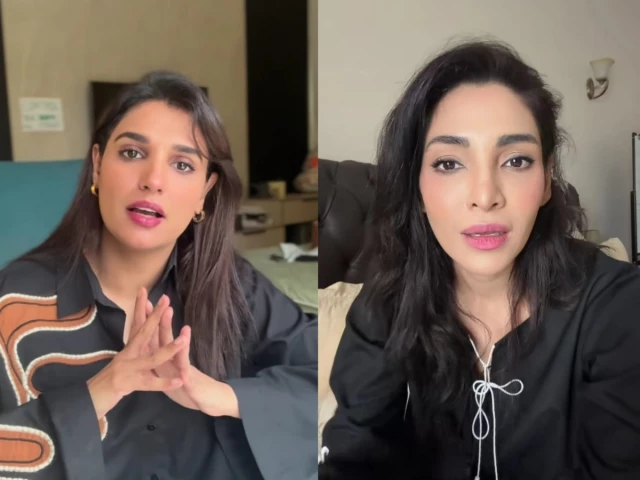
The intersection of digital media, celebrity culture, and systemic misogyny has once again ignited a fierce national conversation in Pakistan. Prominent film and television actors Amna Ilyas and Zhalay Sarhadi have publicly condemned the growing ecosystem of self-proclaimed online "critics" who use digital platforms to police women’s autonomy, appearance, and personal choices.
What began as a reaction to a derogatory remark directed at Ilyas following a routine dance performance has rapidly evolved into a broader, urgent critique of digital vigilantism. Both actors argue that online moral policing is not an isolated nuisance affecting only the privileged class of the entertainment industry. Rather, they contend that viral misogynistic commentary normalises patriarchal oppression, validates offline domestic violence, and creates a hostile environment that severely impacts vulnerable and unprivileged women across society.
This report examines the core issues raised by Ilyas and Sarhadi, the mechanics of online outrage economies, and the dangerous real-world consequences of unchecked digital misogyny in South Asia.
Read Also
Detailed Chronology
The Catalyst: Amna Ilyas’s Dance Performance and the Backlash
The controversy unfolded when actor and model Amna Ilyas shared footage of a recent dance performance on her official Instagram account. As a prominent public figure accustomed to the ebb and flow of public reception, Ilyas anticipated a mixed response. In the entertainment industry, artistic expressions—particularly dance and fashion choices—frequently divide audiences. Ilyas noted that she holds no grievance against genuine artistic critique, whether positive or negative.
However, the discourse quickly deteriorated past professional critique into personal vitriol. Ilyas came across content generated by a self-anointed social media "critic" who casually labelled her "cheap." Rather than immediately scrolling past or issuing a blanket dismissal, Ilyas decided to investigate the creator’s digital footprint to understand the ideological framework driving the comment.
Uncovering the Pattern of Moral Policing
Upon reviewing the creator’s channel and video library, Ilyas uncovered a pervasive and systemic pattern. The content was not a one-off insult; it was systematically built around targeting, mocking, and moral-policing women.
According to Ilyas, the creator’s entire digital catalog relied on highlighting women he personally disapproved of or wished to control. This realization transformed her perspective on the incident. She recognized that the individual was not engaging in legitimate media criticism, but was instead leveraging his platform to promote a patriarchal worldview: the dangerous ideology that women must exist, behave, and dress strictly according to a man’s vision.
Escalation and the Outrage Economy
Realizing the gravity of what she was witnessing, Ilyas took to Instagram to issue a powerful, unvarnished rebuke. She directly addressed the creator, pointing out the mechanics of his digital enterprise. Armed with a microphone, a camera, and a digital audience, the individual was trading women’s dignity for algorithmic engagement.
Ilyas explicitly stated that such creators are actively instigating violence against women under the guise of entertainment and commentary. She drew a direct line between the casual, monetized degradation of women online and the real-world validation it provides to abusers in private spaces.
Zhalay Sarhadi Joins the Fray
Shortly after Ilyas’s video reverberated across social media, fellow actor and media personality Zhalay Sarhadi released her own video statement, strongly backing Ilyas and expanding the scope of the critique. Sarhadi targeted the nomenclature used by these digital actors, refusing to grant them the legitimacy of the word "critic."
Sarhadi asserted that these individuals are fundamentally misogynists rather than critics. She questioned the ethics of an online culture where creators chase virality, algorithmic reach, and financial gain by deliberately launching vicious campaigns against women. Sarhadi emphasized that the constant scrutiny of women’s clothing, bodily autonomy, and personal decisions is not harmless banter; it is a calculated form of psychological damage that reverberates through the entire societal fabric.
Supporting Context & Metrics: The Anatomy of Digital Misogyny in South Asia
To fully comprehend the gravity of the statements made by Ilyas and Sarhadi, it is essential to examine the socio-digital landscape of Pakistan, where the internet has increasingly become a battleground for gender equality.
The Outrage Economy and Monetized Misogyny
In recent years, the rapid expansion of affordable internet connectivity and smartphone penetration across Pakistan has democratized content creation. While this has allowed diverse voices to flourish, it has also given rise to a toxic "outrage economy."
Content creators quickly learn that nuance does not generate revenue; controversy, sensationalism, and moral outrage do. Because deeply ingrained patriarchal structures persist in society, targeting women—especially independent, financially secure, and visible women in the entertainment industry—yields high engagement metrics. Comments sections filled with misogynistic vitriol, victim-blaming, and moral policing boost algorithmic performance, translating directly into financial compensation for creators through platform ad revenues and sponsored content.
Privilege, Protection, and the Vulnerable Majority
A critical nuance highlighted by both Ilyas and Sarhadi is the discrepancy in how online harassment impacts women of different socioeconomic strata.
- The Illusion of Immunity: Both actors acknowledged their positions of privilege. As established celebrities with financial independence, robust support systems, and platforms of their own, they possess the psychological and material armor to shrug off digital abuse. They can log off, delete comments, and continue living life on their own terms.
- The Reality of the Unprivileged: Conversely, ordinary women—particularly those navigating domestic abuse, financial dependency, or strict familial controls—do not have this luxury. When high-profile male creators continuously normalize the harassment and control of women online, it sends a powerful validating signal to abusers in physical spaces. It tells an abusive husband, brother, or community member that their attempts to suppress and control women are culturally backed and righteous. Consequently, the digital harassment of celebrities trickles down, creating an increasingly perilous environment for marginalized women trying to escape cycles of violence and domestic oppression.
The Weaponisation of "Culture" and "Morality"
In patriarchal societies, the terms "culture," "tradition," and "morality" are frequently weaponized to restrict women’s public participation and bodily autonomy. Self-styled critics position themselves as guardians of societal virtue. By framing modern fashion choices, professional performances, or independent lifestyles as existential threats to societal values, these digital actors manufacture a state of perpetual moral panic. This panic is then used to justify harassment, doxxing, and offline intimidation.
Official Statements and Social Reactions
The courageous stances taken by Amna Ilyas and Zhalay Sarhadi drew widespread applause from progressive circles, fellow artists, and civil society advocates, while simultaneously sparking defensive pushback from the very digital commentators they called out.
Amna Ilyas: On Privilege and Real-World Consequence
In her video statement, Ilyas articulated the core danger of online misogyny with chilling clarity:
"It doesn’t affect me because at the end of the day I live life the way I want, I don’t care… But a woman who is already facing violence and is living life through extreme difficulty, your words will in turn validate the mindset of a man that’s doing that with the woman, whatever he’s doing with that woman is right, because you have made it seem okay."
Focusing on the transactional nature of internet outrage, she added:
"You have a mic, you have a platform, and you chose to instigate violence against women using this platform… Congratulations, that for some views, some money, you have given men a licence to not let a woman lead a life with her own wishes."
Zhalay Sarhadi: Rejecting the "Critic" Label
Zhalay Sarhadi reinforced Ilyas’s message by stripping away the intellectual facade often claimed by online commentators:
"The people out there that are sitting there calling themselves ‘critics,’ they are not critics, they are misogynists especially against women… When you come [online] trying to spread your misogynistic ideology, [and] you view women wrongly, it shows that you are the one with issues, you don’t like women, and that is disgusting."
Addressing the wider psychological fallout on women striving for independence, Sarhadi noted:
"The non-privileged women that are already going through so much because of the society and their home situation, trying to overcome these obstacles… can end up discouraged from wanting to move forward when they see even privileged women being targeted in this way."
Sarhadi concluded her address with a profound expression of solidarity, linking online vitriol directly to the catastrophic realities of gender-based violence:
"I am sorry to Amna that this happened to you, sorry to all the women that are going through femicide and abuse at the hands of such men."
Industry and Public Response
The statements triggered a polarized reaction across Pakistani social media spaces:
- The Progressive Front: Fellow actors, writers, and human rights activists lauded Ilyas and Sarhadi for using their capital to challenge systemic misogyny. Many pointed out that mainstream celebrities have a moral obligation to push back against the toxic digital ecosystem that normalizes abuse.
- The Backlash: Predictably, the creators targeted by the actors doubled down, accusing them of trying to suppress freedom of speech and dodging legitimate artistic critiques—a defense that was quickly dismantled by observers pointing out the abusive and ad hominem nature of the original commentary.
Future Outlook: Accountability and the Path Forward
The confrontation initiated by Amna Ilyas and Zhalay Sarhadi marks a crucial inflection point in Pakistan’s digital cultural discourse. As the line between online harassment and real-world violence continues to blur, several key imperatives emerge for the future:
1. Reforming Digital Ethics and Platform Accountability
Social media giants operating in Pakistan must face increased pressure to refine their moderation algorithms. Currently, engagement-driven monetization models reward hate speech and targeted harassment against women. Platforms must be held accountable for actively profiting from content that promotes misogyny, online intimidation, and incitement to violence.
2. Legal Protections and Enforcement
While Pakistan possesses legislative frameworks such as the Prevention of Electronic Crimes Act (PECA), enforcement regarding online harassment remains inconsistent, slow, and frequently biased against women. Law enforcement agencies must proactively protect women from digital vigilantes who weaponize social media for harassment and extortion.
3. Media Literacy and Counter-Narratives
Society must move beyond treating online abuse as "part of being a celebrity." Public awareness campaigns are urgently needed to educate internet users about the dangers of the outrage economy. Consumers must learn to starve toxic creators of the engagement metrics they crave.
Conclusion
Amna Ilyas and Zhalay Sarhadi have done more than defend themselves against an online insult; they have exposed the dark underbelly of the digital creator economy in Pakistan. By unmasking so-called "critics" for what they truly are—merchants of misogyny—the actors have forced a necessary national reckoning. Until society and digital platforms unite to dismantle the structures that reward the harassment of women, the digital realm will remain an extension of the very patriarchal violence that progressive voices are fighting to eradicate.

Comments
Facebook App ID not configured. Please add it in the Customizer.