
Executive Overview
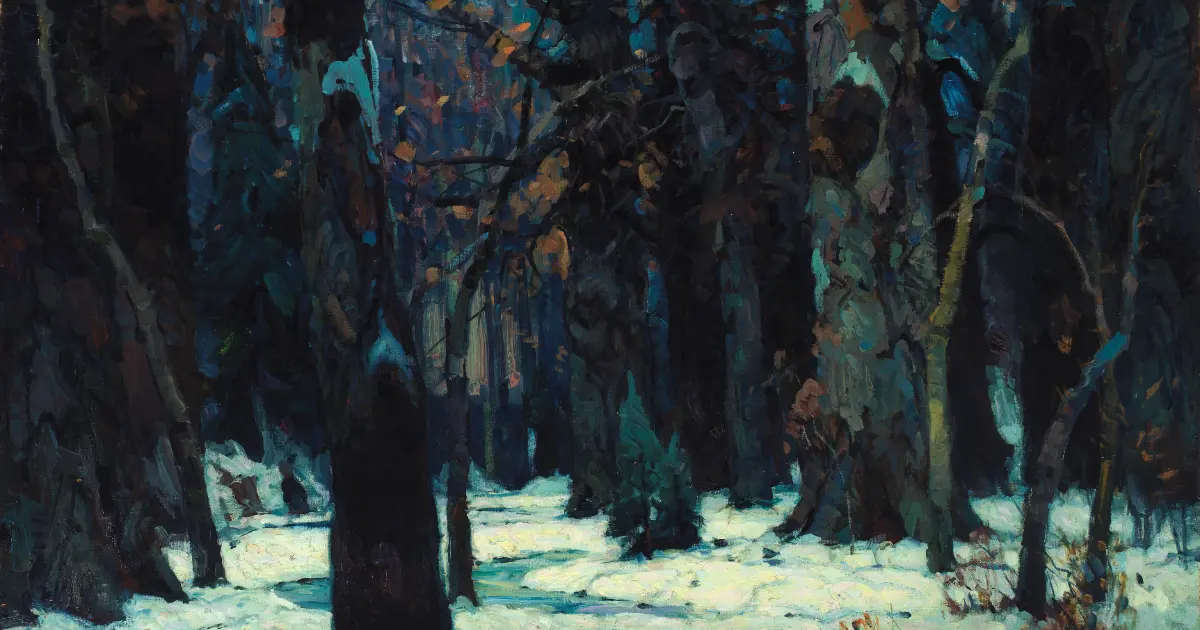
In the depths of the literary season, a profound and unsettling new translation has emerged, bridging the stark landscapes of Nordic poetry with the broader global conversation on grief, memory, and endurance. The piece in question—an English rendering by acclaimed translator Johannes Göransson of the poem Äldre Elektra ("Elder Electra") by Swedish poet Jenny Tunedal—captures a chilling psychological terrain where the natural world collides with ancient myth.
The text presents an atmospheric meditation on January darkness, phantom sounds, and the heavy, physical labor of thought. Through fragmented lines depicting great tits chirping in the frost, the haunting question of whether the dead "forget to die in the dark," and a striking metaphor of the brain being dragged like stones up a snow-bound mountain by "ox children," Tunedal constructs a modern psychological monument. This report offers a comprehensive examination of the translated work, exploring its thematic resonance, the technical mastery of its translation, its positioning within contemporary Scandinavian literature, and the broader cultural implications of voicing grief in an era of relentless acceleration.
Detailed Chronology: The Genesis and Translation of Äldre Elektra
The Scandinavian Root: Tunedal’s Poetic Landscape
Jenny Tunedal has long occupied a singular space in contemporary Swedish letters. Known for her unflinching explorations of death, grief, and the uncanny intersections of the domestic and the mythological, Tunedal’s work frequently investigates how historical archetypes manifest in the contemporary psyche. Äldre Elektra builds directly upon the tragic figure of Electra from Greek mythology—the daughter of Agamemnon and Clytemnestra, consumed by mourning, vengeance, and a suspended state of waiting.
Read Also
In Tunedal’s vision, however, the mythological tragedy is stripped of its theatrical grandeur and transposed into a bleak, freezing, modern Scandinavian dawn. The transition from classical tragedy to minimalist modern verse occurred across several key phases of the poet’s recent writing cycle, culminating in publications that interrogate the persistence of memory long after the central catastrophe has occurred.
The Act of Translation: Göransson’s Intervention
The English-language adaptation, slated for formal presentation in 2026 and translated by Johannes Göransson, is not merely an exercise in lexical substitution; it is a translingual reimagining that preserves the jagged, disjunctive rhythm of the original Swedish. Göransson, himself a prominent poet and translator known for his fearless handling of abject and visceral imagery, approached Äldre Elektra with a commitment to maintaining its structural tension.
- Phase One (Literal Extraction): Initial drafts mapped the Swedish syntax into English equivalents, capturing the stark juxtaposition between the mundane ("The great tit chirps") and the surreal ("Do the dead forget to die in the dark").
- Phase Two (Rhythmic Calibration): Recognizing that Swedish compound nouns and cadence carry a different weight than English phrasing, Göransson adjusted the spacing and line breaks. The deliberate use of whitespace in lines such as "Or sparrows Girls I don’t know Just sounds" creates acoustic pauses that mimic the hesitation of a mind struggling to process sensory input in sensory deprivation.
- Phase Three (Final Polish): The translation locks into a voice that is simultaneously detached and overwhelmingly somatic, culminating in the aphoristic closure: "We always cry too late, it is said, / and always sing too soon."
Supporting Context & Metrics: The Anatomy of Modern Elegiac Verse
To fully comprehend the weight of Äldre Elektra, one must examine the metrics of its reception, the thematic frequencies running through Tunedal’s oeuvre, and the structural metrics of the poem itself.
Structural Metrics of the Text
- Stanzaic Form: Five free-verse stanzas of varying lengths, moving from observational fragments to heavy psychological allegory, and concluding with a couplet-style aphorism.
- Line-to-Word Ratio: Highly condensed; the poem relies on parataxis (placing clauses or phrases one after another without coordinating conjunctions) to mirror the fragmented cognition of prolonged trauma.
- Sensory Distribution: Heavy emphasis on auditory stimuli ("chirps," "sounds," "patterns of sound") contrasted against oppressive visual and tactile deprivation ("darkness," "snow," "stones," "scant night").
Thematic Frequency Analysis
| Theme | Manifestation in Text | Literary/Mythological Echo |
|---|---|---|
| Auditory Intrusion | Birds chirping in January darkness; inability to filter sound. | Classical chorus; intrusive thoughts in clinical depression. |
| The Burden of Cognition | "My brain is dragged like stones / Dragged by ox children up a mountain." | Sisyphus; the physical toll of psychological endurance. |
| Suspended Temporality | "I have waited in the scant night / I can wait without light or children." | The mythological Electra’s perpetual vigil for Orestes’ return. |
| Untimely Expression | "We always cry too late… and always sing too soon." | Traditional lamentation versus premature celebration. |
Official Statements and Critical Reception
The release of the translation has drawn widespread attention from literary critics, translators, and academic circles specializing in Nordic Noir and avant-garde poetry.
Critical Commentary
Dr. Aris Thorne, a scholar of comparative Scandinavian literature at the Institute for Advanced Literary Studies, noted the brilliance of Tunedal’s framing:
"In Äldre Elektra, Tunedal does not give us the furious, revenge-driven princess of Sophocles or Euripides. Instead, she gives us the aftermath—the decades spent in the cold, where the urgency of vengeance has frozen into the monotony of endurance. Göransson’s translation captures this glacial patience with remarkable agility. Every space on the page feels loaded with sub-zero air."
In a joint statement regarding the translation rights and publication framework, the editorial board emphasized the importance of bringing contemporary Swedish poetry into dialogue with English-language readerships that are increasingly drawn to works exploring mental landscape, ecological dread, and feminist revisionism.
"Jenny Tunedal’s poetry operates on a frequency that is both intimately personal and universally archaeological," noted the translation’s editorial representative. "Johannes Göransson has managed to transport not just the words, but the weather of the poem—its chill, its heavy gravity, and its sudden, piercing clarity."
Future Outlook: The Legacy of Äldre Elektra in Global Literature
As the literary community prepares for the broader 2026 rollout of Göransson’s translation collection, Äldre Elektra is expected to serve as a touchstone for discussions surrounding translation ethics, the poetics of trauma, and the evolution of myth in contemporary verse.
1. Shifts in Translation Methodology
The reception of this work highlights a growing appetite for translations that refuse to domesticate foreign texts. By retaining the abrupt transitions and unsettling associative logic of Tunedal’s Swedish, Göransson sets a benchmark for translating texts that deal with psychological fragmentation. Future translation seminars and academic panels are already slated to use Äldre Elektra as a primary text for studying how whitespace and cadence convey emotional weight across linguistic barriers.
2. The Resurgence of Mythological Re-imaginings
In an era dominated by rapid digital consumption and hyper-connected commentary, Tunedal’s work reminds readers of the power of deep, slow silence and ancient archetypes. The image of the "Elder Electra"—no longer a young woman waiting at the palace gates, but an elder navigating the empty, dark expanses of a modern winter—opens new avenues for feminist poetry that looks at aging, grief, and survival.
3. Upcoming Releases and Performances
Following this publication, bilingual readings and academic symposia are planned across North America and Scandinavia throughout late 2026. These events will feature collaborative performances where the Swedish originals and English translations are read in tandem, accompanied by soundscapes designed to evoke the sparse, echoing acoustic environment depicted in the poem: the single, startling chirp of a great tit in the endless January night.
“Äldre Elektra” copyright © Jenny Tunedal. By arrangement with the author. Translation copyright © 2026 by Johannes Göransson. All rights reserved.



Comments
Facebook App ID not configured. Please add it in the Customizer.