
Executive Overview
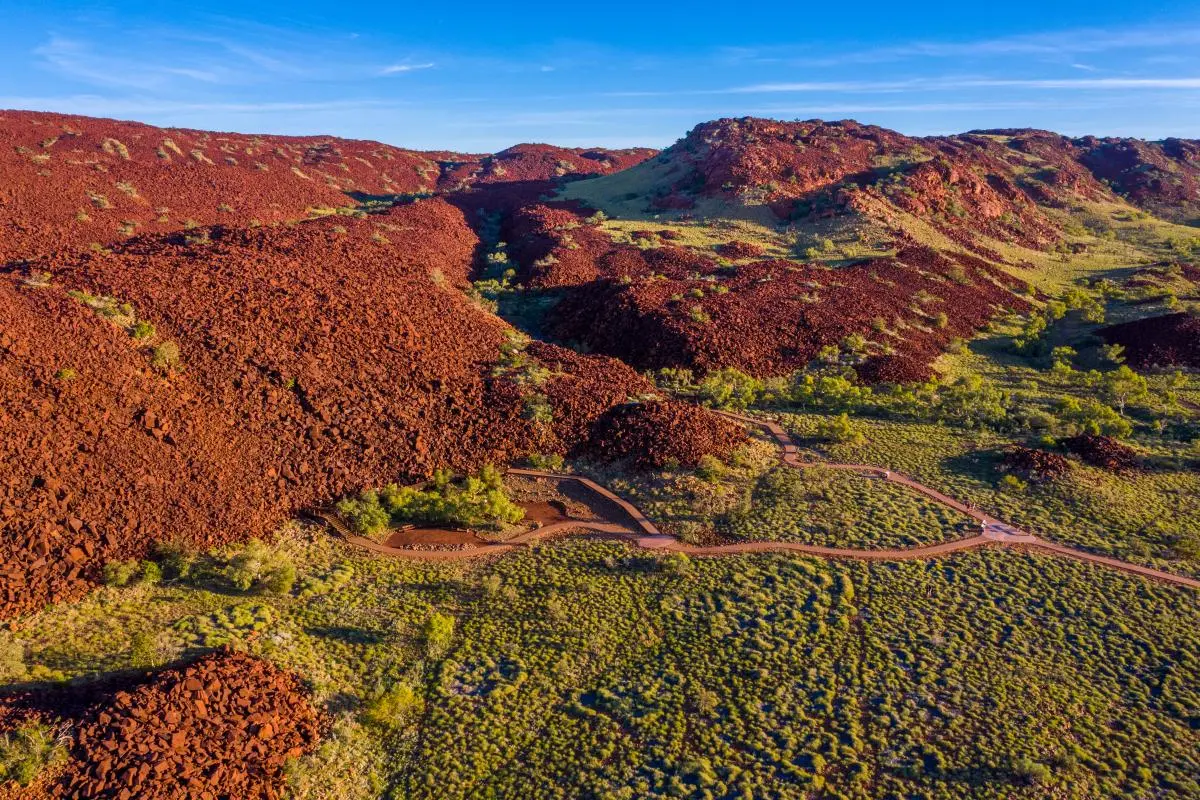
Nestled along the sun-baked coast of Western Australia’s Pilbara region, Murujuga—also known as the Burrup Peninsula—stands as an irreplaceable monument to human history. Located roughly 932 miles north of Perth, this rugged landscape holds one of the densest and most culturally significant collections of ancient rock art on Earth. Spanning an astonishing 50,000 years, tens of thousands of individual petroglyphs trace the deep history of the region’s Indigenous custodians, vividly depicting extinct fauna, powerful spiritual figures, and sacred cosmological narratives that predate many of the world’s oldest recognized civilizations.
Yet, this open-air gallery of human heritage faces a silent, corrosive threat. A landmark scientific investigation—the comprehensive Rock Art Monitoring Report, compiled over three grueling years through a collaborative effort between the peninsula’s five Aboriginal language groups and a team of more than 50 scientists from Curtin University—has revealed that the ancient carvings have suffered far greater historical damage than previously anticipated. The culprit? Industrial air emissions, specifically sulfur dioxide and other pollutants generated by decades of heavy manufacturing operating in direct proximity to these sacred sites.
The findings arrive at a critical political and ecological crossroads. Since the 1950s, the Burrup Peninsula has been aggressively transformed into one of Western Australia’s most formidable industrial powerhouses. Today, it hosts massive fertilizer plants, sprawling liquefied natural gas (LNG) export facilities, and soon, the world’s largest urea production plant. This rapid industrialization sits in uncomfortable juxtaposition with Murujuga’s recent, hard-won designation as a UNESCO World Heritage site.
Read Also
While the new scientific data shows that carving degradation has historically outpaced natural weathering—particularly for rock art located closest to heavy industrial zones—it also provides a glimmer of hope: current industrial operations are not seen to be accelerating this deterioration at present, largely due to stricter modern environmental regulations. Nevertheless, as the federal government greenlights the extension of massive fossil fuel projects through 2070, Traditional Owners, scientists, and policymakers are locked in a high-stakes debate over how to balance economic development with the preservation of an irreplaceable ancestral landscape.
Detailed Chronology
Deep Time and Indigenous Stewardship (Pre-1950s)
For tens of thousands of years, Murujuga existed in a state of sacred equilibrium. The region’s iron-rich, dark brown basalt rocks—known locally as patina or "desert varnish"—provided an ideal canvas for the First Nations peoples of the Ngarda-Nirli, Yindjibarndi, Wong-Goo-Tou-Oo, Ngarluma, and Mardudhunera language groups. Using stone tools to chip away the dark outer crust and expose the lighter-colored rock underneath, generations of artists etched profound records of their existence. These petroglyphs captured the changing landscapes of the Pleistocene and Holocene, depicting thylacines (Tasmanian tigers), ancient marine life, and intricate ceremonial practices. For the Traditional Owners, Murujuga is not merely a collection of historic artifacts; it is a living cultural landscape where the creator beings still dwell and where ancestral law is embedded directly into the stone.
The Industrialization of the Burrup (1950s–2000s)
The mid-20th century shattered the isolation of the Burrup Peninsula. Recognizing the region’s vast mineral wealth and strategic coastal access for shipping, the Western Australian government and multinational corporations targeted Murujuga for intensive industrial development. During the 1960s and 70s, iron ore export hubs were established nearby, followed swiftly by the construction of massive natural gas processing facilities and fertilizer production plants.
Environmental safeguards during this initial boom era were rudimentary by contemporary standards. Industrial complexes pumped massive volumes of sulfur dioxide, nitrogen oxides, and particulate matter into the local atmosphere. As shipping traffic multiplied to service the burgeoning Pilbara economy, combustion engines burned high-sulfur bunker fuels, blanketing the peninsula in invisible chemical mists. For decades, Traditional Owners voiced deep concerns that these airborne pollutants were eating away at the rock varnish, silently erasing the delicate petroglyphs. Their warnings, however, were frequently sidelined in favor of national economic imperatives.
The Scientific Reckoning (2021–2026)
Pressure from the Murujuga Aboriginal Corporation (MAC) and growing international scrutiny finally forced a systematic accounting of the industrial impact. A groundbreaking three-year monitoring framework was established, uniting traditional ecological knowledge with rigorous western science. Spearheaded by lead scientist Professor Ben Mullins of Curtin University alongside a multidisciplinary team of over 50 researchers, the project undertook exhaustive chemical, physical, and micro-climatic analyses of the rock art surfaces.
The culmination of this massive undertaking arrived with the release of the Rock Art Monitoring Report. The findings were stark: the rock art closest to the industrial footprint showed accelerated degradation, specifically manifested as structural changes in rock porosity—the microscopic pore systems that give the basalt its integrity. Crucially, the data pointed an accusing finger at historical sulfur dioxide emissions, proving that decades of burning high-sulfur fuels had structurally compromised the outer layers of the petroglyphs.
However, the report also delivered a nuanced counter-narrative regarding contemporary operations. Thanks to global and domestic shifts toward cleaner fuels—such as the dramatic reduction of sulfur content in shipping and transport fuels implemented since 2010—current industrial activity is not currently accelerating the rate of deterioration.
Modern Policy Crossroads (2026 and Beyond)
The release of the monitoring report coincides with major administrative decisions that underscore the ongoing tension on the peninsula. Federal Environment Minister Murray Watt recently approved the controversial extension of the North West Shelf gas project through 2070, ensuring that industrial operations surrounding Murujuga will continue for decades to come. Simultaneously, Murujuga has achieved official recognition on UNESCO’s World Heritage List, placing its preservation under an international microscope.
Presently, the Murujuga Aboriginal Corporation and the Western Australian government are engaged in delicate negotiations to finalize a memorandum of understanding (MoU) to fund long-term environmental and cultural monitoring beyond 2026. As the industrial footprint expands—highlighted by the impending launch of the world’s largest urea plant next year—the imperative to merge cultural authority with scientific vigilance has never been more urgent.
Supporting Context & Metrics
Understanding the scale of the threat to Murujuga requires examining the specific chemical mechanisms at play and the unique geographical constraints of the Burrup Peninsula.
The Chemistry of Corrosion: Sulfur Dioxide and Patina
The primary mechanism of damage identified in the Curtin University report centers on the interaction between atmospheric sulfur dioxide ($SO_2$) and the iron- and manganese-rich patina that coats the basalt rocks. Over millennia, this dark outer skin formed through complex biochemical and weathering processes, protecting the lighter interior stone and providing the stark visual contrast that defines the petroglyphs.
When sulfur dioxide gas emitted from industrial stacks and combustion engines mixes with atmospheric moisture, it forms weak sulfuric acid. Over decades of high historical emissions—particularly during the unchecked industrial expansion of the 1970s and 1980s—this acidic deposition slowly dissolved the mineral bonds holding the patina together.
The three-year study found that this chemical attack led to measurable changes in the rocks’ porosity—the network of microscopic void spaces within the stone and its varnish. Increased porosity weakens the structural integrity of the rock surface, making it exponentially more vulnerable to thermal expansion, wind erosion, and spalling (the flaking away of rock layers). Once the patina is compromised or lost, the petroglyph underneath fades irrevocably, destroying the visual record carved by ancient hands.
Metrics of Industrial Density and Air Quality
- Geographical Scope: Murujuga is situated approximately 932 miles (1,500 kilometers) north of Perth, encompassing the islands of the Dampier Archipelago and the Burrup Peninsula.
- Chronological Depth: The petroglyphs date back approximately 50,000 years, spanning multiple ice ages and massive sea-level changes.
- Scientific Collaboration: The Rock Art Monitoring Report represents a three-year study executed by over 50 scientists from Curtin University, working in tandem with members from all five Aboriginal language groups of the peninsula.
- Industrial Evolution: Since the 1950s, the region has grown to house major natural gas processing hubs, a prominent fertilizer plant, and the upcoming launch of the world’s largest urea plant, scheduled to commence operations next year.
- Regulatory Shift: Historical emissions data reviewed by researchers demonstrated that sulfur levels in industrial and shipping fuels were substantially higher in the 1970s and 80s. A significant regulatory turning point occurred around 2010, when international and domestic mandates drastically slashed sulfur content in shipping fuels, subsequently lowering ambient sulfur dioxide emissions around the peninsula.
Official Statements
The release of the Rock Art Monitoring Report has galvanized stakeholders across government, academia, and Indigenous leadership, eliciting strong statements regarding the dual necessity of heritage preservation and industrial accountability.
Belinda Churnside, Murujuga Aboriginal Corporation (MAC) Director and Cultural Adviser:
"This latest report provides further confidence that the monitoring program is building the evidence needed to support the long-term protection of our rock art and cultural landscape. World Heritage recognition brings new responsibilities for all of us. MAC will continue working with government, industry, scientists, and our Elders to ensure Murujuga’s outstanding cultural values are protected and cared for long into the future."
Emphasizing the foundational philosophy guiding the Traditional Owners, Churnside further noted:
"As Traditional Owners and Custodians, we know that protecting Murujuga requires both cultural knowledge and robust science. These findings are an important step forward in helping us better understand the landscape and ensure it is protected for future generations."
Professor Ben Mullins, Lead Scientist, Curtin University:
"Transport fuels, shipping fuels, [and the] industry all have some level of sulfur in their fuel. There’s a lot of evidence that that was a lot higher in the 70s and 80s, and even since 2010, shipping fuels have massively reduced sulfur levels and sulfur dioxide emissions."
While Mullins’ research confirms that historical pollution left a profound physical scar on the petroglyphs, his team’s data also offers a vital baseline for assessing the efficacy of modern air-quality controls, proving that contemporary emissions are not compounding the damage at historical rates.
Future Outlook
As Murujuga enters a new era defined by its status as a UNESCO World Heritage site, the path forward is fraught with complex administrative, ecological, and ethical challenges. The juxtaposition of a 50,000-year-old cultural landscape with a multi-billion-dollar fossil fuel and chemical processing hub is unprecedented on the global stage, making Murujuga a test case for industrial heritage management in the 21st century.
The Imperative of Long-Term Monitoring
The immediate priority for the Murujuga Aboriginal Corporation and the Western Australian government is the finalization of the funding memorandum of understanding (MoU) to secure continuous, long-term monitoring beyond 2026. Science has demonstrated that while historical sulfur dioxide damage is severe, the stabilization of current emission levels has slowed active deterioration. Maintaining this fragile equilibrium requires real-time air quality tracking, micro-meteorological observation, and non-invasive surface integrity testing. Without guaranteed, multi-decade funding, researchers and custodians will be left blind to subtle environmental shifts that could spell disaster for vulnerable petroglyphs.
Navigating Policy Contradictions
A profound tension remains at the heart of Australian environmental policy. Even as Murujuga achieves global recognition for its cultural value, federal approvals—such as Environment Minister Murray Watt’s decision to extend the North West Shelf gas project through 2070—guarantee that heavy industry will maintain a massive physical presence on the doorstep of the sacred peninsula. Furthermore, the imminent commissioning of the world’s largest urea plant next year introduces new industrial variables that must be rigorously audited.
For the five language groups of the peninsula, vigilance is not optional; it is an existential duty. The integration of Indigenous ecological governance with western scientific frameworks—as successfully demonstrated in the Curtin University report—provides a robust template for future stewardship. However, policy makers must be willing to act on the data. If industrial emissions begin to creep upward, or if the cumulative impact of climate change and chemical weathering accelerates rock porosity breakdown, regulatory authorities must possess the political will to curtail operations that threaten the world’s most ancient art gallery.
Ultimately, Murujuga’s survival depends on a shared acknowledgment that some landscapes are too precious to be sacrificed for short-term industrial gain. As Belinda Churnside aptly summarized, protecting this peerless archive of human history demands an unyielding commitment from government, industry, and science alike—ensuring that the voices etched into the stone by our ancestors remain legible for tens of thousands of years to come.




Comments
Facebook App ID not configured. Please add it in the Customizer.