
Executive Overview
The debate over political speech, religious nationalism, and municipal jurisdiction reached a fever pitch in New York City this week, centering on an upcoming Madison Square Garden appearance by Mohan Bhagwat, a prominent figure in the global Hindu nationalist movement. Bhagwat, leader of the Rashtriya Swayamsevak Sangh (RSS)—a foundational, right-wing Hindu-centric cultural and paramilitary organization in India—arrived in the United States for a high-profile speaking tour, with a marquee event scheduled for Saturday at one of Manhattan’s most iconic venues.
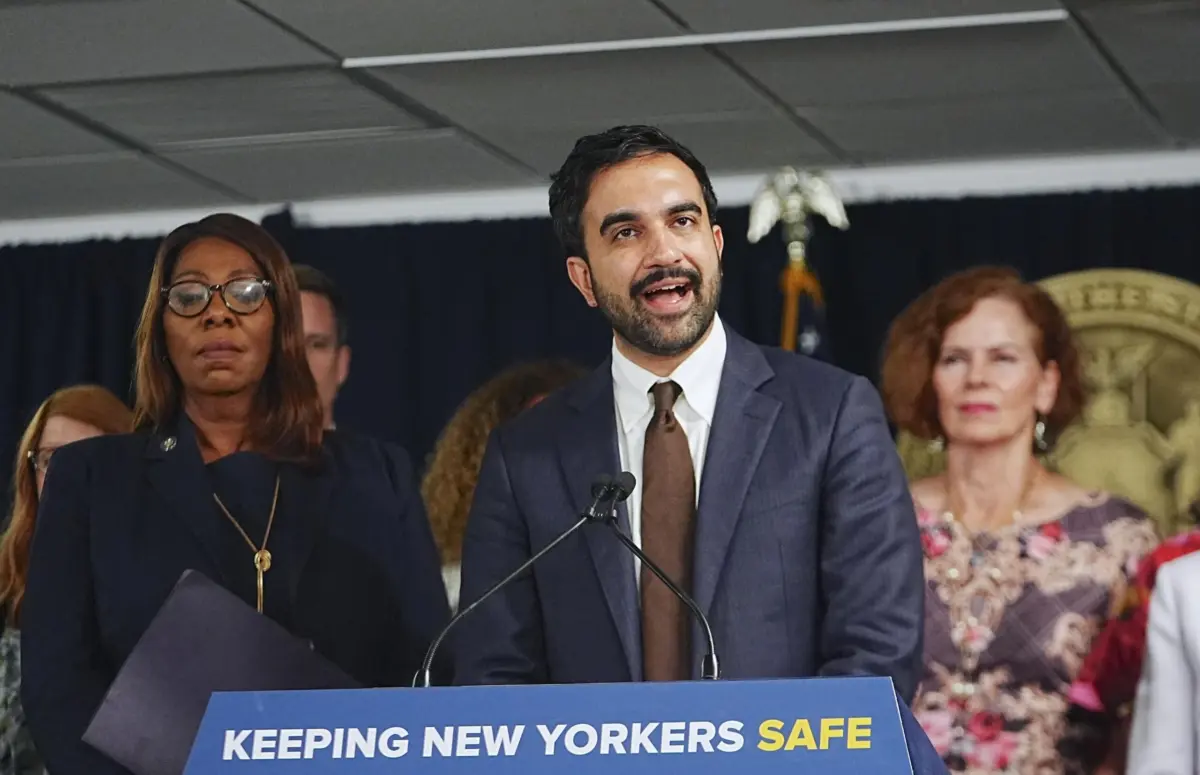
The gathering immediately drew intense scrutiny, culminating in sharp public criticism from New York Mayor Zohran Mamdani. During a City Hall press conference on Tuesday, Mamdani pulled no punches, stating that while the city lacked the legal jurisdiction to cancel a private event, he found the ideology underpinning the RSS to be deeply exclusionary and troubling.
"I don’t support the rally, but I don’t know if the city has any jurisdiction on canceling a private event," Mamdani told reporters. "It has been incredibly troubling to see the rise of a movement that is predicated on an exclusionary vision of any country, frankly, and so it is one that I find myself in deep opposition to."
Read Also
Mamdani’s remarks swiftly ignited a firestorm of controversy. Critics, including various Hindu-American advocacy organizations and conservative commentators, accused the mayor of harboring anti-Hindu biases, favoring Muslim constituents, and unnecessarily inflaming tensions between ethnic and religious communities in the city. The backlash compounds a volatile political landscape for Mamdani, who has spent much of the year weathering fierce criticism from Jewish leaders and pro-Israel organizations over his vocal opposition to Israeli Prime Minister Benjamin Netanyahu and his government’s military campaigns.
However, the opposition to Bhagwat’s Madison Square Garden visit extended far beyond the mayor’s office. A broad coalition of human rights organizations, interfaith groups, and South Asian civil rights activists mobilized throughout the week, staging protests and petitioning venue operators to cancel the event.
To unpack the complexities of this international flashpoint, The Global Dispatch spoke with Nishant Upadhyay, an associate professor in Asian American studies at the University of Colorado Boulder, whose academic work focuses on the intersections of race, caste, and global Hindu nationalism within both India and its international diasporas.
Detailed Chronology: From Nagpur to Manhattan
Understanding the friction surrounding Saturday’s event requires tracing a century-old socio-political arc that began in British-ruled India and has steadily expanded its influence across international borders.
The Origins of the RSS (1925)
The Rashtriya Swayamsevak Sangh was founded in 1925 in Nagpur, British India, under the guiding philosophy that the subcontinent should be defined primarily as a Hindu nation—an ideology formalized decades later as Hindutva. Operating as a self-described cultural and civilizational movement, the RSS established a vast network of local chapters (shakhas) dedicated to physical training, ideological indoctrination, and community mobilization.
While the group operates independently of direct electoral politics, it serves as the ideological mothership for a constellation of political and social organizations known collectively as the Sangh Parivar. Chief among these is the Bharatiya Janata Party (BJP), India’s current ruling political party led by Prime Minister Narendra Modi. The RSS provides the foundational foot soldiers, intellectual framework, and grassroots mobilization engine for the BJP’s electoral victories.
The Rise of Modi and the Mainstreaming of Hindutva
Over the past decade under Prime Minister Modi, India’s political and social landscape has shifted dramatically. Once viewed as a marginal, right-wing force, Hindu nationalism has steadily been mainstreamed into the apparatus of the Indian state. Critics and human rights monitors, including organizations like the U.S. Commission on International Religious Freedom (USCIRF), have documented a steady escalation in systemic discrimination, state surveillance, and targeted violence against religious minorities—particularly Muslims and Christians—as well as marginalized caste and indigenous populations.
Mohan Bhagwat, who has served as the Sarsanghchalak (chief) of the RSS since 2009, is widely recognized as one of the most powerful figures in India. Although he holds no formal legislative or executive office, his directives carry immense weight across the governing apparatus. His U.S. tour and the Madison Square Garden rally represent a concerted effort to project this ideological project onto the international stage, utilizing the infrastructure of the American diaspora to legitimize its vision.
Supporting Context & Metrics: Ideology, Diaspora, and Power
The debate in New York City highlights a profound ideological rift within the global South Asian diaspora, pitting a mobilized, right-wing Hindu nationalist lobby against a diverse coalition of secular, pluralist, and minoritized immigrant groups.
The Diaspora Divide
Historically, the Indian diaspora in the United States was characterized by a generally secular, pluralistic orientation. However, over the past fifteen years—coterminous with the rise of the Modi administration—the Hindu right-wing diaspora has undergone a massive surge in organization, funding, and political influence.
According to Professor Upadhyay, right-wing diasporic groups have successfully forged strategic alliances across the American political spectrum. By aligning with both corporate economic interests and political figures from both major U.S. parties, these networks have accumulated significant economic and political capital.
"There is power in the Hindu diaspora, and now, in some ways, the right-wing diaspora," Upadhyay noted. "That ideology works very well with Trump’s ideology, and actually also works with Democrats in many ways, because Modi has also allowed more and more American corporate interests to come into the Indian economy."
This alignment has allowed nationalist organizations to effectively counter domestic critiques and project an image of moderation. The group organizing Saturday’s event, American Hindus for Engagement and Dialogue, promotes a mission of fostering understanding and building bridges. Yet, critics argue this messaging obscures the exclusionary realities of the Hindutva project on the ground in India.
Intersectional Resistance and the Counter-Movement
Counterbalancing the Hindu right is an active, long-standing network of human rights organizations, interfaith coalitions, and grassroots diasporic groups—including Dalit, Muslim, Kashmiri, and progressive Hindu activists—who have worked for decades to raise awareness about the rise of authoritarianism and religious nationalism.
These activists argue that the normalization of Hindutva ideology in the West carries immediate, real-world consequences for minority communities in the diaspora. Scholars, journalists, and grassroots organizers—particularly women, Muslims, and lower-caste individuals who speak out against Hindu nationalism—frequently face severe online harassment, doxxing, and intimidation campaigns targeting them and their families.
Official Statements and Perspectives
Mayor Zohran Mamdani’s Position
Mayor Mamdani’s intervention has placed him at the center of a national conversation regarding the boundaries of municipal speech and international human rights advocacy. Mamdani, who is Muslim and of South Asian descent with Hindu heritage on his mother’s side, has a long track record as an activist and public official speaking out against global fascism, structural violence, and minority persecution.
Supporters argue that Mamdani’s critique is rooted in a principled, anti-authoritarian framework rather than animosity toward any religious group. His background—including his mother’s work as a renowned progressive filmmaker documenting structural violence in India—gives him a deep familiarity with the mechanics of state-sponsored nationalism.
Accusations of Bias
Conversely, detractors have sharply condemned Mamdani’s public opposition to the Madison Square Garden event. Critics argue that as the mayor of New York City, targeting a specific religious and ethnic community’s leadership event crosses the line from political critique into alienation of Hindu-American constituents.
These allegations echo criticisms leveled against Mamdani earlier in his tenure regarding his outspoken condemnation of Israeli military actions and Prime Minister Netanyahu. Opponents argue that his pattern of targeting the nationalist leadership of specific foreign governments—namely Israel and India—disproportionately impacts Jewish and Hindu communities in New York, feeding accusations of selective outrage and bias.
Future Outlook: The Intersection of Local Governance and Global Politics
As globalization deepens the ties between domestic American cities and international political movements, local leaders increasingly find themselves navigating ideological battles that transcend municipal borders.
The controversy surrounding Mohan Bhagwat’s appearance at Madison Square Garden is unlikely to dissipate once the venue empties on Saturday. It serves as a stark indicator of how deeply transnational politics are now woven into the fabric of urban American life. For New York City, a global metropolis home to vast and diverse diaspora populations, the friction between competing visions of nationalism, pluralism, and human rights will remain a defining political challenge for the foreseeable future.
Ultimately, as Professor Upadhyay emphasized, the core issue extends far beyond individual political figures:
"This is beyond players like Zohran Mamdani and Mohan Bhagwat, and more about the mainstreaming of Hindu nationalist ideology in the US. It is really scary, and we need to be very attentive to it even when they use the language of pluralism and dialogue and building bridges."




Comments
Facebook App ID not configured. Please add it in the Customizer.