
Executive Overview
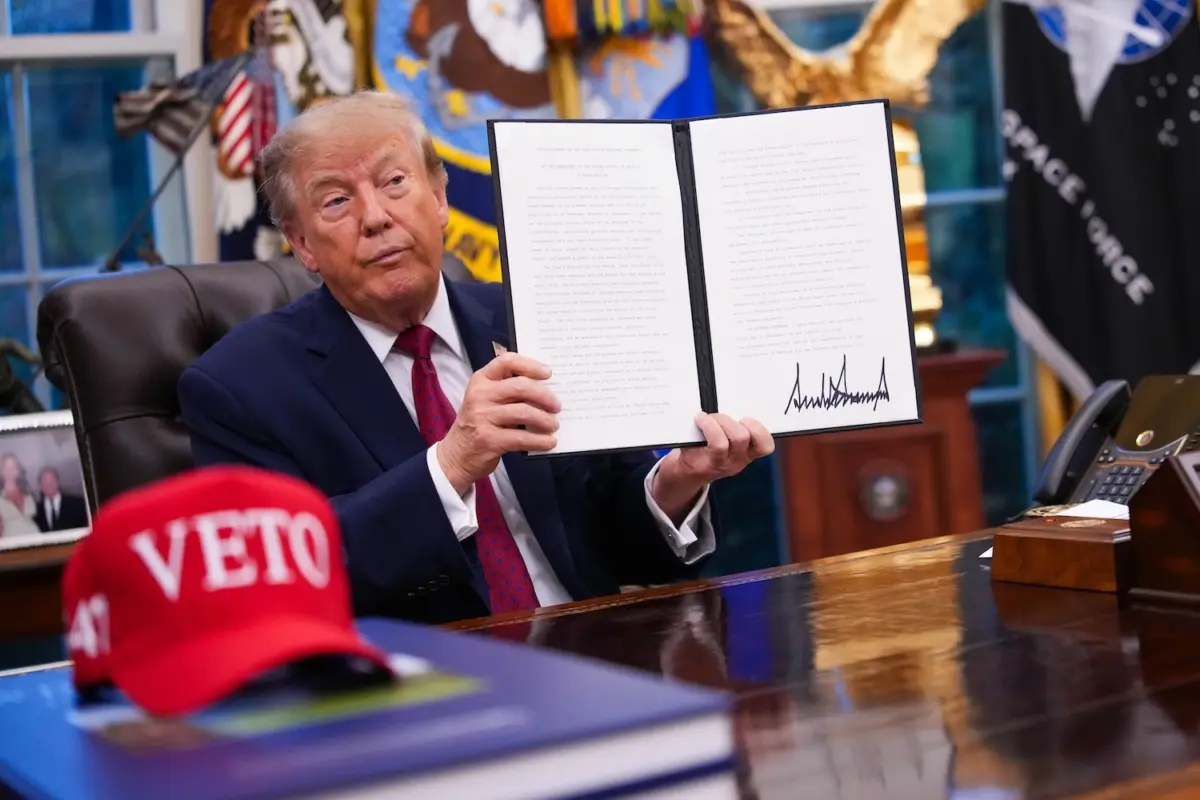
In a dramatic move following a bruising political setback at the ballot box, President Donald Trump signed an executive proclamation on Thursday officially seeking to designate the Oval Office and the adjacent Cabinet Room as national monuments. According to the administration, the unprecedented maneuver is designed to legally shackle future executive branches, requiring explicit congressional approval before any subsequent administration can alter, modernize, or reverse the lavish interior redesigns enacted during Trump’s second term.
For the past several years, the president has spearheaded a sweeping, highly controversial aesthetic and architectural transformation of America’s most storied executive spaces. Moving away from the restrained, historically reverent decor favored by many of his predecessors, Trump has overseen a transformation of the West Wing’s inner sanctums into extravagantly gilded chambers modeled after the opulent French Baroque style of Louis XIV.
This latest legal and administrative gambit unfolds against the backdrop of significant political turbulence. In the immediate aftermath of the midterm elections—which saw his party suffer historic legislative defeats—the president has turned his focus toward an ambitious, legacy-defining portfolio of physical construction and restoration projects spanning the White House complex and the broader Washington, D.C. landscape. From the controversial demolition of the historic East Wing to make way for a massive, multi-million-dollar ballroom, to the fast-tracked approval of a monumental triumphal arch near Arlington National Cemetery, Trump is aggressively cementing his physical footprint on the capital.
Read Also
Yet, this legacy-building effort is fraught with legal ambiguities, intense partisan pushback, and immediate judicial intervention. Legal scholars and preservationists have openly questioned whether a presidential proclamation can legally bind future administrations, especially given that the entirety of the White House already holds status as a national historic landmark—a designation that did not prevent the current administration from fundamentally altering the estate. As federal judges step in to pause elements of his expansive capital construction agenda, the battle over the architecture of the American presidency has entered an unprecedented and contentious new phase.
Detailed Chronology: From Midterm Setbacks to Monumental Proclamations
The Political Aftermath and Self-Soothing Through Architecture
The timing of Thursday’s monument proclamation has drawn intense scrutiny from political analysts and architectural historians alike. Coming less than forty-eight hours after the conclusion of midterm elections that resulted in a severe electoral correction for the ruling party, the announcement underscored a familiar pattern within the current administration: retreating into the realm of real estate development and architectural transformation during times of political adversity.
Rather than retreating from the public eye to strategize in the wake of the electoral wipeout, President Trump chose a decidedly visual and tactile form of political engagement. On Wednesday—his first public appearance following the election results—Trump led an exclusive media tour through the sprawling, noisy construction site of the White House’s newest and most controversial addition: a massive, 90,000-square-foot, $600 million ballroom.
Walking reporters through the cavernous skeleton of the new facility, the president downplayed the political losses, instead directing public attention upward toward the soaring ceilings and structural steel. For an administration increasingly facing a hostile incoming legislative branch, physical construction has increasingly served as a tangible, permanent manifestation of power—one that critics argue is designed to outlive any single political cycle.
Fast-Tracking the Capital: The Triumphal Arch and Legal Roadblocks
The urgency driving the White House’s architectural projects was further highlighted by frantic maneuvering surrounding a proposed 250-foot-high triumphal arch slated for a site near Arlington National Cemetery.
Fearing that incoming Democratic majorities in Congress or shifting political winds would permanently block the project, White House officials lobbied for expedited approval from a federal planning commission. On Wednesday afternoon—coinciding precisely with the fallout from the election—the administration’s hand-picked commissioners granted the necessary permits, greenlighting the massive monument.
However, the victory was short-lived. Recognizing the controversial nature of placing a colossal, classical arch near the nation’s most solemn military cemetery, preservation groups and local stakeholders mobilized immediately. By Wednesday evening, U.S. District Judge Tanya Chutkan stepped into the fray, issuing an emergency temporary restraining order that halted all construction activities for fourteen days. The judicial intervention highlights the widening jurisdictional war between an executive branch eager to break ground and a judiciary increasingly willing to scrutinize accelerated, politically motivated federal approvals.
The Louis XIV Transformation of the West Wing
Inside the executive mansion itself, the chronology of transformation has been equally brisk. Throughout his second term, the president made the complete overhaul of the West Wing a deeply personal priority.
The restrained mahogany tones, traditional portraits, and understated textiles that had characterized the Oval Office for decades were systematically stripped away. In their place emerged a staggering display of wealth and classical European design: heavy gilded moldings, opulent gold-leaf furniture, elaborate brocade drapery, and crystal chandeliers.
Thursday’s proclamation is the culmination of this interior campaign. By attempting to convert the working spaces of the executive branch into federally protected national monuments, the administration is endeavoring to elevate personal interior design choices to the status of inviolable national heritage, erecting a legal firewall against future administrations that might seek to restore the rooms to their traditional appearance.
Supporting Context & Metrics: The Price Tag of Presidential Ambition
To fully understand the scope of President Trump’s architectural campaign, one must examine the staggering scale of the projects, their associated costs, and their physical footprint on federal property.
The White House Complex Projects
- The East Wing Demolition and Grand Ballroom: The centerpiece of the administration’s modern capital projects is the demolition of the historic East Wing. In its place, workers are erecting a 90,000-square-foot state-of-the-art ballroom with an estimated price tag of $600 million. Funded through a combination of private donations and federal outlays, the ballroom is intended to host large-scale state dinners and international delegations, a function previous administrations handled via temporary South Lawn pavilions.
- The South Lawn Granite Helipad: Enhancing the security and logistical infrastructure of the executive estate, the administration constructed a heavy-duty granite helipad on the South Lawn, replacing older, less permanent landing arrangements.
- The Oval Office & Cabinet Room Redecoration: While exact line-item costs for the gilding and redecoration of the West Wing have not been fully disclosed, historical preservation experts estimate that the wholesale interior refitting runs into the millions of dollars, utilizing specialized artisans skilled in historic gold-leaf restoration and custom European upholstery.
Broader Washington, D.C. Initiatives
- The Lincoln Memorial Reflecting Pool Restoration: Long a focal point of the National Mall, the reflecting pool has become the subject of a fraught, $14 million repair and renovation initiative overseen by the administration to address chronic structural leakage and water filtration issues.
- Public Golf Course Redevelopment: Beyond the immediate monument core, the administration initiated a controversial redevelopment of a popular public golf course in the capital region, a project that required the felling of hundreds of mature trees, sparking immediate pushback from environmental advocates.
- The Arlington Triumphal Arch: Projected to reach a towering height of 250 feet, this classical monumental arch carries an estimated multimillion-dollar price tag, designed to rival the Arc de Triomphe in Paris and serve as a permanent structural marker of the administration’s populist nationalist ethos.
Official Statements and Institutional Reactions
The unilateral move to declare the Oval Office a national monument has ignited a fierce debate among legal scholars, constitutional experts, and political opponents, drawing starkly contrasting viewpoints from across the political and institutional spectrum.
The White House Defense
Speaking from the newly gilded confines of the Oval Office during Thursday’s announcement, President Trump defended the proclamation as a necessary act of historical preservation.
"When completed, and when we get the documentation fully done, legally binding, it’ll make it impossible for anybody ever to destroy this incredible space," Trump told reporters, gesturing to the heavy gold ornamentation surrounding him.
Administration officials argue that the physical spaces of the presidency belong to the American people and that anchoring their aesthetic presentation in federal monument law protects them from what they characterize as partisan swings in interior design.
Legal Skepticism and Institutional Pushback
Legal scholars, however, have expressed profound skepticism regarding the mechanics and enforceability of the proclamation. Under the Antiquities Act and general executive powers, presidents possess wide latitude to designate federal lands and historic properties as national monuments. Yet, legal analysts point out a glaring contradiction: the entire White House complex, including the West Wing, is already cataloged as a National Historic Landmark.
"A historic landmark designation has never precluded an incumbent president from making modifications, interior alterations, or structural additions to the White House," noted one constitutional law professor specializing in executive powers. "The executive branch has historically operated under a doctrine of functional control over the working spaces of the presidency. Attempting to use a monument designation to bind future executives from redecorating their own offices treads into uncharted, and likely unconstitutional, territory regarding the separation of powers."
Preservationists have similarly voiced alarm, arguing that weaponizing monument designations for interior decor cheapens the statutory intent of the Antiquities Act, which was originally designed to protect vast, ecologically or archaeologically significant tracts of public land from commercial exploitation.
Furthermore, community groups and legal defense organizations continue to challenge the administration’s broader D.C. construction portfolio. The fourteen-day restraining order issued by Judge Chutkan regarding the Arlington arch project signals that the judiciary is prepared to act as a formidable check against accelerated, non-transparent federal approvals.
Future Outlook: The Battle for the People’s House
As the dust settles on a tumultuous midterm week, the long-term ramifications of President Trump’s architectural and legal gambits remain deeply uncertain.
The Legal Showdown in the Courts
Over the coming weeks, the temporary restraining order halting the triumphal arch project will mature into a broader legal battle. Plaintiffs representing local heritage groups, environmental organizations, and affected federal agencies will press for a permanent injunction, arguing that the planning commission’s rushed approval process violated foundational federal environmental and historical preservation statutes.
Simultaneously, legal analysts will closely monitor whether the Oval Office monument proclamation survives the inevitable transition of power. Should a future administration assume office with a mandate to reverse the aesthetic changes, constitutional lawyers will be forced to test whether an outgoing executive can legally tie their successor’s hands with gold leaf and bureaucratic red tape.
A Permanently Altered Capital Landscape
Regardless of how the legal challenges resolve, the physical geography of Washington, D.C., and the White House complex has been permanently altered. The $600 million East Wing ballroom is too far along in its construction cycle to be easily undone, promising to stand as a monumental structural addition to the executive mansion for generations to come.
Whether viewed by supporters as a bold, populist revitalization of American grandeur, or criticized by opponents as an exercise in autocratic self-aggrandizement, President Trump’s final-term construction projects and monument declarations have ensured that his physical legacy will loom large over the capital long after he vacates the premises. The battle lines drawn in granite, gold, and federal courtrooms guarantee that the architectural soul of the American presidency will remain a fiercely contested frontier for years to come.



Comments
Facebook App ID not configured. Please add it in the Customizer.