
Executive Overview
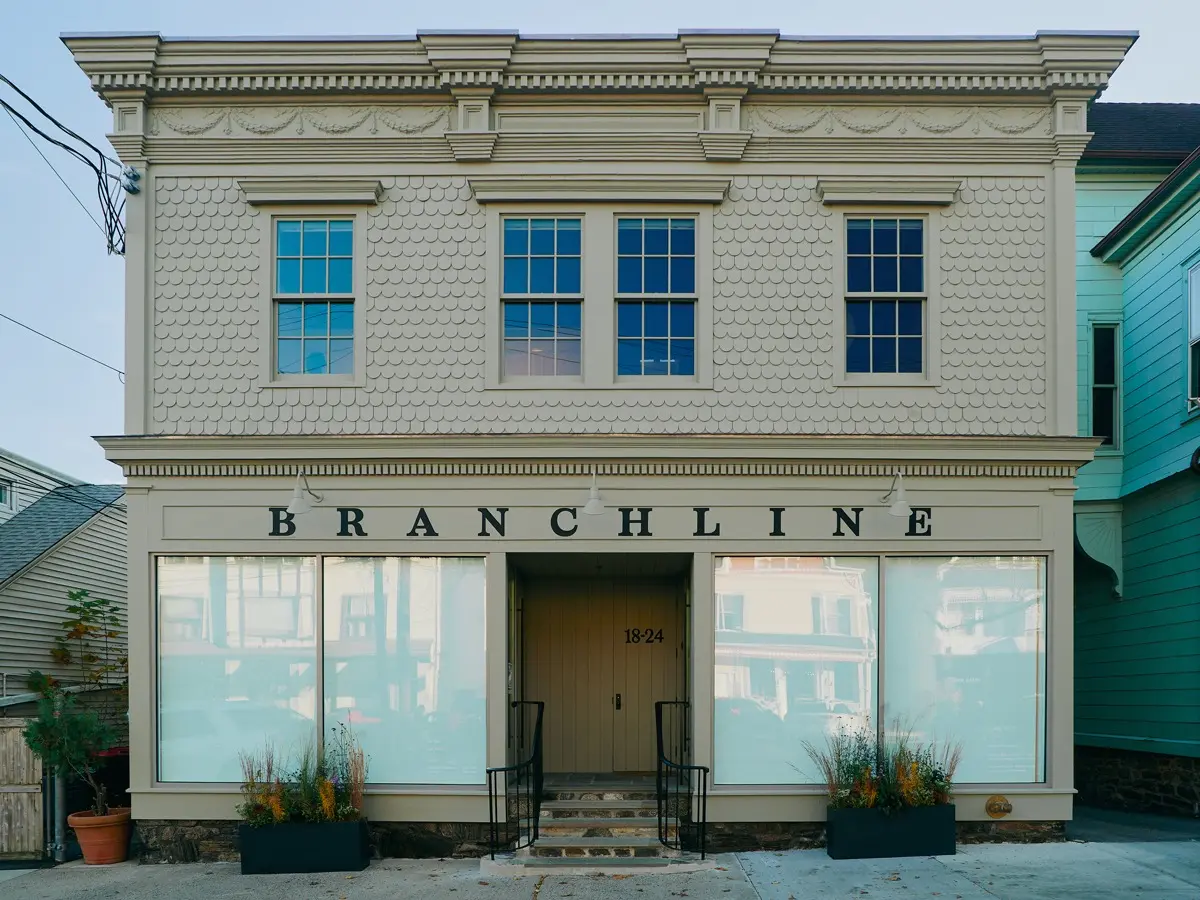
Just a short walk from the Metro-North commuter line in the picturesque Hudson Valley town of Katonah, New York, a nondescript gray two-story building conceals a cultural milestone. Emblazoned with a sleek, kerned-out serif font bearing the name Branchline, this unassuming storefront represents a radical departure from traditional museum models. It serves as the new public-facing exhibition space for the Gochman Family Collection (GFC), an enterprise that has quietly evolved over the past five years into one of the world’s preeminent repositories of contemporary Indigenous art.
Housing more than 850 meticulously curated works, the GFC has historically operated out of the private New York City apartment of founder and custodian Becky Gochman and her family. While the collection has maintained an active international footprint—typically keeping around 200 works on global loan to major cultural institutions, and regularly opening the Gochman residence to museum groups, educators, and artists—the overarching ambition has always been unyielding: to achieve deep, equitable public accessibility without sacrificing community-centered intimacy.
With the inauguration of Branchline, the GFC is translating its foundational mission into physical architecture. Spanning what will eventually encompass a sprawling 10,000-square-foot footprint across four interconnected buildings along an L-shaped plot from Parkway to Katonah Avenue, Branchline rejects the sterile, detached authority of the traditional "white cube." Instead, it offers an experimental, porous sanctuary where the local Hudson Valley public and the broader Native community intersect on equal terms.
Read Also
Curated by an executive team featuring GFC creative director and curator Rachel Martin (Tlingit), assistant curator Moonoka Begay (Ndee + Diné), collection associate Nicole van Brugge, and GFC director Laura Phipps, the space debuts with "Line Break," a masterclass in contemporary Indigenous curation. Featuring 28 works by 18 artists, the exhibition establishes Branchline not merely as a gallery, but as a dynamic cultural ecosystem comprising multi-room exhibition spaces, artist-in-residence quarters, ceramics studios, site-specific exterior installations, and experimental project hubs.
Detailed Chronology: From Private Residence to Public Anchor
The realization of Branchline is the culmination of a deliberate, five-year trajectory characterized by exponential growth and strategic institutional vision.

Phase I: Domestic Stewardship (2021–2025)
Following its establishment, the Gochman Family Collection operated primarily as a private-access holding. Becky Gochman and her family integrated the artworks into their daily domestic environment, turning their Manhattan apartment into an immersive living archive. Recognizing the ethical imperatives of stewarding contemporary Indigenous art, the family actively partnered with global institutions, ensuring that hundreds of pieces regularly circulated through public museums. Simultaneously, they cultivated an intimate hospitality model, welcoming Native artists, scholars, school groups, and curators for private tours and dialogues. However, the physical limitations of a residential space constrained broader public engagement.
Phase II: Architectural Acquisition and Conceptualization (Mid-2025–Late 2025)
The search for a dedicated public home led the GFC to Katonah, drawn by its accessibility via the Metro-North rail system. Acquiring a cluster of aging structures on a prime municipal drag, the team began the complex process of architectural reimagining. Notably, an existing barn on the property was found to be structurally unsound, necessitating a total teardown to pave the way for a future large-scale exhibition hall. During this period, the leadership team coined the name "Branchline"—referencing both the railway metaphor of converging and diverging tracks and the botanical imagery of a growing tree—to symbolize an experimental space dedicated to new pathways in art presentation.
Phase III: The Public Unveiling (November 2026)
Following a press preview on Thursday afternoon, Branchline officially opened its doors for its inaugural weekend. The debut revealed the first completed phase of the development: a 2,000-square-foot ground-floor, three-room gallery space, upstairs residential quarters designed to host invited artists, a nearly operational basement ceramics studio, and the opening-night exhibition, "Line Break." Furthermore, architectural renderings unveiled during the press preview mapped out the upcoming additions, including the rear sculpture deck, the planned large-scale exhibition barn, the experimental Annex, and an eventual physical connection to a retail store and café named Twig.
Supporting Context & Metrics: Inside the Gochman Family Collection
To understand the weight of Branchline’s opening, one must examine the scale, scope, and operational philosophy of the GFC within the broader contemporary art market.
- Total Collection Size: Exceeds 850 contemporary works by Indigenous artists from across North America and beyond.
- Global Loan Footprint: Approximately 200 works are consistently on loan to international museums, biennials, and cultural centers at any given time.
- Initial Physical Footprint: The newly opened Branchline gallery spans nearly 2,000 square feet across three intimate rooms.
- Master Plan Capacity: Future build-outs will expand the facility to a total of 10,000 square feet across four distinct structures along an L-shaped urban plot in Katonah.
- Inaugural Exhibition Metrics: "Line Break" features precisely 28 works created by 18 distinct Indigenous artists spanning multiple generations and technical mediums.
The Thematic Architecture of "Line Break"
Curated by Moonoka Begay and Nicole van Brugge, "Line Break" challenges superficial formalist readings of contemporary art. While introductory wall texts acknowledge that "lines are a core facet of all visual language," the curators immediately pivot to deeper, systemic metaphors: lines as bloodlines and lineage, borders and cartographic impositions, environmental horizons and auditory barriers.

The exhibition layout creates vital intergenerational and cross-cultural dialogues:
- Jaune Quick-to-See Smith (The Spaniard, 1988): A semi-abstract aerial rendering of the Flathead Indian Reservation in Montana, hanging in stark, powerful dialogue with Sara Flores’s Untitled (Shao Pei Maya Kené) (2024). Flores employs the geometric abstract language of the Shipibo-Conibo people, mapping communal worldviews and environmental cosmologies.
- Teresa Baker (Echoes, 2024) & George Morrison (Night Shadows. Red Rock Variation: Lake Superior Landscape, 1994): Both artists offer vibrant abstract meditations on landscape through radically divergent materials. Baker utilizes acrylic, yarn, willow, and artificial sinew anchored to AstroTurf, while Morrison applies rich acrylics to canvas laid over board.
- Nadia Myre & Faye HeavyShield: Myre’s contributions from her "Code of Construction" series translate ground-to-air distress signals ("Require Map and Compass" and "Not Understood") into strung ceramic cylinders reminiscent of Northeastern Woodlands wampum belts. Across the gallery, HeavyShield’s the red line II (2025)—a hand-strung strand of red beads displayed in a flexible coil—serves as a poetic subversion of immutable artistic form and linear time.
- Raven Chacon (Storm Pattern, 2021–24): Serving as the emotional and auditory anchor of the gallery, Chacon’s installation combines a low-frequency multichannel sound piece with a handwoven wool textile. The work records the audio frequencies of police surveillance drones and Indigenous protesters’ counter-drones at the Standing Rock Oceti Sakowin camp in 2016, translating their harmonious dissonance into a traditional Diné weaving pattern.
Official Statements and Institutional Philosophy
The leadership behind Branchline is unified in its critique of traditional institutional frameworks and its commitment to community-led curation.
Speaking at the press preview, GFC creative director and curator Rachel Martin emphasized the organization’s dedication to active, accountability-driven practices:
"It’s one thing to articulate a mission, but what matters to me is if I’m putting that language out into the world, then I’m making sure that our organization is following that with action. Branchline is about bringing community together, which means making the Native community feel like they are very much a part of what the decision-making parts of this are, and then also inviting the community of Katonah to come in and learn about new artists that they might not have heard of."
Elaborating on the metaphorical weight of the institution’s nomenclature, GFC director Laura Phipps noted:

"Anticipating that many visitors will arrive via Metro-North, we were excited about all the sort of ideas that ‘branch line’ conjures—both thinking about the metaphor of the train and the metaphor of trees—and what we can do to experiment and grow in this space. What GFC is doing is not trying to become an institution. It’s trying to just meet where things are needed, and a space is definitely needed for art that is outside of the white box that you’re used to seeing, so that’s what we’re offering."
Future Outlook: Expansion, Experimentation, and Sustainability
As Branchline settles into its Katonah home, its operational philosophy remains intentionally fluid and adaptive. Rather than rushing to finalize every square foot, the GFC leadership is allowing the spaces to evolve organically in response to artistic interventions.
The exterior and transitional spaces already reflect this ethos of ephemerality and radical openness:
- Matthew Kirk’s Site-Specific Commission: Installed along an exterior alleyway wall across three plywood panels, Kirk collaged painted tar paper into abstract forms. Demonstrating immediate responsiveness to the environment, the paper warped naturally under light spring rain during the opening days.
- The Annex: Currently characterized by exposed plywood and exposed power cords illuminating two raw floors through jerry-rigged lightbulbs, the Annex embraces its construction phase. It currently houses intimate drawings by Shuvinai Ashoona, who maps imagined Arctic futures onto the landscape of Nunavut, Canada. The GFC team has deliberately left the long-term architectural and curatorial evolution of the Annex open-ended, allowing invited artists complete autonomy to dictate how the space develops.
In the coming months, construction will push further down the L-shaped plot toward Katonah Avenue. The integration of a sculpture deck, a large-scale exhibition barn, and the eventual public pathways leading to the Twig café and retail shop will solidify Branchline’s position as a multifaceted civic and cultural hub. By marrying rigorous scholarly curation with grassroots community access, the Gochman Family Collection has established a new paradigm for private collections seeking public impact—proving that profound artistic encounters can happen just steps away from the commuter train, far removed from the conventional enclaves of the metropolitan art world.

Comments
Facebook App ID not configured. Please add it in the Customizer.