
Executive Overview
In an era defined by the meteoric rise of artificial intelligence, public fascination remains fixated on a handful of household names—celebrity CEOs, outspoken visionaries, and media-darling founders who dominate headlines and policy debates. Yet, the foundational architecture of the modern artificial intelligence landscape is being engineered far away from the spotlight, shaped by a cadre of quiet researchers, safety evaluators, and infrastructure builders whose daily work directly dictates the trajectory of human civilization.
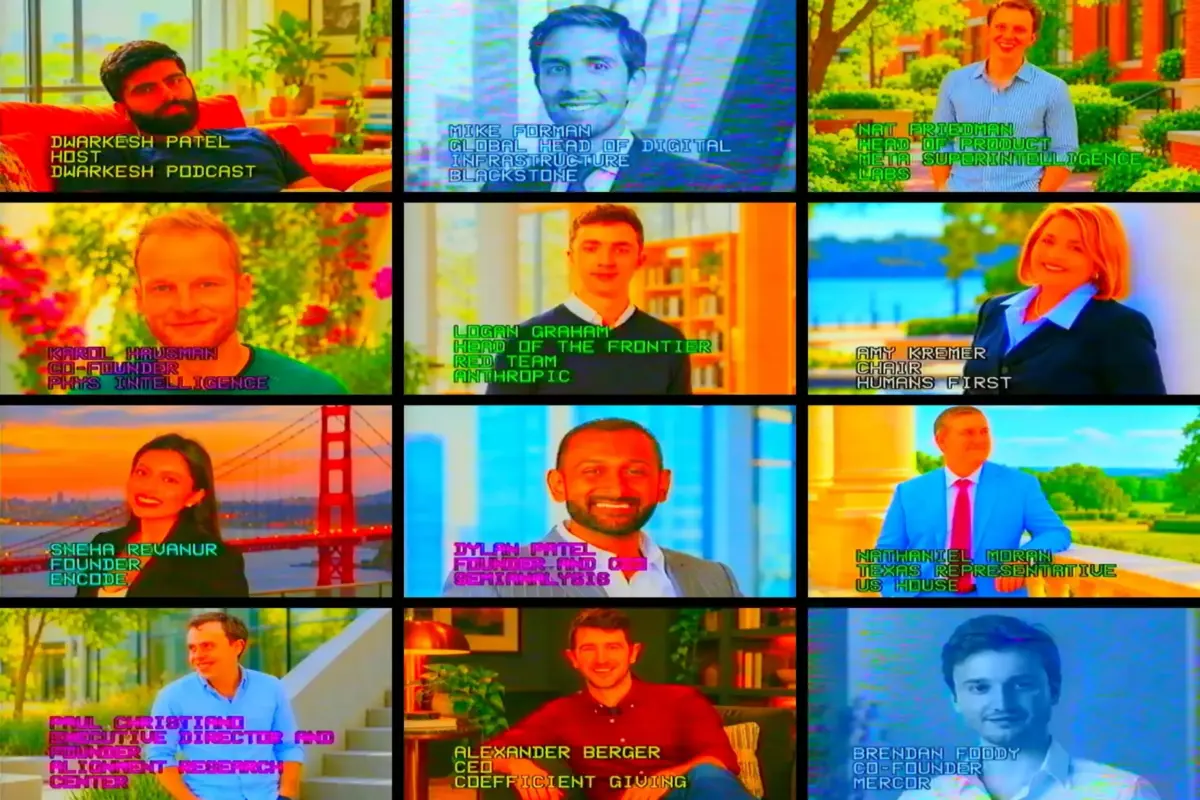
For its flagship "Power" issue, New York Magazine trained its lens on this subterranean power dynamic, commissioning Berlin-based conceptual artist Simon Denny to illustrate a feature titled "So Few People, So Much Influence." The piece profiles 26 artificial intelligence engineers, founders, and theoretical thinkers whose outsized impact on the technological ecosystem stands in inverse proportion to their public notoriety.
Collaborating with Transformer—a Substack newsletter dedicated to decoding the power structures and politics of AI—the feature brings into sharp focus figures such as Logan Graham of Anthropic, tasked with pushing frontier models to the brink of catastrophe to test vulnerabilities like cyberattacks and bioweapon synthesis; Beth Barnes, founder of Model Evaluation and Threat Research (METR), who stress-tests AI systems prior to public deployment; and Brandan Foddy of Mercor, whose work accelerates the integration of AI agents into the global labor market.
Read Also
To capture the surreal dissonance of these quiet architects holding levers of world-altering power, Denny deployed a brilliant aesthetic subversion. Utilizing artificial intelligence tools, he generated a series titled Technologists Portraits. Each image features a smiling technologist against a sterile, uncanny backdrop, rendered in the degraded, crackly, oversaturated palette of vintage VHS tapes. This nostalgic, distorted visual language serves as a poignant conceptual foil: the antiquated media format contrasts starkly with the hyper-modern, existential stakes of the work being performed.
This comprehensive report examines the intersection of Denny’s artistic critique, the hidden power structures detailed in New York Magazine, the mechanics of elite AI engineering, and the broader implications of myth-making in the contemporary technological epoch.
Detailed Chronology: The Anatomy of an Artistic and Editorial Collaboration
The genesis of New York Magazine’s "Power" issue feature and Simon Denny’s accompanying artwork can be traced through a meticulous timeline of creative research, editorial positioning, and technological interrogation.
The Background of Simon Denny
Simon Denny has spent over a decade establishing himself as one of the contemporary art world’s premier cartographers of technological capitalism. His work consistently maps the socio-political infrastructures underpinning digital disruption.
- 2015: Denny represented New Zealand at the 56th Venice Biennale with his critically acclaimed exhibition "Secret Power." Transforming physical internet servers into archival vitrines, Denny displayed leaked documents and visual ephemera concerning the National Security Agency (NSA) and the Five Eyes intelligence alliance, exposing the physical hardware and aesthetic branding of global surveillance.
- April 2024: Writing for Artforum, Denny published a critical essay dissecting the shifting aesthetics of defense technology, investigating how military-industrial applications frame their public image.
- October 2024: In another major feature for Artforum, Denny turned his analytical gaze toward Polymarket and the philosophical underpinnings of decentralized prediction markets.
- 2025: Denny contributed Output 0971—part of his ongoing "Machine Painting" series—to the group exhibition "Sentient Earth" at Amant, continuing his exploration of how machine learning systems fabricate culture and perception.
The Commission: Mapping the Shadows of Silicon Valley
When New York Magazine conceived its "Power" issue, editors recognized that traditional profiles of tech titans would fail to capture where actual momentum resides in the current paradigm. They partnered with Transformer to identify the 26 most influential yet obscure figures in the artificial intelligence space.
To visualize this invisible cohort, the magazine turned to Denny, whose conceptual rigor matched the complexity of the subject matter. Denny proposed a series that would not merely illustrate the subjects’ faces, but actively comment on the medium of their creation. The result was the Technologists Portraits series.
The Production of Technologists Portraits
Rather than employing traditional photography or clean digital illustration, Denny relied on AI image-generation tools to synthesize portraits of the 26 technologists. However, he specifically instructed the generative models to emulate the degraded aesthetics of late-20th-century magnetic tape.
The final compositions deliberately evoke worn-out VHS cassettes: tracking lines tear across smiling faces, colors bleed outside their borders, and lighting possesses the fuzzy, blown-out quality of home video archives recorded decades prior. By filtering cutting-edge AI engineers through a simulated, obsolete medium, Denny created an evocative historical loop. The tools building the future are rendered in the artifacts of a discarded past, signaling the rapid obsolescence and unpredictable mutations of the current technological revolution.
Supporting Context & Metrics: The Invisible Vanguard
The subjects highlighted in New York Magazine’s feature represent a specialized vanguard operating across three critical vectors: frontier capability enhancement, rigorous safety evaluation, and economic displacement infrastructure. Understanding their roles requires examining the metrics and institutional mechanisms that grant them such profound influence.
1. Frontier Capability and Threat Simulation: Logan Graham (Anthropic)
Within labs like Anthropic, safety and capability research exist in a tense, symbiotic feedback loop. Researchers like Logan Graham are tasked with pushing state-of-the-art large language models (LLMs) past their safety guardrails to evaluate worst-case scenarios.
- The Metric of Risk: As models scale in parameter size and reasoning capabilities, the threshold for autonomous hazard generation drops. Graham’s work involves red-teaming systems to determine whether they can independently strategize or execute complex cyberattacks on critical infrastructure or assist in synthesizing novel biological agents.
- The Power Dynamic: While executives lobby Washington, individuals like Graham define the empirical boundaries of what these systems can actually achieve when pushed to their malicious limits. Their findings directly inform national security policy and international AI safety treaties.
2. Pre-Deployment Auditing: Beth Barnes (METR)
As the founder of Model Evaluation and Threat Research (METR), Beth Barnes occupies one of the most critical checkpoints in the artificial intelligence ecosystem.
- The Mission: METR specializes in evaluating frontier AI models before they are released to the public or enterprise clients. The organization tests whether models possess dangerous autonomous capabilities—such as the ability to self-replicate, acquire resources independently, or deceive human operators during safety checks.
- The Bottleneck Effect: As commercial pressures incentivize tech giants to ship models with minimal friction, independent evaluation nonprofits like METR act as institutional speed bumps, holding immense leverage over release schedules and deployment strategies.
3. Labor Market Integration: Brandan Foddy (Mercor)
While safety researchers guard against existential threats, engineers like Brandan Foddy at Mercor focus on economic transformation.
- The Mechanism: Mercor trains and optimizes AI models to directly integrate into corporate workflows, effectively automating white-collar labor and accelerating the replacement of human jobs across diverse industries.
- The Economic Footprint: The influence of infrastructure builders like Foddy is measured by labor displacement velocity. By refining how models interact with specialized task environments, they dictate the speed at which global corporate structures restructure around automated workflows.
| Technologist | Organization | Primary Focus / Domain | Institutional Impact |
|---|---|---|---|
| Logan Graham | Anthropic | Frontier Risk & Threat Red-Teaming | Tests model vulnerabilities regarding cyberattacks and bioweapons. |
| Beth Barnes | METR | Pre-Deployment Model Evaluation | Audits autonomous capabilities and deceptive behaviors prior to release. |
| Brandan Foddy | Mercor | Labor Automation & Agent Training | Optimizes AI systems to absorb human workflows and enterprise jobs. |
Official Statements and Critical Perspectives
The collaboration between New York Magazine and Simon Denny has generated significant discourse within both the art world and the technology sector regarding the myth-making apparatus of Silicon Valley.
Simon Denny on the Aesthetics of Technological Paradigm Shifts
In interviews accompanying the release of the issue, Denny articulated the philosophical underpinnings of his artistic choices, emphasizing the necessity of tracking cultural and technological transformations simultaneously:
"With each major paradigm shift in the past 20 years," Denny explained, "I have tried to map and unpack some of this community’s stories as they narrate our experience of a changing technological world. The distortions of the final compositions are traces of the changes that are coming and the people bringing them about."
Denny’s commentary highlights a central anxiety of the contemporary moment: the feeling that technological velocity outstrips human comprehension. By embedding visual decay into portraits of forward-looking engineers, Denny materializes the systemic friction and uncertainty inherent in generative technology.
Navigating Myth and Reality in Machine Learning
Expanding on these themes in a recent interview with ARTnews regarding his installation at Amant, Denny interrogated the foundational narratives propagated by the tech industry itself:
"I’m interested in the stories that are woven by the people making the technology that we end up using. It’s hard to parse what’s mythology and what’s truth when we’re confronting machine learning; it’s really unfamiliar even to those actors who are building it. This is why myth making is so important in the tech space. How does all of this become familiar and normalized?"
This observation strikes at the heart of AI’s cultural power. The narrative surrounding artificial intelligence is frequently dominated by apocalyptic or utopian hyperbole—much of it generated by the very organizations building the tools. By humanizing and simultaneously distorting the profiles of the lesser-known engineers through historical analog aesthetics, Denny and New York Magazine puncture this corporate mythology, reminding observers that complex human choices, labor practices, and institutional pressures—not autonomous magical forces—drive the machine.
Future Outlook: The Convergence of Art, Governance, and AI Infrastructure
As artificial intelligence continues to reshape global economics, geopolitics, and daily life, the tension between hyper-visible executives and invisible engineers will only intensify. Several critical trajectories define the road ahead:
1. The Institutionalization of Independent Oversight
Organizations like METR and individual researchers within frontier labs are transitioning from informal advisory roles to legally mandated checkpoints. As governments worldwide move to formalize AI safety regulations—such as the European Union’s Artificial Intelligence Act and emerging US federal frameworks—the empirical work conducted by safety researchers will become codified into law. Their quiet technical assessments will increasingly determine corporate compliance and market access.
2. The Evolution of Critical Tech Art
Simon Denny’s work points toward a necessary evolution in contemporary political art. As technology companies increasingly co-opt aesthetic innovation for branding and marketing purposes, critical artists must find ways to subvert the native tools of the digital economy. By weaponizing generative AI to produce vintage, decaying artifacts, Denny demonstrates how artists can critique technological accelerationism from within its own computational logic.
3. Demystifying the Black Box
Ultimately, the collective project undertaken by New York Magazine, Transformer, and Simon Denny serves as a vital democratic intervention. By dragging the 26 most influential yet obscure figures of the AI landscape into the light—while framing them through a lens of fragile, degraded memory—the feature challenges the public to look past corporate hype cycles.
The future of artificial intelligence will not be decided solely by visionary keynotes or trillion-dollar market valuations. It will be forged in the quiet laboratories, evaluation frameworks, and ethical compromises navigated by the invisible architects of code. Understanding their work, and the mythologies surrounding it, remains the single most important task for contemporary journalism, art, and governance.




Comments
Facebook App ID not configured. Please add it in the Customizer.