
Executive Overview
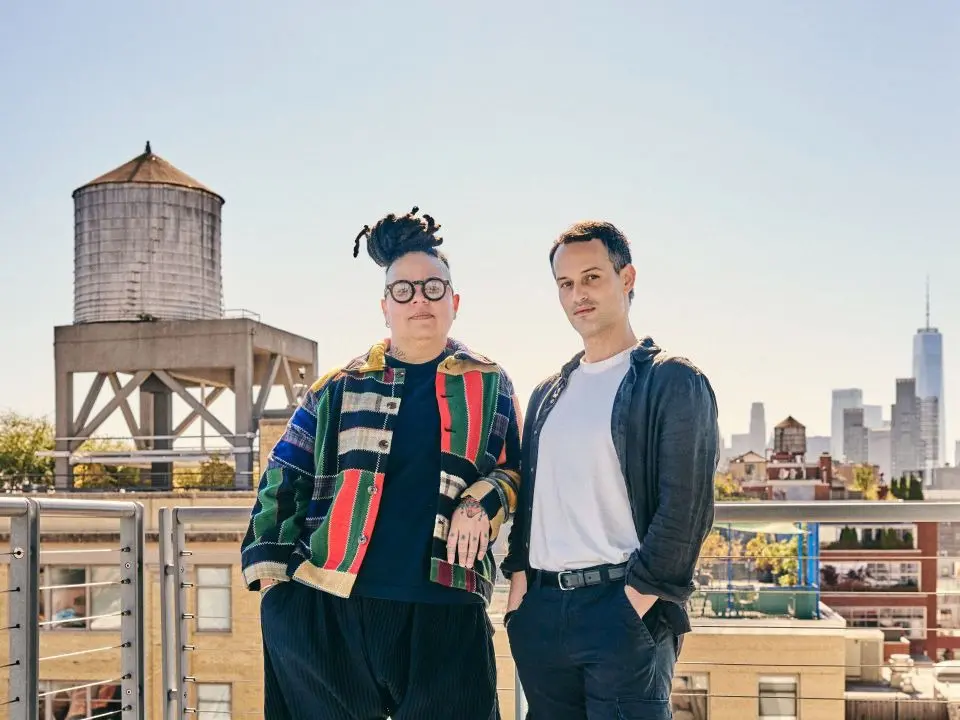
In a major announcement for the contemporary art world, the Whitney Museum of American Art has officially named its curatorial duo for the 83rd edition of its flagship exhibition: Whitney curator Meg Onli and director Zack Winokur. Scheduled to open in March 2028, this upcoming iteration of the nation’s premier—and historically most polarizing—survey of American art arrives with monumental expectations. The appointment signals a deliberate crossing of institutional boundaries, pairing Onli’s razor-sharp, texturally rich contemporary art historiography with Winokur’s cross-disciplinary, boundary-shattering background in opera, theater, dance, and site-specific performance.
The announcement comes on the heels of a massive attendance milestone for the 2026 Biennial, which closed its doors less than a month ago after drawing more than 550,000 visitors. As the contemporary art landscape continues to navigate post-pandemic cultural transformations, shifting attention economies, and an increasingly digitized visual sphere, the choice of Onli and Winokur points toward an exhibition that will likely refuse to stay safely within the traditional confines of painting, sculpture, and photography.
For Onli, this marks her second time helming the Whitney Biennial, having co-curated the critically scrutinized 2024 edition, Even Better Than the Real Thing, alongside Chrissie Iles. For Winokur, a luminary of experimental opera and multidisciplinary staging, the appointment introduces an unexpected and electric theatricality to the museum’s curatorial lineage. Together, this pairing represents a calculated bet by Whitney Director Scott Rothkopf on a "distinct curatorial alchemy"—one designed to bridge the physical, the performative, and the conceptual in ways that could redefine how American art is conceptualized, displayed, and experienced.
Read Also
Detailed Chronology and Professional Trajectories
Meg Onli: Institutional Grounding and Critical Rigor
Meg Onli’s ascent within the upper echelons of American curation is characterized by a relentless interrogation of historical archives, racial politics, and the digital mediation of contemporary life. Onli joined the Whitney Museum in 2023 as a curator-at-large, a strategic hire that signaled the institution’s desire to incorporate sharper, more conceptually adventurous voices into its programmatic core. By 2024, her contributions were formally recognized with her appointment as the Nancy and Fred Poses Curator.
Before her tenure at the Whitney, Onli cultivated a reputation as one of the most intellectually rigorous curators of her generation. Her institutional footprint includes serving as co-director and curator of the Underground Museum in Los Angeles—a vital, community-rooted cultural anchor—and holding the position of associate curator at the Institute of Contemporary Art (ICA) in Philadelphia. At the ICA, she organized groundbreaking exhibitions such as Speech/Acts (2017), which examined black experimental poetry and performance, and Trevor Shimizu: Four Seasons (2019).
Her curatorial style reached a wider national audience with the 2024 Whitney Biennial, Even Better Than the Real Thing, which she co-curated with Chrissie Iles. That exhibition grappled with bodily autonomy, artificial intelligence, and the unstable nature of reality in an era of technological hyper-saturation.
Demonstrating her versatility across historical and contemporary frameworks, Onli recently teamed up with artist Alex Da Corte to co-curate the Whitney’s major retrospective for Pop art master Roy Lichtenstein, which opened in late 2025. In a review for ARTnews, deputy editor Alex Greenberger praised the exhibition as a "stylish show" that successfully argued that Lichtenstein "saw our pictures-obsessed moment coming […] and even deliberately fed into it." This curatorial synergy with Da Corte—known for his immersive, psychologically complex, and hyper-chromatic environments—serves as a compelling foreshadowing of the theatricality Onli may bring to the 2028 Biennial alongside Winokur.
Zack Winokur: The Interdisciplinary Visionary
If Onli provides the historical grounding and conceptual architecture, Zack Winokur introduces an explosive, kinetic energy rooted in the performing arts. Winokur is perhaps best known as the co-founder of AMOC (American Modern Opera Company), a collective of dancers, singers, and instrumentalists dedicated to forging new models for collaborative performance. Under his leadership, AMOC has continually pushed the limits of traditional high art, including a massive, critically acclaimed five-week festival at Lincoln Center featuring 12 new productions.
Winokur’s directorial CV reads as a masterclass in cross-disciplinary innovation. He has staged productions such as Complications in Sue and The Black Clown at Opera Philadelphia, as well as Both Ends, a high-profile fashion-art hybrid starring performance icon Justin Vivian Bond, created to celebrate a major partnership between A24 and Dior. Furthermore, his collaborative streak extends deep into the visual arts sphere; he partnered with artists Hugh Hayden and Davóne Tines to construct an immersive installation for the Cooper Hewitt Smithsonian Design Triennial.
Crucially, Winokur possesses a direct institutional tie to the very ecosystem of the Whitney Biennial. He is the former artistic director of Little Island, the undulating, pier-based public park and performance venue in the Hudson River that served as an off-site partner venue for the 2026 Whitney Biennial. During that iteration, Little Island played host to ambitious, large-scale commissions, including Marina, a collaborative performance staged by filmmaker Julio Torres and artist Martine Gutierrez.
Winokur’s deep fluency in site-specific public art, theatrical staging, and live performance positions him to dissolve the rigid boundaries that traditionally separate the "white cube" gallery space from living, breathing theatrical and sonic experiences.
Supporting Context & Metrics: The Biennial Ecosystem
To understand the weight of Onli and Winokur’s appointment, one must examine the unique economic, social, and cultural ecosystem of the Whitney Biennial itself. Established in 1932 by museum founder Gertrude Vanderbilt Whitney, the Biennial is the longest-running survey of American art in the United States. Over nearly a century, it has functioned as a weather vane for the nation’s cultural anxieties, aesthetic shifts, and political flashpoints.
The Numbers Behind the Spectacle
- Attendance: The 2026 Biennial, curated by Marcela Guerrero and Drew Sawyer, closed its doors having welcomed more than 550,000 visitors, proving that despite ongoing debates about the relevance of large-scale survey exhibitions, public appetite for physical art engagement remains remarkably robust.
- Timeline: With the 83rd edition slated for March 2028, Onli and Winokur have a runway of less than a year and a half before studio visits, international research trips, and architectural planning must coalesce into a cohesive checklist.
- Historical Precedent: While co-curatorial teams have become increasingly common at the Whitney to distribute the immense emotional and logistical labor of the exhibition, pairings that bridge the visual arts curatorial elite with a heavy-hitting performing arts director are exceptionally rare.
The Legacy of Polarization
The Whitney Biennial has earned a dual reputation as both a career-making platform for emerging artists and a lightning rod for intense critical debate. Because it attempts to capture the sprawling, fractured totality of "American art" in a single moment, it is structurally impossible for the exhibition to satisfy everyone. Past editions have sparked fierce debates over identity politics, institutional ethics, sponsorship controversies, and generational divides.
By appointing a duo known for challenging orthodoxies—Onli through her sharp excavation of race, history, and digital culture, and Winokur through his seamless blending of opera, dance, and visual installation—the Whitney is leaning directly into this contentious legacy. Rather than opting for a safe, middle-of-the-road survey, the museum has commissioned a curatorial collision designed to provoke, question, and expand the vocabulary of contemporary culture.
Official Statements and Institutional Vision
The appointment has drawn enthusiastic commentary from leadership across the museum, signaling a unified institutional belief in the duo’s radical potential.
Whitney Director Scott Rothkopf spoke directly to the unique dynamic of the pairing, emphasizing their ability to transcend traditional disciplinary silos:
"Meg is one of the most compelling curatorial voices working today, with an extraordinary ability to champion artists and bring fresh perspectives to the history of American art. Zack is an equally inventive artistic programmer who has become one of the leading voices of his generation through groundbreaking work across opera, theater, dance, and the visual arts. Their partnership promises a radical new vision for the 2028 Biennial."
Meg Onli reflected on the institutional lineage she is re-entering, acknowledging both the history of the museum and the collaborative energy she shares with her co-curator:
"I’m thrilled to be returning to the Whitney Biennial. From the Whitney’s early Annuals to its many subsequent iterations, the Biennial has a rich history of reinvention that is already giving us much to think about. I couldn’t be more excited to explore what the Biennial can be alongside Zack, who is such a dynamic thinker, and to see where our conversations with artists lead."
Zack Winokur emphasized his foundational philosophy of placing himself in service to creative practitioners, noting that his artistic partnership with Onli mirrors the core objective of the Biennial itself: bringing people, objects, and spatial dynamics into transformative collisions:
"Our shared desire to center objects and people and the collision between them already echoes our collaboration. It’s that energy that makes the dialogue with her so fun and inspiring. As an artist, what excites me most is being in service to other artists, and I’m delighted to have the opportunity to do so in the context of the Whitney."
Future Outlook: What to Expect in March 2028
As the art world looks ahead to the spring of 2028, speculation is already swirling regarding how Onli and Winokur will utilize the Whitney’s Renzo Piano-designed building in the Meatpacking District—and potentially spaces beyond its walls.
- The Dissolution of Disciplinary Boundaries: Given Winokur’s deep roots in live performance and opera, alongside Onli’s history of integrating text, video, and sculptural environments, the 2028 Biennial is poised to feature a heavy integration of time-based media, live score, and choreographed spatial movement. Visitors may find that static paintings and sculptures are placed in direct, unpredictable dialogue with live performance and sonic interventions.
- A Reimagining of Public and Off-Site Space: Following the successful integration of Little Island as an off-site venue for the 2026 edition, Winokur’s extensive experience in site-specific outdoor programming suggests that the 2028 Biennial might stretch far beyond the physical galleries of the Whitney, spilling out into the Hudson River parklands, architectural landmarks, and urban infrastructure of New York City.
- Rigorous Conceptual Framing: Onli’s scholarly weight ensures that despite the potential for high-octane theatricality, the exhibition will remain intellectually grounded. Her track record demonstrates a profound commitment to interrogating the socio-political structures that govern how art is made, seen, and valued.
Ultimately, the pairing of Meg Onli and Zack Winokur for the 2028 Whitney Biennial is a testament to an art world increasingly impatient with categorical divisions. By fusing the critical rigor of museum curation with the kinetic immediacy of theatrical staging, the Whitney Museum has set the stage for an edition that will demand not just passive viewing, but active, embodied participation. When the doors open in March 2028, the art world will once again turn its gaze toward the Meatpacking District to witness the architecture of tomorrow’s avant-garde.

Comments
Facebook App ID not configured. Please add it in the Customizer.