
Executive Overview
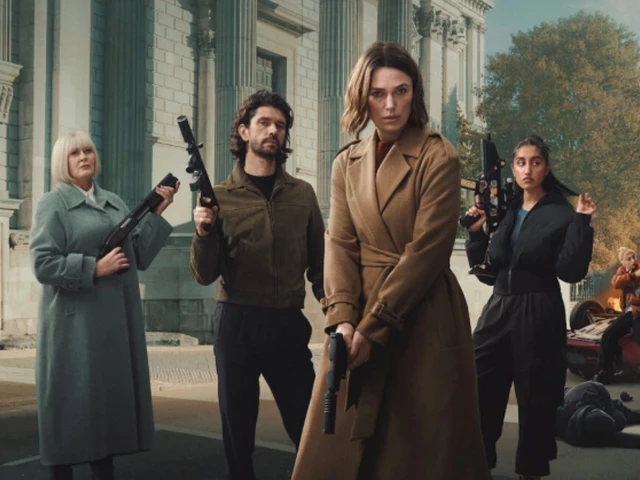
In the high-stakes, hyper-stylized universe of international espionage, the line separating the hero from the antagonist has always been razor-thin. Yet, few contemporary television series embrace this ethical ambiguity with the same ferocious, blood-soaked wit as Netflix’s hit spy thriller Black Doves. As the critically acclaimed series returns for its eagerly anticipated second season, lead star Keira Knightley, alongside co-star Ben Whishaw and creator Joe Barton, are pulling back the curtain on a world where nobody is innocent, morality is a luxury few can afford, and high-octane survival invariably trumps the rule of law.
Premiering on Netflix on Thursday, the six-part second season arrives with substantial expectations. The first installment won critical praise for its unorthodox collision of domestic melodrama, high-concept political conspiracy, and dark, deadpan humor. Speaking at the show’s high-profile London launch event, Knightley articulated the core philosophy that continues to drive the narrative: a deliberate, calculated balancing act between outrageous, popcorn-munching entertainment and deeply rooted moral complexity.
This comprehensive report examines the anatomy of Black Doves Season 2. We explore the narrative evolution of Helen Webb and her beleaguered co-conspirators, unpack the creative philosophy of writer Joe Barton, analyze the industry-wide push for regional representation championed by cast members like Gabrielle Creevy, and capture Ben Whishaw’s candid reflections on the future of the classic British spy genre, including his legacy within the James Bond franchise.
Read Also
Detailed Chronology & Narrative Arc of Season 2
From Domestic Politics to Deadly Conspiracies
To understand the escalating stakes of Black Doves Season 2, one must trace the dizzying trajectory of its protagonist, Helen Webb, brilliantly brought to life by two-time Academy Award nominee Keira Knightley. In the crucible of the first season, audiences watched in breathless suspense as Helen masterfully juggled two diametrically opposed existences: on the surface, she was the unassuming, dutiful wife of a rising British politician; beneath the glossy facade, she operated as a highly lethal, calculating operative for a shadowy intelligence organization known only as the "Black Doves."
As the second season opens, the stakes have escalated exponentially. With Helen’s husband ascending to the ultimate political office—Prime Minister of the United Kingdom—her double life has become an unprecedented minefield. The proximity to absolute political power means that a single misstep, a solitary intercepted communication, or a moment of domestic vulnerability could trigger a cataclysmic national security crisis.
The inciting incident of the six-part sophomore run arrives in the form of a meticulously orchestrated conspiracy targeting Mrs. Reed, Helen’s enigmatic handler. The assassination attempt pulls Helen violently back into the field, forcing her to lean once more on her long-suffering, emotionally fractured ally, Sam Young, played with weary brilliance by Ben Whishaw.
A Descent into Psychological Turmoil
While the first season established the dynamic chemistry between Knightley and Whishaw, Season 2 pushes both actors—and their respective characters—to breaking point. According to the cast, the new episodes trade comfortable spycraft tropes for an atmosphere of unrelenting, white-knuckle stress.
Helen Webb is no longer just playing a game of geopolitical chess; she is fighting a desperate war of attrition. Stripped of the illusions of safety that money and political influence afford, Helen is depicted as a woman willing to cross any moral threshold, endure any torture, and eliminate any obstacle to protect herself and the fragile remnants of her family life.
Conversely, Sam Young’s journey takes a decidedly psychological toll. Whishaw characterizes his character’s state in the new season as a "slightly nervous breakdown." Having weathered years of trauma, violence, and emotional suppression, Sam’s armor begins to crack under the relentless pressure of the Black Doves network’s internal purges and external threats. The result is a volatile, unpredictable performance that anchors the show’s more outlandish action sequences in raw, human vulnerability.
Enter the Assassin: Ambika Mod’s Genre-Busting Addition
Further complicating the narrative landscape of Season 2 is the introduction of a major new character played by breakout star Ambika Mod (This Is Going to Hurt). Mod portrays a pragmatic, ice-cold assassin assigned to assist Helen Webb through a particularly perilous stretch of the operation.
Mod revealed during the London press launch that she had initially approached the role with a degree of hesitation, admitting that traditional espionage narratives had rarely captured her professional interest. However, it was creator Joe Barton’s subversive subversion of genre tropes—refusing to rely on tired clichés while injecting unexpected emotional depth into the characters—that ultimately convinced her to sign on. The dynamic between Knightley’s seasoned, politically entangled operative and Mod’s clinical, younger killer provides some of the season’s sharpest dialogue and most tension-fueled confrontations.
Creator’s Vision: Why Audiences Love Psychopaths
The Philosophy of Joe Barton
At the heart of Black Doves’ critical and commercial success is the singular creative voice of writer and showrunner Joe Barton. Known for his work on critically acclaimed thrillers such as Giri/Haji and The Lazarus Project, Barton has cultivated a distinct authorial signature: an uncanny ability to merge gritty, grounded crime drama with surreal, pitch-black comedy.
Speaking on the moral vacuum that defines the world of Black Doves, Barton made no apologies for the deplorable nature of his protagonists. During the London launch, he offered a candid assessment of the characters populating his fictional universe, noting that conventional heroism has been entirely discarded in favor of compelling, albeit profoundly damaged, human specimens.
"You like them enough that you want them to succeed, even though technically they are all mass murderers, psychopaths," Barton remarked with characteristic dry humor. "They should all be in jail, basically."
This calculated paradox is precisely what elevates Black Doves above standard streaming fare. By granting audiences deep emotional access to characters who routinely engage in extrajudicial executions, blackmail, and treason, Barton forces viewers into a state of delightful moral complicity. We root for Helen and Sam not because they are righteous, but because their survival instincts, quick wits, and undeniable charm make them irresistible focal points in a chaotic world.
Supporting Context & Cultural Metrics
Balancing Entertainment and Moral Complexity
The genius of Black Doves, as articulated repeatedly by its principal cast, lies in its tonal elasticity. In an era where prestige television often risks collapsing under the weight of its own solemnity, Black Doves consciously embraces the absurdity inherent in the spy genre.
Keira Knightley emphasized this delicate equilibrium during her press engagements:
"It’s meant to be fun, it’s meant to be ridiculous, but it equally has these really interesting characters who are morally very complicated. I think the whole joy of the series is that both of those things exist at the same time."
This dual-track approach allows the production design, action choreography, and narrative pacing to swing wildly from high-stakes geopolitical drama to biting situational comedy within the span of a single scene. It is a tonal tightrope walk that requires immense discipline from the cast and crew, ensuring that the outrageous entertainment value never undermines the dramatic weight of the characters’ internal struggles.
Redefining Representation: The Power of Regional Voices
Beyond its explosive plotlines and stylistic bravura, the London launch of Black Doves also served as a platform for discussions regarding diversity and regional representation within mainstream British television.
Welsh actor Gabrielle Creevy, a key member of the ensemble, used the global spotlight to highlight the cultural significance of hearing authentic regional accents on major global streaming platforms like Netflix. For Creevy, the inclusion of non-standard English dialects is not merely a cosmetic casting choice, but a vital milestone for younger generations of viewers.
"I have nephews and a niece and a daughter, and I’m so excited for them that they get to hear that accent on a streamer like Netflix," Creevy noted passionately.
Her comments reflect a broader, ongoing transformation within the British entertainment industry, where streaming giants are increasingly recognizing that global audiences crave authenticity and specificity over homogenized, RP (Received Pronunciation) English accents. By anchoring international spy thrillers in localized cultural realities, Black Doves bridges the gap between high-concept global entertainment and grounded British identity.
Official Statements & Industry Insights
The Legacy of James Bond and the Future of the Spy Genre
Given the presence of Ben Whishaw—who famously portrayed the gadget mastermind Q across multiple installments of the legendary James Bond franchise (Skyfall, Spectre, No Time to Die)—conversation during the press launch inevitably drifted toward the enduring legacy and future of cinematic espionage.
With the James Bond franchise currently navigating a transitional phase under new creative leadership, Whishaw was asked for his perspective on how the iconic British secret agent should evolve for contemporary audiences. His response was both candid and forward-thinking, urging incoming producers to discard safety in favor of radical reinvention.
"I think you have to reinvent it, basically," Whishaw asserted, encouraging the new creative team to be "really bold and free" in their approach to the material.
Whishaw emphasized that repeating historical formulas will no longer suffice in a media landscape saturated with subversive, deconstructionist thrillers like Black Doves. To remain relevant to modern viewers, the legendary spy franchise must be willing to dismantle its own mythos. Furthermore, when questioned about his own potential involvement in future Bond iterations, Whishaw confirmed that no one from the studio had approached him about reprising his role as Q—suggesting a clean slate for the franchise’s next cinematic chapter.
Future Outlook: What Lies Ahead for the Black Doves Universe?
As the six-part second season of Black Doves streams to global audiences on Netflix, the immediate reception suggests that the series has successfully solidified its status as a cornerstone of British prestige television.
The strategic decision to escalate Helen Webb’s political exposure while simultaneously fracturing her psychological equilibrium has paid massive dividends, offering richer material for Keira Knightley and Ben Whishaw to sink their teeth into. Meanwhile, the addition of fresh talent like Ambika Mod ensures that the dynamic interplay between veteran operatives and fresh recruits remains vital and unpredictable.
Looking forward, the success of Black Doves points toward a broader evolution in the spy thriller genre. Audiences are increasingly fatigued by squeaky-clean protagonists fighting faceless geopolitical threats. Instead, the appetite of the streaming public clearly favors morally bankrupt antiheroes operating in a morally grey universe where humor, high-octane violence, and profound emotional trauma coexist in uneasy harmony.
Whether Netflix will greenlight a third season remains to be formally confirmed, but given the unresolved narrative threads of the Season 2 finale and the immense star power driving the project, it is abundantly clear that the shadows of the Black Doves network will continue to loom large over the international television landscape for years to come. In a world where nobody is innocent, the thrill of the hunt has never been more seductive.



Comments
Facebook App ID not configured. Please add it in the Customizer.