
Executive Overview
KARACHI — Day six of the monumental 25-day 3rd World Culture Festival Karachi 2026 transformed the metropolis into a beating heart of international artistic exchange. Organized by the Arts Council of Pakistan (ACP) Karachi, the festival’s sixth installment was widely lauded as a watershed moment for youth engagement, cross-cultural storytelling, and avant-garde performance art. While the preceding days established a high benchmark for global inclusivity, day six heavily tilted toward the imaginative empowerment of youth, dominated by visionary children’s theatre productions from Poland and Norway, while simultaneously offering sophisticated offerings in modern film, improvisational music workshops, bilingual theatre, and traditional Spanish dance.
The day’s itinerary underscored the festival’s core mandate: bridging global divides through localized and universal artistic expressions. Headlining the cultural showcase was Flamenco Blanco Flamenco, a mesmerizing Spanish dance production that brought the passionate, fiery grace of Andalusia to Karachi. Simultaneously, international troupes captivated younger demographics with bold, futuristic adaptations of classic fairy tales and interactive detective mysteries. As the festival crosses its first operational week, the sheer diversity of the programming—spanning Serbian musical pedagogy, Polish cinematic shorts, and bilingual urban satire—cements the Arts Council of Pakistan’s flagship event as one of the preeminent cultural gatherings in South Asia.
Detailed Chronology of Events: Day Six
The programming for day six unfolded across multiple venues within the Arts Council complex, offering an immersive slate of events that ran concurrently from morning workshops through late-night theatrical runs.
Read Also
Morning and Afternoon Sessions: Awakening Young Imaginations
The day’s narrative belonged indisputably to the youngest members of the audience, who were treated to world-class theatrical productions that refused to pander, opting instead for intellectual stimulation and high artistic production values.
The children’s programming commenced with a striking contemporary adaptation of Little Red Riding Hood, presented by Poland’s esteemed Miniatura City Theatre. Conceptualized, directed, and designed by the visionary Chile-born artist David Zawalla, the production completely subverted traditional expectations of the Brothers Grimm fairy tale. Instead of a pastoral forest, Zawalla set the narrative against a grim, futuristic backdrop. Utilizing advanced puppetry and striking minimalist set designs, the play reframed the classic tale to portray the struggle of the last surviving human girl on a devastated, post-apocalyptic Earth. The thematic weight—touching upon ecological collapse and resilience—offered young audiences a profound allegory about environmental stewardship, all delivered through deeply engaging visual storytelling.
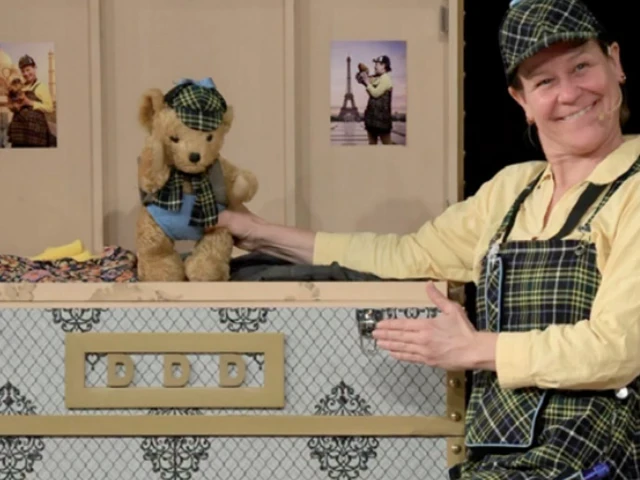
Following this cerebral Polish production, the energy shifted toward high-octane adventure with Norway’s Erler Teaterkompani. The Norwegian group presented Gangster Hunting with Daisy Detective, a deeply interactive piece that dissolved the fourth wall. The narrative followed the intrepid detective Daisy as she navigated a labyrinthine mystery to capture a cunning gangster. Eschewing passive viewing, the production invited children from the audience to actively participate in the investigation, examining clues, solving riddles, and shouting out directions. The interactive format generated a wave of infectious excitement in the auditorium, proving that theatre could serve as both a narrative medium and an active participatory sport for children.
Afternoon Enrichment: The Art of Jam and Improvisation
While children explored futuristic dystopias and detective mysteries, aspiring musicians and local artists gathered for a specialized masterclass. Serbian guitarist and renowned musician Aleksandar Lipovan conducted a technical workshop titled Jam and Improvisation.
Lipovan, celebrated for his fluid cross-genre dexterity, guided participants through the intricate mechanics of spontaneous musical composition. The workshop explored modal jazz, Mediterranean folk motifs, and contemporary rock improvisation. By breaking down the barriers between theoretical musicology and practical execution, Lipovan provided Karachi’s local musicians with invaluable tools to foster cross-cultural sonic collaborations, reinforcing the festival’s mission as an incubator for artistic innovation.
Cinematic Interludes: Polish Featurette Showcase
The festival’s film screening segment offered a curated window into contemporary European cinema. Under the banner of the Polish Featurette showcase, audiences were treated to four distinct short films that explored themes of identity, imagination, and urban alienation:
- Blue Bird: A poignant reflection on freedom and longing.
- Momo & Lulu: An exploration of whimsical childhood companionship.
- Dream Up the Title: A meta-narrative examining the creative process itself.
- The Town That Drove Away: A surrealist fable about community and displacement.
The curation of these short films provided a thoughtful counterbalance to the high-energy theatrical performances, giving cinephiles a chance to digest European cinematic storytelling within an intimate screening environment.
Evening Productions: Bilingual Satire and Andalusian Fire
As dusk settled over Karachi, the festival transitioned into mature, emotionally resonant evening programming.
At 7:00 PM, the spotlight turned to local contemporary theatre with the staging of English Only, an Urdu-English bilingual production directed by Awab Bin Farhat. Set within the pressure-cooker environment of an English-language acquisition center in Karachi, the play focused on four distinct students whose paths cross exclusively through their shared, desperate ambition to master the English language as a socioeconomic ladder. Through razor-sharp dialogue, brilliant comedic timing, and poignant character studies, English Only explored the complex sociolinguistic anxieties, class struggles, and cultural identity crises inherent in modern Pakistani urban life. The production resonated deeply with the Karachi audience, who recognized the nuanced commentary on status, language, and self-worth.
The crowning jewel of the evening, however, arrived with Spain’s special dance presentation: Flamenco Blanco Flamenco, staged under the thematic subtitle The Grace of Movement. Bringing the soul of the Iberian Peninsula to Pakistan, the Spanish troupe delivered a masterclass in traditional Flamenco. The performance was an intoxicating synthesis of explosive footwork (zapateado), hyper-expressive hand and arm movements (braceo), and syncopated rhythmic clapping (palmas), underscored by the haunting strumming of classical Spanish guitars and soulful vocal lamentations.
The dancers, adorned in traditional attire that caught the stage lighting with every dramatic sweep, communicated a raw emotional depth that transcended linguistic barriers. From moments of melancholic introspection (cante jondo) to explosions of unbridled celebratory energy, the performance captured the fiery spirit of Spanish culture. The auditorium erupted into sustained, enthusiastic applause, with spectators rising to their feet to honor the troupe’s breathtaking physical stamina and emotional intensity.
Supporting Context & Metrics
To fully comprehend the magnitude of Day Six, one must contextualize it within the broader framework of the 3rd World Culture Festival Karachi 2026.
| Metric Category | Festival Data Point (Day Six Snapshot) |
|---|---|
| Total Festival Duration | 25 Days |
| Participating Nations | Over 40 Countries |
| Daily Event Footprint | Theatre, Music, Film, Dance, Workshops |
| Primary Organizer | Arts Council of Pakistan (ACP) Karachi |
| Key International Troupes (Day 6) | Miniatura City Theatre (Poland), Erler Teaterkompani (Norway), Spanish Flamenco Delegation |
The festival continues to operate on an unprecedented scale. By drawing troupes from Eastern Europe, Scandinavia, Western Europe, and South Asia, the Arts Council has successfully positioned Karachi as a premier global cultural hub. The financial and logistical mobilization required to execute simultaneous children’s theatre productions, international film showcases, and high-production dance acts speaks to the institutional maturity of the ACP under the leadership of its president, Muhammad Ahmed Shah.
Furthermore, the integration of educational workshops like Aleksandar Lipovan’s guitar clinic ensures that the festival leaves a lasting developmental footprint on Pakistan’s domestic arts sector. It is not merely a showcase of imported talent, but a collaborative ecosystem designed to elevate local practitioners through direct exposure to international masters.
Official Statements and Cultural Commentary
Speaking on the overarching vision of the festival and the specific triumphs of day six, organizers and visiting artists emphasized the unifying power of the arts in an increasingly fragmented global landscape.
Arts Council of Pakistan President Muhammad Ahmed Shah remarked during a press briefing:
"What we are witnessing here in Karachi is nothing short of a cultural renaissance. When we look at the children’s theatre today—Polish artists interpreting ecological futures through puppets, Norwegian artists inviting our children to solve crimes on stage—and contrast it with the fiery passion of Spanish Flamenco or the incisive local critique of our own linguistic struggles in ‘English Only’, we see the exact purpose of this festival. Art does not merely entertain; it heals, it educates, and it unites. Karachi has once again proven that it is a city of peace, literature, art, and boundless love for global cultures."
David Zawalla, the Chile-born director and designer behind Poland’s Little Red Riding Hood, shared his impressions of performing in Pakistan:
"Adapting a classic fairy tale into a futuristic narrative about the last human on earth is a heavy task, but the reception from the children and families in Karachi was overwhelmingly intuitive. Art transcends language. Even when children here didn’t speak Polish or Spanish, the visual language of puppetry and spatial design spoke directly to their imaginations. The warmth and hospitality of this city are something our troupe will cherish forever."
Aleksandar Lipovan, reflecting on his Jam and Improvisation workshop, noted the profound musical synergy he encountered among local Pakistani instrumentalists:
"Music is the purest form of dialogue. During our workshop, the fusion of traditional South Asian rhythmic sensibilities with European modal improvisation happened organically. The talent in this room is world-class; these musicians possess an innate understanding of groove and spiritual depth that made collaboration effortless and deeply rewarding."
Future Outlook: Sustaining the Momentum
As the 3rd World Culture Festival Karachi 2026 marches past its first operational week, the bar has been set remarkably high for the remaining nineteen days. The seamless integration of children’s pedagogy, high-concept European theatre, cutting-edge cinematic showcases, and heritage dance forms demonstrates an organizational agility that is rare on the global festival circuit.
Looking ahead, the festival organizers have promised an even more eclectic lineup, featuring upcoming performances from African musical collectives, Asian contemporary dance ensembles, and panel discussions focusing on the preservation of indigenous theatrical traditions in the digital age.
Day six will be remembered as the day children’s imaginations were stretched to the stars through Polish and Norwegian theatre, local socio-cultural realities were laid bare through sharp bilingual satire, and the fiery soul of Spain bridged continents through the stamping feet and soaring guitars of Flamenco. As Karachi continues to host the world, the 3rd World Culture Festival 2026 is rapidly cementing its legacy as a historic milestone in international cultural diplomacy.



Comments
Facebook App ID not configured. Please add it in the Customizer.