
Executive Overview
Speculative fiction has long served as a vital cultural mirror, utilizing metaphor, myth, and fantastical world-building to examine the complex parameters of the human condition. Within this vast literary and cinematic landscape, few character arcs match the psychological depth and thematic resonance found in Robert Jordan’s epic fantasy masterwork, The Wheel of Time, and the enduring sci-fi legacy of Marvel’s X-Men.
A fascinating intersection emerges when comparing two of modern fiction’s most prominent, reluctant warriors: Perrin Aybara, the gentle blacksmith turned Wolfbrother, and Logan/Wolverine, the feral mutant whose skeleton was laced with indestructible adamantium. While stemming from distinct narrative traditions—epic high fantasy and serialized superhero media, respectively—both figures navigate the exact same thematic journey. They wrestle with internal savagery, the burden of inherited duty, external prejudices that reduce complex beings to simplistic tools, and the ultimate struggle to define oneself beyond a singular, violent identity.
This analytical review explores the profound parallels between these two icons. By examining recent narrative developments in media adaptations such as X-Men ’97 alongside the sweeping structural arcs of The Wheel of Time (specifically tracking toward the narrative events of Towers of Midnight), we uncover how both characters challenge the false binary of human versus animal, ultimately proving that complex beings cannot be reduced to a single defining trait.
Read Also
Detailed Chronology: Tracing the Parallel Trajectories of Logan and Perrin
The Weapon and the Beast: Logan’s Trajectory in X-Men ’97
To understand the modern resonance of Logan’s psychological struggle, one must examine his arc in Marvel’s critically acclaimed animated continuation, X-Men ’97. Throughout his centuries-long existence, Logan has functioned primarily as a soldier, an operative, and a weapon. Renowned as the "best at what he does"—with that specialty being lethal combat—Wolverine has perpetually battled the internalized belief that he is nothing more than a beast shaped for slaughter.
In the first season of the series, Logan undergoes a profound physical trauma when Magneto strips the adamantium from his skeletal structure. Seeking to reclaim what he perceives as his true, hardened self, the fifth episode of the second season depicts Logan leading a team—including Morph, the non-binary shapeshifter harboring unreciprocated feelings for Logan—under false pretenses to a covert Weapon X facility.
The mission devolves into chaos as the facility is revealed to be overrun by hostile extraterrestrials, resulting in casualties and severe emotional distress for Morph, who discovers Logan’s deceit. Confronted by a bruised and furious Morph at the episode’s conclusion, Logan justifies his deception with a bleak worldview: "Not everyone can be like Morph. Not everyone can be more than one thing. Some people can only be one thing."
This moment encapsulates Wolverine’s core tragic flaw. Despite the persistent encouragement of his mutant family, who see him as a noble protector, a loyal friend, and a man capable of profound love, Logan clings defensively to his identity as a monster. He believes the metal enhancement makes him stronger because his entire sense of self is tethered to his capacity for violence.
The Hammer and the Axe: Perrin Aybara’s Evolution in The Wheel of Time
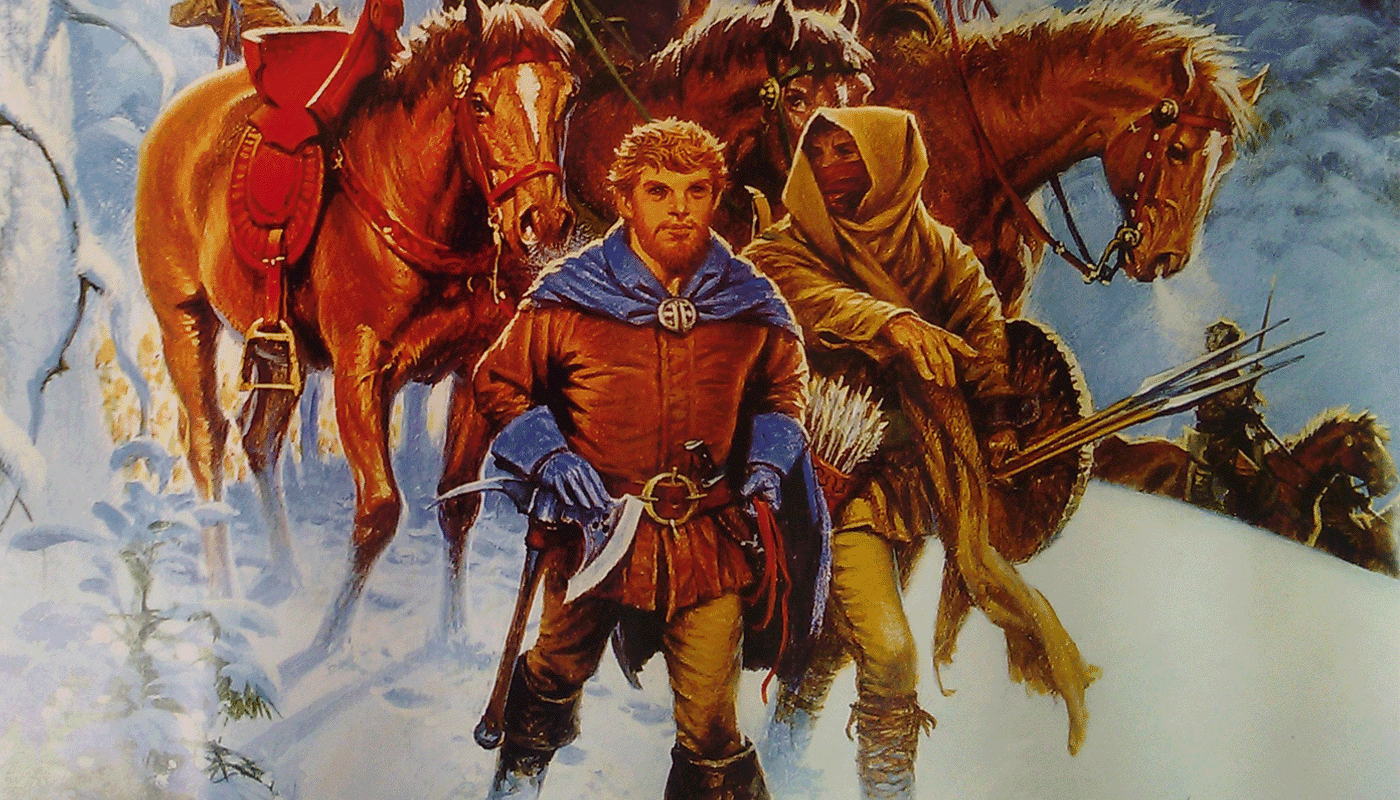
Perrin Aybara’s journey begins in stark contrast to Logan’s ancient, blood-soaked history. Introduced as a deliberate, cautious young man in the peaceful rural enclave of the Two Rivers, Perrin intentionally cultivated slow, measured movements to ensure his immense physical strength would never accidentally harm anyone. Yet, the tranquility of his early life shatters with the invasion of Trollocs, launching him into a sprawling, perilous conflict alongside the forces of the Shadow.
Perrin’s narrative is a protracted study in the cost of violence. From contemplating a mercy killing to spare Egwene from the Dark One’s avian agents, to yielding to a vengeful rage against Whitecloaks following the death of his mentor-wolf Hopper, Perrin continually questions his own nature. He internalizes his transformation into a Wolfbrother as the physical manifestation of his inner savagery, setting up a stark dichotomy: the wolf represents mindless violence and bloodlust, while the man—the blacksmith—represents peace, civilization, and creation.
This conflation is historically reinforced by human culture itself. Society routinely deploys animalistic metaphors ("savage," "beast") to dehumanize those who engage in violence, externalizing human cruelty onto the natural world. Yet, as characters like Hopper attempt to teach him, real wolves do not kill out of malice, greed, or political ambition; they hunt to feed the pack and defend their territory, untainted by the corrupting human desire for suffering.
Perrin’s most harrowing acts—such as his ruthless slaughter of Shaido at Malden or the dismemberment of a prisoner—are not driven by an animalistic instinct, but by a profoundly human, desperate love for Faile. When Perrin casts away his battle-axe, it is not because he has made peace with violence, but because the axe makes killing too easy. He adopts the warhammer instead—a tool capable of both destruction and construction—marking his first hesitant step toward acknowledging his own multi-faceted nature.
Supporting Context & Metrics: The Sociological Impact of Archetypal Dualism
The thematic resonance shared by Wolverine and Perrin taps into core sociological and psychological frameworks regarding identity, marginalization, and trauma responses.
| Thematic Element | Logan / Wolverine (X-Men) | Perrin Aybara (The Wheel of Time) |
|---|---|---|
| Primary Metaphor | The Mutant as the Marginalized / The Weapon as Property | The Wolfbrother as the Outsider / The Beast as Inner Savagery |
| Catalyst for Trauma | Weapon X experimentation, centuries of military exploitation | Destruction of the Two Rivers, loss of Hopper, the hunt for Faile |
| Chosen Instrument | Adamantium-laced claws (purely lethal) | The Warhammer (capable of destruction and creation) |
| Core Internal Conflict | Believing he is merely an animal meant for killing | Fearing that accepting the wolf side means permanent damnation |
| Counter-Perspective | Morph, Cyclops, and Jean Grey pushing against his self-loathing | Hopper, Elyas, and Tam urging him to accept his whole self |
The Mechanics of Internalized Oppression
Both narratives heavily explore how external conditioning dictates internal self-worth. Wolverine is convinced he is an animal because his exploiters—those who caged him and melted metal onto his bones—treated him as sub-human property. Similarly, Perrin internalizes the fearful whispers of villagers and the rigid dogmatism of the Children of the Light (Whitecloaks), who view his golden eyes and wolf connection as undeniable proof of dark allegiance.
This psychological conditioning creates a dangerous feedback loop. By defining themselves strictly by their capacity for violence, both characters attempt to preemptively control their trauma, weaponizing their own identities to shield themselves from vulnerability.
Official Statements and Critical Commentary
Literary analysts and adaptation creators have frequently noted the deliberate subversion of the "berserker" trope in both modern fantasy and comic book storytelling.
"When Wolverine tells Morph that some people can only be one thing, the tragedy isn’t just in Logan’s self-assessment—it’s in his active choice to embrace that limitation. Speculative fiction uses claws, metal, and wolves not to glorify savagery, but to ask the ultimate question: Can a person rewrite their assigned destiny?"
— Dr. Aris Thorne, Professor of Comparative Literature & Speculative Media
In discussions surrounding the narrative structure of The Wheel of Time, narrative critics have frequently highlighted Perrin’s psychological landscapes within Tel’aran’rhiod (the World of Dreams) as crucial turning points.
"Perrin’s confrontation with the Whitecloaks and his integration of Hopper’s final lessons represent a maturation away from black-and-white morality. Galad represents institutional rigidity; Perrin represents the painful, necessary synthesis of man, wolf, and lord. To deny the wolf is to let the violence control you; to accept it is to master the choice."
— Editorial Commentary, Speculative Horizons Quarterly
Future Outlook: Breaking the Binary in Upcoming Narrative Arcs
As readers and viewers track Perrin’s impending confrontations in Towers of Midnight—particularly his psychological reckoning within the Dream and his anticipated dialogue with Galad Damodred—the thematic convergence with Wolverine’s ongoing saga offers a clear trajectory for both characters’ futures.
The core challenge facing both Perrin and Logan is the dismantling of their internal binaries. Galad and the Children of the Light view the world in absolute terms of light and dark, pure and tainted, mirroring the rigid self-categorization that Wolverine embraces when he claims he can "only be one thing."
To break free from this cycle, both heroes must realize that capacity does not equal destiny. Engaging in physical conflict to protect the innocent or combat existential threats does not invalidate a person’s capacity for peace, leadership, and deep emotional connection. Perrin can be a lord, a blacksmith, a husband, a friend, and a Wolfbrother simultaneously.
Ultimately, as Hopper’s dream-self demonstrates by endlessly imagining he can soar through the sky like a bird, true mastery of self lies in refusing confinement. Even a wolf is never just one thing—and neither is a human being who chooses to master their own choices rather than let violence choose for them.

Comments
Facebook App ID not configured. Please add it in the Customizer.