
Executive Overview
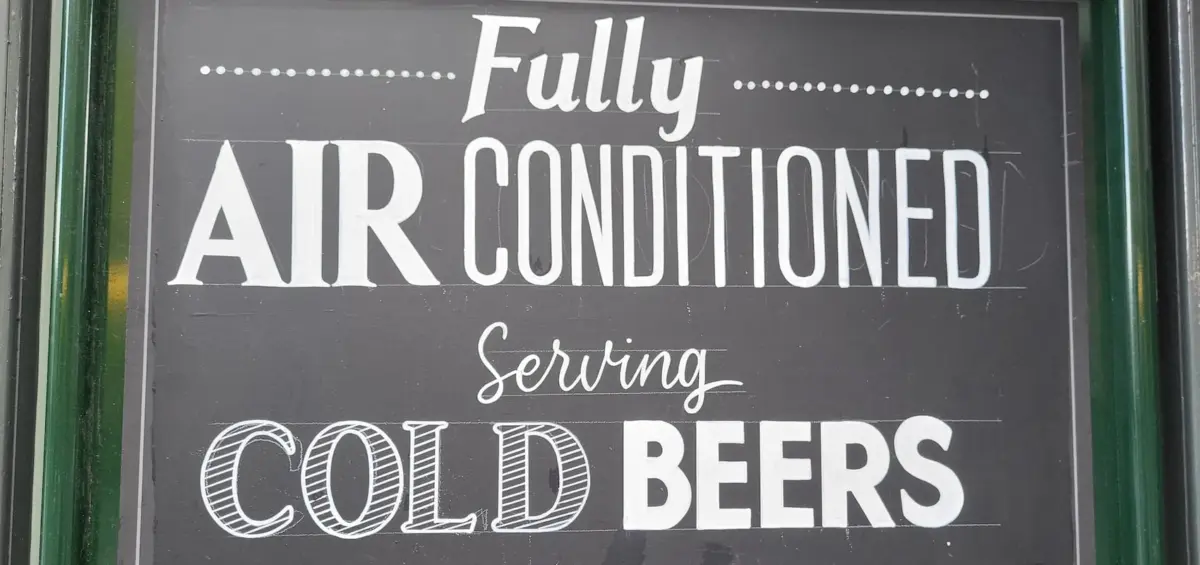
To walk down a bustling London street in the sweltering heat of mid-summer is to witness a landscape undergoing a profound, almost jarring metamorphosis. Recently, near the historic monument of Trafalgar Square, a casual glance at a local tavern’s exterior signage offered a stark illustration of this cultural shift. The placard proudly proclaimed: “Fully Air Conditioned. Serving Cold Beers.”
For a native son returning from decades abroad, the statement elicited a wry, bittersweet laugh. Turning to his wife, the observer remarked, “I truly don’t recognize my own country anymore.” Though delivered with a veneer of facetiousness, the underlying sentiment was deadly serious. It struck at the heart of an ongoing cultural debate regarding whether traditional England—the tight-knit, idiosyncratic society of the author’s youth—still exists, or if it has been irretrievably lost to the relentless march of modernization, globalization, and shifting socioeconomic paradigms.
When this thesis was first floated in public essays, the backlash from readers was swift. The counterarguments frequently relied on a quintessentially British institution: the local pub. Skeptics insisted that England remains alive and well, suggesting that one need only step inside a neighborhood tavern to experience the nation’s enduring vitality. To these critics, the pub stands as an immutable monument to British culture, untouched by time.
Read Also
However, a closer examination reveals a tragic irony. The contemporary English pub does not serve as counter-evidence to the death of traditional English culture; rather, it is its most visible symptom. Once the communal anchor of village and urban life alike, the traditional pub has been hollowed out, commercialized, and subjected to the same hyper-individualistic forces that have fractured modern Western society. Coupled with the draconian tightening of state borders against conservative thinkers, runaway taxation, and the total digitalization of social spaces, the decline of the pub mirrors the wider dissolution of British social capital. This report provides an in-depth investigation into the systemic transformation of England’s most cherished social institution, exploring the cultural, political, and economic dimensions of its decline.
Detailed Chronology of Decline: From Community Anchor to Commercialized Enterprise
To understand the magnitude of what has been lost, one must look back at the mechanics of the English pub as it existed in the mid-to-late 20th century. In the England of the author’s youth, the public house was not merely a commercial establishment that retailed alcohol; it was a living, breathing expression of communal interdependence.
The Golden Era of the Traditional Pub
In those decades, the pub was defined by what it chose to exclude as much as what it welcomed. There was rarely any pressure to consume food; while basic, unpretentious snacks—crisps, pickled eggs, or perhaps a rudimentary pie—might be available, people went to the pub for a drink, yet crucially, they did not go there to drink in a vacuum.
The primary currency of the pub was conversation. Warm, flat ales lubricated discussions that spanned from local village gossip to global politics. More importantly, the environment was governed by subtle yet powerful social rituals that actively subverted personal hierarchies and social barriers. Chief among these was the unwritten rule of "buying rounds."
In this ritual, participants took turns visiting the bar to purchase drinks for the entire table, absorbing the cost collectively and rotating the responsibility. This practice did not merely reflect an existing sense of community; it actively constituted it, binding individuals together in a mutual loop of generosity and trust. Furthermore, these spaces were deliberately devoid of televisions. Patrons gathered to converse with friends and strangers alike, rather than sitting passively in the glow of a screen while their attention was stolen away by external stimuli.
The Shift Toward Corporate Homogeneity
As the decades progressed, powerful structural forces began to dismantle this delicate social architecture. The chronology of the pub’s decline is inextricably linked to the broader deindustrialization of Britain, the rise of hyper-mobility, and the transformation of real estate markets.
- The 1980s and 1990s (The Rise of the "Pubco"): Legislative changes, such as the Beer Orders introduced by the Thatcher government in 1989, forced major breweries to sell off thousands of pubs. This gave birth to large pub-owning companies ("pubcos") that prioritized corporate profit margins, uniform branding, and supply chain control over local autonomy. Independent landlords were squeezed out, replaced by corporate managers beholden to distant shareholders.
- The 2000s (The Smoking Ban and Economic Pressures): The implementation of the indoor smoking ban in 2007, while a public health victory, fundamentally altered the atmospheric and social dynamics of pub culture. Concurrently, escalating property values and aggressive commercial taxation began to price out traditional patrons.
- The 2010s to Present (The Digital and Gastropub Pivot): To survive financially, remaining pubs were forced to reinvent themselves. The cozy, conversation-driven drinking den was largely replaced by the "gastropub"—focusing on high-end dining—or transformed into sports bars dominated by giant television screens. The sacred silence from screens was broken, replaced by the relentless noise of broadcast media and digital distraction.
Supporting Context & Metrics: The Numbers Behind the Extinction
The subjective experience of cultural loss is powerfully validated by hard economic and demographic data. The infrastructure of British pub culture is collapsing at an unprecedented rate, driven by a lethal combination of state taxation, regulatory burdens, and shifting consumer habits.
The Statistical Reality of Closures
According to comprehensive data compiled by the British Beer and Pub Association (BBPA) and industry monitors, the decline of British pubs over the last quarter-century represents a staggering cultural contraction:
- Net Losses: Between the years 2000 and 2025, the United Kingdom suffered a net loss of 16,150 pubs.
- Percentage Reduction: This constitutes an overall reduction of 36 percent in the nation’s pub stock.
- The Masked Reality: Because this is a net figure—accounting for the small number of newly opened bars, craft beer spots, and corporate franchises—the actual number of traditional establishments that have permanently closed their doors is significantly higher.
[UK Pub Decline: 2000 - 2025]
Year 2000 Baseline: ----------------------------------------- (approx. 45,000+ pubs)
Year 2025 Status:   ----------------------------               (Net loss of 16,150 pubs / -36%)
The Anatomy of Failure: Taxation and Regulatory Strangulation
Behind these bleak statistics lies a systemic failure of government policy. High business rates, skyrocketing energy costs, and steep alcohol duties have placed intolerable pressure on landlords’ financial margins. Successive administrations—spanning both Conservative and Labour governments—have demonstrated a profound institutional blindness toward what pubs actually represent within their communities.
Rather than viewing pubs as vital social infrastructure, modern governance treats them as cash cows to be squeezed or administrative burdens to be regulated. When local public houses in rural villages change hands half a dozen times in a single decade, it is a flashing red light indicating that the economic model of the traditional village pub is no longer viable under current state policies.
Official Statements and Political Hypocrisy: Borders, Free Speech, and State Reach
The degradation of English cultural life is not merely economic; it is enforced from the top down by a political class that actively polices ideological boundaries while ignoring foundational societal decay.
The Borders of Orthodoxy
While ordinary citizens are told that the local pub remains a bastion of British identity, the British government has simultaneously erected aggressive ideological barriers at its national borders, dictating precisely who may—and may not—participate in English social life.
In recent years, high-profile international figures holding traditional, conservative, or orthodox Christian viewpoints have been routinely barred entry to the United Kingdom under the guise of "hate speech" laws or public interest provisions:
- The Dutch Case: Prominent conservative activists and Christian converts have faced severe travel restrictions or outright entry bans for articulating mainstream biological realities, such as the definition of sex and gender.
- The Finnish Case: Distinguished parliamentarians facing politically motivated prosecutions in their home countries for publishing pamphlets based on historic Christian principles have been denied entry to the UK.
The bitter irony is stark: while the British state proves entirely incapable of acting decisively against pressing domestic crises—such as unchecked illegal immigration or the rampant exploitation of children by grooming gangs—it mobilizes immense bureaucratic energy to bar foreign intellectuals and thinkers who dare to articulate the very moral consensus that defined British society until a generation ago. An Englishman can no longer share a pint and a round of drinks in his local pub with a foreign colleague who holds traditional, conservative convictions, because the state has deemed such perspectives unwelcome within its borders.
Political Discourse and Public Standards
This institutional hypocrisy is mirrored in the collapse of public discourse. Leading politicians across the political spectrum now routinely employ crude expletives and confrontational rhetoric on prime-time news broadcasts—language that previous generations would have found entirely unacceptable in public life. The degradation of political language is a direct reflection of a culture that has abandoned shared norms of decorum and mutual respect in favor of unbridled expressive individualism.
Future Outlook: The Rise of Expressive Individualism and the Loss of Social Capital
As we look toward the future of English society—and by extension, the broader Western world, including the United States—the prognosis for traditional community life is deeply sobering.
The Exhaustion of Social Capital
Societies operate on a store of invisible "social capital"—the networks of relationships, trust, mutual obligations, and shared moral intuitions that enable human beings to live together harmoniously without constant state intervention. What we are witnessing today is the final bankruptcy of that social capital.
The traditional English pub was built upon, and sustained by, that very capital. Its demise is not an isolated phenomenon, but a symptom of a much deeper cultural malaise: the triumph of expressive individualism. In this new cultural paradigm, the individual’s subjective desires, therapeutic self-actualization, and digital entertainment supersede all communal obligations.
What Replaces the Pub?
As genuine community spaces vanish, they are being replaced by sterile, commercialized environments designed for passive consumption:
- The Digital Silo: Citizens increasingly interact through algorithmic social media platforms rather than face-to-face conversation over a pint of warm ale.
- Ambient Surveillance and Noise: Screens are now ubiquitous—beaming mindless entertainment into homes, petrol stations, and even the remaining pubs, ensuring that individuals are never truly alone with their thoughts, nor genuinely present with their neighbors.
- A Culture of Casual Contempt: Stripped of the civilizing rituals of proximity, interdependency, and mutual respect, public discourse has descended into routine hostility and casual contempt for those with differing views.
Conclusion: A Lament for a Lost England
For the expatriate returning home, or the native citizen watching their neighborhood transform beyond recognition, the realization is heartbreaking. The advent of "fully air-conditioned pubs serving cold beer" is not a sign of progress or modernization; it is a monument to a culture that has surrendered its soul for superficial comfort.
The author’s initial quip—“I truly don’t recognize my own country anymore”—resonates with millions who feel like strangers in their own land. The England of deep-rooted community, unhurried conversation, and unwritten social grace is gone. And in its place stands a colder, louder, and profoundly lonelier nation, where the least of one’s worries is simply getting a cold beer at the bar.

Comments
Facebook App ID not configured. Please add it in the Customizer.