
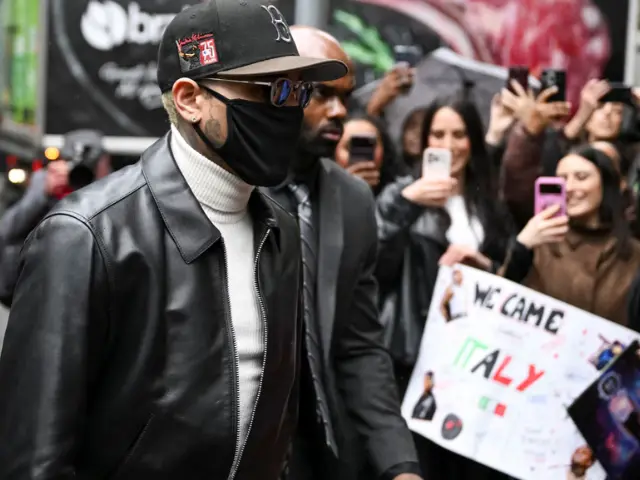
LONDON — US Grammy Award-winning R&B singer Chris Brown was spared an immediate custodial sentence on Monday, October 26, 2026, following legal proceedings at London’s Southwark Crown Court. Brown, 37, walked free from the courthouse to the jubilation of waiting supporters after receiving an eight-month suspended prison sentence. The ruling concludes a high-profile legal battle stemming from a violent, unprovoked altercation inside a central London nightclub in February 2023, during which the artist struck a music producer over the head with a tequila bottle.
Despite the gravity of the offense and vocal condemnation from presiding officials regarding public violence, the court opted for a suspended term conditioned on a 12-month probationary period. The case has reignited intense global debate surrounding accountability, celebrity privilege within the justice system, and the recurring pattern of legal infractions trailing one of contemporary music’s most commercially successful yet perpetually controversial figures.
Executive Overview
The sentencing hearing at Southwark Crown Court marked the culmination of a multi-year legal saga that began on a winter night in February 2023 at Tape, an exclusive West End nightclub in London. What began as a night out escalated into a 20-second flashpoint of severe violence, capturing international headlines and ultimately threatening the artist’s global touring schedule.
Read Also
In July, Brown and his vocal coach, 40-year-old Omololu Akinlolu, formally entered guilty pleas to a charge of affray. This concession was accepted by prosecutors in lieu of more severe indictments—specifically, attempting to inflict grievous bodily harm and assault causing actual bodily harm.
Judge Tony Baumgartner condemned the attack as "serious, public violence," explicitly rejecting any notion that the performer’s immense commercial success or international celebrity status afforded him immunity from standard British jurisprudence. Nonetheless, weighing mitigating factors—including a substantial £5 million ($6.7 million) security bond, expressions of remorse, and the short-lived nature of the altercation—the bench handed down an eight-month sentence, suspended for 12 months. Akinlolu similarly avoided immediate imprisonment.
While outside the courtroom doors, a contingent of devoted fans cheered the artist’s departure, legal analysts, law enforcement agencies, and advocacy groups have scrutinized the leniency of the outcome, pointing to Brown’s extensive history of violent offenses across multiple jurisdictions.
Detailed Chronology of the 2023 Incident and Legal Proceedings
The Altercation at Tape Nightclub
The events leading to Brown’s conviction unfolded in the early hours of February 2023 inside Tape, a celebrity-frequented venue in London. According to Crown prosecutor Heidi Stonecliffe, the altercation targeted music producer Abraham Diaw and was characterized as "vicious and unprovoked."
During the roughly 20-second confrontation, Diaw was struck twice in the head with a tequila bottle. As the chaotic scene played out, the bottle was swung at the victim two additional times. The physical trauma left Diaw with visible injuries and triggered an immediate police investigation by the Metropolitan Police Service.
Arrest, Bail Hearings, and Tour Disruption
Following the incident, Brown departed the United Kingdom, evading immediate apprehension. However, the legal net tightened when the singer returned to British soil in May 2025—his first visit to the country since the 2023 altercation. Metropolitan Police officers arrested the singer upon his arrival.
Initially, UK magistrates denied Brown bail, a decision that cast a dark shadow over his planned worldwide concert itinerary, notably his high-profile "Breezy Bowl XX" tour. The denial of bail threatened to derail millions of dollars in promoter investments and ticket sales. To secure his release pending trial, Brown’s legal team mounted a successful appeal predicated on an extraordinary financial undertaking: a £5 million ($6.7 million) security fee posted to the court. This substantial financial guarantee enabled his release and allowed the international tour to proceed, albeit under the looming cloud of impending criminal litigation.
The Guilty Pleas and Sentencing Hearing
By July, facing mounting forensic and witness evidence, Brown and co-defendant Omololu Akinlolu altered their legal strategy. They formally entered guilty pleas to the lesser charge of affray, stepping back from the perilous prospect of trial on charges carrying significantly heavier maximum penalties.
On October 26, 2026, Southwark Crown Court convened to deliver judgment. Judge Baumgartner walked a careful line between acknowledging the severity of the offense and adhering to sentencing guidelines for suspended terms. Addressing the courtroom, Baumgartner stated:
"This was serious, public violence. In your case, Brown, it involved the repeated use … of a bottle, including twice striking Diaw to his head."
Directing his remarks squarely at the defendant, the judge added: "Your fame, commercial success and professional standing do not entitle you to special treatment — the law applies equally to everyone."
Despite these stern admonitions, the judge concluded that the threshold for immediate custody had not been definitively crossed when balancing the defendant’s cooperation, guilty plea, and personal mitigation against sentencing precedents. Brown was handed an eight-month sentence, suspended for a full year. This ensures that any further infraction within the 12-month window will automatically trigger the activation of the custodial term. Akinlolu received a comparable suspended disposition.
Supporting Context and Metrics
To fully understand the weight of the 2026 London sentencing, one must examine the broader commercial profile of Chris Brown alongside his documented history of legal entanglements.
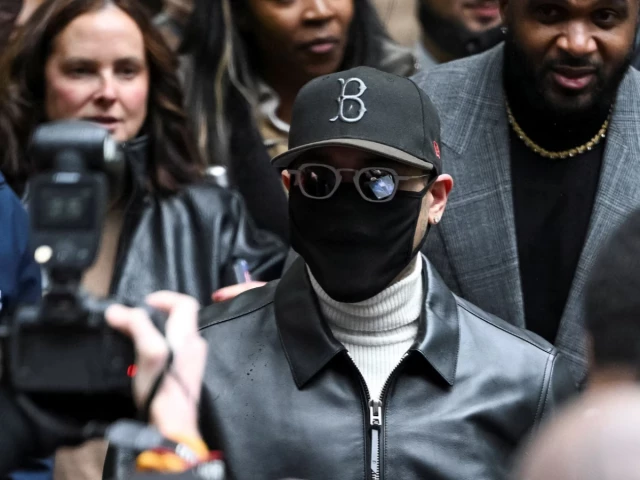
Commercial Footprint Versus Legal Infractions
Chris Brown remains an undisputed powerhouse within the global music industry. Having burst onto the R&B scene as a teenager, he has amassed tens of millions in record sales, streaming billions of plays across digital platforms. His critical acclaim includes prestigious Grammy Awards, notably winning Best R&B Album in 2011 and again in 2025.
Yet, this towering commercial success has run parallel to a persistent, well-publicized record of aggressive behavior. Most notably, Brown made global headlines in 2009 following his assault on his then-partner, pop superstar Rihanna. That incident resulted in widespread public condemnation, the circulation of police photographs depicting Rihanna’s bruised face, and a conviction that landed Brown on five years of formal probation.
Four years later, in 2013, Brown found himself in legal crosshairs once more after admitting to assaulting a fan who had approached him for a photograph outside a Washington, D.C., hotel. These historical milestones formed a critical backdrop during the London proceedings, with prosecutors explicitly placing the 2023 nightclub assault within a broader behavioral pattern.
Public and Fan Dynamics
The polarization surrounding Brown was vividly demonstrated outside Southwark Crown Court. From 07:00 GMT—an hour before the courthouse doors officially opened—dozens of passionate fans queued outside, braving the elements to show solidarity with the singer.
Inside the public gallery, approximately two dozen supporters watched the proceedings unfold. Upon hearing the verdict, Brown reportedly thanked the judge, stepped down from the dock, and offered a brief nod to his supporters. As he exited the building into a waiting vehicle, cheers erupted from the crowd gathered outside—a striking display of unwavering fan loyalty in the face of criminal culpability.
Official Statements and Legal Defense Arguments
The outcome of the trial prompted sharply contrasting perspectives from legal representatives, prosecuting authorities, and police officials.
The Defense: Mitigation and Remorse
Representing the R&B star, defense counsel Sallie Bennett-Jenkins KC acknowledged the undeniable ugliness of the offense while emphasizing her client’s humanity and personal growth outside the spotlight.
"This was an ugly and unattractive incident, we would be the first to accept," Bennett-Jenkins submitted to the court. "It was, however, an incident that was very short-lived."
Furthermore, the defense team sought to humanize the multi-platinum artist by portraying him as a devoted parent. Bennett-Jenkins described Brown as "a dedicated, loving and loyal father to four children," emphasizing that he was profoundly sorry for his actions at the Tape nightclub. This narrative of paternal responsibility and sincere contrition formed the core pillar of the strategy designed to avert an immediate prison sentence.
The Prosecution and Metropolitan Police Response
Conversely, crown prosecutors and law enforcement officials maintained that celebrity status must never compromise the integrity of public safety protocols.
Detective Chief Superintendent Christina Jessah of the Metropolitan Police issued a resolute statement following the verdict, emphasizing zero tolerance for nighttime violence in the British capital:
"Violence will not be accepted on the streets of London," Jessah stated. "Regardless of an individual’s profile or status, we will pursue those responsible and work tirelessly to bring them before the courts."
The prosecution’s framing during the trial successfully dismantled any argument of self-defense, highlighting the unprovoked nature of the strike with a heavy glass bottle against an unsuspecting victim inside a crowded commercial venue.
Future Outlook
The conclusion of the Southwark Crown Court proceedings removes the immediate threat of imprisonment, clearing the legal horizon for Chris Brown’s ongoing professional commitments. With his £5 million security bond eligible for review or release now that the case has reached its judicial conclusion, the artist can direct his full focus toward recording, international touring, and brand management.
However, the 12-month suspended sentence acts as a legal sword of Damocles. Any misstep, altercation, or legal infraction anywhere in the world—or specifically within jurisdictions sharing legal cooperation frameworks with the UK—could instantly activate the eight-month custodial term.
Furthermore, the case leaves an indelible mark on the ongoing discourse regarding accountability in the entertainment industry. While Brown’s core fanbase remains fiercely protective and commercially supportive, institutional bodies and legal watchdogs have signaled that high-profile entertainers will face rigorous scrutiny when public safety is compromised. Whether this near-miss with British incarceration will prompt a lasting behavioral shift for the enduring R&B icon remains one of the industry’s most closely watched questions.




Comments
Facebook App ID not configured. Please add it in the Customizer.