
Executive Overview
The cultural and intellectual calendar of Pakistan is set to welcome back one of its most cherished literary flagships as the Sindh Literature Festival (SLF) prepares for its monumental ninth edition. Scheduled for November 21 and 22, 2026, this year’s gathering will unfold within the majestic, heritage-rich halls of Karachi’s historic Mohatta Palace. Over the course of two immersive days, the festival will serve as a dynamic nexus where writers, poets, historians, artists, musicians, and avid readers converge to celebrate, debate, and interrogate the multifaceted narratives that define the province of Sindh.
Since its inception in 2016, the Sindh Literature Festival has evolved far beyond a conventional book fair. It has cemented its status as a vital sociopolitical and cultural institution—a platform dedicated to the preservation of indigenous languages, the propagation of Sindhi literature, and the robust exploration of the region’s ancient history and modern dilemmas. By bridging the generational divide between established literary icons and avant-garde voices, the SLF has consistently fostered an environment of inclusive discourse.
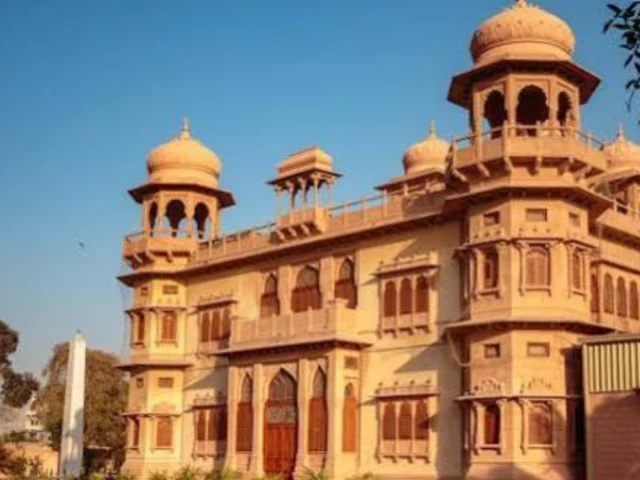
The selection of Mohatta Palace as the venue for the 2026 iteration introduces a profound layer of historical continuity. Built in the late 1920s and standing today as an architectural jewel in Karachi’s Clifton district, the palace bridges the physical architecture of the past with the living heritage of modern literary expression. As the festival prepares to open its gates, it arrives against a backdrop of increasing regional and global challenges, proving once again that literature, art, and critical thought remain indispensable tools for community resilience, identity preservation, and intellectual awakening.
Read Also
Detailed Chronology: Tracing the Evolution of the Sindh Literature Festival
To fully appreciate the scope and ambition of the upcoming ninth edition, one must examine the rich evolutionary trajectory of the Sindh Literature Festival. Since its founding by journalist Naseer Gopang under the aegis of the Sindh Literary Foundation, the festival has charted a steady course of expansion, steadily adapting its thematic focus to reflect the urgent historical, environmental, and social currents shaping Sindh and the wider subcontinental landscape.
[2016: Foundation] ---> [2022: 5th Edition (Mohenjo-daro Centenary)] ---> [2023: 6th Edition (Climate Action)] ---> [2024: 7th Edition (Indus Conservation)] ---> [2025: 8th Edition (Global Power of Words)] ---> [2026: 9th Edition (Mohatta Palace)]The Genesis and Early Years (2016–2021)
Launched in 2016, the SLF was conceived out of a pressing need to carve out dedicated spaces for Sindhi literature and indigenous languages in Pakistan’s urban centers. For decades, traditional literary gatherings were often siloed, academic, or restricted to elite circles. The SLF disrupted this paradigm by democratizing access to literature, pairing high-brow intellectual debates with accessible public forums, musical performances, and theatrical showcases. In its formative years, the festival established its core blueprint: a hybrid celebration featuring book launches, poetry recitals (mushaairas), and panel sessions exploring the interplay between classical Sufi poetry—such as the verses of Shah Abdul Latif Bhittai—and contemporary sociological realities.
The Fifth Edition: Centenary of Mohenjo-daro (March 2022)
A watershed moment in the festival’s history occurred in March 2022 with its fifth iteration, hosted at the Arts Council of Pakistan in Karachi. This edition was dedicated to commemorating the centenary of the discovery of Mohenjo-daro. By centering archaeological heritage, the festival successfully bridged the gap between ancient history and modern civic identity. Scholars, historians, and archaeologists from across the globe gathered to discuss the legacy of the Indus Valley Civilisation, examining how urban planning, ancient trade networks, and egalitarian social structures from four millennia ago continue to inform modern understandings of South Asian history.
The Sixth Edition: Confronting the Climate Crisis (March 2023)
Demonstrating its responsiveness to contemporary planetary emergencies, the sixth edition of the SLF in March 2023 adopted the powerful theme "Aalam Sabh Abaad Kareen" (May the entire world flourish). Coming in the wake of the catastrophic 2022 climate floods that submerged large swathes of Sindh, this iteration pivoted sharply toward environmental consciousness. Panel discussions dissected global warming, the vulnerability of the Indus Delta, agricultural displacement, and climate justice. The festival proved that literary platforms cannot remain divorced from material realities, positioning ecological survival as a central pillar of cultural preservation.
The Seventh Edition: "Save Indus, Save Life" (December 2024)
Continuing its ecological advocacy, the seventh edition convened in December 2024 at the Liaquat Memorial Library in Karachi under the rallying cry "Save Indus, Save Life." This iteration focused intensely on the ecological and geopolitical fate of the Indus River—the lifeblood of Sindh. Authors, activists, and hydrologists debated water rights, downstream environmental degradation, the shrinking of freshwater lakes, and the existential threat facing the riverine ecosystem and the communities dependent upon it.
The Eighth Edition: Celebrating the Power of Words (November 2025)
Held on November 15 and 16, 2025, at Karachi’s Beach Luxury Hotel under the theme "Celebrate the Power of the World," the eighth edition expanded its international and cross-cultural footprint. It examined how literature acts as a universal equalizer, transcending linguistic borders to challenge authoritarian narratives, preserve marginalized histories, and articulate the aspirations of ordinary people in an increasingly interconnected and turbulent global landscape.
Supporting Context & Metrics: The Cultural and Architectural Significance of Mohatta Palace
The Venue: A Masterpiece of Architectural Heritage
The decision to host the ninth edition of the SLF at Mohatta Palace is a masterstroke in spatial curation. Located in the upscale Clifton neighborhood of Karachi, the palace was commissioned in the late 1920s by Rai Bahadur Seth Shivratan Mohatta, a wealthy Hindu businessman who envisioned a palatial seaside summer home. Designed by the renowned architect Agha Ahmed Hussain, the building reflects a striking synthesis of traditional architectural styles.
+-----------------------------------------------------------------+
|                   MOHATTA PALACE: KEY METRICS                   |
+--------------------------+--------------------------------------+
| Commissioned             | Late 1920s                           |
| Original Patron          | Rai Bahadur Seth Shivratan Mohatta   |
| Lead Architect           | Agha Ahmed Hussain                   |
| Architectural Style      | Rajasthani-Rajput & Mughal Revival   |
| Primary Materials        | Jodhpuri pink stone & local yellow   |
|                          | Gizri stone                          |
| Current Status           | Protected National Monument & Museum |
+--------------------------+--------------------------------------+
The palace’s facade is constructed from a harmonious blend of pink Jodhpuri stone and local yellow Gizri stone, featuring intricate stonework, stately domes, balustrades, and expansive stone railings (jalis). Following the partition of British India in 1947, the building served briefly as the office of the Ministry of Foreign Affairs of Pakistan and later as the residence of Fatima Jinnah, the sister of the nation’s founder, Quaid-e-Azam Muhammad Ali Jinnah. Today, managed as a cultural museum by the Government of Sindh, Mohatta Palace stands as a testament to Karachi’s cosmopolitan past.
By housing the Sindh Literature Festival within these historic walls, the organizers have created a symbiotic relationship between the physical space and the intellectual programming. The palace, which has long served as a sanctuary for fine arts exhibitions and historical retrospectives, will temporarily transform into a living archive of spoken and written word, mirroring the historical continuity of Sindh itself.
Demographics and Impact Metrics
Over its nine-year history, the SLF has grown exponentially in scale and reach:
- Footfall: Attendance has grown from a few thousand local enthusiasts in 2016 to tens of thousands of visitors across multi-day events, drawing university students, civil society members, diaspora intellectuals, and working-class readers alike.
- Literary Output: More than 200 newly published books in Sindhi, Urdu, and English have been launched or spotlighted across past editions.
- Collaborative Sessions: Over 150 panel discussions, theatrical performances, and musical recitals have been staged, providing a vocational and artistic platform for over 500 contemporary poets, novelists, historians, and performers.
Official Statements and Institutional Vision
The formal announcement of the 2026 festival, disseminated via the SLF’s official digital channels, strikes a celebratory yet purposeful tone. The organizing committee framed the upcoming ninth edition as an open invitation to all custodians of heritage:
"The ninth edition of the Sindh Literature Festival is more than a gathering of books; it is a communion of spirits, a reaffirmation of our shared history, and a testament to the unyielding resilience of our languages and cultures. By bringing the SLF to the historic halls of Mohatta Palace, we honor the past while challenging our writers, thinkers, and citizens to confront the intellectual demands of tomorrow."
Founder and producer Naseer Gopang, reflecting on the journey of the festival since its inception in 2016, has consistently emphasized that the SLF was built on the premise that literature must belong to the public sphere. In prior institutional statements, Gopang noted that the festival strives to ensure that indigenous languages—such as Sindhi, Saraiki, Brahui, and Balochi—are not relegated to the margins of academic study, but are instead championed as vibrant, evolving mediums capable of addressing modern socio-economic and existential challenges.
Cultural critics and civil society leaders have widely praised the foundation’s resilience. In an era marked by commercialization and digital fragmentation, the SLF has maintained its core commitment to rigorous, open-ended intellectual debate. Scholars from institutions across Pakistan have lauded the festival’s capacity to serve as an inter-provincial bridge, bringing diverse linguistic communities into constructive dialogue under one roof.
Future Outlook: The Road to November 2026 and Beyond
As the countdown to November 21 and 22, 2026, begins, anticipation within Pakistan’s literary circles is reaching a fever pitch. The programming committee for the ninth edition has indicated that the upcoming festival will feature an expanded lineup of events tailored to contemporary exigencies:
- Multilingual Literary Sessions: Panel discussions will explore the challenges of translation, digital publishing in regional languages, and the preservation of oral storytelling traditions in the age of artificial intelligence and social media saturation.
- Environmental Roundtables: Building on the momentum of previous climate-focused editions, sessions will address the compounding ecological crises affecting the Indus Basin, including water scarcity, urban heat islands, and sustainable agricultural practices.
- Youth Engagement Initiatives: Special workshops will be dedicated to mentoring emerging writers, high school students, and university researchers, ensuring that the torch of literary criticism and creative expression is safely passed to the next generation.
- Artistic Showcases: Evening programs will feature classical Sufi musical performances (kaafis), contemporary theatrical productions highlighting social justice themes, and curated visual art exhibitions displayed throughout the galleries of Mohatta Palace.
Conclusion
The Sindh Literature Festival has proven itself to be an indispensable pillar of Pakistan’s cultural ecosystem. By anchoring its ninth edition in the historical gravitas of Mohatta Palace, the SLF promises to deliver a transcendent weekend where the echoes of ancient civilizations meet the pressing inquiries of the twenty-first century. For readers, writers, and custodians of culture, November 21 and 22, 2026, will not merely mark a date on the calendar; it will represent a vital collective celebration of the enduring power of the word, the river, and the land of Sindh.




Comments
Facebook App ID not configured. Please add it in the Customizer.