
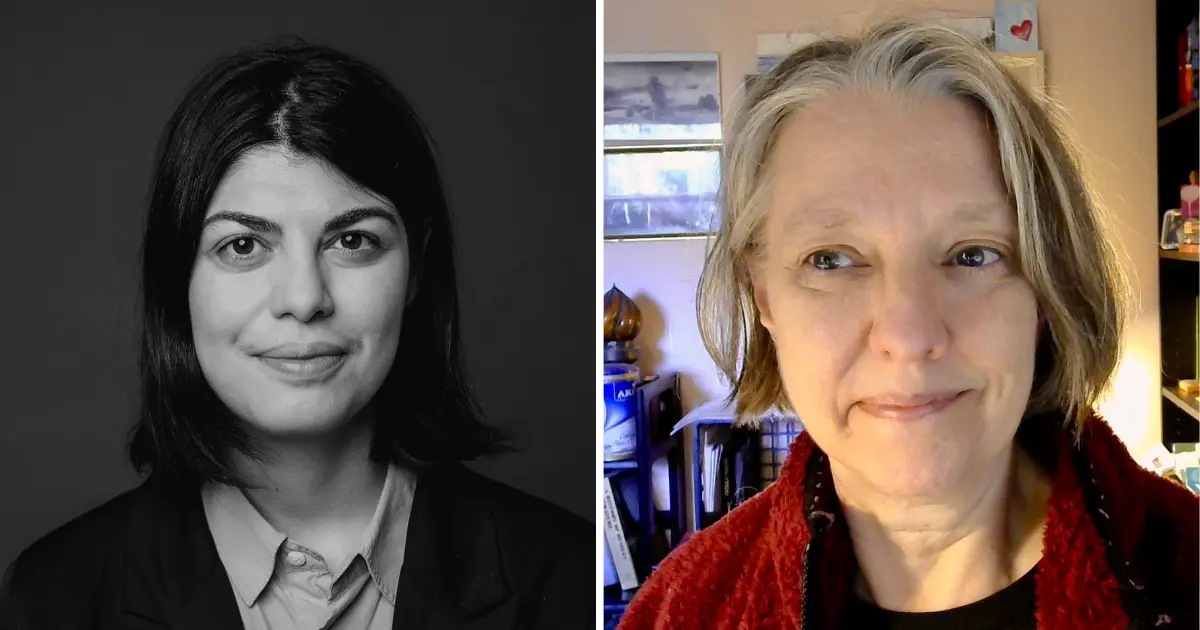
In the contemporary literary landscape, few works capture the visceral friction of displacement, bodily autonomy, and post-Soviet marginalization quite as acutely as Egana Djabbarova’s debut novel, My Dreadful Body. Originally written in Russian between 2022 and 2023 while Djabbarova was residing in Taipei, Taiwan, the book has recently been brought to English-language readers through a sensitive and meticulous translation by Lisa C. Hayden, published by New Vessel Press.
This deep-dive feature explores the intricate gestation of My Dreadful Body, examining the unique geopolitical and somatic circumstances of its creation. Through an exclusive Q&A-style retrospective and critical breakdown, this article traces the book’s trajectory from an authorial response to lifelong identity crises to a masterclass in cross-cultural literary translation. The work stands as a testament to the resilience of minoritized voices within and beyond the post-Soviet space, employing a distinctly poetic register to confront state-sanctioned violence, xenophobia, patriarchy, and the urgent politics of embodiment.
Detailed Chronology: From Taipei Exile to English Translation
The genesis of My Dreadful Body spans multiple geographies, political upheavals, and internal reckonings. Understanding the book requires tracing its evolution across distinct chronological phases.
Read Also
1. Formative Years and the Seeds of Identity (Adolescence to Early Adulthood)
Long before the physical manuscript was drafted, the core concepts animating My Dreadful Body were decades in the making. Raised in Yekaterinburg, Russia, within an Azerbaijani family, Egana Djabbarova grappled from her teenage years onward with an acute internal crisis of belonging. Navigating an environment marked by structural racism, xenophobia, and patriarchal expectations, Djabbarova found herself questioning the boundaries of her world and her place within it.
A pivotal turning point arrived with a medical diagnosis. Rather than remaining an abstract philosophical dilemma, identity suddenly manifested within the physical frame. This health crisis catalyzed a profound realization of embodiment—an acute understanding that human subjecthood and the physical body are inextricably bound. This realization formed the bedrock of her artistic philosophy: to bypass abstract theorizing and construct narratives directly through the architecture of the flesh.
2. The Writing Process in Taipei (2022–2023)
The physical writing of the novel occurred under unusual, highly transitional circumstances. Between 2022 and 2023, Djabbarova was living in Taipei, Taiwan, where she was employed as a teacher of Russian as a foreign language.
This period coincided with sweeping geopolitical catastrophes, including the escalation of the war in Ukraine and tightening authoritarian controls within Russia. Operating from a dual distance—both temporal and geographical—Djabbarova found the perspective necessary to synthesize her life experiences. This physical and psychological distance allowed her to look back at her past as a cohesive narrative, translating personal trauma and systemic marginalization into a work of literary fiction.
3. Editorial Acquisition and the Translation Journey (2024–Present)
The bridge to the English-speaking world was constructed through a fortuitous editorial connection. Michael Wise, publisher and editor at New Vessel Press, encountered the manuscript and recognized its profound literary value. He approached seasoned literary translator Lisa C. Hayden with the project.
Hayden, holding an MA in Russian Literature from the University of Pennsylvania and drawing on six years of residency in Moscow, immediately accepted the assignment. What followed was a rigorous, collaborative translation process characterized by constant communication between author and translator. The resulting English edition preserves the dense, poetic compression of Djabbarova’s original Russian while navigating formidable linguistic and cultural chasms.
Supporting Context & Metrics: The Politics of the Body and Language
To fully appreciate the weight of My Dreadful Body, one must examine the theoretical framework underpinning Djabbarova’s prose and the technical hurdles overcome during its translation into English.
The Coloniality of Being and Somatic Resistance
Djabbarova’s narrative strategy is deeply informed by decolonial theory. She explicitly draws upon the work of decolonial thinker Nelson Maldonado-Torres and his concept of the "coloniality of being." Maldonado-Torres details how the agency and subjecthood of colonized populations are systematically questioned, effectively denying them inherent humanity.
Within the borders of the Russian Federation, ethnic minorities, diaspora communities, and marginalized individuals face a strikingly similar dynamic: their full humanity is contested by dominant state structures. To counter this erasure, Djabbarova deliberately anchors her narrative in the physical body. By doing so, she renders marginalization visible, inescapable, and unignorable—transforming the body into an undeniable testament of autonomous subjecthood.
+-----------------------------------------------------------------+
|                    THE ARCHITECTURE OF MARGINALIZATION           |
+-----------------------------------------------------------------+
|  Geopolitical Displacement  -->  Loss of Traditional Belonging  |
|  Systemic Discrimination    -->  Denial of Inherent Humanity    |
|  Somatic Realization        -->  The Body as a Site of Agency   |
|  Poetic Compression         -->  Literary Form as Resistance    |
+-----------------------------------------------------------------+
Navigating Untranslatable Slurs and Cultural Divides
One of the most complex challenges encountered by Djabbarova and Hayden involved Chapter VII ("TONGUE"), wherein the protagonist confronts a catalog of verbal assaults hurled against her: "I’m black, blackie, black-ass, alien, monster, foreigner, foreign-born . . ."
In the Russian linguistic context, terms like chernaya or chernozhopaya function as specific xenophobic slurs deployed to dehumanize individuals from the Caucasus, Muslim-majority post-Soviet states, and people of color. However, when translated literally into American English, these terms carry a heavy historical weight primarily intertwined with anti-Black racism.
Hayden and Djabbarova had to navigate this delicate terrain with immense care. They needed to convey the precise socio-political reality of post-Soviet ethnic discrimination and colorism without conflating it with Western, specifically American, racial dynamics. Furthermore, they faced formal constraints—such as a long string of Russian insults beginning with the letter "ch"—which resisted direct duplication in English. Through judicious use of footnotes and contextual framing, the translation team avoided weighing down the text while preserving its sharp socio-political edge.
Official Statements & Collaborative Insights
The synergy between author Egana Djabbarova and translator Lisa C. Hayden forms the beating heart of the book’s English iteration. In their reflections on the collaborative process, both creators offer profound insights into the mechanics of literary translation.
Egana Djabbarova on Poetic Density and Trust
Reflecting on the collaborative dynamic, Djabbarova emphasizes the absolute trust she placed in Hayden from the outset:
"The process of translating the novel together with Lisa Hayden was an incredible journey. We stayed in constant contact throughout, and Lisa’s approach to the work absolutely amazed me with its profound responsibility, sensitivity, and tenderness. I trusted her one hundred percent, and I still do!"
Djabbarova notes that a central obstacle in translating the work stems from its aesthetic register. The novel is written as a work of prose approached entirely through the lens of poetry, utilizing metaphoric weight, emotional intensity, and extreme linguistic density. Ensuring that this compressed poetic energy was not lost required maintaining a continuous dialogue over specific verbs, polysemic words, and layered interpretations.
Lisa C. Hayden on Intuition, Metaphor, and Coiled Energy
For Hayden, translating My Dreadful Body became a transformative personal experience. She describes how subsequent readings and translation drafts opened up dimensions of the text that turned the book into a permanent fixture of her life:
"What she writes feels unexpectedly personal in many ways since I identify so very closely with how she writes about feminism, cultures, and women’s bodies."
Describing the linguistic texture of the book, Hayden invokes two powerful metaphors:
- The Coiled Spring: Like a spring possessing elastic potential energy, Djabbarova’s text is highly compact yet stores tremendous kinetic power and emotional force.
- The Fluid Spring (Water Source): Much like a natural water spring rising from a deep source, the writing is fluid, sparkly, and remarkably fresh, rewarding the reader with new clarity upon every immersion.
Future Outlook: The Global Trajectory of Marginalized Voices
As My Dreadful Body makes its debut in the English-speaking world, its release signals a critical shift in how literature originating from the margins of the former Soviet Union is received, translated, and valued.
The Author’s Present Reality
The publication of this work coincides with profound personal transitions for its creator. Egana Djabbarova—recognized as a poet, essayist, and scholar—was forced to flee Russia in 2024 due to intense state persecution stemming from her LGBTQ+ activism and her vocal opposition to the war in Ukraine. Today, she continues her literary and intellectual work from Hamburg, Germany, embodying the very themes of forced diaspora, geographic displacement, and resilience that permeate her fiction.
Broader Literary Implications
The success of My Dreadful Body and its nuanced English translation underscores several vital trends in contemporary publishing:
- Decolonial Translation Practices: The willingness of translators like Lisa Hayden and publishers like New Vessel Press to retain cultural specificities—using well-placed contextual notes rather than flattening foreign realities—sets a new standard for cross-cultural literature.
- Visibility of Dissident Writers: As authoritarian regimes across Eastern Europe and Eurasia continue to crack down on independent thought, queer advocacy, and anti-war sentiment, platforms like Words Without Borders and independent presses serve as vital lifelines for exiled creators.
- The Somatic Turn: Djabbarova’s work paves the way for future literary explorations that bypass traditional Western paradigms of identity, centering instead on the visceral realities of the body as a primary site of political and personal struggle.
Ultimately, My Dreadful Body transcends the boundaries of conventional fiction. It is a linguistic tapestry, a coiled spring of political and emotional energy, and an unyielding testament to human agency forged in the crucible of exile.





Comments
Facebook App ID not configured. Please add it in the Customizer.