
Executive Overview
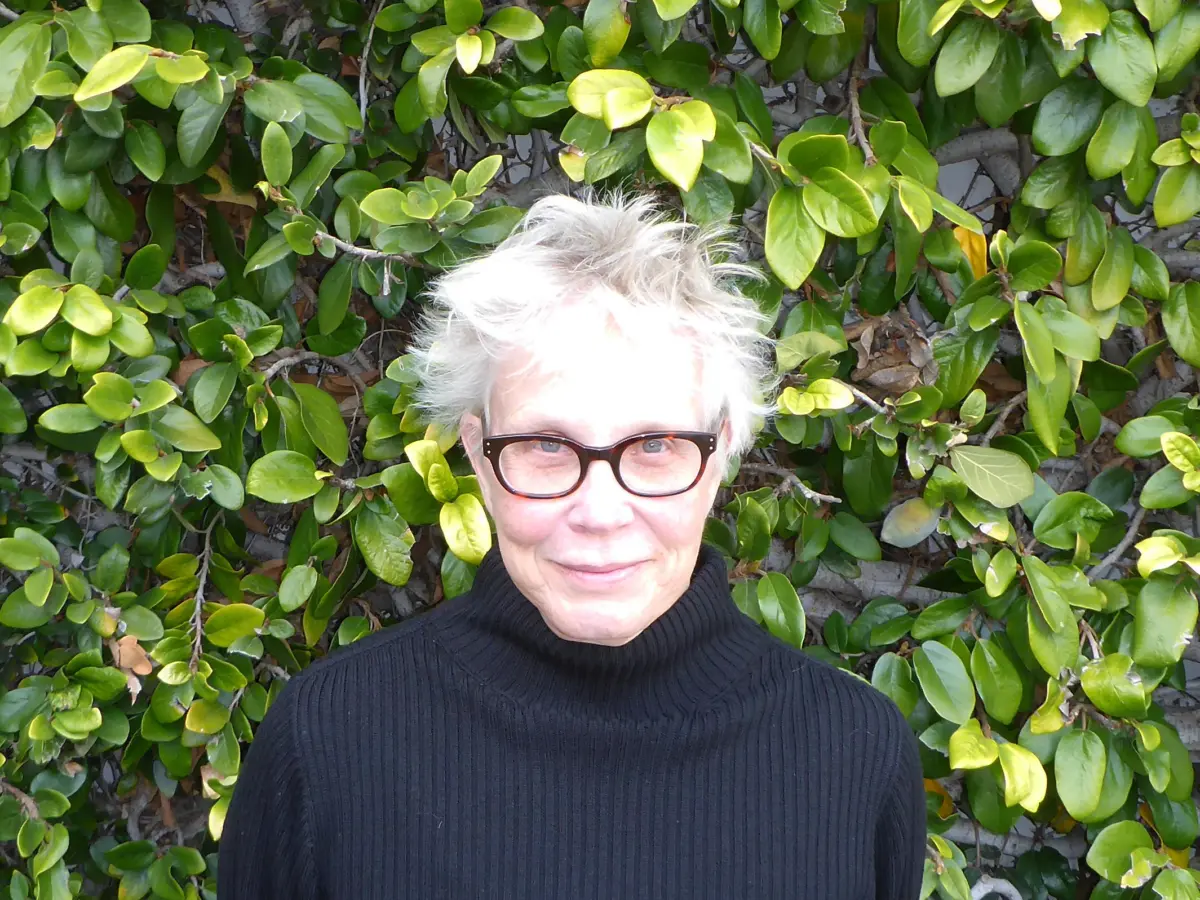
In the sprawling landscape of contemporary American creative nonfiction, few works capture the idiosyncratic nature of lifelong platonic intimacy quite like Jane Gillette’s memoir, Old Friends. Published as part of The Missouri Review’s vibrant online-only prose anthology, BLAST, Gillette’s essay interrogates the scaffolding of human relationships. It explores how individuals we meet, lose touch with, and ultimately bury continue to occupy a permanent, immutable space within the architecture of our memories.
At its core, Old Friends is not merely an obituary or a standard retrospective tribute. Rather, it is a nuanced, deeply personal investigation into the discrepancies of public grief versus private remembrance. Prompted by the 2018 death of her longtime confidant, "Steve"—a man whose public memorialized persona as a tax law professor, anti-war activist, and political intellectual bore little resemblance to the deeply flawed, endlessly conversational companion Gillette knew—the memoir serves as a literary bridge. It spans decades of changing geography, shifting marital statuses, and the subtle evolutionary phases of a profound, non-romantic bond.
Gillette, an acclaimed short fiction writer and recipient of both the O. Henry Prize and the Lawrence Foundation Prize, brings the precision of a seasoned fiction author to her autobiographical prose. Through vignettes that swing from the academic bars of Washington, D.C., in the 1970s to transatlantic flights, academic politics, and the surreal finality of a terminal cancer diagnosis, the memoir raises critical questions about what it means to truly know another person. This analysis explores the structural layers of Gillette’s narrative, tracing the chronology of an enduring friendship, the cultural and academic context of their formative years, and the broader implications of how literature preserves our most essential human connections.
Read Also
Detailed Chronology: The Evolution of an Unconventional Bond
The Academic Underground: The Tombs and "The Committee"
The genesis of Gillette and Steve’s relationship traces back to the vibrant, intellectually charged atmosphere of a university town during an era of cultural and political upheaval. Steve was born in 1945; Gillette in 1943. They inhabited what Gillette affectionately terms "the olden time." Their paths first crossed when Gillette was working as an adjunct professor of English—a precarious professional position she would eventually abandon upon disillusionment with modern literary criticism and the cyclical exploitation of adjunct labor.
Friday afternoons served as the sacred meeting time for "The Committee," a collective that gathered at The Tombs, a local subterranean institution where academics and intellectuals celebrated the conclusion of the workweek over pints of beer. While the rest of the circle comprised tenure-track assistant professors in Classics, English, Philosophy, and Economics—individuals destined to graduate to formal university governance—Gillette remained an outsider by virtue of her adjunct status and her primary devotion to writing short stories.
The political climate of the late 1960s and early 1970s soon injected a strange, performative urgency into The Committee. Following student protests against South African apartheid and the subsequent establishment of a shanty town on university grounds, institutional negotiations led to a bizarre administrative compromise: the university transformed The Committee into an official "class" on apartheid. Consequently, what began as a social drinking club morphed into a Wednesday afternoon seminar directed by a law professor deeply invested in the anti-apartheid movement. Steve, a brilliant tax law instructor equipped with a fierce social conscience, willingly engaged in the academic penance of teaching professors what they already understood. It was within this crucible of intellectual posturing, radical politics, and institutional absurdity that Gillette and Steve first recognized the wavelength of each other’s minds.
Parallel Lives and the Geography of Activism
Although they occasionally suspected they had crossed paths earlier—such as during the 1970 Vietnam War Moratorium efforts, where Steve and Gillette’s then-husband worked in parallel political spheres—their early interactions were mediated by larger historical backdrops. Gillette remembers sitting in the Senate gallery with her husband and a young intern from Arkansas, watching the McGovern-Hatfield Amendment go down to defeat, while Steve and others wisely recognized the inevitable outcome and took a vacation.
Despite these near-misses, their friendship truly accelerated decades later, catalyzed by domestic dissolution. When Steve’s marriage to his first wife, Gaylord, fractured after she left him, and when Gillette’s own marriage similarly dissolved, the two found themselves occupying identical emotional frequencies. Night after night, Steve would call Gillette to dissect the minutiae of his separation. These marathon telephone conversations formed the bedrock of their mature friendship. They talked endlessly about what they were reading—a rotating canon of ambitious European and Latin American literature including The Charterhouse of Parma, The Magic Mountain, and Love in the Time of Cholera—using books as a cipher to process their own romantic entanglements and existential dislocations.
Transatlantic Commutes, Domestic Rituals, and Social Circles
As Steve’s life grew increasingly complex—including a subsequent relationship with a South African activist that necessitated regular travel to Cape Town and London—his late-night phone consultations with Gillette remained a constant. Steve even imparted his hard-earned wisdom on surviving transatlantic aviation: a strict regimen of passenger logistics, a glass of red wine followed by white wine immediately upon boarding, and an expedited route to sleep.
In Washington, D.C., Steve’s domestic life was a study in contrasts. There were formal dinner parties populated by important political figures, where the catering consistently arrived via delivery from the Yenching Palace on Connecticut Avenue. There were everyday domestic scenes involving children, movies at Sidwell Friends, and unexpected excursions—such as a trip to IKEA to procure Swedish meatballs for a gathering hosted by a prominent D.C. attorney. Steve even acted as an anchor during crises, steering Gillette toward legal counsel when she faced a persistent stalker, and assisting her with taxes and the acquisition of a vital laptop computer after she transitioned to a new career at the National Trust for Historic Preservation.
Their geographic proximity shifted permanently in 2000 when Gillette relocated to the West Coast with a new husband. Yet distance only altered the rhythm of their connection, not its substance. Steve eventually found lasting stability and happiness with Laura, a law professor at New York University. The two couples traveled internationally—Steve and Laura famously vacationing at the Europa in Venice—while Gillette and Steve retained a fond, long-distance affection rooted in decades of shared history.
Supporting Context & Metrics: The Literary Anatomy of Memoir
To contextualize Old Friends, one must examine the literary ecosystem from which it emerges. Published in The Missouri Review’s BLAST series—a digital initiative designed to showcase prose too kinetic and vibrant to be restricted by the physical constraints of print pagination—the essay embodies the contemporary renaissance of the personal essay in digital literary journals.
The Mechanics of Flawed Memory
Gillette’s memoir directly confronts the unreliability of autobiographical memory. Throughout the narrative, she openly acknowledges the friction between her own recollections and those of her peers. When she recalls the bizarre administrative metamorphosis of The Committee into an apartheid study group, her friend Vicky—a fellow Committee member—flatly denies the event ever occurred, dismissing it as a collective dream. Gillette’s pragmatic defense—"If it didn’t happen, why do I remember it?"—highlights the central thesis of the memoir: subjective emotional truth frequently supersedes objective historical verification.
The Dual Identity of the Subject
A compelling metric of the essay is the widening chasm between Steve’s public persona and his private self. At his memorial service in September 2019, speakers eulogized Steve through the lens of institutional achievement: his anti-war activism, his legal scholarship, and his passion for teaching tax law. Yet Gillette’s Steve is an entirely different entity. He is the man who forgot his children’s dog at the veterinarian while dragging Gillette out for an impromptu drink, leaving her cat Dexter stranded in a carrier in the lobby. He is the man who brought mysterious political operatives to her home during presidential inaugurations, dancing on the edge of whispers regarding potential Secret Service affiliations. By juxtaposing the public monument with the private mosaic, Gillette constructs a multidimensional portrait that challenges the reductive nature of standard eulogies.
Official Statements & Cultural Echoes
While Old Friends is a work of creative nonfiction rather than an institutional report, the "statements" embedded within the text—ranging from Steve’s pragmatic travel advice to his final medical prognosis—carry the weight of emotional authority.
When Laura delivered the news that Steve had been diagnosed with pancreatic cancer, Gillette initially misheard the diagnosis as prostate cancer, a linguistic misunderstanding that momentarily cushioned the blow with false optimism. Upon realizing the terminal severity of the illness, Gillette’s immediate instinct was to fulfill the cultural and moral imperative of visiting the dying:
"I felt driven by the rule that we must visit the sick, old friends or not, visit them and pray for them when they die. Well, I couldn’t visit Steve . . . and pray? I don’t pray. And yet maybe this bit of writing is a prayer of sorts, a prayer for an Old Friend."
This statement encapsulates the secular ritual of modern mourning. Denied the traditional closure of a bedside vigil due to the rapid progression of the disease and familial boundaries, Gillette converts the act of writing into an act of secular devotion. Her essay becomes an altar built from syntax, memory, and affection.
Future Outlook: The Permanence of Digital Prose and Memory
As digital literary platforms continue to redefine how essays are distributed and consumed, works like Jane Gillette’s Old Friends offer a roadmap for the future of personal narrative. By leveraging online spaces like The Missouri Review’s BLAST, authors can bypass traditional print limitations to deliver intimate, essayistic explorations directly to a global audience.
Furthermore, Old Friends speaks to a universal psychological reality: the inevitability of outliving our inner circles. As generations shift and the figures who anchor our youth pass away, the spaces we shared with them contract into the realm of pure memory. Yet, as Gillette suggests in her concluding sentiment—imagining Steve ascending to Heaven to "make new Old Friends"—the human capacity for connection is infinite. Through masterclasses in narrative nonfiction such as this, writers ensure that even when physical spaces vanish, the resonant, messy, and irreplaceable human beings who inhabited them remain forever alive on the page.





Comments
Facebook App ID not configured. Please add it in the Customizer.