
Executive Overview
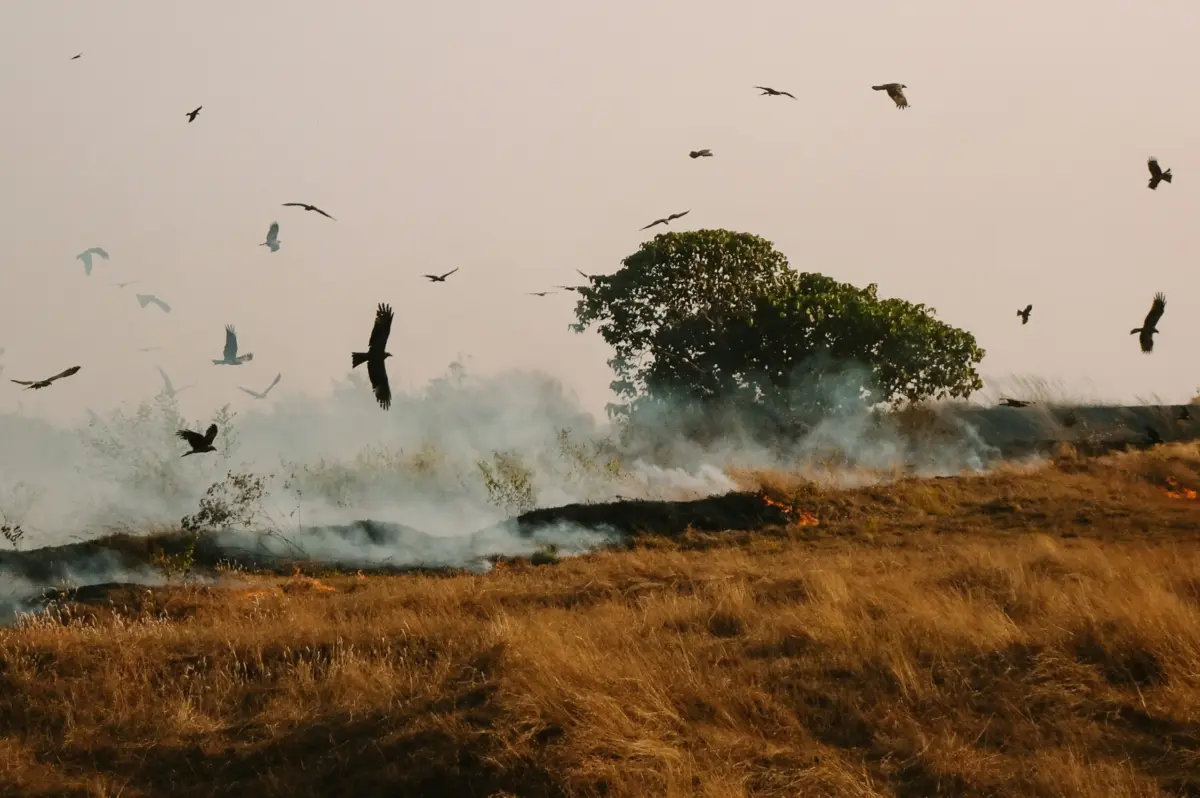
In the summer of 1952, against the backdrop of choked skies and raging wildfires in the rural settlement of Kampong Krokop—famously known as the "Village of the Boars"—a traumatic chapter of post-war history reached its grim conclusion. Guan Ah-fung, a well-known local general store operator who had lost both arms decades earlier, was found dead, hanged from a jackfruit tree on his property.
Despite his severe physical disability, local authorities and eyewitnesses confirmed that Ah-fung took his own life using his feet—a testament to the remarkable physical dexterity he had cultivated over a lifetime. However, an investigation into the months leading up to his death reveals that Ah-fung was not merely a victim of physical hardship, but a man driven to madness by the unearthing of lingering World War II trauma.
The tragedy was precipitated by a group of local children who uncovered a hidden cache of Japanese imperial wartime relics—including yōkai fright masks and mechanical toys—concealed beneath Ah-fung’s stilt house. The unearthing of these items unleashed a torrent of repressed memories, culminating in severe post-traumatic hallucinations, paranoia, and ultimately, suicide.
Read Also
This report provides a comprehensive breakdown of the events leading to Guan Ah-fung’s death, the environmental and historical factors at play in post-war Borneo, an analysis of his extraordinary physical adaptations, and an evaluation of the broader social impact on the community of Kampong Krokop.
Detailed Chronology
+-----------------------------------------------------------------------------------+
|                            TIMELINE OF EVENTS                                    |
+-----------------------------------------------------------------------------------+
|  c. 1930s        | Guan Ah-fung loses both arms at age 21; adapts by using feet. |
|  c. 1941–1945    | Japanese occupation of Borneo; Allied bombings; guerilla clashes. |
|  c. 1947         | Ah-fung introduces son, Bag-rhong, to wilderness observation.  |
|  June 1952       | Durian harvest; children discover hidden crate of Japanese toys. |
|  Mid-1952        | Ah-fung discovers the children, destroys relics in a bonfire.     |
|  Late 1952       | Rapid psychological decline; severe nocturnal hallucinations.     |
|  Late 1952       | Wildfires sweep Krokop; Guan Ah-fung dies by suicide.              |
+-----------------------------------------------------------------------------------+
1. Trauma and Adaptation (Pre-1952)
At age twenty-one, Guan Ah-fung suffered a catastrophic injury that resulted in the amputation of both arms. Left without hands in a challenging equatorial frontier, Ah-fung developed an exceptional degree of motor control in his lower limbs.
Over two decades, he adapted to perform complex daily tasks using his toes:
- Craftsmanship & Tools: Manufactured deadly slingshots using V-shaped sapling branches whittled with a parang machete held between his toes; constructed paper kites with hand-cut bamboo strips.
- Marksmanship: Operated a double-barreled shotgun by resting the stock against his pelvis, securing the barrel between his left toes, and pulling the trigger with his right middle toe.
- Mobility: Navigated an imported Raleigh cargo bicycle along the muddy tracks between the Krokop River and Gang-rhun General Store, steering and braking using his feet.
- Paternal Bond: Constructed a tire swing on a jackfruit tree for his young son, Bag-rhong, using his feet to kick the swing high into the air.
2. The Discovery in the Sunshade Crawl Space (June 1952)
During the peak durian harvest of June 1952, wild boars drawn by the fallen fruit descended upon Kampong Krokop. Local children, including Bag-rhong, took to the trees with slingshots to hunt birds and scare off the wildlife.
While exploring the shaded crawl space beneath the sunshade roof of Ah-fung’s stilt house (rumah panggung), the children discovered an ox-belly-sized crate bound with thick hemp rope. Upon opening the container, they found a collection of imperial-era Japanese artifacts:
- Fright Masks: Intricately carved yōkai masks depicting bird beaks, cyclopes, red-faced monsters, fanged demons, and malicious spirits.
- Windup Mechanical Toys: Metal novelties including hopping chickens, drumming rabbits, chirping cicadas, and a Spanish snowman with a broom.
The children put on the masks and began playing with the windup toys beneath the jackfruit tree, roasting pigeon nestlings over an open fire.
3. The Climax and Destruction of the Relics
Upon discovering the children wearing the Japanese masks, Ah-fung suffered a severe emotional shock. Observers noted that his stoic, drumskin-tight facial expression instantly drained to an ashen pallor. In a fit of rage and terror, he ordered the children to remove the masks and flee the premises.
Ten days after the incident, Ah-fung forced his son Bag-rhong to help him burn the entire contents of the crate beneath the jackfruit tree. Despite the fire, residual metal components survived; months later, neighborhood children recovered surviving clockwork mechanisms from the ash heap.
4. Psychological Collapse and Nighttime Vigils
In the six months following the bonfire, Ah-fung underwent a severe psychological deterioration:
- Social Withdrawal: He became cold and distant at the Gang-rhun General Store, sitting mute behind the counter with an intense, aggressive stare that villagers described as harboring "an uncontrollable urge to kill."
- Nocturnal Paranoia: He sat on the veranda late into the night, chain-smoking over a hundred cigarettes until dawn, staring hyper-vigilantly into the dark jungle edge.
- Hallucinations: He repeatedly woke his son in the middle of the night, flashing lights into the yard and claiming to see disembodied figures, Japanese bicycle infantry riding over dead children, and headless spirits playing charred harmonicas.
5. The Final Excursion and Suicide
Three days prior to his death, Ah-fung took Bag-rhong to a nearby grassy hill overlooking Allied bomb craters and old hunting grounds. Ah-fung described vivid, terrifying hallucinations of an approaching rōnin wielding a katana, an assassin concealed in a khaya tree with a blowgun and bayonet, and a woman hunting pregnant sows accompanied by skeletal animals.
Three days later, during a severe wildfire that filled Kampong Krokop with dense, suffocating smoke, Ah-fung walked out to the jackfruit tree in his garden. Using only his toes, he untied the rope of the tire swing he had built for his son, fashioned a hanging noose, placed it around his neck, and jumped from the branch.
Supporting Context & Environmental Metrics
Environmental Factors
The tragedy occurred during a period of extreme ecological stress in Sarawak, characterized by widespread seasonal wildfires burning through lalang grass fields and equatorial bushland.
+-----------------------------------------------------------------------------------+
|                        ENVIRONMENTAL & LANDSCAPE METRICS                          |
+-----------------------------------------------------------------------------------+
| Landscape Type      | Tropical marshland, lalang grass fields, primary rainforest |
| Key Flora           | Jackfruit trees, rambutan, khaya, boxwood, strangler figs   |
| Key Fauna           | Greater coucals, wild green pigeons, bearded pigs, hawks   |
| Settlement Type     | Kampong Krokop: ~200 wooden stilt houses (rumah panggung)   |
| Primary Hazards     | Seasonal wildfires, smoke haze, WWII shell craters/mines    |
+-----------------------------------------------------------------------------------+
The dense smoke created severe visibility issues, shifting rapidly with southwest monsoon winds, enveloping crops, choking livestock, and driving wild birds—particularly the greater coucals—from their nests. The environmental chaos provided a chaotic backdrop that masked Ah-fung’s final actions from immediate neighborly intervention.
       [ WILD FIRE DISASTER ZONE ]
                  │
  ┌───────────────┴───────────────┐
  ▼                               ▼
[ECOLOGICAL IMPACT]      [COMMUNITY DISRUPTION]
 - Lalang grass fires     - Smoke enveloping stilt houses
 - Wildlife panic         - Livestock distress
 - Avian displacement     - Children's dangerous games
Psychological Profile: Post-War Trauma in British Borneo
Ah-fung’s hallucinations directly reflect the historical trauma experienced by civilians in Sarawak during the Japanese occupation of 1941–1945 and the subsequent Allied liberation campaigns.
                                 ┌────────────────────────────────────────┐
                                 │ JAPANESE OCCUPATION OF BORNEO (41–45)  │
                                 └───────────────────┬────────────────────┘
                                                     │
                                                     ▼
                                 ┌────────────────────────────────────────┐
                                 │ Hidden Crate of War Relics & Masks     │
                                 └───────────────────┬────────────────────┘
                                                     │
                                                     ▼
                                 ┌────────────────────────────────────────┐
                                 │ Re-activation of Repressed Memories    │
                                 └───────────────────┬────────────────────┘
                                                     │
                                                     ▼
┌───────────────────────────────────┬───────────────────────────────────┬───────────────────────────────────┐
│     Hallucinations of Soldiers     │     Obsessive Nighttime Vigils    │      Extreme Social Withdrawal    │
└───────────────────────────────────┴───────────────────────────────────┴───────────────────────────────────┘
The presence of the hidden crate under his home suggests Ah-fung was directly exposed to occupation forces or guerrilla resistance activities. The imagery recalled in his final months—bicycle troops, severed limbs, bayonets, and Japanese folk songs—corresponds to documented military tactics used by Japanese infantry units during their sweep through North Borneo.
Official Statements and Observations
Testimony from Kampong Krokop Residents
Local elders and neighbors emphasized Ah-fung’s supernatural physical capabilities, while noting the dark omens surrounding his final days:
"No one doubted that Guan Ah-fung had ended his own life, even though he had no hands. He had climbed up that jackfruit tree, straddled the branch, and with his toes he had removed the tire and tied a noose, then put the noose around his own neck, doing all of this with his own two feet."
— Unanimous Consensus of Krokop Villagers"His eyes had the cold gleam of blades, as if they harbored some uncontrollable urge to kill that had outlasted the war. He sat at the store counter like a sentry, silent and rigid."
— Local Merchant, Gang-rhun General Store
Eyewitness Account: Bag-rhong (Son)
Bag-rhong’s accounts provide an intimate view of his father’s brilliant adaptations alongside his tragic mental collapse:
"If I hadn’t hung up the tire swing on that jackfruit tree, perhaps my father would not have hanged himself. The line the rope left on Father’s neck was like the indelible mark the parasitic strangler fig cuts into a tree… But I will never forget how he used to put on shadow puppet shows on the plank walls of our house, using his toes like fingers in the light of the kerosene lamp to make spirit snakes dance."
— Bag-rhong Guan
Literary and Historical Context
Translators and scholars of Southeast Asian Sinophone literature point out that Zhang Guixing’s narrative frames Ah-fung not merely as an individual case study, but as an allegory for post-war Borneo:
"The bodily resilience of Guan Ah-fung reflects the sheer survival instinct of rainforest pioneer communities, but his ultimate downfall illustrates that physical adaptability cannot cure the deep psychological wounds inflicted by war and violence."
— Literary Analysis Commentary
Future Outlook and Legacy
The death of Guan Ah-fung leaves a profound mark on the community of Kampong Krokop, illuminating several broader socio-historical themes that continue to impact the region:
- Unresolved Historical Trauma: The incident underscores how war remnants—both physical artifacts and unaddressed psychological injuries—continue to disrupt civilian lives years after active combat ceases.
- Impact on the Next Generation: Children who grew up in the immediate post-war era, such as Bag-rhong and his peers, were caught in an environment where childhood games (hunting birds, playing with discarded war toys) collided directly with the horrific adult realities of wartime occupation.
- Cultural Memory in Sinophone Literature: Guan Ah-fung’s story remains a poignant representation of the Chinese diaspora experience in North Borneo—a history marked by frontier resilience, extreme environmental pressure, and the inescapable shadows of 20th-century geopolitical conflict.
While the physical ashes of the Japanese masks and windup toys have long settled into the dirt beneath the jackfruit tree, the story of Guan Ah-fung serves as a permanent reminder of the lasting human cost of war.




Comments
Facebook App ID not configured. Please add it in the Customizer.