
Executive Overview
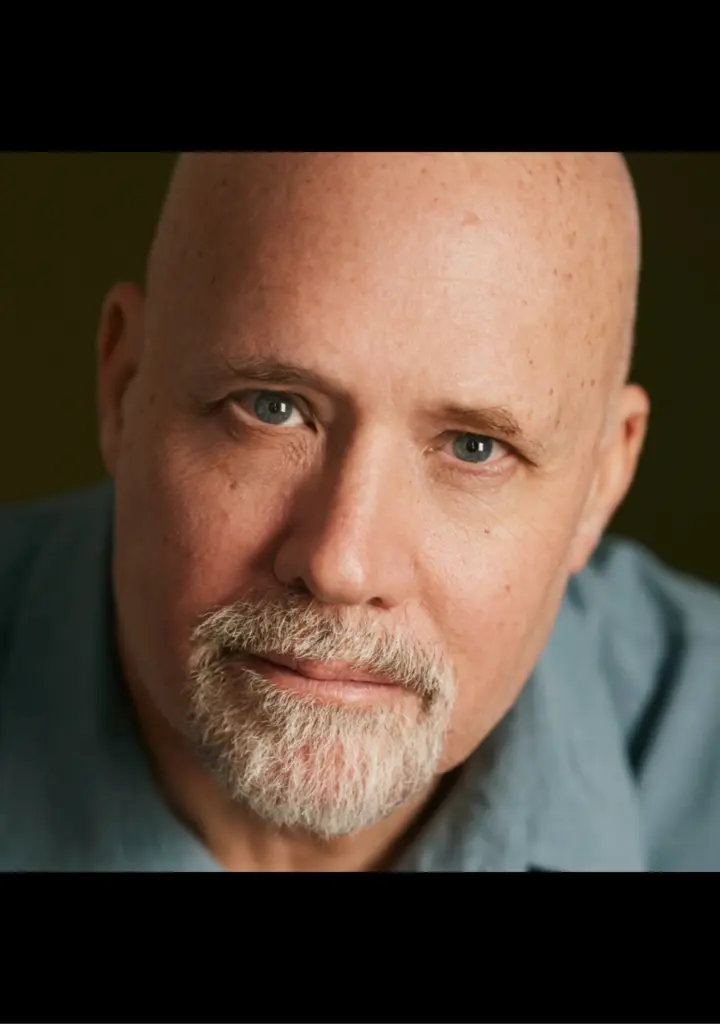
Literary evolution is rarely a linear trajectory; more often, it is a process of prolonged excavation, patience, and structural attrition. For acclaimed novelist and educator Mitch Wieland, the journey toward his third novel, The Ghosts of Okuma—slated for publication on November 3, coinciding with the thirtieth anniversary of his debut novel, Willy Slater’s Lane—spanned nearly ten years, thousands of discarded pages, and a profound global tragedy.
What began as “Snow Angels,” an 8,000-word short story published in the summer 2015 edition of The Missouri Review, has ultimately expanded and refined itself into a critically lauded novel. Garnering a starred review from Kirkus Reviews and earning recognition as a Best Indie Book for March, The Ghosts of Okuma represents the culmination of Wieland’s deep-seated relationship with Japan, his rigorous study of narrative architecture, and his lifelong dedication to the literary arts.
In a wide-ranging interview with Scout Hudson, Wieland reflects on the messy, trial-and-error process of turning a modest short story into a sweeping novel. He explores the profound ontological shock of the 2011 Tōhoku earthquake, tsunami, and Fukushima Daiichi nuclear disaster; discusses the mechanics of sensory-driven prose; and outlines his enduring impact on the American literary landscape through his founding roles at The Idaho Review and Boise State University’s Master of Fine Arts program.
Read Also
Detailed Chronology: From a Muddy Mailbox to Tokyo’s Shadow
The origins of The Ghosts of Okuma stretch far beyond its decade-long gestation period, tracing back to Wieland’s formative years living in Japan from 1986 to 1991. Immersed in an era when the nation’s economy was superheating, Wieland developed an enduring passion for literary short fiction, regularly patronizing local bookstores for collections by Raymond Carver and Joy Williams. Upon returning to the United States in 1991, he secured his first-ever literary journal subscription: The Missouri Review.
The relationship with the journal proved transformative. While living on an Idaho farm near the Oregon border with his wife, Cindy, Wieland experienced a quintessential moment of literary serendipity. Following a severe windstorm that scattered his mail across the fields, Wieland waded through flood-irrigation mud in a hundred-degree heat to retrieve a letter from The Missouri Review editor Speer Morgan. Though a previous submission had narrowly missed publication, Morgan encouraged Wieland to send another piece. That subsequent submission was “Snow Angels.”
[1986–1991] ──► [1991–2011] ──► [March 2011] ──► [2012–2014] ──► [2020–2024] ──► [Nov 3]
  Japan Years    Early Career   Fukushima    Research &    Agency & Edit  Publication
  & Discovery    & TMR Debut    Disaster     Composition   (Massie/McQ)   & 30th Anniv.
Years later, while working on a sprawling, 500-page novel about Japan under the guidance of iconic literary agent Wendy Weil, Wieland’s creative trajectory was irrevocably altered. In March 2011, watching NHK news coverage of the tsunami crashing ashore—followed immediately by CNN’s emergency broadcasts—Wieland realized the impossibility of writing about contemporary Japan while ignoring the catastrophe.
"I just realized instinctively at that moment that I couldn’t write about Japan without this," Wieland noted.
Discarding the entire 500-page manuscript, Wieland retained a solitary peripheral character named Yoshimi and began anew. Backed by a National Endowment for the Arts (NEA) grant and a one-year fellowship from Boise State’s Arts and Humanities Institute, Wieland traveled to Japan for eight intensive weeks of research. Seeking to master plot and structure, he attended seminars by master narrative theorists Robert McKee and Christopher Vogler in Los Angeles. By 2013–2014, “Snow Angels” was completed and submitted to The Missouri Review, serving as the narrative seed for the novel to come.
The path to publication, however, demanded immense stamina. Though the manuscript was largely finished by the onset of the 2020 pandemic lockdowns—a notoriously difficult climate for securing representation—Wieland eventually signed with Julie Stevenson of Massie & McQuilken in 2021. Together, they subjected the manuscript to rigorous revision, ultimately cutting an additional seventy pages from the opening chapters. Out of roughly 2,000 generated pages, the final 275-page novel emerged, anchoring its narrative DNA in the exact opening scene of the original 2015 short story.
Supporting Context & Metrics: The Sensory Architecture of Disaster
Wieland’s approach to translating massive historical trauma into fiction relies heavily on sensory texture, a methodology honed under the tutelage of legendary writer George Garrett. Garrett emphasized the creation of a "sensuously effective texture"—one that, to the mind’s eye, remains virtually indistinguishable from lived reality.
Modern neuroscience increasingly validates Garrett’s intuitive pedagogy. Functional MRI (fMRI) studies demonstrate that processing sensory-rich literary phrasing—such as descriptions involving clove cigarettes and lavender—activates both the brain’s language centers and its olfactory cortexes in real-time. For Wieland, capturing Tokyo required leaning into this sensory overload:
- Sensory Immersion: Wieland visited every physical location featured in the novel—excluding the immediate Fukushima exclusion zone, which he approached as closely as permissible just one year post-disaster. Locations range from the bustling districts of Shinjuku and Shibuya to the tranquil, wind-swept wooden slats of the historic Yanaka Cemetery.
- Economic Realities: Observing the stark differences between his late-1980s residency—marked by the conspicuous consumption of "Big Trash Day"—and his 2012 research trip, where secondhand stores reflected a post-crash, tightened economy, provided crucial socio-economic grounding for his characters.
- The Weight of Collective Trauma: Drawing parallels to the generational anxiety following American historical watersheds like the 1979 Three Mile Island accident and the September 11 attacks, Wieland explored the existential vertigo experienced by Japanese youth in the wake of Fukushima. The disaster shattered fundamental assumptions of safety within a densely populated island nation spanning a mere 150 miles in width.
Official Statements & Creative Philosophy
Discussing the mechanics of character development and narrative perspective, Wieland emphasized the delicate balance required when an outsider protagonist navigates a foreign society’s grief:
"The main thing was to take in each setting and try to take enough notes that I could translate it into the scenes in the book… On the national level, the thing that I tried to use as a guiding light is the fact that Wyatt is an outsider. He’s only there for ten days, and he’s trying to find his sister. He has a clear and visible outer goal. He’s also brought his mother’s [ashes] along. He has this inner need to find a place for her."
Wieland also pointed to real-world acts of defiance as thematic touchstones for his characters, noting the inspiration drawn from the young Tokyo artist collective Chim↑Pom. One month after the 2011 disaster, the collective marched in hazmat suits and tennis shoes to an official Tepco lookout point in Okuma, unfurling a hand-painted Japanese flag that morphed into the international symbol for radiation against a smoldering backdrop. This spirit of righteous public anger directly informed the characterization of Yoshimi.
Future Outlook: A Legacy of Mentorship and Letters
As The Ghosts of Okuma prepares to hit bookshelves on November 3, Wieland’s influence extends far beyond his own bibliography. Approaching retirement after a thirty-year tenure at Boise State University, Wieland reflects on the institutional legacy he helped establish.
Having co-founded Boise State’s MFA Program in Creative Writing and edited twenty issues of The Idaho Review—which garnered numerous selections in the Best American series and Pushcart anthologies—Wieland has helped foster an incubator for national literary talent. Alumni of the program have achieved remarkable commercial and critical success, including:
- Mary Pauline Lowry (The Roxy Letters, Simon & Schuster)
- Ariel Delgado Dixon (Sourland, Don’t Say We Didn’t Warn You, Penguin Random House)
- Jackie Polzin (Brood, winner of the Los Angeles Times Book Prize and the Sue Kaufman Prize for First Fiction)
- Ayotola Tehingbola (Author of the forthcoming short story collection Lagos Will Be Hard For You)
This unbroken chain of mentorship—bridging George Garrett’s mid-century Georgia workshops to contemporary voices reading at national festivals—underscores a career dedicated to the preservation and transmission of narrative craft.
With The Ghosts of Okuma, Mitch Wieland offers readers not merely a story of a brother searching for his sister in a transformed Tokyo, but an authoritative meditation on memory, resilience, and the enduring necessity of bearing witness to history through art.





Comments
Facebook App ID not configured. Please add it in the Customizer.