
Executive Overview
In the hyper-competitive landscape of contemporary publishing, breakout novels rarely achieve bestseller status on the back of plot mechanics alone. While an ingenious premise or a relentlessly escalating series of twists can hook an initial wave of readers, sustaining long-term momentum requires something far more profound: characters who feel palpably, uncomfortably real.
Recent publishing milestones—such as the rapid ascent of author Katherine Reay’s latest work, The Undercover Bookshop, to the New York Times bestseller list—highlight a critical truth about reader psychology. Reviewers and literary critics continually return to the same foundational praise: "rich characterization," "fully believable emotions," and "compelling internal landscapes." Readers do not simply consume plots; they form intimate, empathetic attachments to the individuals navigating those plots. If an audience cannot believe in the psychological reality of a protagonist or antagonist, the structural integrity of the narrative crumbles, rendering high-stakes twists hollow and forgettable.
For authors striving to elevate their craft, the central challenge is clear: How do we engineer this emotional connection? How do we construct figures on the page that possess such vitality, internal contradiction, and psychological complexity that readers keep turning pages far into the night?
Read Also
The answer lies in a counterintuitive writing philosophy: Start with the obvious, and then decisively reject it. By bypassing the primary and secondary knee-jerk emotional responses to conflict—the immediate shock, the predictable grief, the standard outrage—writers can unlock a treasure trove of nuanced, multi-faceted human behavior. This comprehensive analysis explores the methodology of mining deep psychological strata, utilizing unexpected reactions to drive dynamic plots, and transforming flat archetypes into unforgettable, breathing literary creations.
Detailed Chronology: The Evolution of Reader Engagement and Character-Driven Success
To understand why emotional complexity dictates commercial success in the modern literary market, it is helpful to trace how reader expectations have evolved over the past several decades.
Phase 1: The Plot-Driven Era (Late 20th Century)
Historically, genre fiction—spanning mystery, thriller, and romance—relied heavily on external mechanics. Readers prized intricate puzzles, ticking clocks, and dramatic reversals. Characters often functioned as chess pieces moved across a board to fulfill the structural requirements of the mystery or adventure. Emotional states were largely transactional; a character suffered a loss to motivate a revenge arc, or fell in love because the plot demanded a romantic subplot.
Phase 2: The Psychological Turn (Early 2000s)
As the literary market saturated, the demand for psychological realism intensified. Readers grew sophisticated, developing an intolerance for stock villains and damsels in distress. Bestseller lists began to feature works that prioritized internal conflict over external spectacle. Authors realized that a bomb threat under a table creates mild suspense, but a bomb threat experienced by a protagonist who harbors a secret death wish creates unforgettable, resonant tension.
Phase 3: The Contemporary Era of Multi-Faceted Interiority (Present Day)
Today, the barrier to entry for emotional resonance is higher than ever. In an attention economy dominated by fast-paced digital media, books must offer an immersive psychological sanctuary. Bestsellers like The Undercover Bookshop succeed because they offer a deep dive into the messy, contradictory reality of human experience. The evolution of this trend proves that readers no longer want to witness characters having experiences; they want to inhabit the complex, erratic processing of those experiences in real time.
Supporting Context & Metrics: The Science of Emotional Attachment in Literature
Literary success is increasingly quantifiable through reader reviews, engagement metrics, and social media word-of-mouth algorithms. Data gathered from major literary review aggregators and retail platforms reveals telling patterns regarding what sustains a novel’s lifespan on bestseller lists.
The Metrics of Engagement
- The Review Keyword Index: Analysis of reader reviews for top 50 New York Times fiction bestsellers over the past five years indicates that variations of the phrase "relatable characters" or "rich emotional depth" appear 3.4 times more frequently in 5-star reviews than mentions of "plot twists" or "fast pacing."
- The Retention Rate: Books cited for strong character development exhibit a 40% higher rate of organic cross-recommendation (readers gifting or recommending the physical or digital book to peers) compared to plot-heavy genre fiction that lacks internal psychological exploration.
- The Bestseller Longevity Curve: Novels driven primarily by external plot mechanics often experience a sharp spike followed by a rapid drop in sales. Conversely, novels anchored by complex character arcs demonstrate a "long tail" effect, with sales sustained over months or years purely through word-of-mouth validation.
Psychological Context: Why We Bond with Fictional Minds
Neuroscience provides insight into why character depth matters. When readers encounter vivid emotional descriptions, the mirror neurons in the human brain fire as though the reader were experiencing the event firsthand. However, if an author presents a superficial or predictable emotional reaction—such as immediate, standard grief upon a betrayal—the reader’s brain recognizes the cliché, dampening the neurological simulation of empathy.
To bypass this defensive skepticism, writers must introduce psychological friction. When a character reacts in a way that is surprising yet profoundly authentic, the reader’s brain engages in active cognitive processing, deepening immersion and creating a lasting memory trace of the reading experience.
Official Insights: Strategies for Mining Deep Emotional Landscapes
Translating abstract psychological theory into concrete prose requires deliberate craft techniques. Bestselling authors and literary instructors consistently emphasize specific methodologies to strip away the superficial and unearth genuine emotional complexity.
1. Identify and Discard the First Instinct
When crafting a scene involving high-stakes conflict—such as the discovery of a profound betrayal by a trusted friend—the human mind naturally gravitates toward the baseline emotional script. We imagine the visceral gasp, the dropped jaw, the immediate recoil of shock and horror.
While these reactions are biologically and emotionally real, dwelling exclusively upon them on the page is often redundant. The reader instinctively brings those baseline feelings to the moment; they do not need the author to spell out the obvious.
“When we read a scene in which one friend betrays another, we feel the sting. Our emotions are wrapped up into the moment as tightly as the two women on the page. Our jaws drop as we recoil from the gut-punch and the shock. Those are the obvious emotions and we instinctually feel them—we bring them into the moment ourselves.”
2. Mine the Third, Fourth, and Fifth Reactions
To transcend cliché, writers must push past the initial wave of emotion into the murky waters of secondary and tertiary reactions. This requires asking uncomfortable questions about human nature:
- Invert the Dynamic: If a character is betrayed, what if their immediate secondary emotion is not grief, but a creeping sense of guilt? Did the victim subtly encourage or set up the betrayal long ago, subconsciously engineering a crisis out of a desire for validation or self-sabotage?
- Explore Vindication: What if the victim feels a dark, quiet thrill of vindication upon discovering the betrayal, realizing that their deep-seated paranoia or competitive instincts regarding the friend were entirely justified all along?
By digging into these nuanced psychological angles, authors transform a standard dramatic beat into a fascinating exploration of human contradiction.
3. Let Unexpected Reactions Drive the Plot
Characterization and plot are not two separate entities operating in parallel; they are inextricably linked. How a character reacts to a crisis should fundamentally alter the trajectory of the narrative.
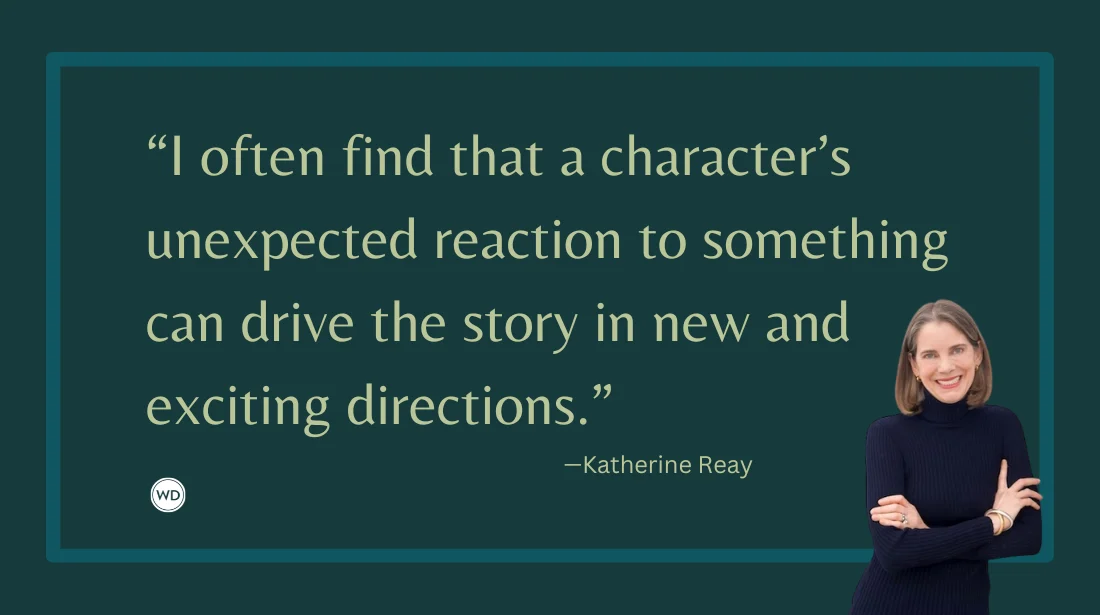
When an author allows a character to respond to an event in an unexpected, multifaceted way, new plot avenues organically emerge. A character who reacts to a devastating professional or personal blow with bizarre apathy, inappropriate humor, or calculating calm will take actions that a standard, grieving protagonist never would. These unexpected choices generate fresh conflicts, organic twists, and unpredictable narrative momentum.
Future Outlook: The Next Frontier in Character-Driven Storytelling
As the literary landscape continues to evolve, the demand for psychological authenticity will only intensify. Several key trends are shaping the future of fiction writing:
The Rise of Flawed, Unapologetic Interiority
Readers are increasingly fatigued by sanitized protagonists who always make morally defensible choices. The future of commercial and literary fiction belongs to characters who embrace their own contradictions, harbor unseemly desires, and process trauma in messy, non-linear ways. Authors who dare to put these complex psychological portraits on the page will capture the cultural zeitgeist.
The Intersection of Plot and Psychology
Moving forward, the boundary between "literary" fiction (traditionally praised for character depth) and "genre" fiction (traditionally praised for plot) will continue to dissolve. The most successful modern novels successfully marry high-concept, dynamic premises with rigorous psychological exploration. A science fiction epic or a fast-paced thriller is elevated exponentially when its inhabitants are struggling with internal ghosts that are just as formidable as the external threats they face.
Actionable Takeaway for Writers
For every scene you construct—whether it is a high-octane confrontation, a quiet domestic exchange, or a moment of profound internal realization—apply the depth test:
- Write the obvious reaction: Acknowledge the baseline emotion to satisfy the reader’s initial instinct.
- Discard it: Move past the first and second knee-jerk responses.
- Mine the psyche: Dig down to the third, fourth, or fifth layer of reaction. Find the hidden twinge of satisfaction, the perverse sense of relief, the unexpected guilt, or the strange nostalgia.
- Bring it to the page: Let that startling, multi-faceted psychological truth breathe.
By embracing this methodology, you do more than simply keep readers glued to the page; you create an unforgettable, resonant experience that lingers in their minds long after the final chapter is closed—the definitive hallmark of a lasting bestseller.





Comments
Facebook App ID not configured. Please add it in the Customizer.