
Executive Overview
As the calendar year draws to a close, a familiar malady settles over the creative community. Writers everywhere face a daunting convergence of pressures: desperate, eleventh-hour attempts to meet annual word-count quotas set back in January, paired with the relentless, time-consuming demands of the holiday season. The result is a pervasive, institutionalized burnout that leaves keyboards gathering dust and imaginations running completely dry.
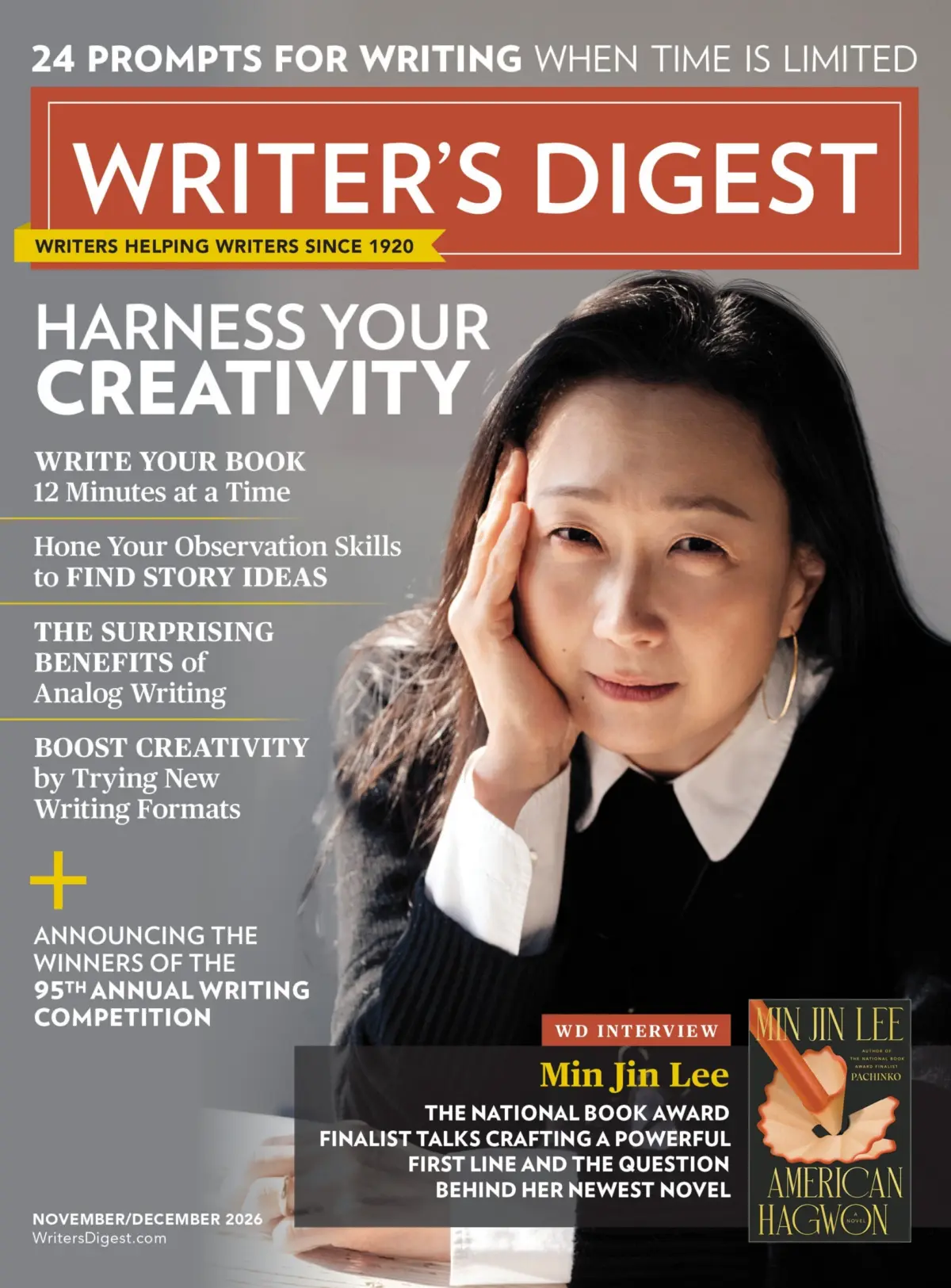
Entering the fray to rescue beleaguered scribes is the latest edition of Writer’s Digest, which arrives not a moment too soon. Serving as both a tactical survival manual and an inspirational manifesto, this issue addresses the acute seasonal exhaustion that plagues authors. Rather than demanding impossibly long blocks of uninterrupted writing time—a luxury few can afford amid family gatherings, travel, and fiscal year-end crunches—the magazine pivots toward micro-habits, cognitive re-framings, and systemic creativity hacks.
At its core, this flagship issue confronts the modern realities of the literary arts. It offers an expansive roadmap designed to help writers steal moments on the go, experiment with radical new formats, return to the tactile grounding of pen and paper, and protect their unique human voices in an era increasingly dominated by generative artificial intelligence. Highlighted by an exclusive interview with National Book Award finalist Min Jin Lee and the official unveiling of the 95th Annual Competition Winners, this edition positions itself as an indispensable resource for anyone determined to keep their creative pulse alive through the darkest and busiest weeks of the year.
Read Also
Detailed Chronology & Issue Breakdown
To understand how Writer’s Digest addresses the multifaceted nature of writer’s block and seasonal fatigue, one must examine the specific architecture of the new issue. The editorial team has curated a precise sequence of features designed to diagnose the symptoms of burnout and administer immediate, actionable remedies.
1. The Diagnosis: Embracing Everyday Curiosity
The journey out of burnout begins in the unlikeliest of places: the mundane corners of daily life. In "Shopping for Story Ideas," contributor Jenna Brooks posits that the root cause of creative stagnation is often a failure of observation rather than an absence of imagination. Brooks outlines a methodology for turning passive people-watching into active plot generation. By cultivating a deep, clinical curiosity about the inner lives, subtle quirks, and hidden trajectories of strangers encountered in coffee shops, grocery stores, and transit hubs, writers can unearth organic, character-driven conflicts that far surpass contrived, purely conceptual brainstorming.
2. The Tactical Intervention: Micro-Drafting and Constraints
Once an idea is secured, the perennial barrier is time. Elizabeth Sims tackles this head-on in "12-Minute Drafts: Creativity hacks for a chaotic season." Sims dismantles the myth that creative work requires sacred, hours-long rituals in isolated cabins. Instead, she weaponizes extreme time-boxing. By carving out a mere 12 minutes amidst the chaos of holiday preparations, writers can bypass their internal editors and tap straight into the subconscious flow state. These micro-sessions lower the psychological barrier to entry, proving that sustained progress is built on compound interest rather than monumental daily output.
3. Structural Experimentation: Shaking Up the Form
When traditional storytelling begins to feel stale, P.M. Raymond suggests a radical change of architecture. In "Trying New Writing Formats to Boost Creativity," Raymond introduces six distinct storytelling methods designed to jolt the brain out of its habitual pathways. Whether it is shifting from third-person omniscient to epistolary formats, experimenting with non-linear timelines, or adopting structural constraints borrowed from poetry, these methods provide a shock to the system. Writers are given six immediate pathways to apply these formats, ensuring they can pivot away from creative ruts without abandoning their core projects.
4. The Analog Pivot: Reconnecting with the Physical Page
In a digital ecosystem saturated with blinking cursors, notification pings, and the ambient anxiety of open browser tabs, the physical act of writing often feels degraded. Polly Campbell offers a profound corrective in "Analog Antidote." Campbell argues that returning to pen and paper during high-stress periods acts as a neurological reset. The tactile friction of graphite on pulp slows down the frantic pace of digital composition, forcing a deliberate, meditative connection between thought and hand that effortlessly preserves writing momentum when digital fatigue sets in.
5. The Existential Defense: Thriving in the Age of AI
Perhaps the most timely and culturally urgent piece in the lineup is Jane K. Cleland’s "Tell Your Story to Beat the Bots: A writer’s guide to thriving in the age of AI." As large language models increasingly flood the market with competent, algorithmic prose, Cleland addresses the profound existential crisis facing human authors. Her thesis is clear: generic storytelling is uniquely vulnerable to automation, but radical, deeply specific human vulnerability is entirely immune to it. Cleland provides a strategic framework for leaning into idiosyncratic lived experiences, emotional truths, and distinct stylistic fingerprints that algorithms can mimic but never genuinely feel.
6. Literary Masters and Milestone Competitions
Balancing the tactical advice are profound discussions of literary achievement. Amy Jones conducts "The WD Interview" with Min Jin Lee, celebrated author of the National Book Award finalist Pachinko. Lee discusses her highly anticipated newest novel, American Hagwon, and expands upon the central, guiding question that informs her oeuvre: How to live a wise life? For writers drowning in commercial anxieties, Lee’s reflections offer a grounding reminder of literature’s moral and philosophical weight.
Concurrently, the issue marks a monumental historical milestone by announcing WD’s 95th Annual Competition Winners, accompanied by an insightful profile and interview with the grand-prize winner by Michael Woodson. This showcase not only celebrates top-tier emerging talent but also serves as a beacon of inspiration for readers striving to elevate their own craft.
Supporting Context & Metrics
The release of this comprehensive issue arrives against a backdrop of mounting documented stress within the creative industries. According to recent surveys tracking occupational health among independent creators and working writers, nearly 74% of respondents experience acute burnout spikes during the fourth quarter of the calendar year. This seasonal exhaustion is driven by a toxic combination of professional milestone anxiety—such as the pressure to complete book proposals or manuscript revisions before publisher fiscal years reset—and the socio-emotional overhead of the holiday season.
Furthermore, the literary landscape is undergoing a seismic technological shift. Industry metrics indicate a 300% year-over-year surge in the volume of self-published and query-submitted content partially or wholly generated by AI tools. This influx has created a paradoxical crisis for traditional authors: while productivity demands are higher than ever, the market value of formulaic writing is plummeting.
Writer’s Digest has strategically positioned this issue to address these precise macro-trends. By advocating for micro-drafting (addressing the time deficit), analog reversion (addressing digital fatigue), and hyper-personalization (addressing AI commodification), the magazine provides empirically sound countermeasures to contemporary publishing pressures. Additional instructional segments—such as guides on prioritizing an overabundance of ideas, resurrecting abandoned drafts, and mastering the intricate mechanics of rhyming picture books for children—ensure that the publication remains a comprehensive encyclopedia of practical literary craft.
Official Statements
While Writer’s Digest has long operated as the premier trade publication for aspiring and established authors alike, the editorial philosophy underpinning this specific year-end release speaks volumes about the shifting ethos of the profession.
In editorial briefings accompanying the release, the leadership team emphasized a departure from "hustle culture" metrics that glorify exhaustion. An excerpt from the publication’s guiding notes underscores this philosophy:
"We are living through a cultural moment that tells writers they must produce more, faster, and louder just to stay visible. But true creativity cannot be bullied out of a burned-out mind. This issue represents a necessary paradigm shift. We are teaching writers how to scale down to scale up—to find power in twelve-minute windows, strength in pen and paper, and unmatched market value in their own irreplaceable, deeply human stories."
Regarding the inclusion of AI-focused pedagogy, industry analysts note a deliberate alignment with the broader mission of the Author’s Guild and allied literary organizations. The directive is unequivocal: rather than fearing technological disruption, writers must lean aggressively into the messy, unquantifiable specifics of human experience that machines cannot replicate.
Future Outlook
As the literary community looks toward the horizon of the new year, the release of this Writer’s Digest issue signals a much-needed recalibration in how authors approach their craft and careers. The traditional model of isolated, marathon writing sessions is increasingly proving incompatible with the hyper-connected, fast-paced demands of modern life.
Looking forward, the methodologies championed in this issue—micro-constraints, analog mindfulness, and radical emotional authenticity—are expected to shape writing pedagogy throughout the coming year. As generative AI continues to democratize and dilute baseline content creation, publications like Writer’s Digest will play a vital role in defending the artisanal integrity of the written word.
For writers willing to embrace these strategies, the end of the year does not have to be a season of creative bankruptcy. Instead, armed with the tactical advice of Elizabeth Sims, the observational drills of Jenna Brooks, the structural experiments of P.M. Raymond, and the philosophical grounding of Min Jin Lee, authors can close out the year not with exhaustion, but with a renewed, ferocious momentum.
Writers seeking to secure their physical or digital copies can explore purchasing options directly through the Writer’s Digest Shop or subscribe as a VIP member to ensure continuous access to future issues.

Comments
Facebook App ID not configured. Please add it in the Customizer.