
Executive Overview
For millennia, the concept of the haunted house has occupied a primal, indispensable space in the human psyche. From the flickering torchlight of ancient civilizations to the glowing screens of modern digital media, the specter of a spirit bound to a terrestrial dwelling continues to raise the hairs on the back of the human neck. Far from being a mere pop-culture novelty reserved for autumn festivals or late-night campfire tales, the ghost story is a profound cultural artifact. It represents a collective rehearsal for our greatest existential dreads: mortality, grief, ancestral guilt, and the unsettling suspicion that the past is never truly dead.
This deep-seated cultural obsession transcends simple entertainment. It is a psychological mechanism, a historical mirror, and a versatile literary framework that allows generations of storytellers to explore the deepest fissures of human society. As authors, filmmakers, and cultural critics continue to adapt the tropes of the haunted house for contemporary audiences, the genre proves infinitely elastic. Whether manifested as a crumbling medieval fortress in 18th-century Europe, an isolated Rust Belt manor in modern-day America, or the psychological trauma woven into the heart of a mother, the haunted house remains one of humanity’s most enduring and revealing artistic expressions.
Detailed Chronology: From Babylonian Tablets to Modern Gothic
To understand why the haunted house holds such sway over the modern imagination, one must trace its lineage through recorded history. The chronology of the ghost story is as old as literacy itself, evolving from utilitarian magic into high art and, eventually, commercial entertainment.
Read Also
3500 BCE: The Dawn of the Undead in Babylonia
According to historical analyses by publications such as Smithsonian Magazine, the earliest written accounts of ghosts do not originate from spooky campfire lore, but from the cuneiform tablets of ancient Babylonia. Etched into clay around 3500 BCE, these early texts served a remarkably practical purpose: they functioned as manuals and exorcism guides. Rather than merely seeking to frighten, these ancient inscriptions provided citizens with precise ritual instructions on how to appease, banish, or permanently dispatch an unwanted spirit back to the underworld. Even at the dawn of civilization, humanity was grappling with the problem of what to do with the dead when they refused to stay put.
1st Century CE: Classical Rome and the Rattling Chain
Fast forward a few millennia to classical Rome, and the ghost story begins to acquire the distinct theatricality we recognize today. In the letters of Pliny the Younger, written during the first century CE, we find the foundational tropes of the classic haunting. Pliny famously documented accounts of a bearded old ghost rattling heavy iron chains, wandering through a dark and eerie house, and ultimately terrorizing its inhabitants until the mystery of the apparition’s unburied remains was solved. This Roman iteration established the ghost not just as a supernatural nuisance, but as a seeker of justice demanding resolution from the living.
1764: Horace Walpole and the Birth of the Gothic Novel
While ancient and classical texts laid the groundwork, the specific architectural framework of the haunted house—or castle—crystallized in the mid-18th century. In 1764, Horace Walpole published The Castle of Otranto, a work widely celebrated by literary historians as the world’s first true Gothic novel. Initially published under the pseudonym William Marshall to mask its transgressive nature, this roughly 85-page novella utilized a structure reminiscent of a five-act classical play. Walpole freely admitted that his primary inspirations were the ghost-haunted works of William Shakespeare.
The Castle of Otranto established nearly every rule of the haunted house playbook:
- A ancestral curse hanging over the head of a corrupt lord.
- The sins of the father violently visiting the children.
- Vengeful spirits manipulating the physical environment.
- Prophetic dreams and omens acting as unavoidable portents.
- The fates of innocent lives hanging in the balance of a moral reckoning.
Walpole’s genius lay in his blending of romance, melodrama, and supernatural terror. However, navigating the intellectual climate of the European Enlightenment required caution. During an era that championed rationalism, scientific inquiry, and logic, unwashed superstitions about curses and ghosts were routinely derided by the intellectual elite as barbaric and juvenile—hence the derogatory label "Gothic."
Anticipating a harsh critical reception from the learned classes, Walpole pulled off a brilliant literary hoax. In the first edition of the novel, he claimed the book was actually a 15th-century Italian manuscript translated by a fictitious medieval monk. This fabricated academic pedigree lent the book immediate legitimacy. The strategy succeeded wildly; The Castle of Otranto became an overnight sensation, sparking a literary revolution that persists to this day.
The 19th and 20th Centuries: The Evolution of American and Global Gothics
Following Walpole’s successful gambit, the Gothic genre exploded across Europe and crossed the Atlantic, spawning countless subgenres. The American Gothic tradition, in particular, adapted the haunted European castle to fit a New World landscape defined by vast expanses, rapid industrialization, and deep historical traumas. Castles were replaced by crumbling robber baron estates, brutal slave plantations, oppressive religious communes, decaying mental institutions, and desolate farmlands. Authors like Edgar Allan Poe, Henry James, and later Shirley Jackson used these physical spaces to exteriorize internal psychological decay, cementing the house as a character in its own right.
Supporting Context and Metrics: Why We Are Obsessed with the Dead
Why does humanity return, time and again, to narratives of hauntings? The answer lies at the intersection of human psychology, evolutionary biology, and our shared confrontation with mortality.
The Existential Equation
At its core, our obsession with ghosts boils down to a fundamental human truth: every single one of us will die, and every single one of us will experience the devastating loss of loved ones. Mortality is the ultimate unknown. Because none of us possess empirical proof of what lies beyond the veil, humanity has constructed an elaborate tapestry of religions, spiritual frameworks, and personal superstitions, all united by a common hope: that our departed loved ones haven’t gone far.
Culturally and psychologically, we desperately want to believe that consciousness survives death. This desire manifests in myriad ways across modern families:
- Interpreting recurring natural phenomena—such as a specific bird visiting a backyard—as a watchful ancestor.
- Believing that sudden, unexplainable bursts of intuition or sudden steering corrections on a slick highway are the work of protective guardian angels.
Whether viewed as wishful thinking, psychological coping mechanisms, or genuine spiritual phenomena, the dead are never far from our collective consciousness. When humans walk through aging, creaking historic buildings, dense fog-shrouded forests, or long-abandoned industrial complexes, a primal evolutionary instinct activates. We feel the heavy weight of history. We sense that we are not alone. Writers tap directly into this uncanny, hardwired sensation, crafting stories about unseen truths that simultaneously thrill us, chill us, and offer a strange form of existential hope.
The Anatomy of a Haunting: Core Structural Elements
Regardless of whether a haunted narrative is set in a medieval Italian fortress, a Victorian mansion, or a modern suburban split-level, certain structural pillars remain universally effective:
- The Burden of History: A house is never merely a shelter; it is a repository of generational lineage, accumulated wealth, social status, and, crucially, hidden sins. The past physically rots the foundations of the present.
- The Unresolved Conflict: Ghosts do not typically haunt places out of boredom; they are bound to a location by trauma, injustice, murder, or unfulfilled desires that demand closure.
- The Isolation Factor: To be truly haunted, protagonists must be structurally or emotionally isolated. Communication lines fail, weather closes in, or social status traps them within the terrifying confines of the estate.
- The Environment as an Antagonist: The house breathes, groans, locks doors, alters floor plans, and manipulates the senses, transforming domestic safety into a claustrophobic prison.
Official Perspectives and Expert Commentary
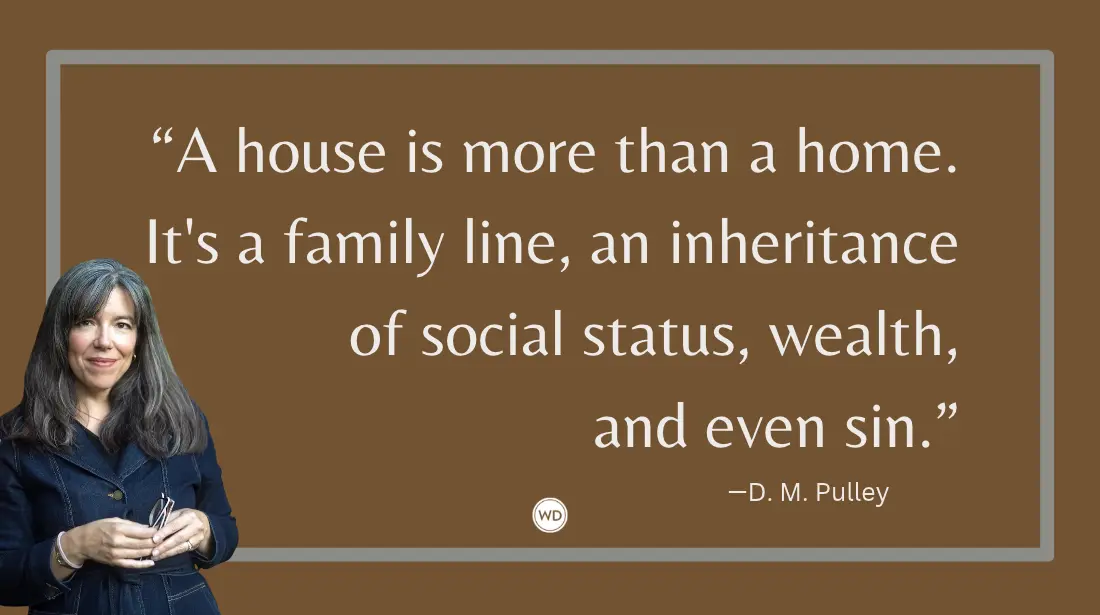
Contemporary creators and literary theorists frequently discuss how the mechanics of horror must evolve to reflect modern cultural anxieties. D.M. Pulley, a critically acclaimed novelist and former forensic structural engineer, offers a unique professional perspective on how the physical world intersects with psychological terror.
"A house is more than a home; it’s a family line, an inheritance of social status, wealth, and even sin," notes Pulley. Drawing on her day job analyzing structural failures, she explains how physical deterioration and historical trauma mirror one another. "True to the form, characters must confront the horrors of the past and the secrets buried inside these spaces, or become their next victims."
Literary critics and sociologists emphasize that the haunted house genre has survived centuries precisely because it is elastic enough to absorb the anxieties of any era. While 18th-century writers worried about aristocratic lineage and divine right, modern writers utilize the haunted house framework to dissect systemic racism, corporate greed, ecological collapse, and domestic trauma.
For instance, Toni Morrison’s masterpiece Beloved reimagines the haunted house not as a sprawling European estate, but as 124 Bluestone Road—a home saturated with the literal and figurative ghost of slavery, manifesting the broken heart and unbearable grief of a mother. Similarly, contemporary indigenous horror, such as Stephen Graham Jones’s The Only Good Indians, uses the framework of haunting to explore the lingering, inescapable weight of historical displacement, cultural guilt, and generational trauma within a modern social landscape.
Future Outlook: Reimagining the Haunted House for Modern Readers
As we look toward the future of speculative fiction and Gothic literature, the haunted house shows no signs of losing its structural integrity or cultural relevance. However, to keep an ancient trope vibrant for contemporary audiences, modern authors must continually subvert expectations.
Shifting Perspectives and Fresh Geographies
The key to making the old house new again lies in diversifying viewpoints. Modern storytellers are actively dismantling the homogenous perspectives that dominated 18th- and 19th-century Gothic literature. By shifting the narrative lens toward marginalized voices, working-class protagonists, and diverse cultural traditions, the genre unearths entirely new sources of terror and catharsis.
Furthermore, the physical geography of the haunting is expanding. Haunted houses are no longer confined to dusty rural manors or gothic European provinces. Modern narratives place hauntings in the future, deep within outer space installations, inside the sterile digital architectures of the internet age, or right in the middle of bustling, anonymous urban centers.
The Rust Belt Gothic and Modern Industrial Trauma
A prime example of this evolution is the modern Rust Belt Gothic subgenre—exemplified by contemporary thrillers set inside crumbling, abandoned industrial manors and post-industrial urban landscapes. In settings like present-day Cleveland, historical movements of economic boom and bust leave behind physical monuments to corporate hubris and human suffering.
When a modern protagonist—such as a working-class single mother or an investigative engineer—steps into these decaying modern ruins, the terror is no longer just about a chain-rattling phantom from the Middle Ages. It is about environmental neglect, institutional corruption, class warfare, and the inescapable echoes of late-stage industrial decay.
Conclusion
Ultimately, the enduring appeal of the haunted house rests on its profound psychological utility. Houses are containers for our lives, our secrets, our grief, and our shame. As long as humans build walls to keep the outside world at bay, we will inevitably wonder what—and who—is trapped inside with us. By continually renovating these ancient architectural frameworks to address modern social injustices and contemporary fears, writers ensure that the haunted house will remain standing for centuries to come, forever inviting us to cross the threshold into the dark unknown.


Comments
Facebook App ID not configured. Please add it in the Customizer.