
Executive Overview
For millennia, the architectural envelope of a home has served as more than mere shelter; it has functioned as a physical repository for humanity’s deepest psychological fears, moral failings, and existential grief. Haunted houses—ranging from the ancient cuneiform tablets of Babylonia to the sleek, digital-age ghost stories of contemporary cinema—occupy a unique space in global culture. They capture our imaginations, raise the tiny hairs on the backs of our necks, and provide a secure, controlled framework to process the ultimate unknown: mortality.
While architectural trends, societal structures, and literary mediums have evolved drastically over the centuries, the core grammar of the haunted house remains remarkably intact. Cursed lineages, unquiet dead seeking vengeance, and the inescapable weight of generational trauma continue to resonate with readers and viewers across generations. This investigation explores the profound psychological, historical, and literary mechanics behind humanity’s enduring obsession with things that go bump in the night, tracing the evolution of the haunted house narrative from ancient Mediterranean lore to modern, socially conscious Gothic thrillers like D. M. Pulley’s Stone Mad.
Detailed Chronology: From Ancient Cuneiform to the Birth of the Gothic Novel
To understand why contemporary audiences remain enthralled by haunted spaces, one must examine the deep historical roots of the supernatural narrative. The fear of lingering spirits is as old as human civilization itself.
Read Also
3500 BCE: The Dawn of Spectral Bureaucracy
According to historical analyses from Smithsonian Magazine, the earliest known written account of a ghost was meticulously chiseled onto a clay tablet in ancient Babylonia around 3500 BCE. Far from the atmospheric, atmospheric chills of modern horror, this early text functioned as a spiritual instruction manual—detailing precise rituals and incantations designed to banish an unwanted, wandering spirit back to the underworld. Even at the dawn of written history, humanity was grappling with the problem of the post-mortem trespasser.
1st Century CE: Chains, Rattles, and Roman Haunts
The classic trope of the rattling ghost—the bearded, spectral entity dragging heavy chains through the dark corridors of a decaying estate—is not a modern cinematic invention. It dates back directly to the personal letters of Pliny the Younger in first-century Rome. Pliny documented famous accounts of haunted properties in Athens, establishing early archetypes of poltergeist activity and paranormal phenomena that terrified classical antiquity just as effectively as they frighten modern audiences.
1764: The Birth of the Literary Haunted House
While ancient civilizations recorded supernatural encounters, the concept of the house itself as a sentient, cursed participant in human tragedy was codified during the Enlightenment. Horace Walpole, writing initially under the pseudonym William Marshall, published The Castle of Otranto in 1764. Widely accepted as the first true haunted house novel in history, this 85-page novella utilized a plot structure mirroring a five-act classical play. Walpole freely admitted that his primary inspirations were the ghostly mechanics and psychological tragedies of William Shakespeare.
The Castle of Otranto established the foundational blueprint for the Gothic genre:
- The Ancestral Curse: A dark, hereditary doom hanging over a lord’s domain.
- Sins of the Past: The moral failings and violent crimes of ancestors directly impacting the living.
- Vengeful Entities: Ghosts demanding restitution or retribution.
- Prophetic Omens: Dreams, portents, and supernatural warnings signaling impending doom.
- Melodramatic Stakes: A high-stakes battle between good and evil where innocent lives hang in the balance.
Interestingly, Walpole was deeply anxious about how his contemporaries would receive the work. During the hyper-rational Age of Enlightenment, unwashed superstitions, curses, and medieval ghosts were widely derided by the intellectual elite as juvenile and barbaric—a phenomenon derisively categorized as "Gothic." To bypass this intellectual prejudice, Walpole presented the first edition of Otranto as a genuine 15th-century Italian translation of an older medieval manuscript, lending the fictional work an academic pedigree. The gambit worked brilliantly, transforming the book into an instant cultural phenomenon and cementing the haunted house as a premier vehicle for literary exploration.
Supporting Context & Metrics: The Psychology of Mortality and Place
What drives our collective fascination with domestic spaces transformed into chambers of terror? Experts suggest that our obsession with ghosts boils down to a fundamental human truth: we are all mortal, and we will all experience profound loss.
The Psychology of Grief and the Supernatural
None of us know with absolute certainty where the dead go, but almost every culture has developed theories, religions, and intuitive suspicions that the departed do not vanish entirely—at least not right away. Anthropological and psychological frameworks indicate that supernatural beliefs often serve as a coping mechanism for unresolved grief.
In many families, the dearly departed are believed to maintain an active presence through signs, omens, and symbolic manifestations. Whether it is a blue heron watching over a grieving aunt, a cardinal representing a deceased grandfather, or an inexplicable intuition pulling a steering wheel away from danger at the split second of a potential highway collision, the human mind instinctively weaves the dead into the fabric of daily life.
Wishful thinking or not, the dead are never truly far from our minds. This internal psychological landscape explains why walking through old, decaying buildings, abandoned industrial complexes, or dark, isolated forests so frequently triggers an uncanny sensation of not being alone. Writers have capitalized on this liminal space for centuries, spinning narratives about unseen forces and unknowable truths that simultaneously thrill, chill, and offer a strange form of existential hope.
The Evolution of the American Gothic
As the Gothic literary tradition crossed the Atlantic, it underwent a profound metamorphosis. The haunted castles of feudal Europe were systematically reimagined to fit the unique sociopolitical landscapes of the New World. American Gothic literature translated ancient fortresses into:
- Crumbling robber-baron estates built on exploited capital.
- Brutal plantations stained by the generational trauma of slavery.
- Secretive, authoritarian religious orders.
- Decaying mental institutions and asylums.
- Desolate farmlands and industrial rust-belt manors.
Official Perspectives: Modern Authors on Reinventing the Haunted House
To remain vital, the haunted house genre must continually adapt to contemporary anxieties. Modern authors utilize the traditional architectural framework of the Gothic novel as a scaffolding to address modern social commentary, systemic injustice, and marginalized perspectives.
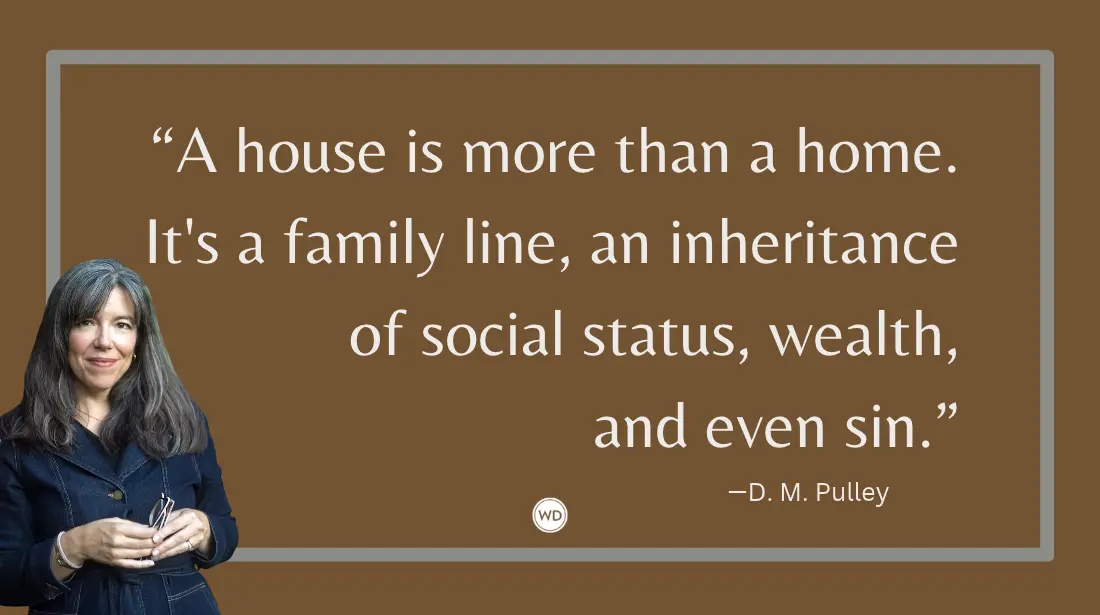
Literary scholar and thriller author D. M. Pulley notes that while historical Gothic fiction often romanticized the past, contemporary haunted house narratives can be situated anywhere—in the distant future, in outer space, or tucked away in one’s own suburban backyard.
"The key to keeping the haunted house story fresh is to tell it from a unique point of view and to find social justice themes relevant to modern readers," Pulley explains. "Whether it is found in the broken heart of a mother—such as Toni Morrison’s masterwork Beloved—or in the guilty conscience of a young man trapped within systemic cultural oppression, as seen in Stephen Graham Jones’s The Only Good Indians, the haunted house adapts to reflect our deepest societal wounds."
Pulley’s own Gothic thriller, Stone Mad, deliberately subverts traditional tropes by setting its terror not in a medieval European castle, but inside a crumbling, atmospheric Rust Belt manor in present-day Cleveland. Drawing upon real-world historical movements and professional experience as a forensic engineer, Pulley crafts a narrative where the protagonist—a single working mother hired to investigate a legally entangled, cursed estate—must confront physical decay, corporate malfeasance, and buried historical secrets to survive. Much like the classic heroines of Walpole’s era, modern protagonists must reckon with the architectural and moral skeletons of the past, or risk becoming permanent fixtures of the building’s dark history.
Future Outlook: The Enduring Blueprint of Fear
As we look toward the future of speculative fiction, horror, and cinematic storytelling, the haunted house shows no signs of losing its structural integrity or cultural currency.
The enduring success of the genre lies in its infinite adaptability. As society confronts new technological frontiers—such as smart-home automation, artificial intelligence, and digital surveillance—the definition of a "home" is shifting rapidly. Consequently, contemporary storytellers are already beginning to explore digital haunting grounds, smart-house surveillance ghosts, and ecological trauma inscribed directly into the modern landscape.
Yet, despite these technological shifts, the fundamental architecture of fear remains unchanged. Whether built out of ancient stone, decaying timber, or fiber-optic wiring, the haunted house will continue to serve as the ultimate cultural mirror. It reminds us that the past is never truly dead, that buildings retain the emotional resonance of those who inhabited them, and that the scariest monsters we will ever encounter are the ones we build within our own walls.


Comments
Facebook App ID not configured. Please add it in the Customizer.