
Executive Overview
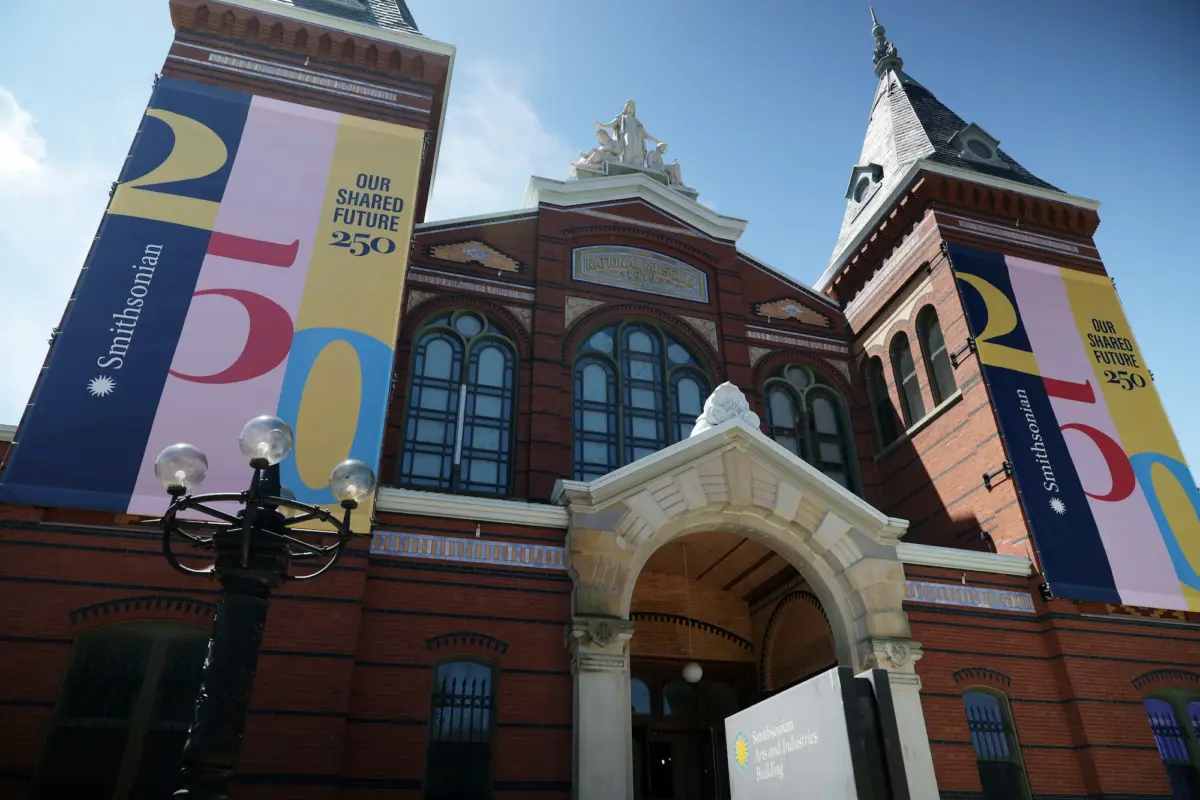
The Smithsonian Institution is facing one of the most delicate infrastructural and political crossroads in its nearly two-century history. According to reports from The New York Times, the Smithsonian’s Board of Regents is poised to vote on a pivotal plan that could permanently alter the physical and cultural landscape of the National Mall. Rather than pursuing a purpose-built facility requiring extensive legislative authorization from a deeply divided Congress, the institution is considering repurposing the historic Arts and Industries Building—a property it already owns—to serve as the long-sought home for the National Museum of the American Latino.
This prospective pivot highlights the intensifying friction between federal cultural custodians and a Republican-dominated Washington. The decision, scheduled for an imminent board meeting, arrives amid a wave of intense political scrutiny, executive orders, and legislative stalemates. For years, the museum—authorized by Congress in 2020 after a quarter-century of advocacy—has operated without a physical brick-and-mortar home. The search for a site has evolved from a matter of architectural planning into a high-stakes ideological referendum.
Critics from conservative think tanks, such as the Trump-aligned Heritage Foundation, have characterized the potential move into the Arts and Industries Building as an executive maneuver designed to bypass congressional oversight. Conversely, museum advocates and Smithsonian leadership view the historic structure as a practical, already-secured alternative that avoids the logistical minefields of securing National Park Service land and navigating an increasingly hostile legislative branch. As the Smithsonian balances its reliance on federal funding with its mandate to chronicle the multifaceted tapestry of American history, the looming board vote represents a watershed moment for the institution’s autonomy, its architectural footprint, and the future of cultural representation in the United States.
Read Also
Detailed Chronology
1. Decades of Advocacy and the 2020 Legislative Breakthrough
The journey toward establishing a national museum dedicated to the history, art, and culture of American Latinos spans more than 25 years of relentless grassroots and political organizing. For decades, community leaders, historians, and lawmakers argued that the contributions of the nation’s largest ethnic minority group deserved a prominent, permanent place on the National Mall.
This multi-decade campaign culminated in December 2020, when Congress officially authorized the creation of both the National Museum of the American Latino and the Smithsonian American Women’s History Museum as part of a sweeping $2.3 trillion year-end spending bill. The authorization marked a historic milestone, establishing the structural framework for the museums, though it left the formidable tasks of site selection, fundraising, and architectural development for the future.
2. Leadership Appointments and Early Momentum
In 2022, the Smithsonian took a major step toward operationalizing the project by naming Jorge Zamanillo as the inaugural director of the National Museum of the American Latino. Zamanillo stepped into the role tasked with building the institution from the ground up, assembling a core leadership team, and courting high-profile donors.
Despite initial optimism, the project encountered severe political headwinds in 2023 when the House Appropriations Committee approved a budget measure attempting to bar the federal government from spending taxpayer funds on the Latino and women’s history museums. However, the project demonstrated remarkable resilience. By the following year, the museum had cleared significant hurdles: it formed a well-connected board of trustees, established initial programmatic footprints, and successfully raised $70 million in private donations toward a targeted $500 million private-matching fundraising goal, intended to pair with $500 million in public funds for construction and endowment.
3. Site Selection Struggles and Legislative Impasses
As the search for a permanent home narrowed, a site near the Tidal Basin—located directly across from the United States Holocaust Memorial Museum—emerged as a leading proposal. However, the location immediately ran into a wall of practical and political opposition.
From a logistical standpoint, museum leadership raised red flags regarding the site’s proximity to the local water table and the fact that it lacked direct frontage on the National Mall. Politically, the proposal faced insurmountable obstacles in May, when the House of Representatives voted down a bill designed to advance the Tidal Basin site. The legislative defeat was driven largely by contentious amendments that sought to impose restrictive ideological mandates on the institution—including demands that the museum focus exclusively on "biological women"—and grant the executive branch heightened influence over museum operations.
4. The Pivot to the Arts and Industries Building
With the Tidal Basin option dead on arrival and the prospect of building new structures on National Park Service land stalled by congressional gridlock, the Smithsonian began reevaluating its existing real estate portfolio. Attention naturally turned to the Arts and Industries Building.
Completed in 1881 and situated prominently on the National Mall between the Smithsonian Castle and the Hirshhorn Museum, the building has long served as a flexible exhibition space but lacks a permanent tenant. Previous board resolutions had favored erecting entirely new, purpose-built facilities for both the Latino and women’s history museums. However, the shifting political reality has forced the Board of Regents to reconsider the 19th-century landmark as a viable, immediately available alternative that sidesteps the need for new congressional site approvals.
Supporting Context & Metrics
Architectural and Real Estate Dynamics
The operational viability of housing the National Museum of the American Latino in the Arts and Industries Building hinges on a complex matrix of architectural capacity and historic preservation standards. Built in the late Victorian era, the sprawling brick-and-iron structure offers immense historical character and a prime location on the National Mall. However, retrofitting an 1881 building to meet modern museum standards—including climate control, security infrastructure, artifact conservation laboratories, and visitor amenities—presents monumental engineering challenges.
Furthermore, utilizing an existing Smithsonian-owned asset fundamentally alters the capital campaign strategy. While the original vision required securing half a billion dollars in public funds alongside private matching contributions for a brand-new ground-up construction, repurposing the Arts and Industries Building could shift financial priorities toward extensive interior renovation and historical restoration.
The Broader Political and Federal Funding Ecosystem
The Smithsonian Institution occupies a unique hybrid space within the American governance structure. While it operates as an independent trust instrumentality of the United States government, it relies heavily on annual federal appropriations to maintain its vast network of museums, research facilities, and archival repositories. This financial dependency leaves the institution perpetually vulnerable to shifts in congressional power and political ideology.
The current legislative landscape—characterized by a Republican-dominated Congress closely aligned with the executive branch—has created a particularly fraught environment for cultural institutions. The Smithsonian’s programming, educational outreach, and curation strategies have increasingly become flashpoints in broader culture-war debates.
Official Statements and Stakeholder Perspectives
Executive Pressure and Ideological Critiques
The institutional pressures facing the Smithsonian are heavily amplified by executive branch skepticism. In his second term, President Donald Trump issued a searing 2025 executive order explicitly targeting the Smithsonian Institution. The directive accused the network of museums of promoting "improper, divisive, or anti-American ideology," signaling a concerted administration push to reshape federally funded cultural narratives.
These sentiments have been echoed loudly by conservative commentators and political organizations. Mike Gonzalez, a senior fellow at the Trump-aligned Heritage Foundation, emerged as a prominent critic of the Smithsonian’s site-selection maneuvers. In a strident editorial published in the Washington Examiner, Gonzalez slammed the potential selection of the Arts and Industries Building as an evasive tactic:
"The Smithsonian Institution is trying to use a loophole to sneak in a building for a yet-to-be-built controversial museum that remains homeless. It is an act of desperation by a museum complex beset with accusations of bias."
Gonzalez further escalated his critique following a contentious July congressional hearing where National Museum of American History Director Anthea Hartig faced rigorous questioning regarding diversity, equity, and inclusion (DEI) programming. Characterizing the Smithsonian’s institutional philosophy as "Marxist," Gonzalez and other conservative figures have called for sweeping leadership changes, warning that the National Museum of the American Latino would function as a "hothouse for radical activism" should it secure a permanent home.
The Smithsonian’s Stance
In contrast to the vocal opposition from external critics, the Smithsonian Institution has maintained a measured, defensive posture. When approached regarding the impending August 31 board meeting and the potential decision to anchor the Latino museum in the Arts and Industries Building, Smithsonian representatives confirmed the scheduling of the meeting but formally declined to offer further comment.
This reticence reflects a calculated institutional strategy to navigate the volatile political climate quietly. By avoiding public sparring with congressional critics and executive branch officials, the Board of Regents is seemingly attempting to insulate the decision-making process from further politicization, prioritizing internal consensus and administrative pragmatism over public debate.
Future Outlook
As the Smithsonian Board of Regents convenes on August 31, the decisions made behind closed doors will set the trajectory for cultural representation in the nation’s capital for decades to come.
Should the board vote to approve the Arts and Industries Building as the permanent home for the National Museum of the American Latino, it will effectively neutralize the immediate legislative hurdle of securing congressional approval for National Park Service land. However, this path is not without its own set of long-term consequences. By bypassing new construction, the Smithsonian may avoid a protracted floor fight in the House of Representatives, but it will inevitably inherit intense congressional oversight regarding the building’s renovation, curation, and governance.
Conversely, choosing this route may draw immediate retaliatory budgetary measures from a Republican-led Congress determined to exert tighter control over federal cultural spending and ideological content. The broader implications extend beyond the Latino museum, serving as a bellwether for how federal cultural institutions will navigate executive orders, ideological litmus tests, and polarized legislative bodies in the years ahead.
Ultimately, whether the National Museum of the American Latino opens its doors within the historic walls of the Artsisch Building or continues its search through the legislative wilderness, the institution must successfully balance its founding mission—celebrating the profound historical contributions of American Latinos—with the stark political realities of modern Washington.



Comments
Facebook App ID not configured. Please add it in the Customizer.