
Executive Overview
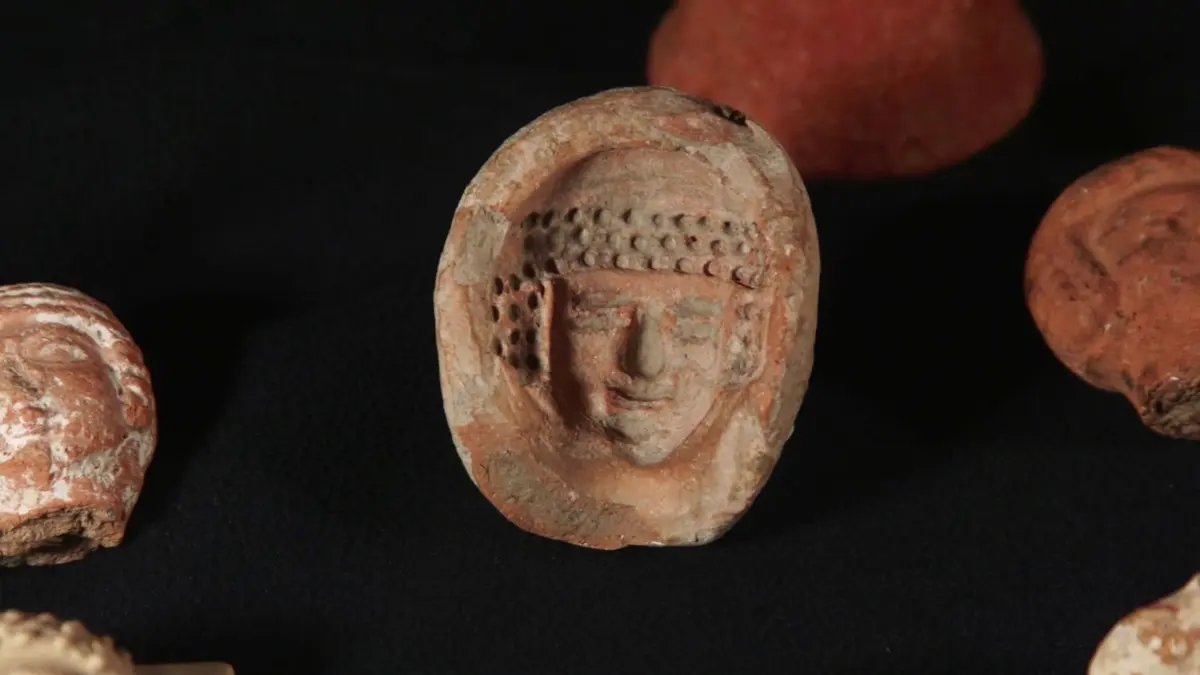
In a landmark archaeological breakthrough that is reshaping our understanding of ancient urban production and domestic life, researchers in Jerusalem have announced the discovery of a rare, First Temple-period mold used for manufacturing clay figurines. Unearthed earlier this summer during systematic excavations on the grounds of the Tower of David Jerusalem Museum, the artifact represents a monumental first for the city. While thousands of ancient clay figurines dating from the eighth to the sixth centuries BCE have been cataloged across archaeological sites in the ancient capital, this marks the absolute first time that a production mold—the foundational blueprint for crafting these ubiquitous artifacts—has been found within Jerusalem’s historical boundaries.
Overseen by the Israel Antiquities Authority (IAA), the excavation took place within the Kishle, a sprawling historic compound that once served as an Ottoman-era prison and a later British military base, which is now integrated into the modern museum complex. The discovery abruptly settles a decades-long academic debate regarding the provenance of these ancient artifacts. For generations, Near Eastern archaeologists have questioned whether the widespread anthropomorphic and zoomorphic figures discovered throughout the Levant were imported luxury goods, regional trade items, or products of a thriving local industry. By confirming that at least some of these items were forged directly within the city limits, the find opens a new window into the micro-economies, artisanal networks, and daily routines of ancient Jerusalemites during the height of the Kingdom of Judah.
Measuring small enough to fit within the palm of a hand yet rich in artistic detail, the mold depicts the stylized face of a woman featuring pronounced facial features and an intricate, tiered hairstyle characteristic of the Iron Age II period. Demonstrating both the durability of ancient technology and the prowess of modern conservation techniques, specialists at the IAA successfully used the ancient mold to cast a contemporary replica, bringing a millennia-old face back into the light. As excavation directors and institutional curators parse the broader implications of the Kishle dig, this singular artifact stands poised to redefine how researchers interpret the domestic religion, material culture, and socio-economic infrastructure of Jerusalem more than two and a half millennia ago.
Read Also
Detailed Chronology
To fully grasp the significance of the Kishle mold discovery, the find must be situated within the complex timeline of the site itself and the broader historical arc of the First Temple Period.
The First Temple Era: Iron Age II Jerusalem (8th–6th Centuries BCE)
During the eighth through sixth centuries BCE, Jerusalem was the bustling, fortified capital of the Kingdom of Judah. Under monarchs such as Hezekiah and Josiah, the city expanded rapidly, transforming from a modest hilltop settlement into a sprawling urban center with sophisticated administrative systems, monumental architecture, and a distinct material culture. It was during this politically volatile and culturally vibrant era—marked by the Assyrian siege of 701 BCE and the ultimate Babylonian conquest and destruction of the city in 586 BCE—that the clay figurines in question were mass-produced and distributed among the populace.
The Modern Site: The Kishle Complex
Centuries after the fall of the First Temple, Jerusalem’s topography layered upon itself, burying ancient strata beneath successive empires. The Kishle, located immediately south of the Jaffa Gate within the historic Citadel complex, encapsulates this multi-layered history. Originally constructed as a barracks and prison compound during the Egyptian occupation of Palestine in the 1830s, the Kishle continued its penal and military functions through the Ottoman period and the British Mandate.
In recent years, as the Tower of David Museum undertook ambitious preservation and expansion projects, the Kishle became the focus of prolonged, intensive archaeological investigations led by the IAA. Because the site remained largely undisturbed by deep modern foundations compared to other parts of the Old City, it preserved an extraordinarily intact, vertical slice of Jerusalem’s urban history.
The Summer 2024 Discovery
During the summer excavation season at the Kishle site, IAA archaeologists meticulously sifting through stratigraphically secure Iron Age contexts recovered the ceramic mold. Unlike random surface finds, the stratigraphy of the Kishle allowed researchers to securely date the artifact to the First Temple period, anchoring it firmly within the 8th to 6th centuries BCE. Conservation specialists immediately recognized the object’s anomalous nature; while figurine fragments are common in Judahite excavations, industrial tools dedicated to their mass production are virtually unprecedented in the capital. Following initial laboratory stabilization, the artifact was subjected to photogrammetry, high-resolution microscopic analysis, and experimental casting, culminating in the public announcement of the discovery.
Supporting Context & Metrics
The discovery of the figurine mold cannot be viewed in isolation. It invites a broader examination of the category of artifacts it was designed to produce, shedding light on the domestic habits, religious practices, and socio-economic structures of ancient Judah.
Typology of Iron Age Figurines
Archaeologists working in the Southern Levant generally categorize the terracotta figurines of the Iron Age II period into three primary typological groups:
- Anthropomorphic Female Figurines: Typically depicted as nude or semi-nude women, often supporting their breasts or holding ritual objects. These are the most common anthropomorphic finds in Judahite domestic contexts.
- Horse-and-Rider Pairs: Figurines depicting a stylized horse with an attached or integrated human rider, often interpreted as royal iconography, military motifs, or representations of deities.
- Zoomorphic Figures: Representations of various animals, predominantly quadrupeds such as sheep, goats, and bovines, likely symbolizing livestock wealth, sacrificial offerings, or pastoral blessings.
The Kishle mold specifically belongs to the first category, capturing the visage of a female figure. A striking feature of these figurines is their polychromatic nature; extensive residue analysis on similar artifacts across Israel has revealed that they were routinely painted after firing. Artisans applied vivid mineral pigments—predominantly Egyptian blue, cinnabar-derived reds, and carbon-based blacks—over a white lime wash, creating striking, vibrant visual objects that stood in stark contrast to their raw clay bodies.
Domestic Contexts and Functional Interpretations
The sheer ubiquity of these figurines in domestic environments—recovered from the floors of residential houses, street drains, and occasionally burial caves—has sparked decades of academic debate regarding their precise function. Were they high-status religious idols, household amulets, fertility talismans, or children’s toys?
The prevailing scholarly consensus suggests a multifaceted domestic utility. The prominence of female imagery has long linked these objects to household religion, specifically invoking divine protection for pregnant women, nursing mothers, and general domestic well-being. However, their presence in everyday trash pits and broken floor levels also suggests they functioned as disposable or transient ritual objects—items invoked during times of crisis, sickness, or domestic transition and subsequently discarded. The discovery of the manufacturing mold in a civic workspace within Jerusalem strongly reinforces the theory of a localized cottage industry, where neighborhood artisans supplied households with the tangible instruments of daily popular religion.
Official Statements
The gravity of the Kishle excavation and the unprecedented nature of the mold discovery have elicited enthusiastic responses from leading Israeli archaeologists and heritage conservationists.
In a joint statement released by the Israel Antiquities Authority, the significance of the find was underscored by the institutional researchers:
"Although many figurines from this period have been uncovered in Jerusalem, this is the first time that a mold used to manufacture them has ever been found in the city. For decades, scholars debated whether these ubiquitous figures were brought into Jerusalem from external manufacturing centers or produced locally. We now have definitive proof that at least a portion of this material culture was crafted by hands working right here in the capital of the Kingdom of Judah."
Sviatoslav Klindukhov, an IAA conservation and restoration specialist tasked with examining the fragile artifact, highlighted the mechanical ingenuity embedded within the ancient mold:
"The mold captures astonishing detail—from the distinct contours of the woman’s face to the complex symmetry of her braided, tiered hairstyle. By carefully pressing prepared clay into the negative space and allowing it to dry before firing, we were able to successfully cast a replica figurine. Handling this newly cast piece bridges a gap of nearly 2,700 years, allowing us to replicate the exact operational steps taken by an ancient Jerusalemite artisan."
Debbi Ben-Ami, an IAA curator specializing in the Iron Age, expressed high expectations for how the artifact will influence future academic discourse:
"This discovery arrives at a crucial juncture in Iron Age studies. While our typological classifications are robust, questions regarding workshop organization, distribution networks, and the socio-religious role of these objects remain open. This mold will provide fresh insights and help answer some of the lingering questions that continue to occupy researchers across the globe."
Reflecting on the historical weight of the Kishle excavation site itself, excavation directors Amit Re’em and Ayala Zilberstein emphasized the unparalleled stratigraphic continuity preserved beneath the Tower of David Museum:
"The Kishle excavation, which has been ongoing for several years, continues to surprise us time and again. It is arguably one of the most significant archaeological projects in modern Jerusalem because it presents the city’s history in a clear and continuous sequence—from the days of the Kings of Judah, through the Hellenistic, Roman, Byzantine, Crusader, and Ottoman periods, and right up to the British Mandate. Every stratum tells a story, and the First Temple-period mold is a glittering crown jewel of our Iron Age discoveries."
Future Outlook
As the dust settles on the physical excavation trenches of the Kishle site, a new phase of rigorous scientific analysis begins. The mold has been transferred to the state-of-the-art laboratories of the Israel Antiquities Authority, where multidisciplinary teams are preparing a suite of advanced investigative procedures.
Archaeometric and Scientific Testing
In the coming months, researchers plan to subject the ceramic mold to petrographic analysis and Instrumental Neutron Activation Analysis (INAA). By examining the mineral and chemical signature of the clay used to fashion the mold itself, scientists can determine whether the raw materials were sourced directly from local clay beds in the Judean Hills or imported from regional production centers in the Shephelah or Jordan Valley. Cross-referencing these chemical profiles with existing databases of Iron Age ceramics will provide definitive data on the raw material supply chains operating within ancient Jerusalem.
Furthermore, residue analysis using microscopic and spectroscopic techniques will be deployed across the interior surfaces of the mold to search for micro-traces of organic compounds, release agents, or pigment residues that might clarify the exact manufacturing techniques employed by First Temple-era artisans.
Museological Presentation and Public Access
Beyond academic publication in peer-reviewed archaeological journals, the Tower of David Jerusalem Museum is actively developing plans to integrate the mold—alongside the modern experimental replica cast by Sviatoslav Klindukhov—into its permanent exhibition galleries. As part of the museum’s recent multi-million-dollar renewal project, curators aim to present the artifact within its proper chronological and thematic context, allowing the general public to visualize the daily life, religious practices, and industrial capabilities of ancient Jerusalem.
Broader Archaeological Horizons
The success of the Kishle excavation underscores the immense potential that remains locked beneath the modern urban fabric of Jerusalem’s Old City. As archaeologists continue to refine their methods and expand their collaborative networks, discoveries of this caliber serve as a vital reminder that the material history of the ancient world is still waiting to be uncovered, piece by piece, beneath our feet. The First Temple-period mold is not merely a static museum piece; it is an active participant in an ongoing dialogue with the past, promising to illuminate the human stories of ancient Jerusalem for generations to come.




Comments
Facebook App ID not configured. Please add it in the Customizer.