
Executive Overview
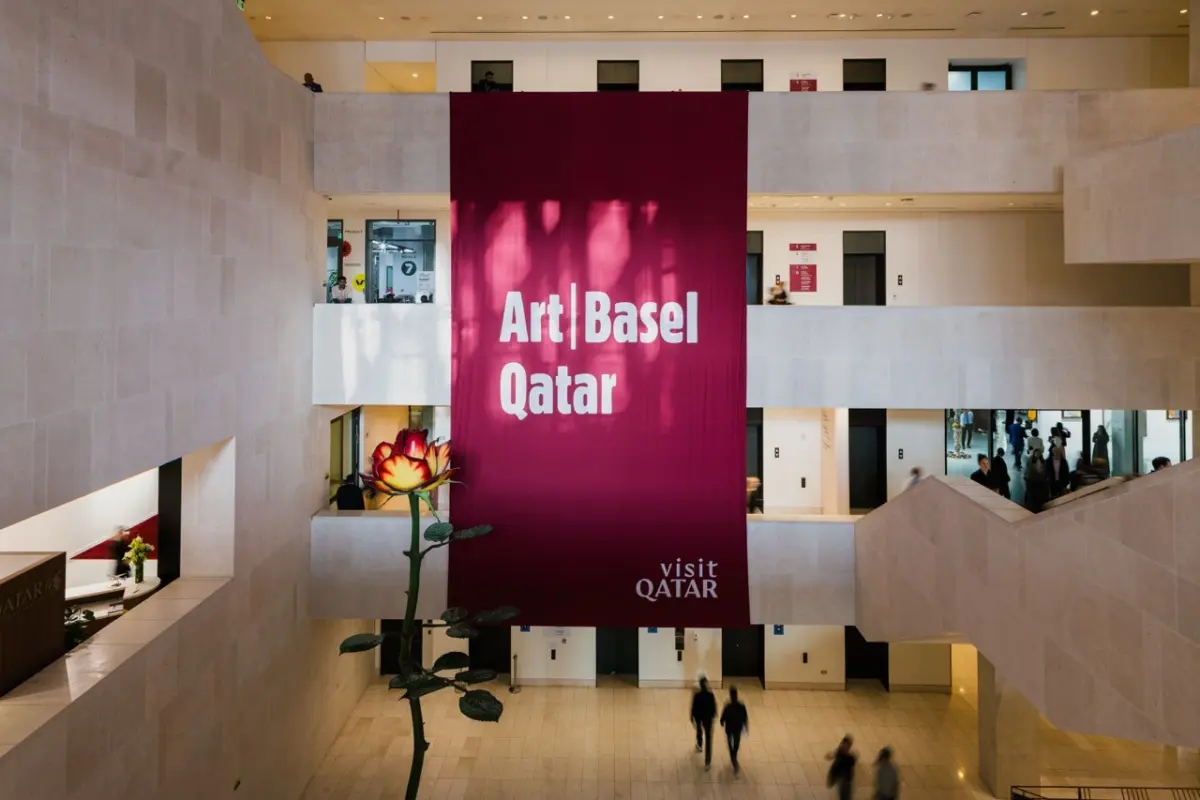
As the global contemporary art calendar accelerates toward its early-year apex, Art Basel Qatar is formally gearing up for its high-stakes sophomore edition, scheduled to run from January 28 to 30. Following a successful inaugural run that firmly planted the world-renowned Swiss art fair brand in the Arabian Gulf, the upcoming iteration returns to its dynamic footprint across three distinct architectural hubs within Msheireb Downtown Doha: Barahat Msheireb, M7, and the Doha Design District.
The fair’s return underscores Art Basel’s long-term commitment to anchoring itself within the Middle East, North Africa, and South Asia (MENASA) region. This year’s assembly features an impressive roster of 82 galleries hailing from 37 countries. True to its localized mandate, the fair boasts formidable representation from the region: 50 percent of the exhibiting artists originate from the MENASA sphere, while more than one-third of the participating galleries operate directly within these territories.
Behind the numbers lies a sophisticated logistical, financial, and curatorial strategy designed to insulate galleries from market volatility while elevating the intellectual rigor of the region’s art market. Guided by newly appointed chief curator Wassan Al-Khudhairi—working alongside Art Basel’s chief artistic officer and global director of fairs, Vincenzo de Bellis—the 2027 edition introduces the conceptual framework "between." This liminal theme seeks to bridge diverse histories, cross-generational talents, and disparate perspectives.
Read Also
Furthermore, Art Basel Qatar is doubling down on institutional partnerships, forging strategic alliances with heavyweights such as Qatar Sports Investments (QSI), QC+, and Visit Qatar. Through unprecedented financial subsidies for shipping and accommodation, alongside year-round collector engagement initiatives like the newly minted "Collectors Majlis," Art Basel Qatar is evolving from a seasonal pop-up event into a permanent catalyst for ecosystem development in the Gulf.
Detailed Chronology and Structural Evolution
The Road to January 2027: Building on Inaugural Momentum
The trajectory of Art Basel Qatar has been remarkably swift. When the fair first announced its expansion into Doha, skeptics questioned whether the region could absorb another high-end international art fair alongside established regional powerhouses like Art Dubai and the burgeoning contemporary scenes in Saudi Arabia and the United Arab Emirates. However, the inaugural edition proved that Doha’s rapidly maturing cultural infrastructure—bolstered by world-class museums, visionary state patronage, and an increasingly sophisticated local collector base—was more than ready.
Recognizing that sustainability requires more than a three-day marketplace, fair organizers used the interim months between the inaugural and sophomore editions to refine their approach. The establishment of high-level partnerships with Qatar Sports Investments (QSI), QC+, and Visit Qatar signals an inter-sectoral strategy. By bridging sports, luxury culture, and tourism, the organizers are actively working to "deepen collector relationships, support galleries, and sustain momentum between editions."
The "Collectors Majlis": Fostering a Year-Round Community
A central pillar of this inter-edition momentum is the launch of the "Collectors Majlis." Rolling out this month, the Majlis is designed to function as an intellectual and social nexus for local, regional, and international collectors, gallerists, and institutional leaders.
Moving far beyond traditional VIP networking, the Collectors Majlis program is meticulously structured to educate and integrate participants into the regional arts fabric. The initiative features:
- Curated master classes and educational workshops aimed at both emerging and established collectors navigating the complexities of the contemporary market.
- Invitation-led community encounters that foster intimate dialogues among patrons, artists, and curators.
- Immersive cultural experiences and private collection visits, granting privileged access to some of the Gulf’s most significant private holdings and institutional archives.
By cultivating this continuous engagement, Art Basel Qatar is addressing a historical challenge of international art fairs: the transactional, fly-in-fly-out nature of the art market. The Majlis aims to plant deep roots, ensuring that the dialogue initiated in late January reverberates throughout the calendar year.
The Curatorial Vision: Unpacking "Between"
At the intellectual helm of the 2027 fair is Iraqi artistic director Wassan Al-Khudhairi, whose appointment in May signaled a deliberate pivot toward deep regional resonance combined with rigorous global critique. Al-Khudhairi, whose curatorial pedigree includes major leadership roles such as chief curator at the Contemporary Art Museum St. Louis, has crafted a thematic anchor for the sophomore edition titled simply "between."
Elaborating on this conceptual framework in an official statement, Al-Khudhairi noted:
"For me, the theme ‘between’ is a liminal space of possibility, where different perspectives, histories and ideas meet and new ways of seeing emerge."
This thematic lens is not merely theoretical; it directly informs how the fair is experienced on the ground. True to the successful format established last year, every single gallery booth will feature a strictly curated solo presentation. By restricting galleries to showcasing one artist per booth, Art Basel Qatar eliminates the visual clutter typical of mega-fairs, forcing a deeper, more contemplative engagement with individual practices.
Al-Khudhairi’s curatorial mandate specifically prioritizes generational dialogue, bringing together pioneering modernists alongside vanguard contemporary voices who are pushing the boundaries of medium and message. This approach bridges the rich, under-examined art histories of the Global South with contemporary global discourse.
Supporting Context and Metrics: Galleries, Geography, and Financial Engineering
A Global Mosaic with a MENASA Heart
The 82 galleries assembling in Doha represent a carefully curated cross-section of the international art ecosystem. The participant list reads as a testament to Doha’s growing gravity, successfully marrying Tier-1 Western mega-galleries with vital regional spaces that have long nurtured the artistic ecosystems of the Middle East and North Africa.
Returning heavyweights and blue-chip staples—such as Berlin’s Sprüth Magers, London powerhouses Lisson Gallery and White Cube, Athens’ The Breeder, and New York giants David Zwirner, Gagosian, and Sadie Coles HQ—lend immediate global market authority to the floor plan.
However, the heartbeat of the fair lies in its robust regional contingent. A cohort of foundational regional galleries is making its debut appearance at Art Basel Qatar, bringing fresh perspectives and deeply rooted local networks to the floor:
- Efie Gallery (Dubai)
- Iyad Qanazea (Abu Dhabi)
- Le LAB Gallery (Giza)
- Alhosh Gallery (Doha)
- Contemporary Art Platform (Kuwait)
- Dastan Gallery (Tehran and Toronto)
The inclusion of these spaces ensures that the fair is not merely an imported Western luxury good, but an authentic platform reflecting the polyphonic realities of the regions it serves.
Unprecedented Financial Engineering: Mitigating Gallery Risk
Operating a gallery in the post-pandemic global economy involves navigating skyrocketing shipping fees, volatile currency markets, and prohibitive logistical overhead. Art Basel has responded to these pressures with one of the most aggressive support packages in the international art fair industry, mirroring the financial scaffolding it provided during its inaugural Doha edition.
To lower barriers to entry and protect participating galleries from financial exposure, Art Basel Qatar is underwriting a comprehensive suite of logistical and hospitality costs:
- Customs clearance and in-country transportation handled seamlessly through centralized, fair-approved channels.
- Consolidated storage and professional installation services on-site across the Msheireb venues.
- Complimentary hotel accommodations for up to two staff members per exhibiting gallery.
- Full coverage of travel and hotel expenses for all exhibiting artists.
Perhaps most significantly, the fair has introduced a groundbreaking shipping subsidy: Art Basel is covering 50 percent of outbound shipping costs for unsold works, up to a maximum of $20,000 per gallery.
In an industry where the cost of returning unsold inventory can cripple mid-sized and regional galleries, this financial safety net is revolutionary. It provides galleries with the flexibility to take risks, bring ambitious and large-scale works that might otherwise be deemed too expensive to transport, and commit to the Doha market with confidence. It is a clear reflection of Art Basel’s stated mission: to contribute to the long-term, sustainable development of the art market in the region rather than extracting short-term profits.
Official Statements and Institutional Alignment
The convergence of corporate muscle, state-backed vision, and curatorial autonomy is rare in the contemporary art world, yet Art Basel Qatar appears to have struck a delicate balance.
Vincenzo de Bellis, Art Basel’s chief artistic officer and global director of fairs, has worked closely with Wassan Al-Khudhairi to ensure the fair maintains the rigorous institutional standards associated with the Art Basel brand while remaining hyper-attentive to the cultural nuances of the host country. De Bellis has consistently emphasized that Art Basel does not simply transplant a Swiss blueprint into new territories; rather, it listens to local stakeholders, adapts to regional rhythms, and builds collaborative bridges.
This collaborative ethos is further amplified by the fair’s official commercial and institutional partners—Qatar Sports Investments (QSI), QC+, and Visit Qatar. In joint statements released ahead of the January opening, representatives from these entities emphasized the vital role that contemporary culture plays in Qatar’s National Vision 2030. By diversifying the economy away from hydrocarbon dependency and investing heavily in creative capital, these partnerships signal that support for the arts is viewed as an essential pillar of national development, social cohesion, and international diplomacy.
Future Outlook: Doha’s Wider Cultural Ecosystem
An international art fair does not exist in a vacuum. Much like its counterparts in London and Paris—such as Frieze London and Art Basel Paris—Art Basel Qatar is strategically positioned to coincide with a rich constellation of major museum exhibitions and institutional happenings across Doha. This temporal alignment transforms the city into a sprawling, week-long capital of contemporary culture, drawing international curators, museum directors, critics, and collectors.
Visitors attending the fair in late January will have the opportunity to engage with landmark regional exhibitions running concurrently across the city’s world-class cultural institutions:
- "What Lingers in the Artist Mind: Experiments and Legacies of the Baghdad Modern Art Group" at Mathaf: Arab Museum of Modern Art (on view through February 6, 2027). This exhibition offers a profound historical look into one of the most influential avant-garde movements in the Arab world, tracing the experimental spirit of mid-century Iraqi modernism.
- "Bu’ed Nadhar" at Liwan Design Studios and Labs (running through January 31, 2027). This exhibition highlights contemporary design thinking, spatial investigations, and experimental practices bubbling out of Doha’s burgeoning creative incubator spaces.
Looking Ahead to 2027 and Beyond
As Art Basel Qatar prepares to open its doors at Barahat Msheireb, M7, and the Doha Design District from January 28 to 30, the stakes are high, but the foundations are undeniably solid.
By combining aggressive financial protections for galleries, a intellectually rigorous and locally rooted curatorial framework centered on the concept of "between," year-round collector engagement via the Collectors Majlis, and powerful alignment with national cultural institutions, Art Basel Qatar is proving its staying power. It is no longer an experiment in Gulf expansion; it is a permanent, evolving anchor in the global art market—one that is steadily reshaping the geography of contemporary art production, display, and exchange for the decades to come.


Comments
Facebook App ID not configured. Please add it in the Customizer.