
Executive Overview
For nearly four decades, contemporary artist Walid Raad has operated at the precarious intersection of historical fact, collective trauma, and deliberate fabrication. Emerging from the crucible of the Lebanese Civil War (1975–1990)—a conflict defined not merely by kinetic violence, but by an intense, fragmented war of images and competing media narratives—Raad has built a practice that defies conventional artistic categorization. Whether through his foundational work with the fictional collective The Atlas Group, his haunting painted representations of Yasser Arafat’s perpetually shifting resting places, or his recent installations exploring cultural censorship and the spectral residues of disaster, Raad uses parafiction as a critical tool.
His work does not seek to trick the viewer with conventional forgeries; rather, it provides a lucid, tragicomic framework for processing the dizzying glut of information and misinformation that characterizes the modern geopolitical landscape. By meticulously engineering documents, constructing alternative archives, and invoking the theoretical paradigms of cultural theorist Jalal Toufic, Raad investigates how major political upheavals induce an immaterial withdrawal of tradition, memory, and form. As his recent exhibitions at the Venice Biennale and upcoming presentations at New York’s Paula Cooper Gallery demonstrate, Raad remains one of the art world’s most astute chroniclers of how grand historical events imprint themselves upon the intimate, human scale.
Detailed Chronology: From the Darkrooms of Beirut to the Global Stage
Formative Years and the Lens of War
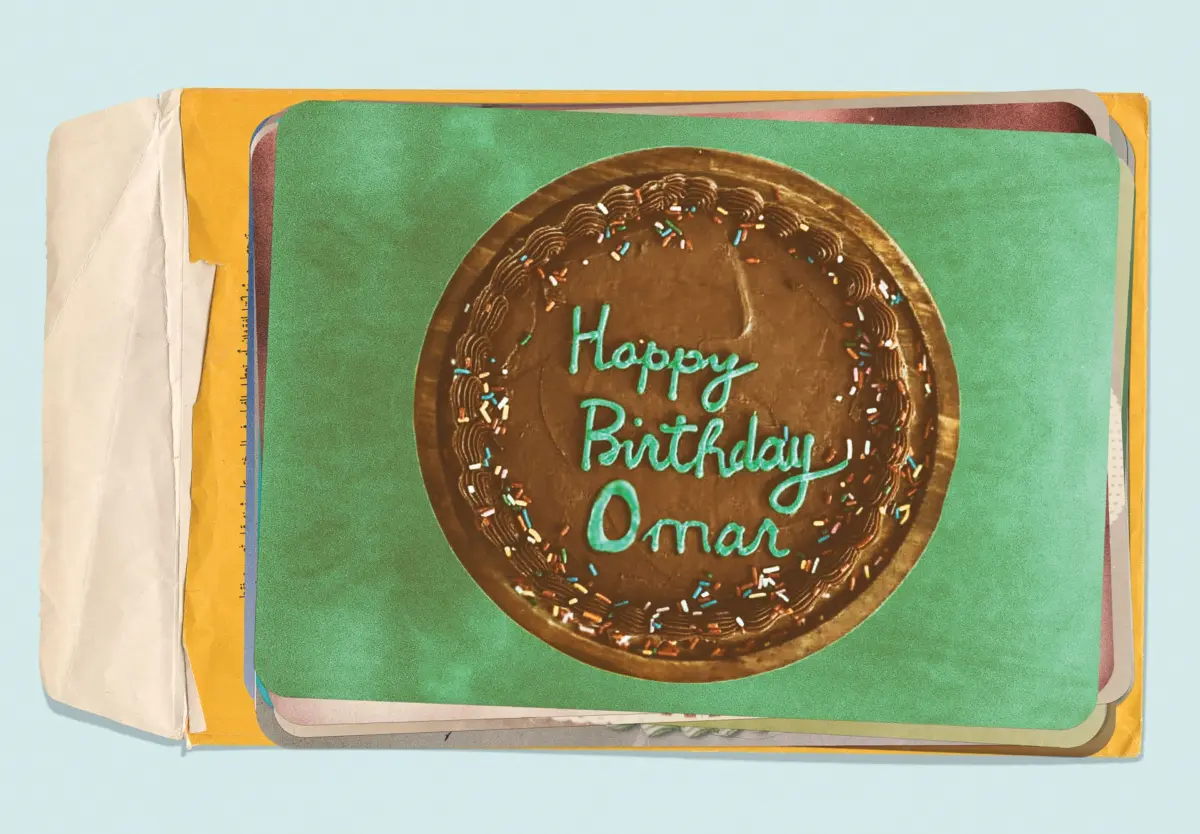
Walid Raad’s artistic consciousness was forged in the physical and psychological landscape of war-torn Beirut. As a teenager, Raad walked the streets of his hometown with a camera, attempting to make sense of a world collapsing inward under the pressures of civil strife. His early black-and-white photographs offered detached, observational views of a city under siege. A pivotal, if apocryphal-feeling, moment occurred when Raad snapped a photograph of a bakery window displaying a birthday cake decorated with well-wishes for "Hassan." Only later, while developing the film in his father’s makeshift home bathroom-turned-darkroom, did Raad realize that the cake was intended for Hassan Nasrallah, then a rising militiaman in the Lebanese Civil War and later the leader of Hezbollah before his assassination in a 2024 Israeli airstrike. At fifteen years old, the young Raad briefly fantasized about poisoning the cake, a memory he recounts today with self-effacing laughter: "I was a coward."
Read Also

Academic Foundation and Theoretical Triangulation
Moving to the United States in the mid-1980s, Raad pursued higher education at the Rochester Institute of Technology (RIT), initially majoring in medicine before shifting his focus to photography. During this period, he won his first photography prize under the pseudonym P.X. Chesterfield—borrowing the name of a U.S. Marine Corps general whose moniker struck him as cinematic.
He subsequently enrolled in the University of Rochester’s rigorous "Cultural and Visual Studies" PhD program. Under the mentorship of rising-star theorists such as Craig Owens, Kaja Silverman, and Douglas Crimp, Raad immersed himself in what he describes as the intellectual "holy trinity" of the era: psychoanalysis, linguistics, and Marxism. This academic grounding provided him with a sophisticated theoretical vocabulary that would soon converge with his photographic practice.
The Atlas Group (1989–2004)
Upon returning to Beirut each summer during his studies, Raad attempted to apply the observational techniques of masters like Diane Arbus or Eugène Atget. However, the realities of wartime Beirut—marked by constant sniper fire—made basic photographic tools, such as tripods, impossible to deploy safely. Rather than capturing direct combat, Raad focused on the aftermath: detonated ordnance, bullet-riddled architecture, and the invisible traces of violence.

These explorations culminated in the creation of The Atlas Group, a fictional foundation that Raad operated from 1989 to 2004. Through The Atlas Group, Raad manufactured an expansive archive of photographs, videos, and notebooks attributed to various invented personas, such as the gambling historian Dr. Fadl Fakhouri and the police detective Yussef Bitar. Notable projects included Hostage: The Bachar tapes (#17 and #31), which featured Souheil Bachar recounting his decade-long captivity alongside Western hostages, subtly destabilized through green-screen manipulation and mistranslated subtitles.
The Atlas Group deliberately scrambled historical timelines; while Raad stated the group disbanded in 2004, institutional acquisitions and catalog entries routinely assigned conflicting origin dates—ranging from 1945 and 1948 to Raad’s birth year of 1967—thus underscoring the instability of historical documentation itself.
Supporting Context & Metrics: Theoretical Frameworks and Methodologies
Critical Fabulation and Parafiction
Scholars have long grappled with how to classify Raad’s methodology. Harvard art historian Carrie Lambert-Beatty coined the term "parafiction" to describe works that are received by audiences as real before their fictional status is revealed, emphasizing that art’s greatest power lies in its ability to make viewers experience a scenario as having been true.

Similarly, theorist Saidiya Hartman has drawn parallels between Raad’s work and her own concept of "critical fabulation"—an imaginative approach designed to tell the stories of oppressed or marginalized individuals who left sparse traces in official archives. By synthesizing narrative without defaulting to authoritative master narratives, Raad creates a surrealism tailored for the information age.
The Influence of Jalal Toufic and "Withdrawal"
A profound turning point in Raad’s career occurred in the early 1990s when he encountered the writings of Lebanese artist and writer Jalal Toufic. Toufic’s concepts—most notably "withdrawal," articulated in works such as The Withdrawal of Tradition Past a Surpassing Disaster (2009)—provided Raad with a philosophical framework for understanding immaterial losses.
Toufic posits that major cultural disasters cause traditions, rituals, and forms to become unavailable, leaving behind a void. When these traditions are later revived in a new context, they do not truly live; rather, they are "undead," akin to the reflection of a vampire in a mirror. This concept directly inspired Raad’s later exhibitions, such as his 2005 presentation at the Sfeir-Semler Gallery in Beirut, where his shipped works mysteriously arrived shrunk to one-one-hundredth of their original size—a physical manifestation of withdrawal rather than a mere technical trick.

Official Statements and Institutional Reception
Raad’s work has achieved global institutional recognition, culminating in major retrospectives at the Museum of Modern Art (MoMA) in New York and prominent installations at the Venice Biennale.
Art historians and curators have frequently praised his ability to blend rigorous archival critique with poetic invention. Claire Bishop, in her writings on contemporary artistic research, distinguished Raad from peers who merely reproduce the bureaucratic information overload of vitrines and documents, noting that Raad offers genuine narrative synthesis.
Despite his international acclaim, Raad maintains a deeply guarded personal life. Operating from his studio and home in upstate New York—a restored 19th-century barn situated in the "Irish Alps"—he has spent over two decades intentionally obscuring his likeness from internet algorithms using strategic misdirection, a practice he attributes partly to a self-described "phobia" and partly to an extension of his photographic philosophy: making the world feel larger and stranger rather than simply capturing it.

Future Outlook: Recent Exhibitions and Upcoming Projects
Raad’s artistic trajectory continues to evolve into realms closer to magical realism and direct forensic commentary. Recent installations reflect the shifting geopolitical realities of the Middle East and the global art market:
- The Venice Biennale and Mathaf Presentations: Raad’s recent installations feature painted wooden pallets discovered in Ljubljana, serving as metaphors for the circulation of arms—whereby weapons sold off at the end of the Lebanese Civil War were subsequently utilized in the Yugoslav Wars. Alongside these are collaborative installations such as I thought I’d escape my fate (again) (2025), created with graphic designer Pierre Huyghebaert for Doha’s Mathaf: Arab Museum of Modern Art, which archives statements from cultural workers whose programs were canceled due to expressions of solidarity with Palestine.
- Upcoming Paula Cooper Gallery Exhibition: In the spring, Raad is set to debut a new body of work in New York featuring a vintage Volkswagen Beetle positioned upside down—a direct reference to the "flying Volkswagens," the grim moniker American soldiers gave to artillery shells fired on Beirut in the 1980s. Surrounding the installation will be wall reproductions of real inscriptions left by contemporary soldiers on munitions worldwide, sourced from public digital forums and subtly exaggerated by the artist.
As Raad moves fluidly between the ghosts of the Lebanese Civil War, the digital cacophony of the modern internet, and the material traces of ongoing conflicts, his work continues to challenge audiences to interrogate the boundaries of what is seen, what is documented, and what is irrevocably lost.

Comments
Facebook App ID not configured. Please add it in the Customizer.