
In an era defined by economic precarity, sudden joblessness, and the quiet fracturing of domestic stability, the modern American household has increasingly become a pressure cooker. When macro-level economic downturns collide with micro-level domestic grievances, the results can range from the farcical to the federally alarming.
This is precisely the intersection navigated by an unnamed former software engineer—displaced in the wake of the dot-com crash—and his wife, Suzanna, a former daycare worker. What began as a routine domestic dispute over spoiled dairy products in a suburban kitchen quickly escalated into a surreal federal investigation involving the Federal Bureau of Investigation (FBI), a local drive-through window, and a suspicious twenty-dollar bill.
This investigative report examines the cascading events that transformed a simple morning errand into a cautionary tale of economic desperation, marital friction, and the unintended consequences of the digital age on everyday commerce. Through a detailed chronology of events, socio-economic metrics regarding post-dot-com unemployment, and an analysis of rising counterfeit detection trends, this feature explores how ordinary citizens navigate the thin, fragile line between lawful survival and federal transgression.
Read Also
Detailed Chronology: From Cottage Cheese to the Federal Bureau of Investigation
The Kitchen Incident
The sequence of events leading to a federal inquiry began with a common household catalyst: a container of forgotten cottage cheese. Five years into their marriage, the couple’s post-employment reality had fostered heightened domestic friction. The husband, conditioned by an immigrant background where food waste is treated as a moral failing, had taken it upon himself to police the household refrigerator. Suzanna, resistant to leftovers and operating under different domestic paradigms, rejected the inspection.
The ensuing confrontation turned physical when Suzanna pushed her husband away. The shove sent him crashing into the kitchen table, disturbing their sleeping cat, Zenith. The startled feline lashed out, clawing the husband’s thigh, while the container of cottage cheese flew across the freshly mopped floor. What followed was a familiar volley of marital grievances, quickly bleeding into broader arguments over financial stewardship, dietary habits, and past eccentricities.
The Ghost of "Joo Joo" and the Economics of Waste
During the argument, the husband inadvertently invoked a sore subject: the infamous "egg project." Months after both lost their respective jobs, Suzanna had fallen prey to an online marketing campaign, renting a live hen and a custom wooden coop for an initial hundred dollars, with an option to purchase it outright for an additional two hundred.
Totaling three hundred dollars—a significant sum for a household facing mortgage precarity—the venture was marketed as an exercise in sustainable self-sufficiency. Named "Joo Joo" (Persian for "bird"), the red-orange hen initially produced an egg every few days before tapering off entirely. By the time the rental company retrieved the non-performing fowl, the household calculation revealed that each artisanal egg had cost roughly ten dollars.
The invocation of the chicken project proved to be a breaking point. Suzanna retreated upstairs, slamming the bedroom door, leaving her husband to clean up the spilled dairy and reflect on the cyclical nature of their marital arguments.
The Drive-Through Incident at Dunkin’ Donuts
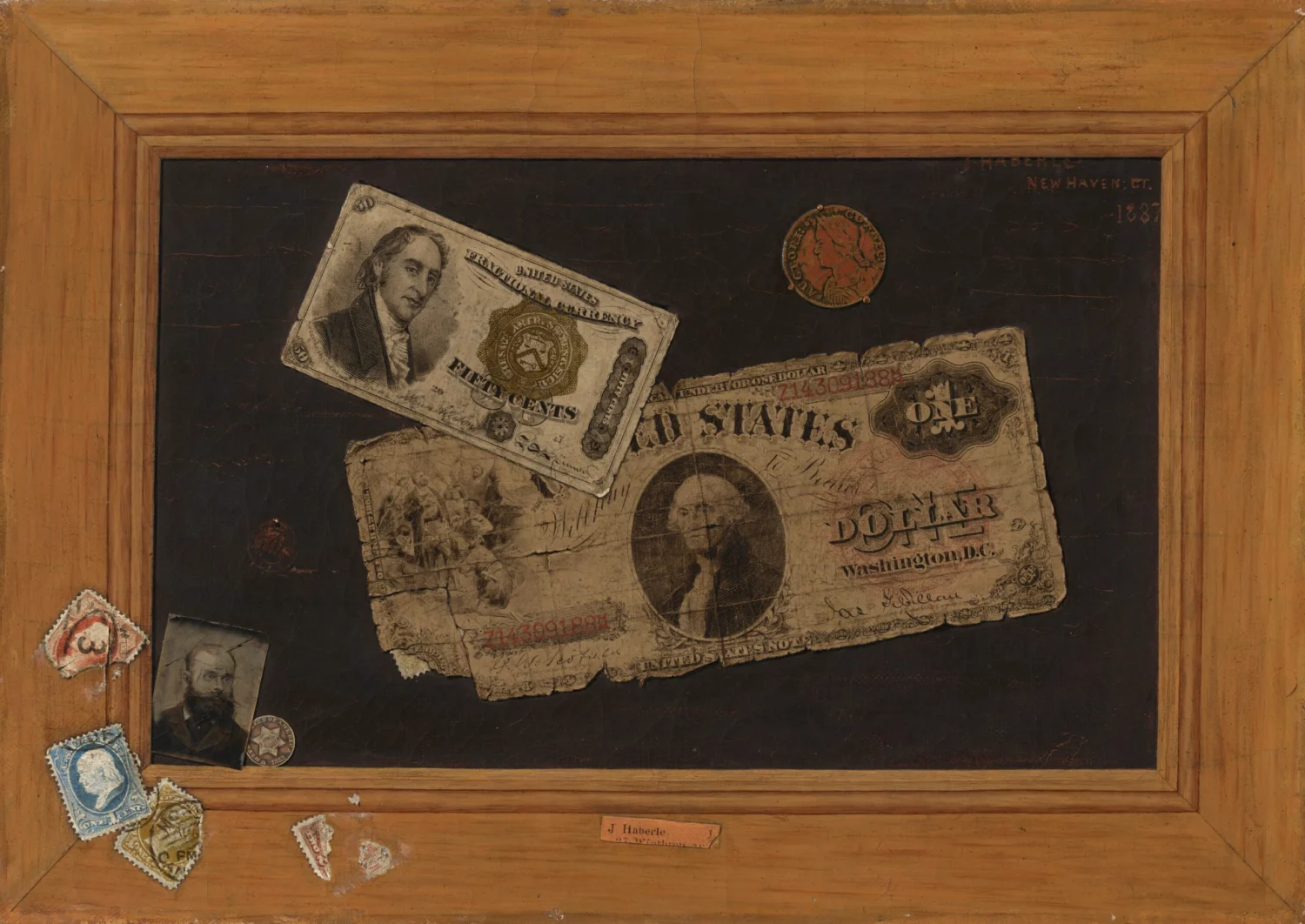
Seeking refuge from domestic tension, the husband later undertook a routine errand involving a stop at a local Dunkin’ Donuts drive-through—a community hub for retirees and the unemployed. Handing a twenty-dollar bill to the window attendant, he expected a simple transaction: a cup of coffee and a chocolate glazed doughnut.
Instead, the transaction triggered a security protocol. The employee returned, accompanied by a colleague, and declared the bill counterfeit. When the husband, bewildered and morbidly curious, asked to retain the rejected currency to take to his bank, the employee refused, citing federal protocol and demanding identification, license plate numbers, and vehicle details to report the incident to local authorities.
Fearing entanglement with law enforcement—an anxiety rooted in his country of origin and reinforced by a prior vacation in Hawaiʻi, during which Suzanna jokingly mused about the ease of framing a spouse for murder on a narrow mountain ridge—the husband hastily paid with a genuine five-dollar bill and fled the scene.
The Federal Interventions
Two weeks later, the consequences of that drive-through interaction arrived on the suburban doorstep. Two men in dark suits and sunglasses—one identifying himself as an FBI agent—blocked the driveway with an improperly parked cruiser.
Invited inside by a remarkably composed Suzanna, the agents presented a manila folder containing the exact twenty-dollar bill passed at the Dunkin’ Donuts drive-through. The interrogation was systematic. The federal agent questioned the husband regarding his employment status, his daily routines, and his source of income. When pressed about the origin of the bill, the husband’s nervous demurral prompted Suzanna to skillfully intervene, deflecting suspicion with a composed narrative regarding automated teller machines (ATMs) and household cash flow.
To demonstrate the mechanics of counterfeiting, the FBI agent produced a genuine twenty-dollar bill alongside the counterfeit specimen, instructing the couple on the tactile differences: surface texture, edge definition, ink sharpness, and even olfactory cues. Following a professional departure and a parting warning to inspect all currency rigorously, the agents left the household intact, though deeply shaken.
Supporting Context & Metrics: The Socio-Economics of Modern Precarity
To understand the couple’s trajectory, one must examine the broader socio-economic landscape of the early 2000s post-dot-com crash era. The sudden contraction of the technology sector left thousands of white-collar professionals stranded, translating into prolonged periods of underemployment and shifting domestic dynamics.
Key Socio-Economic Indicators (Post-Dot-Com Era)
- White-Collar Displacement: The contraction of the IT sector led to a surge in structural unemployment among skilled engineers, many of whom faced protracted re-entry cycles into the workforce.
- Household Debt & Mortgage Stress: With dual-income households suddenly reduced to zero or single-income streams, the psychological burden of mortgage retention frequently manifested as obsessive-compulsive behaviors—such as extreme food-waste policing and budgetary micromanagement.
- Micro-Entrepreneurship and Desperation Spending: As seen in Suzanna’s "chicken project," displaced households often gravitated toward alternative, highly inefficient self-sufficiency schemes as a psychological coping mechanism against financial powerlessness.
The Mechanics of Counterfeiting in the Digital Age
The FBI agent’s assessment that the twenty-dollar bill was likely produced via a standard consumer color scanner and printer highlights a growing vulnerability in retail commerce. According to federal law enforcement metrics:
- Denomination Trends: While hundred-dollar bills historically dominated international counterfeiting operations, domestic low-denomination counterfeiting (specifically $20 and $5 bills) surged due to the lower friction of acceptance in fast-food establishments, convenience stores, and drive-throughs where cashiers conduct high-volume transactions under time constraints.
- Technological Accessibility: The democratization of high-resolution flatbed scanners, dye-sublimation, and inkjet printers lowered the technical barrier to entry for amateur currency duplication, transforming household basements into unintended points of interest for federal investigators.
Official Statements and Law Enforcement Perspective
While no official press release was issued regarding this specific suburban incident, federal guidelines concerning counterfeit currency distribution outline a clear protocol for merchants and law enforcement agencies.
"The proliferation of consumer-grade digital imaging equipment has altered the landscape of low-level currency duplication," noted a federal law enforcement official speaking on condition of anonymity. "Citizens often underestimate the speed at which retail compliance networks report suspect bills. When a transaction is flagged, the trail leads directly back to the point of circulation, triggering standard investigative protocols regardless of the suspect’s background or stated intent."
Local retail management at the subject Dunkin’ Donuts franchise declined to comment on record, though corporate training manuals emphasize mandatory reporting procedures for suspected counterfeit currency to protect franchise operators from liability and assist federal task forces in tracking domestic printing rings.
Future Outlook: The Digital Basement and Domestic Equilibrium
As the federal agents’ vehicle departed down the suburban street, leaving behind a bewildered household and a chastened former IT worker, the psychological aftershocks lingered. The domestic ecosystem within the home had shifted from routine marital bickering to an acute awareness of external surveillance.
For the husband, the temptation of the basement workshop—historically a sanctuary for repairing discarded electronics and contemplating an unwritten book—took on a new, speculative dimension. As demonstrated by his subsequent late-night experiment with a five-dollar bill, a flatbed scanner, and the flickering blue light of digital duplication, the allure of technological shortcuts remains a persistent hazard for the economically disenfranchised.
Long-Term Implications for the Household
- Heightened Vigilance: The couple’s interaction with federal authorities has permanently altered their approach to cash transactions, establishing a strict protocol of currency inspection.
- Vocational Uncertainty: With traditional tech employment remaining scarce and amateur creative projects stalling, the pressure to find alternative income streams continues to threaten domestic stability.
- The Fragility of Suburbia: This incident serves as a microscopic case study in how national macroeconomic stressors infiltrate the private sphere, turning everyday domestic items—from cottage cheese to currency—into flashpoints of existential anxiety.
Ultimately, while the immediate threat of federal indictment dissolved at the front door, the underlying conditions of modern economic precarity remain unresolved. Whether the household can maintain its equilibrium—or whether the basement workshop will yield further unintended consequences—remains the central narrative of a marriage navigating the turbulent waters of twenty-first-century survival.




Comments
Facebook App ID not configured. Please add it in the Customizer.