
Executive Overview
Mortality is rarely experienced as an isolated event; rather, it is inherited, rehearsed, and folded into the domestic routines of daily life. This investigation explores the intimate, generational transmission of grief, examining how the sudden and protracted deaths that shadow a family ripple across decades, shaping maternal anxieties, familial duties, and the psychological contours of memory.
At the center of this narrative is an intimate cross-generational study of survival, beginning in the late 1980s—a volatile era marked by fertility struggles, international migration, and sudden bereavement—and stretching forward into the contemporary landscape of modern motherhood. Through the archival records of key family milestones, medical emergencies, and historical displacement, this piece evaluates how families record loss. By juxtaposing the sudden coronary deaths of the past with the protracted attrition of late-stage cancer, the article illuminates a universal human endeavor: the desperate, loving urge to document those we have lost so that they might outlive their vanishing.
Detailed Chronology: Landmarks of Life, Loss, and Survival
The historical timeline of the family is punctuated by structural upheavals, medical milestones, and sudden passages that permanently altered the domestic sphere.
Read Also
1987: The Genesis of Loss in London and Islamabad
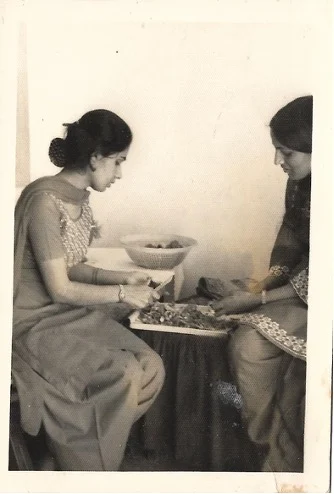
Following a seven-year struggle with conception, the matriarch traveled from Baghdad to London in 1987 under a Pakistani government-sponsored medical program for fertility intervention. During her stay with her oldest maternal uncle, Muhammed Ishaq, the fragile architecture of daily life was shattered. Ishaq, a kind patriarch who had emigrated from Pakistan in 1962, suffered a sudden cardiac event in his living room. Transported by ambulance amid blaring sirens, he was pronounced dead upon arrival at the hospital. This marked the author’s mother’s foundational encounter with sudden, proximate mortality.
Shortly after returning to Pakistan in her final trimester, the family was struck by a second unexpected tragedy. Anjum Amin, the author’s 34-year-old uncle (married to the mother’s older sister), suffered a fatal medical emergency at home surrounded by relatives gathered to welcome the travelers. As he was rushed to the hospital, conflicting advice regarding emergency medication paralyzed the response; he died en route. This event left his 28-year-old wife a widow with two toddlers under the age of five—a foundational trauma that bonded the two sisters as lifelong companions in survival.
1988: The Birth of Twins and the Shadow of Infancy
Returning to Pakistan for delivery, the mother gave birth to twins. While one child survived, the other twin—a brother the author would never meet—died mere hours after birth. This profound infant loss remained an unvoiced undercurrent within the household until the author reached childhood, establishing an early, inherited consciousness of grief that blended seamlessly with the games played on rooftops and streets alongside bereaved cousins.
2016–2017: The Protracted Attrition of Sohail Amin
Nearly three decades after the sudden losses of 1987, the family confronted a different species of mortality: the slow, chemical unraveling of Stage 4 pancreatic cancer. Diagnosed in May 2016, the author’s father, Sohail Amin, endured a year-long physical decline marked by hallucinations rooted in the generational anxieties of post-partition displacement. His final months required harrowing hospitalizations, fluid extractions, and nightly vigils accompanied by scriptural recitation. His passing in June 2017 severed a primary anchor for the family, transforming how time, migration, and geographic rootlessness were measured across continents.
Supporting Context & Metrics: The Mechanics of Inherited Trauma
The psychological weight carried by the family reflects broader socio-cultural dynamics surrounding migration, medical access, and generational survival.
- The Geography of Displacement: The family’s trajectory—spanning Pakistan, Baghdad, London, Germany, Australia, and the United States—highlights the precariousness of post-colonial identities. Born five years after the formation of Pakistan in 1952, the patriarch’s generation internalized a fundamental insecurity: the subconscious belief that the land beneath their feet was provisional and hard-won.
- Medical Intervention and Survival Rates: The contrast between the rapid, unceremonious cardiac deaths of 1987 (Muhammed Ishaq and Anjum Amin) and the institutionalized, highly managed oncological death of 2017 (Sohail Amin) exposes the evolving intersection of familial caregiving and medical technology. In the former cases, families were left wrestling with the counterfactuals of emergency intervention ("If only he had taken the pill"); in the latter, they faced the grueling, protracted mathematics of palliative decline, where physical suffering is quantified by fluid retention, palliative rounds, and chemical hallucinations.
- The Intergenerational Transmission of Fear: Modern psychological frameworks suggest that chronic maternal anxiety—manifested here in the constant, intrusive anticipatory dread of a child’s accidental injury or medical distress—acts as a somatic inheritance. Having witnessed the abrupt cessation of life in her own prenatal year, the mother’s hyper-vigilance is mirrored by the author, who finds her cognitive pathways instantly short-circuiting at the sound of a child running toward a staircase gate.
Official Statements and Personal Testimonies
Reflections gathered from surviving family members offer profound insight into how communities process enduring trauma decades after the fact.
- On the Death of Muhammed Ishaq (1987): When questioned thirty-three years after the event regarding his brother’s sudden collapse in a London flat, surviving uncle Abdul Razzaq offered a stark, minimalist summation of migrant grief:
"It was very hard."
- On the Burden of Intervention: Reflecting on the split-second decision to veto emergency heart medication for Anjum Amin—a choice that burdened the surviving brother with lifelong guilt—the narrative captures the universal human delusion of control:
"In Islam, we believe that you will die when the time of your death is written, never sooner or later… But still, people cannot help but say, you should have done this, you should have done that, if only this had happened this way."
- On the Permanence of Love and Memory: Addressing the ultimate legacy left by transient lives, the family dynamic underscores that grief is not measured by societal achievement, but by emotional resonance:
"What remains after you die is not what you did and not the manner of your dying, but only how people felt about you… Look. These people died, but we remember."
Future Outlook: Documenting the Ephemeral Present
As the generational wheel turns, the focus shifts from the retrospective cataloging of ancestors to the preservation of the present moment for the descendants who will inherit these stories.
The author, now anchored in the exhausting, joyous reality of raising a young child who interacts with pedestrian signals, string cheese, and neighborhood birds, confronts the inevitability of future losses. Just as her mother documented the past through survival and storytelling, the current generation faces the task of recording the mundane details of daily life—bathwater bubbles, bedtime routines, and morning walks—as a bulwark against time.
Ultimately, the trajectory from the sudden tragedies of 1987 to the quiet domesticity of the present suggests a resilient model of human endurance. Grief is neither cured nor forgotten; rather, it is integrated into the daily rhythm of living, transforming the anticipation of loss into a profound, daily act of witness and devotion.

Comments
Facebook App ID not configured. Please add it in the Customizer.