
Executive Overview
In the highly competitive landscape of traditional publishing, aspiring authors are constantly fed a rigid diet of prescriptive advice. We are told that query letters must strictly adhere to word counts, utilize hyper-recent comparable titles, maintain a formulaic narrative structure, and package an author’s personal bio into a neat, palatable marketing profile. Yet, the path to publication is rarely as linear as industry handbooks suggest.
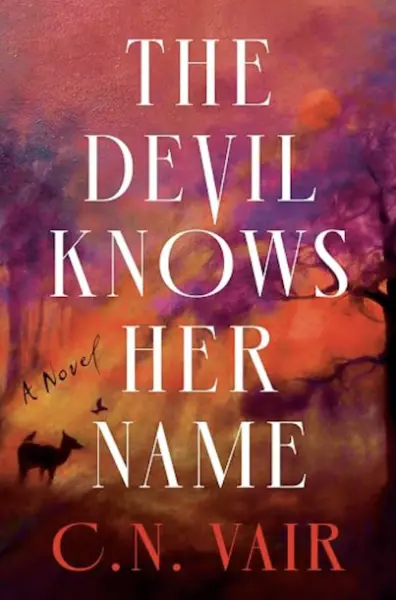
The latest installment of Writer’s Digest’s celebrated "Successful Queries" series offers a masterclass in breaking the rules to brilliant effect. It features the original query letter that secured representation for C.N. Vair’s adult folk horror debut—originally pitched as The Beast and ultimately published as The Devil Knows Her Name—by literary agent Julie Gourinchas of London’s Bell Lomax Moreton agency.
Vair’s query letter defied several conventional industry commandments: it was slightly over-extended, featured a comparative title that stretched the limits of recency, and leaned heavily into an unapologetically atmospheric pitch rather than a clinically engineered plot summary. Yet, it captured the exact attention of an agent seeking "anything spiky, toothy, and dark." This deep-dive investigative analysis examines the anatomy of Vair’s successful pitch, exploring the intersection of raw authorial voice, strategic agent alignment, and the immutable role that subjective taste and timing play in the modern literary marketplace.
Read Also
Detailed Chronology: From Pitch Wars to Publication
The journey of The Devil Knows Her Name illuminates the arduous, multi-stage pipeline modern manuscripts must navigate before ever reaching bookstore shelves. Vair, a former journalist hailing from western New York with a penchant for the macabre, cultivated her craft through rigorous community workshops and developmental programs, notably participating as a 2021–22 Pitch Wars mentee. Pitch Wars—a celebrated mentorship program that pairs unpublished writers with seasoned authors—served as a crucial crucible for refining the novel’s dark, atmospheric folklore.
Armed with a completed 95,000-word manuscript initially titled The Beast, Vair cast her net toward agents who specifically signaled an appetite for darker, visceral speculative fiction. Among them was Julie Gourinchas, a French-American literary agent at Bell Lomax Moreton known for championing boundary-pushing literary, upmarket, and genre fiction that garners prestigious accolades (including Hugo, Arthur C. Clarke, and Shirley Jackson Award nods).
When Vair’s query landed in Gourinchas’s inbox, the hook was immediate. The opening lines—signaling themes of "female rage" and "the reclamation of witchcraft"—cut through the mundane noise of the slush pile. Gourinchas requested the full manuscript, leading to an offer of representation. The book was subsequently acquired, rebranded under its current chilling moniker, The Devil Knows Her Name, and launched into the marketplace, proving that an evocative, voice-driven pitch can eclipse mechanical adherence to query formulas.
Supporting Context & Metrics: The Mechanics of the Query
To understand why Vair’s query succeeded despite breaking minor structural conventions, one must examine its core components and how they align with industry evaluation metrics.
1. The Power of Precise Comps and Thematic Alignment
Query letters rely heavily on "comps" (comparative titles) to help agents immediately contextualize a manuscript’s tone, target audience, and market niche. Vair comped her novel against Alexis Henderson’s The Year of the Witching and Brom’s The Slewfoot.
- The Strategic Fit: Both comp titles deal with historical or isolated folk-horror landscapes where women navigate patriarchal oppression, religious zealotry, and supernatural pacts.
- The Agent’s Resonance: Gourinchas has openly noted that The Year of the Witching was a personal favorite read long before she became an agent. By directly invoking a title that resonated deeply on a personal level with the recipient, Vair bypassed generic categorization and struck an emotional chord.
2. Establishing Voice and Atmosphere Over Plot Mechanics
Many aspiring authors make the mistake of treating a query blurb like a back-cover synopsis, trying to cram every plot twist, character name, and world-building detail into 300 words. Vair’s blurb, by contrast, establishes a mood.
It introduces protagonist Tess Wynne—a woman who sold her soul to the devil a century ago and now maintains a fragile ecological sanctuary in Appalachia—not through an exhaustive list of historical lore, but through conflict:
- The intrusion of a mysterious, human-toothed, meat-eating red fawn.
- The aggressive encroachment of a firebrand pastor seeking to build a "city on a hill."
- The tightening noose of community suspicion and Tess’s subsequent reliance on "darker and darker powers."
By framing the conflict around visceral imagery ("spiky, toothy, and dark") and emotional stakes (the thin line between predator and prey), the pitch communicated the vibe of the book instantly. For an agent looking for atmospheric horror, the vibe is often worth far more than a blow-by-blow plot summary.
3. Deconstructing the Author Bio
Vair’s bio was straightforward and unpretentious: a 2021-22 Pitch Wars mentee, a former journalist with two New York Press Association awards, and a resident of Western New York living with her husband, dogs, and cats. It did not attempt to manufacture artificial prestige or apologize for a lack of a massive publication history. It simply established professionalism, dedication to the craft, and regional grounding—the latter of which heavily informs her atmospheric, small-town horror settings.
Official Statements and Perspectives
The transaction between author and agent offers rare, transparent insights from both sides of the submission trench.
The Agent’s Perspective: Julie Gourinchas on What Works
Reflecting on the acquisition, Gourinchas emphasizes that she consciously avoids being overly prescriptive regarding the formatting of query packages. While industry veterans frequently preach strict guidelines, Gourinchas admits that her primary focus centers on tone, atmosphere, metadata, and—above all—the actual prose.
"I try not to be too prescriptive over the contents of query packages, particularly the blurb—I tend to be much more focused on the atmosphere and metadata and, of course, the writing itself," Gourinchas shares. "In this case, I think C.N. did an excellent job of using the blurb to underscore the themes she’d brought up in her metadata: the thin line between predator and prey, the witchy atmosphere, and the refusal of a female protagonist to make herself small. In hindsight, it’s fascinating to see C.N. pull apart the ‘flaws’ in her query letter when all I could think was: more please!"
Gourinchas’s commentary underscores a vital truth often lost on nervous writers: agents are human readers hunting for an experience, not compliance officers auditing a tax return. If a voice captivates them, structural eccentricities are easily forgiven.
The Author’s Perspective: C.N. Vair on Perfectionism
Vair is refreshingly candid about the imperfections of her original document, noting that the letter was slightly long, featured older comparable touchstones, and relied on modest credentials. She issues a pragmatic warning to writers paralyzed by internet writing advice:
"If this query letter reveals anything, it’s that you don’t have to be perfect to be successful," Vair notes. "For the people sweating bullets because one of their comps is six years old or they’re unsure if their pet collection is a fun enough personality tidbit for their bio, let this be a sign to breathe. So much of this process is down to luck, and you can tick every single box available without landing an agent, so remember that your goal is not to write the most perfect query letter, only one that hooks an agent’s interest enough to read your pages."
Future Outlook: The Shifting Landscape of Folk Horror and Query Culture
Vair’s successful debut with The Devil Knows Her Name arrives at an opportune cultural moment. The horror genre—particularly folk horror, eco-horror, and female-led dark speculative fiction—is experiencing a monumental renaissance. Readers are increasingly hungry for stories that deconstruct traditional rural mythologies, interrogate religious fundamentalism through a feminist lens, and explore humanity’s fraught relationship with the natural world.
Furthermore, the discourse surrounding the query letter process is evolving. As publishing platforms diversify and literary agents become more vocal on digital platforms about their personal tastes, the monolithic "one-size-fits-all" query model is steadily giving way to an emphasis on voice-matching and authentic connection.
For the next generation of debut authors navigating the grueling trenches of the slush pile, Vair’s journey serves as both an encouragement and a cautionary blueprint. It demonstrates that while professionalism, proper formatting, and polished prose remain baseline requirements, the ultimate catalyst for literary representation is unmistakable, singular voice. When an author writes with absolute conviction about the dark corners they wish to explore, the right agent will not be looking at a checklist—they will be turning the page, hungry for more.


Comments
Facebook App ID not configured. Please add it in the Customizer.