
Executive Overview
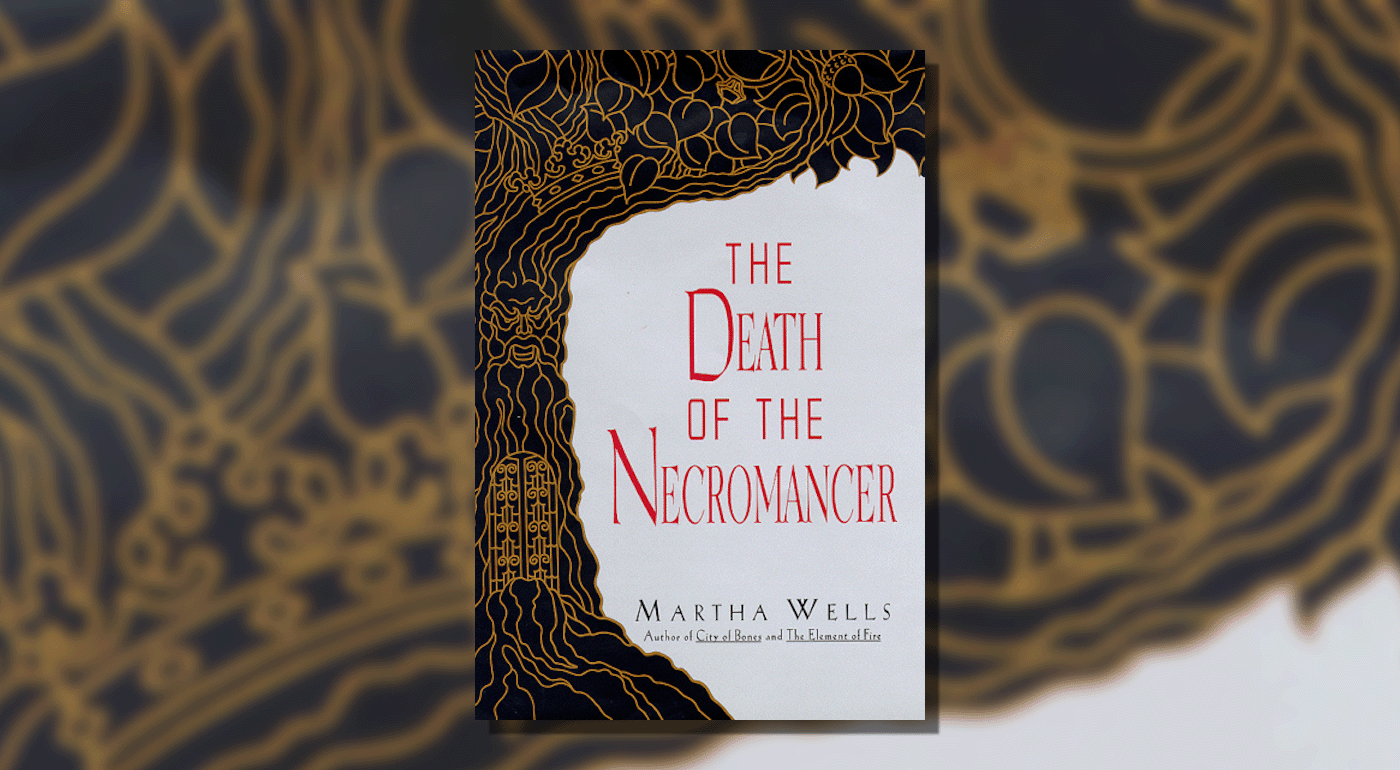
Literary fantasy has long grappled with the balance between intricate world-building and character-driven narratives. In Martha Wells’ 1998 novel, The Death of the Necromancer—the second installment set within the expansive universe of Ile-Rien—readers are plunged into a gaslamp-esque milieu defined by high-stakes heists, resurrected corpses, and the catastrophic repercussions of untethered sorcery. Set approximately two centuries after the events of The Element of Fire, the novel expands upon its predecessor’s foundation, trading straightforward magical wonder for a gritty, systemic exploration of a world where supernatural forces are integrated into everyday criminal underworlds and aristocratic machinations.
This retrospective analysis examines the structural mechanics of Wells’ narrative, evaluating its high-octane pacing, complex character dynamics, and its surprisingly progressive thematic inclusions for a late-90s speculative fiction release. While the novel occasionally stumbles into tropes regarding underutilized female leads and recalcitrant male protagonists refusing emotional processing, it ultimately represents a significant leveling-up in Wells’ world-building prowess. Through an exploration of its plot chronology, audio adaptation metrics, thematic diversity, and forward-looking trajectory toward The Wizard Hunters, this report provides an authoritative assessment of The Death of the Necromancer’s enduring place in the speculative fiction canon.
Detailed Chronology: From Grand Balls to Catacombs
The narrative trajectory of The Death of the Necromancer begins in media res, establishing a tone of theatrical subterfuge and imminent danger that permeates the entire book.
Read Also
Act I: The Catalyst at the Noblewoman’s Ball
The story opens at an elite society ball in the heart of Ile-Rien. Madeline, a talented actress, glides through the ballroom on the arm of Reynard, a disgraced military officer. To the casual observer, they are socialites partaking in the evening’s festivities. In reality, they are operatives executing a calculated infiltration.
Behind the facade of the prosperous art importer Nicholas Valiarde lies a subterranean reality known only to a trusted crew of underworld operators: Nicholas is secretly the master thief Donatien. Furthermore, to an even more exclusive circle, he is the last living descendant of a lineage introduced in The Element of Fire. However, the heist goes awry when Nicholas’s crew crosses paths with a rival faction attempting to steal an entirely different set of antiquities. This collision shatters the careful compartmentalization of Nicholas’s dual lives, thrusting him headlong into a lethal labyrinth of spiritualism and dark arts.
Act II: Unearthing the Legacy of Dr. Viller
The botched heist draws Nicholas into the crosshairs of Dr. Octave, a spiritualist purporting to commune with the dead, and a vastly more powerful sorcerer operating in the shadows. This mysterious antagonist unleashes revenants and resurrected fae creatures to hunt down Nicholas and his allies.
The roots of this conflict stretch back years into Nicholas’s past. His adoptive father, the natural philosopher Dr. Edouard Viller, was executed on what Nicholas maintains were fabricated charges of necromancy. The sole physical remnants of Viller’s legacy are several mystical metal orbs, constructed with the aid of Dr. Arisilde—a companion now rendered functionally incapacitated by a severe opium addiction. Meanwhile, Madeline’s grandmother, Madele, a formidable witch in her own right, finds herself targeted by the same necromantic faction.
Act III: The Citywide Chase and Climax
What follows is a relentless, life-or-death pursuit traversing the breadth of Ile-Rien. The characters are driven from grand aristocratic estates into crumbling ruins, subterranean tunnels, and city sewers. The pursuit is further complicated by the dogged persistence of Inspector Ronsarde—the quintessential Sherlock Holmes to Donatien’s Moriarty—who trails the master criminal through every escalation. The narrative culminates in a confrontation with the primary antagonist: an arrogant sorcerer driven by deep personal trauma, whose refusal to confront his past grief manifests as a catastrophic threat to the entire populace of Ile-Rien.
Supporting Context & Metrics: Adaptation, Pacing, and World-Building
Evaluating a speculative fiction work of this vintage requires analyzing both its original publication context and its modern reception formats, particularly regarding audiobook production and structural evolution.
The Audio Adaptation: Derek Perkins’ Narration
A significant variable in contemporary engagement with The Death of the Necromancer is its 2013 audiobook release, narrated by veteran voice actor Derek Perkins. Consuming the text entirely via audio format reveals distinct pacing advantages. Perkins demonstrates a commanding grasp of the narrative’s inherent theatricality, maintaining a tight, breathless tempo throughout the cross-city pursuits.

While Perkins manages a large, disparate cast of unique-sounding characters with professional polish—a common critique notwithstanding, where male narrators occasionally struggle to render distinct feminine vocal profiles—his execution grounds the complex, “fiddly” plot mechanics in immediate, visceral auditory tension. This performance elevates the experience, rendering the sprawling conspiracies of Ile-Rien more immediate than standard print digestion might suggest.
Evolution of Magic and World-Building
Published between the first two Ile-Rien books—alongside City of Bones—The Death of the Necromancer marks a distinct maturation in Wells’ craft. While The Element of Fire utilized a generalized fantasy magic system (“here is some magic”), the second volume treats magic as a systemic element with profound socio-environmental consequences.
The novel explores what happens when potent magical artifacts and methodologies are accessible to the public and the criminal underworld alike. Notably, the book introduces a dark magical innovation wherein a sorcerer channels and amplifies power through physical agony—a conceptual precursor to the pain-based magic systems seen in later works like Witch King.
Official Statements and Critical Analysis: Tropes and Representation
Critical appraisal of The Death of the Necromancer reveals a fascinating dichotomy between formulaic character allocations and progressive thematic elements.
The Protagonist Paradox: Underutilized Women and Traumatized Men
A recurring motif in early Martha Wells bibliography is the allocation of narrative focal points. Critics frequently note that Wells tends to anchor her stories around the "least interesting man" while keeping dynamic, highly capable women operating in supporting capacities.
- Nicholas Valiarde vs. Thomas (The Element of Fire): While Nicholas boasts a wily, engaging rogue’s personality that makes him an improvement over his predecessor Thomas, he remains somewhat flat compared to the ensemble surrounding him.
- Madeline vs. Kade: Madeline is an effective catalyst, but she suffers from a lack of active agency when compared to Kade from the first novel.
- The Villainous Archetype: The primary antagonist exemplifies a recurring trope: an arrogant sorcerer crippled by personal tragedy who chooses to weaponize his unresolved trauma against society at large. As Reynard dryly observes of the overarching absurdity:
"I’m a little confused as to how the master criminal of Ile-Rien ended up hot on the trail of a petty confidence man and his friend the murderer, and I was along from the first."
Progressive Representation in 1990s Fantasy
Despite formulaic narrative pillars, The Death of the Necromancer breaks significant ground for mainstream fantasy published in 1998 regarding diversity and representation:
- Racial Parity: Characters like Isham, a Parscian man hailing from a region analogous to the Middle East, occupy roles of dignity and significance. Isham is integrated into the narrative as an equal peer rather than reduced to exoticized tropes of servitude.
- Normalizing Queer Identities: The novel depicts a society where gay and trans individuals exist openly as acknowledged members of the community. A secondary yet crucial character is openly gay, accepted by those around him without narrative moralizing or societal consternation. Seeing such organic representation in a late-90s gaslamp fantasy underscores Wells’ early commitment to inclusive world-building.
Future Outlook: Transitioning to The Wizard Hunters
As readers and critics look toward the next stage of the Ile-Rien chronology—specifically the transition into The Wizard Hunters—the structural methodology of Martha Wells’ universe-building becomes clear.
Rather than locking readers into a static, multi-book character arc with the same recurring roster, Wells deliberately employs generational leaps. The Wizard Hunters takes place approximately a generation after the events of The Death of the Necromancer, ensuring that the overarching history of Ile-Rien evolves organically while introducing entirely new perspectives to old geopolitical conflicts.
While this anthology-style hopping between eras can occasionally disorient readers invested in specific character fates, it guarantees that the world of Ile-Rien remains dynamic, preventing narrative stagnation. As the gaslamp-fantasy machinery grinds forward into new generations of magical conflict, The Death of the Necromancer stands firmly as a vital, complex, and surprisingly progressive stepping stone in one of speculative fiction’s most enduring literary experiments.




Comments
Facebook App ID not configured. Please add it in the Customizer.