
Executive Overview
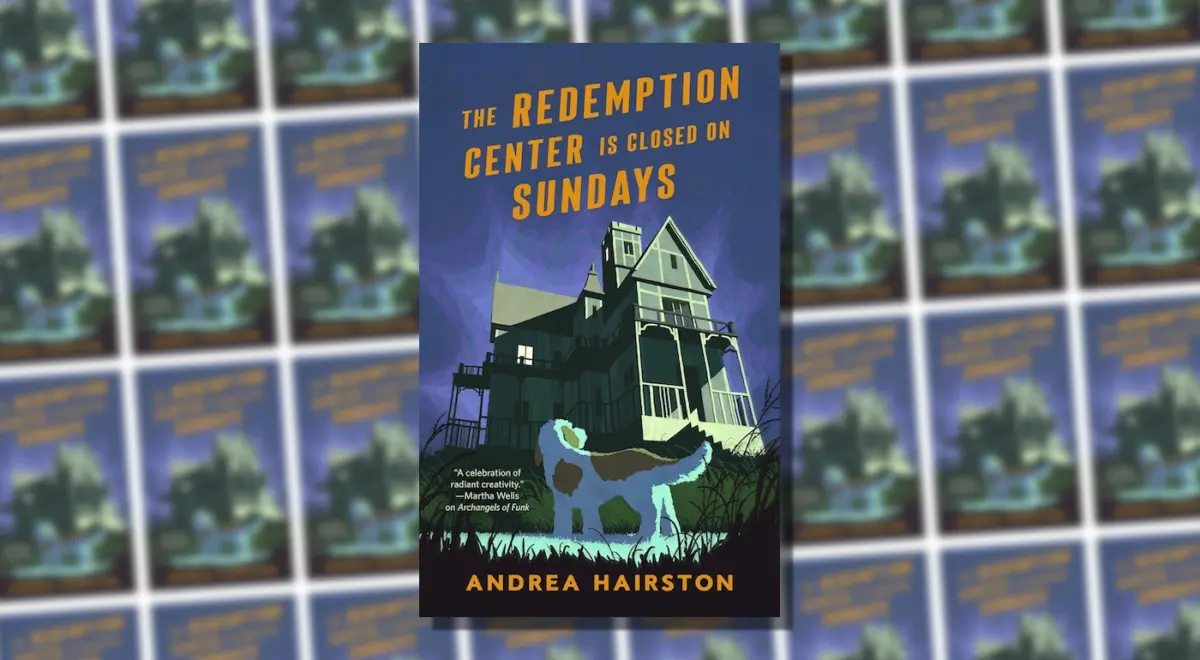
In the contemporary landscape of speculative fiction, few authors operate with the stylistic density, thematic scope, and linguistic dexterity of Andrea Hairston. With the publication of her latest novel, The Redemption Center Is Closed on Sundays—released by Tor Books—Hairston has constructed a work of astonishing structural ambition. Blurring the boundaries between speculative realism, mystery, queer romance, and social commentary, the novel resists easy categorization. It presents readers with an intricate, multi-threaded narrative tapestry set in a deceptively ordinary town where commuting via public transit is as fraught with philosophical peril as solving a string of local homicides.
At its core, The Redemption Center Is Closed on Sundays is a study of community, trauma, resilience, and the infinite complexity of human (and canine) lives. The narrative unfolds through an ensemble cast of meticulously rendered characters whose everyday routines collide with dark mysteries, bureaucratic absurdities, and ontological shifts. Led by an extraordinary St. Berdoodle named Oona—a canine protagonist with a literary pedigree of her own—the novel invites readers to consider the ways in which individual realities overlap, diverge, and occasionally fracture.
This journalistic review and critical examination explores the structural mechanics, thematic architecture, and cultural significance of Hairston’s latest masterwork. Through a detailed analysis of its narrative threads, character ecosystems, and philosophical underpinnings, we examine why this genre-defying novel represents a watershed moment in modern speculative literature.
Read Also
Detailed Chronology & Narrative Architecture
The structural brilliance of The Redemption Center Is Closed on Sundays lies in its manipulation of time and perspective. Hairston structures the novel around a pivotal fracture point: the axis of "Today" (following a series of unsettling local murders) and "Yesterday" (the fateful Sunday when an unsuspecting group of citizens becomes inexplicably trapped at the municipal Redemption Center).
Thread One: Paula B. Queenie and the High Street Commute
The primary narrative anchor is Paula B. Queenie, a self-professed town nerd whose encyclopedic knowledge of her neighbors and hyper-vigilant observational skills make her an ideal focal point for the town’s eccentricities. As the novel opens, Paula is simply attempting to navigate a mundane morning commute to her cleaning job. However, external forces conspire against her: public transit is predictably delayed, the bus stop is crowded with impatient commuters, and the weather is uncooperative.
Even before reaching the bus stop, Paula is waylaid by her conspiracy-minded, moderately helpless gym-rat neighbor. Bound by proximity and small-town obligation, she is subjected to a breathless debriefing on the latest local homicide—and the unsettling rumor that her own uniquely talented canine companion, Oona, might be wanted by local authorities for questioning.
Thread Two: Oona the St. Berdoodle and the Multiverse of Trails
Oona is no ordinary dog. Raised by a carnival troupe consisting of a musician, a magician, and a clown, Oona’s formative education involved being fed tricks alongside her puppy chow. As Hairston writes, Oona’s "maps had no fixed borders, just the routes she discovered and enjoyed."
Oona’s traversal of the town forms a vital connective tissue across the novel’s disparate plotlines. She acts as an unofficial search-and-rescue operative, guiding Paula out of dangerous situations on High Street and navigating the labyrinthine tunnels down by the river. On Sundays, Oona stays with Zsuzsu Marlene Hönig. Together, they embark on an excursion to the local State Forest to visit the Redemption Center.
Although the facility is firmly closed on Sundays, Zsuzsu and Oona discover a disparate group of ten stranded tourists, medical technicians, eco-tourists, a corporate operative, and Belle Roberts—the director of the local library and leader of the "Change Gang" (affectionately or derisively termed "hope junkies" by Paula). Try as they might to leave, the tourists find that every forest path inexorably loops back to the locked gates of the Redemption Center.
Thread Three: Anqwenique Robinson and the Podcaster’s Paradox
Running parallel to Paula and Oona’s journeys is the frantic, surreal day experienced by podcaster Anqwenique Robinson. As strange figures in peculiar costumes stalk her neighborhood, and another neighbor faces an imminent, unpleasant demise, Anqwenique attempts to maintain a semblance of normalcy. She heads out to meet a local computer geek for a vegan picnic, only to find the laws of probability and physics bending around her in inexplicable ways.
As the narrative shifts between the immediate aftermath of the murders ("Today") and the strange confinement at the Redemption Center ("Yesterday"), Hairston layers her characters with psychological depth. Anqwenique’s intellectual rigor and anxious affections clash hilariously when strangers begin quoting her own podcast back to her, highlighting the eerie permeability of modern media and public life.
Supporting Context & Thematic Metrics
To fully appreciate The Redemption Center Is Closed on Sundays, one must examine the broader thematic machinery that elevates the novel beyond a traditional mystery or speculative caper. Hairston employs several recurring motifs that anchor her kaleidoscopic vision.

The Portrayal of Canines in Fiction
Hairston has established a distinct reputation for crafting exceptional literary animals. In her previous novel, Archangels of Funk, readers were introduced to two wise, sharp-nosed border collies whose acute intelligence drove the narrative forward. In Oona, Hairston transitions to a St. Berdoodle—a hybrid breed imbued with an almost supernatural self-awareness. Oona is fiercely independent, belonging to "no one and nowhere, everyone and everywhere." She assists injured wildlife, befriends crows, and shepherds lost humans across literal and metaphysical boundaries. Through Oona, Hairston explores themes of agency, loyalty, and the porous boundary between the domestic and the wild.
The Mechanics of "Everyday" Speculative Realism
While the novel features supernatural elements, alternative geometries, and multiversal bleed-throughs, it remains deeply rooted in the textures of daily life. Hairston’s prose evokes the sensory overload of a bustling community:
- Culinary Cravings: Readers are left yearning for buns accented with vegan bacon bits.
- Civic Spaces: Libraries, bus stops, and vegan picnics are rendered with anthropological precision.
- Interpersonal Dynamics: The slow-burn queer romance that develops across the narrative unfolds with a naturalistic hesitance that grounds the high-concept speculative elements in emotional authenticity.
Genre Resistance
The novel defies rigid genre classification. It is simultaneously a whodunit, a work of speculative fiction, a sociological study of small-town politics, and a romance. Hairston provides exhaustive backstories for local law enforcement officers, their falsely accused suspects, runaway teenagers, and queer couples whose dynamic is bound by strict narrative rules (such as the inseparable figures of Louise and Thelma).
Official Statements & Critical Reception
Early critical reception from literary journals and publishing insiders underscores the book’s monumental impact on contemporary speculative fiction. Reviewers have universally praised Hairston’s ability to balance tonal extremes—pairing deeply unsettling accounts of violence with a whimsical, life-affirming lightness.
In promotional materials provided by Tor Books, editors emphasize Hairston’s singular status within the literary ecosystem. "Andrea Hairston is an author who refuses to flatten her world for the sake of narrative convenience," notes one editorial review. "Every character, no matter how minor their intersection with the primary plot, carries the weight of a fully realized interior life."
Literary critics have drawn comparisons to magical realism and postmodern metafiction, noting that the novel’s central philosophical revelation is articulated by Anqwenique at the Redemption Center:
"We all have a bead on the Redemption Center. Even if it’s a different place, a different reality for each of us: black ops site, steampunk rocket ship, haunted house, whatever. We’re in a multiverse insisting it’s one world. […] The witch’s trick is to break that spell, inadvertently or on purpose."
This sentiment encapsulates the core thesis of Hairston’s work: that human interaction is, in effect, interdimensional travel. Every conversation with a stranger bridges separate realities.
Future Outlook & Literary Significance
As The Redemption Center Is Closed on Sundays makes its way into the hands of readers worldwide, its long-term implications for speculative fiction are profound. Hairston proves that narratives dealing with collective trauma and systemic violence do not need to abandon hope, humor, or community cohesion.
The novel arrives at a cultural moment when readers are increasingly fatigued by cynicism and structural fragmentation in fiction. Hairston offers an antidote: a sprawling, abundant community portrait where "the horrors persist, but so do we." There is no lingering in perpetual grief when a mystery must be solved and a community must protect its members—including its exceptionally clever, multiverse-walking dogs.
For aspiring writers and seasoned bibliophiles alike, Hairston stands as a singular force. Her work challenges us to look closer at our neighbors, to treat public transit as an observational arena, and to recognize that the ordinary world is bursting at the seams with untamed, wondrous possibilities. The Redemption Center Is Closed on Sundays is not merely a book to be read and shelved; it is an invitation to march back out into the world and re-engage with humanity in all its messy, kaleidoscopic glory.





Comments
Facebook App ID not configured. Please add it in the Customizer.