
Executive Overview
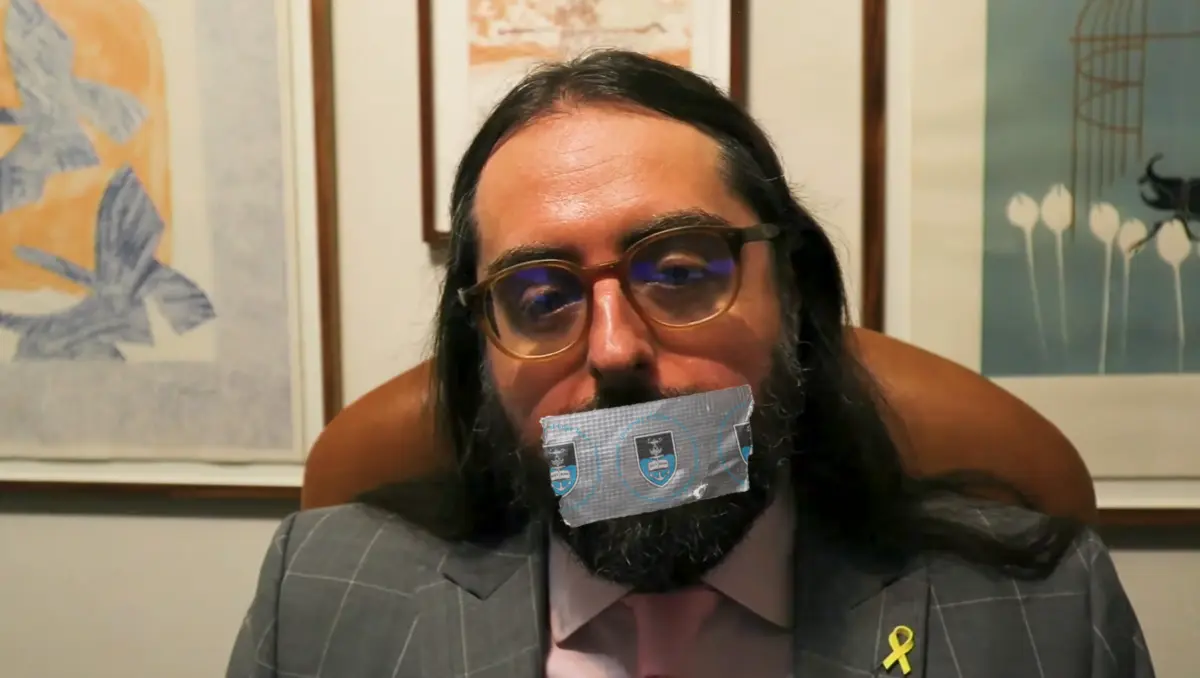
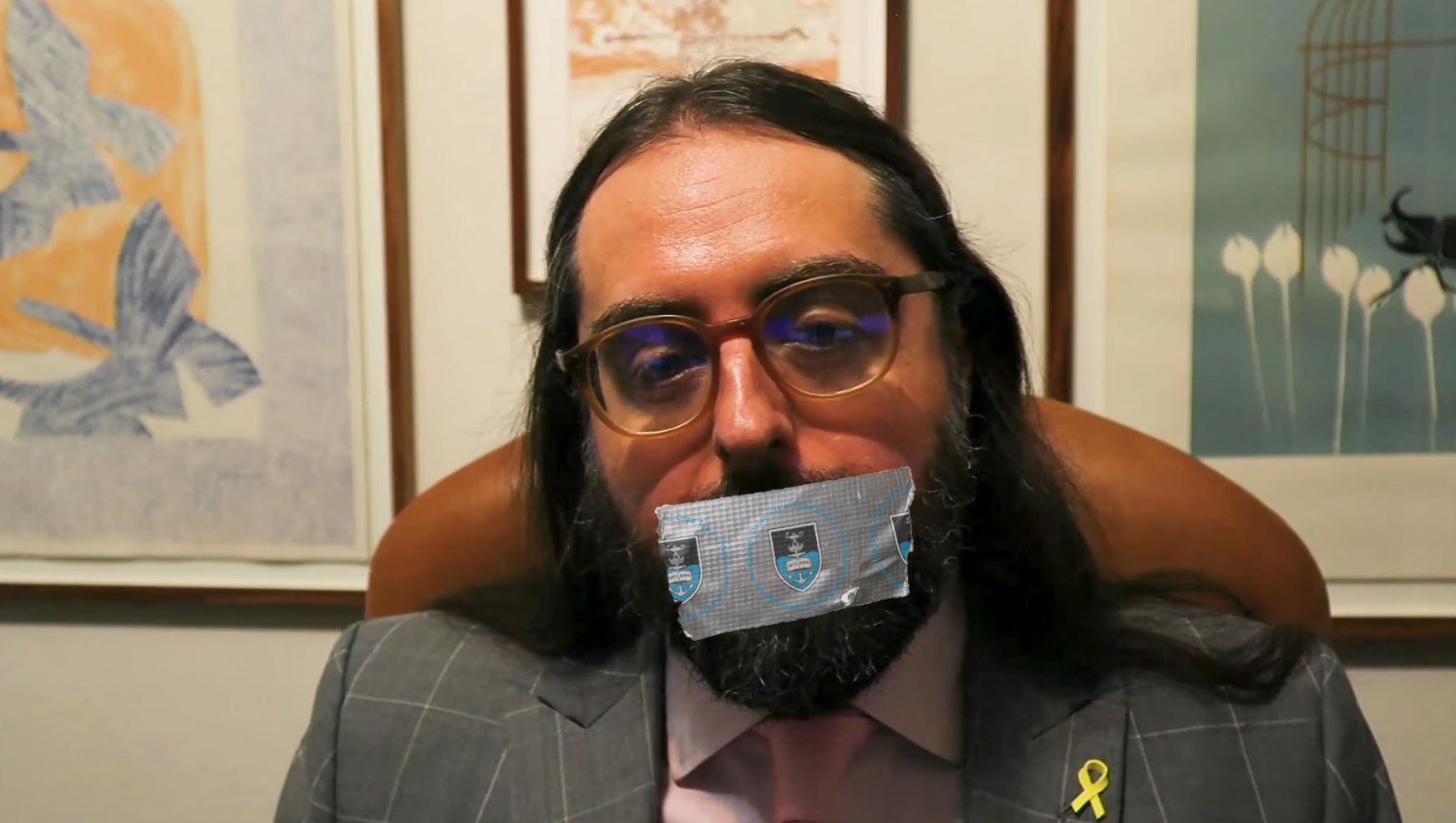
The University of Cape Town (UCT), one of Africa’s premier higher education institutions, finds itself at the epicenter of a fierce national and international debate concerning freedom of expression, institutional governance, and the boundaries of political discourse. At the center of this controversy is Mark Oppenheimer, a prominent South African advocate and co-host of the popular philosophy podcast Brain in a Vat, who currently faces expulsion from the UCT Council—the university’s highest governing body.
The disciplinary proceedings against Oppenheimer, alongside a proposed six-month suspension for fellow council member David Ansara, stem from remarks Oppenheimer made during a March 2025 interview with author and commentator Ayaan Hirsi Ali. In that conversation, Oppenheimer criticized UCT’s controversial policies regarding the Middle East—specifically its academic boycotts tied to the Israeli Defense Force—and alleged that "Islamist elements" had exerted undue influence and control over aspects of the university administration, fostering an environment where anti-Semitic behavior went unchecked.
Following an independent inquiry led by retired judge Mahomed Navsa, which concluded that Oppenheimer’s claims and Ansara’s social media amplification breached the council’s code of conduct, UCT’s leadership moved toward severe sanctions. The university adopted the investigation reports on October 18, 2025, triggering a five-member subcommittee to weigh final penalties.
Read Also
The unfolding crisis has galvanized legal scholars, academics, and civil liberties advocates across South Africa and beyond. Critics of the university’s actions argue that punishing a council member for expressing contentious political views—regardless of whether those views are deemed accurate or offensive—represents a chilling infringement on protected speech and violates the spirit of the South African Constitution. Conversely, supporters of the disciplinary measures maintain that public pronouncements by governing officials that allege institutional corruption or religious extremism among colleagues cross the line from protected criticism into defamatory misconduct and a breach of fiduciary duty. As an open letter defending Oppenheimer’s right to free speech circulates globally, the UCT controversy serves as a critical test case for the resilience of academic freedom and institutional tolerance in a deeply polarized socio-political landscape.
Detailed Chronology
To understand the gravity of the current disciplinary actions, it is necessary to trace the sequence of events that transformed a podcast interview into a full-scale institutional crisis.
The Genesis: Gaza Resolutions and Campus Tensions
The underlying friction within the UCT community predates Oppenheimer’s remarks, rooted deeply in ideological divisions over the Israeli-Palestinian conflict. In the wake of escalating hostilities in the Middle East, UCT adopted a series of resolutions regarding Gaza, which critics—including Oppenheimer—characterized as a targeted academic boycott of Israeli academics and institutions associated with the Israeli Defense Force. This policy triggered intense internal debate, legal challenges, and deep-seated animosity among faculty, students, and council members alike. The campus atmosphere became increasingly volatile, marked by accusations of intimidation, protests, and retaliatory complaints that heavily strained university resources.
The Catalyst: The Hirsi Ali Podcast Interview (March 2025)
In March 2025, Mark Oppenheimer appeared as a guest on a podcast hosted by prominent public intellectual Ayaan Hirsi Ali. During the interview—specifically around the 32-minute mark—Oppenheimer addressed his role as a UCT council member and offered a scathing critique of the university’s trajectory. He pointed to the adoption of the Gaza resolutions, described violent episodes of anti-Semitic behavior on campus, and asserted that "Islamist elements" had taken control of portions of the university, marginalizing moderate voices and trampling upon academic freedom.
While Oppenheimer did not explicitly name individuals, his commentary directly implicated senators and fellow council members who had championed or voted in favor of the Gaza-related institutional policies.
Social Media Amplification and the Inquiry
Shortly after the interview aired, David Ansara, another UCT council member, reposted praise for Oppenheimer’s interview on social media. This digital amplification caught the attention of university authorities, prompting formal complaints. In response, UCT commissioned retired judge Mahomed Navsa to investigate the conduct of both Oppenheimer and Ansara.
Judge Navsa’s inquiry culminated in a comprehensive report submitted in late 2025. Navsa concluded that Oppenheimer’s claims of Islamist control at UCT, as well as Ansara’s endorsement of those claims, constituted a breach of the council’s code of conduct. The judge noted that the investigation found no evidence supporting the assertion that council members were Islamists or were operating under Islamist influence. Consequently, Navsa recommended that Oppenheimer be expelled from the Council and that Ansara face a six-month suspension.
Institutional Action and Oppenheimer’s Rebuttal
On October 18, 2025, at a special meeting, the UCT Council formally adopted Navsa’s investigation reports. A five-member subcommittee was subsequently appointed to hear representations from the accused council members before finalizing any sanctions.
In response to the adoption of the report, Oppenheimer published a scathing rebuttal on October 18 via the South African publication The Daily Friend. He characterized the move to expel him as "an egregious attack on freedom of expression." Oppenheimer maintained that his podcast commentary raised legitimate, pressing concerns regarding anti-Semitic intimidation and the university’s failure to adequately protect Jewish students. Furthermore, he clarified that his critique was aimed at political Islamism as an ideology rather than individual Muslims, and that his references to individuals being "terrorized" pertained to real-world campus intimidation rather than literal terrorism by council members.
Supporting Context & Metrics
The battle over Oppenheimer’s Council seat does not exist in a vacuum; it is anchored in the constitutional framework of South Africa and the specific governance guidelines of the University of Cape Town.
The Constitutional Standard of Free Expression
Section 16 of the Constitution of the Republic of South Africa provides robust protections for freedom of expression. It explicitly states:
1. Everyone has the right to freedom of expression, which includes—
- a. freedom of the press and other media;
- b. freedom to receive or impart information or ideas;
- c. freedom of artistic creativity; and
- d. academic freedom and freedom of scientific research.
2. The right in subsection (1) does not extend to—
- a. propaganda for war;
- b. incitement of imminent violence; or
- c. advocacy of hatred that is based on race, ethnicity, gender or religion, and that constitutes incitement to cause harm.
Legal analysts reviewing Oppenheimer’s podcast remarks point out that his critique falls well outside the narrow exclusions defined in Section 16(2). He did not engage in war propaganda, incite imminent violence, or advocate harm-inciting religious hatred. Consequently, from a constitutional perspective, his statements are classified as protected speech. Furthermore, as a public institution, UCT is constitutionally bound to uphold and respect these foundational rights.
The UCT Council Code of Conduct
The disciplinary proceedings against Oppenheimer also intersect with internal governance rules. The Code of Conduct for UCT Council Members stipulates that members must maintain high standards of integrity and respect the institution. However, the code also explicitly notes:
"Council members should be respectful of every individual’s right to express their opinions, whether those opinions are complimentary or critical of Council and UCT."
Critics of the university’s actions emphasize that punishing a council member for voicing sharp criticism of institutional policies directly undermines this explicit protection for dissent within the governing body.
Official Statements & Perspectives
The controversy has elicited sharply polarized reactions from the accused, the investigating authority, and the broader academic community.
Judge Mahomed Navsa’s Findings
According to excerpts from Judge Navsa’s report, the inquiry sought to frame the dispute not merely as a matter of abstract free speech, but as an issue of good faith, factual integrity, and respect for the Council. Navsa argued that Oppenheimer’s public assertions—specifically that UCT enacted an academic boycott and that Islamist elements had seized control—were demonstrably false within the context of the council’s actual operations. The report asserted:
"The findings against Oppenheimer arose from his March 2025 interview… He identified himself as a council member and alleged that Islamist elements had taken control of UCT… Navsa found no evidence that council members were Islamists or were being influenced by Islamists."
Mark Oppenheimer’s Defense
Oppenheimer has vigorously defended his actions, emphasizing that a university council must not become an echo chamber immune to outside scrutiny. In his public statements, he argued:
"Our support for Oppenheimer’s freedom of expression does not require agreement with his political views, his assessment of events at UCT, or his choice of words. These matters are open to vigorous disagreement. The principle we defend is that members of a university community must be free to question institutional policies and prevailing orthodoxies."
The Global Open Letter
As the disciplinary process moves forward, an open letter defending Oppenheimer’s right to free speech has gathered widespread signatures from academics, legal professionals, and public intellectuals. The signatories argue that even if Oppenheimer’s claims are perceived as overstated or offensive, institutional punishment is the wrong remedy:
"When a governing body removes a member because it finds his public account of such a dispute untrue, it punishes speech, whatever it calls the offence… Colleagues who felt maligned had every right to answer him, in public and at length. That is how a university should settle such disputes. It is no reason to remove an elected member from the body that oversees the university."
Future Outlook
The outcome of the UCT subcommittee’s deliberations regarding Mark Oppenheimer and David Ansara will have profound implications reaching far beyond the borders of Cape Town.
- Precedent for Institutional Governance: If the university proceeds with the expulsion of Oppenheimer and the suspension of Ansara, it will establish a potent precedent regarding the limits of public commentary by university overseers. It would signal that governing bodies can police the political and ideological utterances of their members outside of official university channels, potentially creating a chilling effect on board-level dissent across South African higher education.
- Potential Legal Challenges: Given Oppenheimer’s extensive background as an advocate specializing in freedom of expression and constitutional litigation—having appeared before the Supreme Court of Appeal and the Constitutional Court—any final decision to strip him of his council seat is widely expected to be challenged in a court of law. Such a legal battle would force the judiciary to adjudicate the delicate tension between fiduciary codes of conduct and constitutionally protected free speech.
- The Broader Cultural War: The UCT controversy underscores the deep fractures within contemporary academic institutions regarding geopolitical conflicts, religious politics, and the definition of a safe learning environment. As universities worldwide grapple with how to balance student welfare, anti-discrimination mandates, and open inquiry, the resolution of the Oppenheimer case will be scrutinized as a bellwether for the future of academic freedom in the 21st century.




Comments
Facebook App ID not configured. Please add it in the Customizer.