
Executive Overview
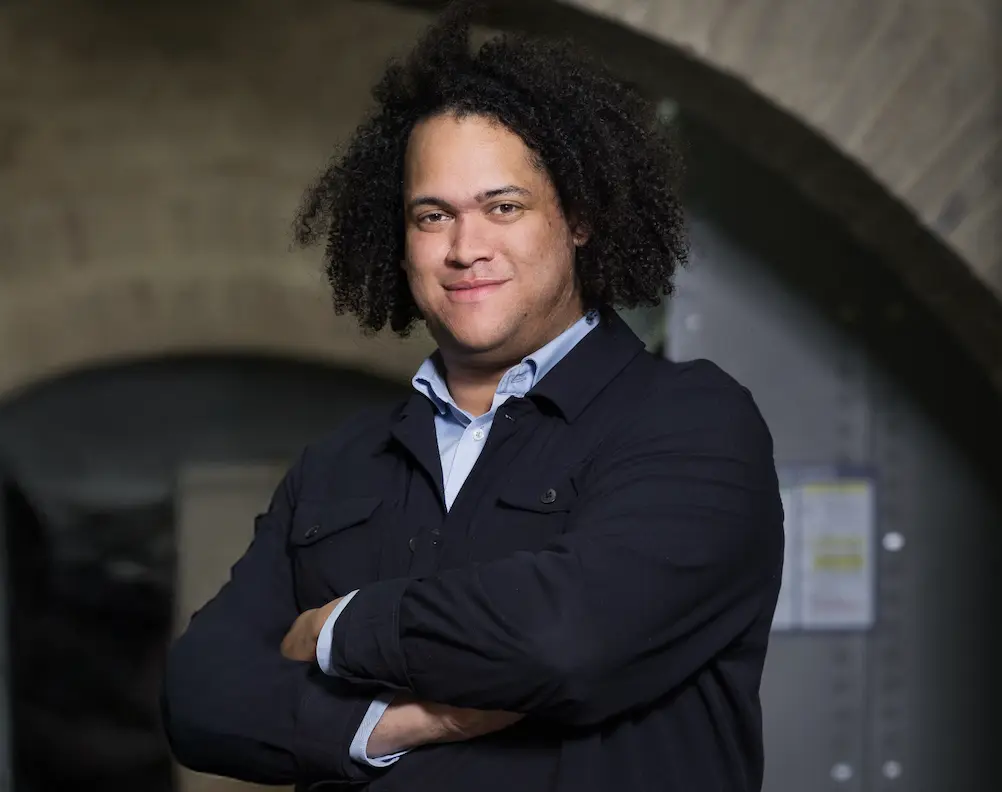
In a strategic appointment signaling a profound shift for one of Europe’s premier cultural flagships, Stockholm’s Moderna Museet has named Cédric Fauq as its next curator of contemporary international art. Set to assume his new role on December 1, Fauq departs his current post as chief curator and head of programs and collections at the Capc Musée d’art contemporain de Bordeaux. His arrival in the Swedish capital is not merely a staffing update; it marks a critical pivot point for a museum undergoing monumental structural and philosophical evolution.
Fauq steps into an institution in the midst of a historic consolidation. Earlier this year, the Moderna Museet officially merged with ArkDes (The Swedish Centre for Art and Design) and the Public Art Agency Sweden (Statens konstråd) to forge a sprawling, multi-disciplinary collective institution. This union of contemporary art, architecture, public intervention, and design is designed to redefine how cultural institutions engage with the public sphere.
Simultaneously, the museum is steering through a leadership transition. Fauq’s appointment directly follows the arrival of Tone Hansen as the museum’s new director earlier this month. Hansen, who previously helmed Norway’s prestigious Munch Museum and the Henie Onstad Kunstsenter, assumed the directorship over the summer with a mandate to build a more innovative, knowledge-driven, and audience-centric organization.
Read Also
With Fauq’s track record of critically engaged, socially conscious, and boundary-pushing exhibitions—ranging from the haunting historical echoes of Blackground: murmures des mornes in Bordeaux to his jury service for the prestigious 2023 Turner Prize—the Moderna Museet is betting big on a curator renowned for asking difficult questions about contemporary life. As Stockholm prepares for this new chapter, the international art world is watching closely to see how Fauq and Hansen will weave together the disparate threads of art, public space, architecture, and design into a cohesive, future-facing vision.
Detailed Chronology: Tracing Cédric Fauq’s Curatorial Trajectory
To understand the weight of Cédric Fauq’s appointment at the Moderna Museet, one must trace the trajectory of an international curator who has rapidly become one of the most distinctive voices of his generation. Fauq’s career is characterized by an intellectual fearlessness, a deep commitment to underrepresented narratives, and a keen sense of institutional critique.
Early Foundations and International Ascendancy
Fauq’s curatorial profile was forged through a series of rigorous institutional engagements across Europe. Prior to his tenure in Bordeaux, he served as a curator at Nottingham Contemporary in England, an institution celebrated for its adventurous programming and deep community roots. During his time in the UK, Fauq developed a reputation for working closely with living artists to stage exhibitions that responded directly to the socio-political fractures of post-Brexit Britain.
Following his work in Nottingham, Fauq moved to Paris to join the curatorial team at the Palais de Tokyo, Europe’s largest center for contemporary art. Operating within the sprawling, industrial expanses of the Palais de Tokyo, Fauq honed his ability to stage immersive, large-scale exhibitions that challenged traditional white-cube viewing habits. His projects in Paris positioned him as a curator capable of handling complex spatial dynamics while maintaining a sharp focus on theoretical and cultural discourse.
Leadership at Capc Musée d’art contemporain de Bordeaux
In recent years, as chief curator and head of programs and collections at the Capc Musée d’art contemporain de Bordeaux, Fauq cemented his status as an institutional innovator. Operating within a striking 19th-century warehouse—a former colonial goods storehouse that carries the heavy historical ghosts of France’s maritime past—Fauq used the architecture itself as a foil for contemporary interventions.
Among his most notable credits in Bordeaux was the group exhibition Blackground: murmures des mornes. The exhibition engaged deeply with histories of diaspora, colonial legacies, and the subterranean whispers of historical trauma, utilizing the architecture of the Capc to stage an evocative dialogue between past and present.
Fauq also curated Rammellzee Alphabeta Sigma (Side B), a profound exploration of the late, legendary visual artist, musician, and graffiti writer Rammellzee. The exhibition celebrated the artist’s complex cosmological philosophies, language systems (Gothic Futurism), and his resistance to art-world categorization.
Further demonstrating his curatorial range, Fauq organized Garden of the Nine Suns by Trevor Yeung. This sensitive, atmospheric presentation explored notions of ecology, botanical labor, artificial environments, and emotional mapping, proving Fauq’s adeptness at shifting effortlessly between heavy sociopolitical critique and delicate, ecologically conscious poetics.
Academic and Evaluative Footprint
Beyond his institutional roles, Fauq has maintained a robust presence in the educational and critical spheres. In 2023, he served as a member of the jury for the Turner Prize, helping to evaluate some of the most dynamic contemporary art practices emerging from the United Kingdom. Furthermore, Fauq is deeply invested in the pedagogical formation of the next generation of artists and theorists, teaching at HEAD (Haute École d’Art et de Design) in Geneva and the historic Université Paris 1 Panthéon-Sorbonne.
Supporting Context & Metrics: A New Era for Nordic Culture
The appointment of Cédric Fauq does not happen in a vacuum; it occurs against a backdrop of sweeping structural transformation within the Swedish cultural landscape.
The Mega-Merger of Swedish Cultural Agencies
Earlier this year, the Swedish government and the cultural sector witnessed one of the most significant institutional realignments in recent European history. The Moderna Museet, ArkDes (The Swedish Centre for Art and Design), and the Public Art Agency Sweden were officially merged to form a unified, collective institution.
This tripartite merger was designed to break down long-standing silos between fine art, architectural history, design thinking, and public space interventions. By bringing these three heavyweights under a single organizational umbrella, the Swedish state has signaled a desire to create a more porous, responsive, and holistic cultural body—one that can address the spatial and visual complexities of the 21st century.
However, such structural overhauls bring immense logistical and philosophical challenges. Merging institutions with distinct administrative histories, staff cultures, and public expectations requires steady, visionary leadership. This is precisely where Tone Hansen and Cédric Fauq enter the picture.
Tone Hansen’s Visionary Mandate
Tone Hansen officially took the helm as director of the Moderna Museet earlier this month, following a successful and highly regarded tenure leading the Munch Museum and the Henie Onstad Kunstsenter in Oslo. When her appointment was announced over the summer, Hansen laid out an ambitious roadmap for the newly expanded institution:
"My ambition is to shape a new direction for Moderna Museet and to build a stronger, more innovative and knowledge-driven organization within one of the world’s most influential museums, with art, architecture, design and audiences at its heart."
To achieve this, Hansen required a contemporary curator who not only possesses deep knowledge of international art networks but also shares a commitment to cross-disciplinary pollination. Fauq’s appointment is the first major structural chess piece moved by Hansen in her campaign to modernize and unify the museum’s identity.
Official Statements: Bridging the Vision
The alignment between Tone Hansen’s strategic vision and Cédric Fauq’s curatorial ethos is clear in the public statements released surrounding his hiring.
In her official announcement welcoming Fauq to Stockholm, Tone Hansen emphasized the pivotal timing of his arrival:
"Cédric joins us at a pivotal moment as the museum prepares for its next chapter, where art, public art, architecture, and design come together. His experience, curiosity, and engagement with key artistic questions of our time will be a true asset as we build a new vision for the museum."
For his part, Fauq’s transition to Stockholm represents a natural evolution of his career-long inquiry into how institutions can remain porous, critical, and deeply engaged with the public. While stepping into a newly expanded institution that bridges the gap between historical modernism, contemporary fine art, architecture, and design, Fauq’s curatorial voice will be instrumental in framing how the Moderna Museet speaks to both its local constituency and the global art community.
Future Outlook: What Cédric Fauq’s Arrival Means for the Moderna Museet
As Cédric Fauq prepares to unpack his office in Stockholm ahead of his December 1 start date, the international art world is speculating on the thematic directions his exhibitions will take. What can visitors, critics, and artists expect from this new chapter at the Moderna Museet?
1. Dismantling Institutional Silos
Given the recent merger with ArkDes and the Public Art Agency Sweden, Fauq’s programming is expected to actively dismantle the traditional boundaries separating visual art from architecture and design. Fauq’s past work—often sensitive to spatial politics, environmental constructs, and historical architecture (such as his utilization of the Capc’s warehouse spaces)—positions him uniquely to curate exhibitions that spill out of traditional gallery walls and engage directly with the built environment.
2. Amplifying Global and Marginalized Narratives
Throughout his career at Nottingham Contemporary, the Palais de Tokyo, and Bordeaux, Fauq has consistently championed artists who interrogate colonial histories, diaspora, identity politics, and systemic structures. His curation of exhibitions like Blackground: murmures des mornes demonstrates a commitment to bringing urgent, globally resonant conversations to European institutional spaces. Under his watch, the Moderna Museet’s contemporary international art program will likely deepen its engagement with non-Western perspectives and transnational dialogues.
3. Deepening Audience Engagement and Critical Discourse
Both Hansen and Fauq share an ethos rooted in knowledge-driven, critically rigorous programming that does not shy away from the complex social questions of our time. In an era marked by geopolitical polarization, ecological crisis, and rapid technological shifts, art museums are increasingly called upon to serve as civic town squares. Fauq’s academic background—teaching at institutions like HEAD and the Sorbonne—suggests a curatorial approach that treats exhibitions not merely as aesthetic displays, but as active sites of learning, debate, and intellectual exchange.
Conclusion
The pairing of Tone Hansen as director and Cédric Fauq as contemporary curator ushers in a golden opportunity for the Moderna Museet. As the institution digests its historic merger with ArkDes and the Public Art Agency Sweden, it faces the challenge of reinventing itself for a complex future. With Fauq steering the contemporary art program starting this December, Stockholm is poised to become one of the most vibrant, intellectually charged epicenters of contemporary art and design in Europe.

Comments
Facebook App ID not configured. Please add it in the Customizer.