
Executive Overview
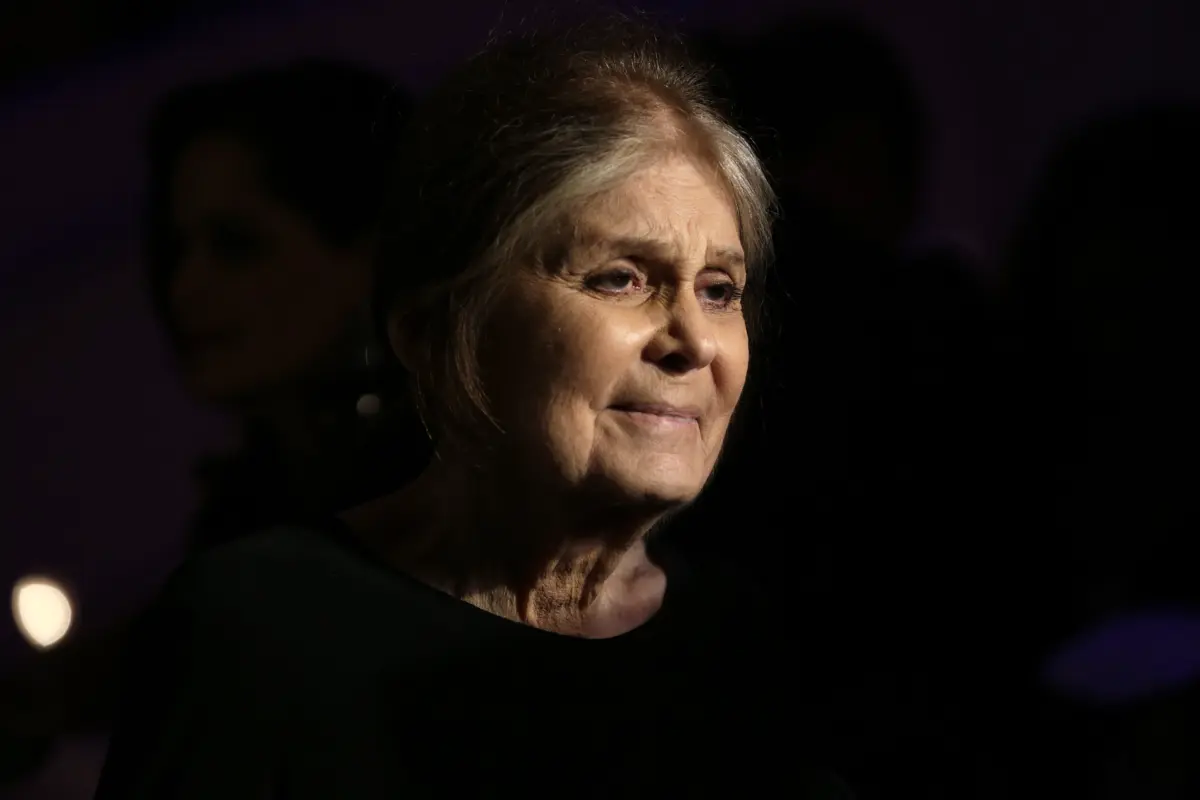
Gloria Steinem, the pioneering feminist activist, journalist, and intellectual who fundamentally reshaped the modern women’s liberation movement in the United States and across the globe, has passed away at the age of 92. Her death was confirmed via an official statement shared on Instagram, which highlighted her lifelong dedication to writing, community-building, and grassroots activism. While an exact cause of death was not disclosed, the announcement celebrated a life spent on the front lines of social justice, noting that her final years were spent in the company of activists, thinkers, and writers in her historic New York City brownstone.
Steinem’s impact transcended political organizing, reaching deeply into the realms of art, photography, literature, and popular culture. Throughout her decades-long career, she served as a central node in a vast network of artists, photographers, and cultural creators. From her formative years sharing an apartment with visionary artist Barbara Nessim to her decades-long mentorship and friendship with iconic photographer Annie Leibovitz, and her deep-seated mutual admiration for feminist artist Judy Chicago, Steinem maintained a symbiotic relationship with the creative community. Her writings inspired museum blockbusters, cinematic biopics, and contemporary art exhibitions, cementing her legacy not merely as a political strategist, but as a foundational muse and architect of modern cultural consciousness.
As the world mourns her loss, tributes from artists, activists, and cultural institutions underscore a legacy built on resilience, radical hope, and an unwavering belief in community. Her historic Manhattan home, envisioned as a permanent hub for social justice movements and the site of her renowned "Talking Circles," will continue to serve as a beacon for future generations of changemakers.
Read Also
Detailed Chronology
Early Life, Journalism, and the Birth of a Movement
Born in Toledo, Ohio, in 1934, Steinem’s early life was marked by a nomadic upbringing and the responsibility of caring for her ailing mother. After graduating from Smith College and spending time in India on a Chester Bowles Fellowship, Steinem moved to New York City to pursue a career in journalism.
Her early breakout moment as an investigative reporter came in 1963, when she went undercover as a waitress at Hugh Hefner’s New York Playboy Club. Her explosive exposé, published as "A Bunny’s Tale" in Show magazine, exposed the grueling working conditions, meager pay, and systemic degradation faced by the club’s employees. This early piece of gonzo journalism offered an acute preview of the systemic critiques she would bring to the mainstream women’s liberation movement later that decade.
By the late 1960s and early 1970s, Steinem emerged as a charismatic and articulate leader of second-wave feminism. In 1972, alongside legendary activists like Dorothy Pitman Hughes and Bella Abzug, she co-founded Ms. magazine, the first periodical to make feminist perspectives mainstream and commercially viable. Ms. served as a vital megaphone for reproductive rights, equal pay, childcare access, and systemic patriarchal oppression, all while cultivating a distinct visual and literary culture.
Artistic Intersections and Radical Friendships
Steinem’s life was deeply intertwined with the New York art world. In the 1960s, she lived for six years with artist and illustrator Barbara Nessim. The two women had met through intersecting professional circles—Steinem was dating Robert Benton, an assistant art director at Esquire, while Nessim was dating Henry Wolf, the magazine’s art director. Reflecting on their living arrangement years later in a 2016 interview with i-D Magazine, Steinem credited Nessim with expanding her aesthetic worldview, noting that her roommate taught her "how to look at form rather than function."
As her public profile expanded, Steinem developed close ties with many of the era’s most notable women creators. She became a close friend and mentor to legendary photographer Annie Leibovitz, eventually penning the introductory text for Leibovitz’s monumental 2016 exhibition, Women: New Portraits, hosted at the former Bayview Correctional Facility in New York City.
Despite her immense cultural status, Steinem selectively retreated from public life in her later years. However, monumental figures in the art world could still coax her out. Notably, art historian and museum director Ann Philbin recounted how Steinem repeatedly turned down invitations to the Hammer Museum’s annual galas—until she was asked to introduce feminist artist Judy Chicago in 2019. Recognizing Chicago’s profound influence on her worldview, Steinem delivered a powerful tribute, declaring, "You can pretty much divide the art world, and certainly I can divide my life, into before and after Judy Chicago."
Later Works, Exhibitions, and Legacy Projects
Steinem’s written output continued to inspire cultural institutions long into the 21st century. Her 1983 bestselling essay collection, Outrageous Acts and Everyday Rebellions, served as the conceptual blueprint for the Brooklyn Museum’s ambitious exhibition, Everyday Rebellions: Collection Conversations, which ran from October 2025 through July 2026. The exhibition showcased how contemporary artists integrate acts of creative defiance into everyday life, mirroring Steinem’s belief that individual choices possess the power to disrupt oppressive narratives.

Even as her life drew to a close, Steinem remained prolific. Her forthcoming book, An Unexpected Life, reflects on the decades she spent within the walls of her historic brownstone—a space that witnessed generations of social movements and hosted hundreds of guests for her signature "Talking Circles."
Supporting Context & Metrics
Cultural Representation on Screen
Steinem’s iconic status, signature aviator glasses, and streak of blonde hair made her an enduring figure in popular culture, leading to numerous high-profile screen adaptations:
- 1985: Portrayed by Kristie Alley in the television film A Bunny’s Tale, based on her investigative reporting of the Playboy Club.
- 2020: Depicted at various stages of her life by a powerhouse ensemble cast—including Ryan Kiera Armstrong, Lulu Wilson, Alicia Vikander, and Julianne Moore—in the biographical feature film The Glorias.
- 2020: Portrayed by Rose Byrne in the critically acclaimed FX historical drama miniseries Mrs. America, which chronicled the political battles surrounding the Equal Rights Amendment (ERA).
Visual Art and Activism
Steinem’s ethos of resilience deeply influenced contemporary fine artists. In 2023, renowned artist Marilyn Minter featured Steinem alongside cultural figures like Monica Lewinsky and Lady Gaga in her solo exhibition at New York’s LGDR gallery. Following the Supreme Court’s 2022 overturning of Roe v. Wade, Minter frequently invoked Steinem’s philosophy in interviews, describing the activist as a "self-proclaimed hopeaholic" who reminded the public that hope must be enacted through daily labor and resistance.
Historical Tensions: Georgia O’Keeffe
Steinem’s mainstream feminist framing was not universally embraced by all female cultural icons of the 20th century. In the 1970s, Steinem made a pilgrimage to visit modernist painter Georgia O’Keeffe at her home in New Mexico, hoping to forge a connection with the legendary artist. However, O’Keeffe swiftly turned her away at the door. While Steinem profoundly admired O’Keeffe’s artistic achievements, O’Keeffe fiercely rejected identity-based categorizations, adamantly refusing to be labeled a "woman artist" and insisting her work transcended the bounds of gender.
Official Statements
The news of Steinem’s passing was delivered to the public via a heartfelt statement posted to her official Instagram account. The announcement reflected her lifelong philosophy of community and collective action:
"She spent her recent years doing the two things she loved most: being in community with others and writing. She has welcomed hundreds of guests into her living room for Talking Circles, a tradition she insisted will continue long after she is no longer with us."
The statement also quoted from her upcoming memoir, An Unexpected Life, grounding her legacy in the physical space she inhabited for over half a century:
"As Gloria wrote in her forthcoming book, An Unexpected Life, ‘I have now lived for more than fifty years in this brownstone, in rooms that have witnessed lives before mine, and will know others after I am gone.’ This book, along with her commitment to her home becoming a center for social justice movements, are among the many gifts Gloria has given the world with the hope they have ripple effects for generations to come."
Future Outlook
As the global community processes the loss of Gloria Steinem, the institutional and cultural infrastructure she helped build stands poised to carry her mission forward. The preservation of her Manhattan brownstone as a permanent center for social justice ensures that her trademark "Talking Circles" will endure, serving as an incubator for future grassroots organizing and intersectional feminist thought.
In the worlds of contemporary art, literature, and human rights, Steinem’s ethos of "everyday rebellions" remains more vital than ever. As political landscapes shift and civil liberties face renewed challenges, her model of radical hope—grounded not in passive optimism, but in daily, active resistance—serves as an enduring blueprint. Gloria Steinem leaves behind a world indelibly transformed by her pen, her voice, and her unyielding faith in the collective power of community.



Comments
Facebook App ID not configured. Please add it in the Customizer.