
Executive Overview
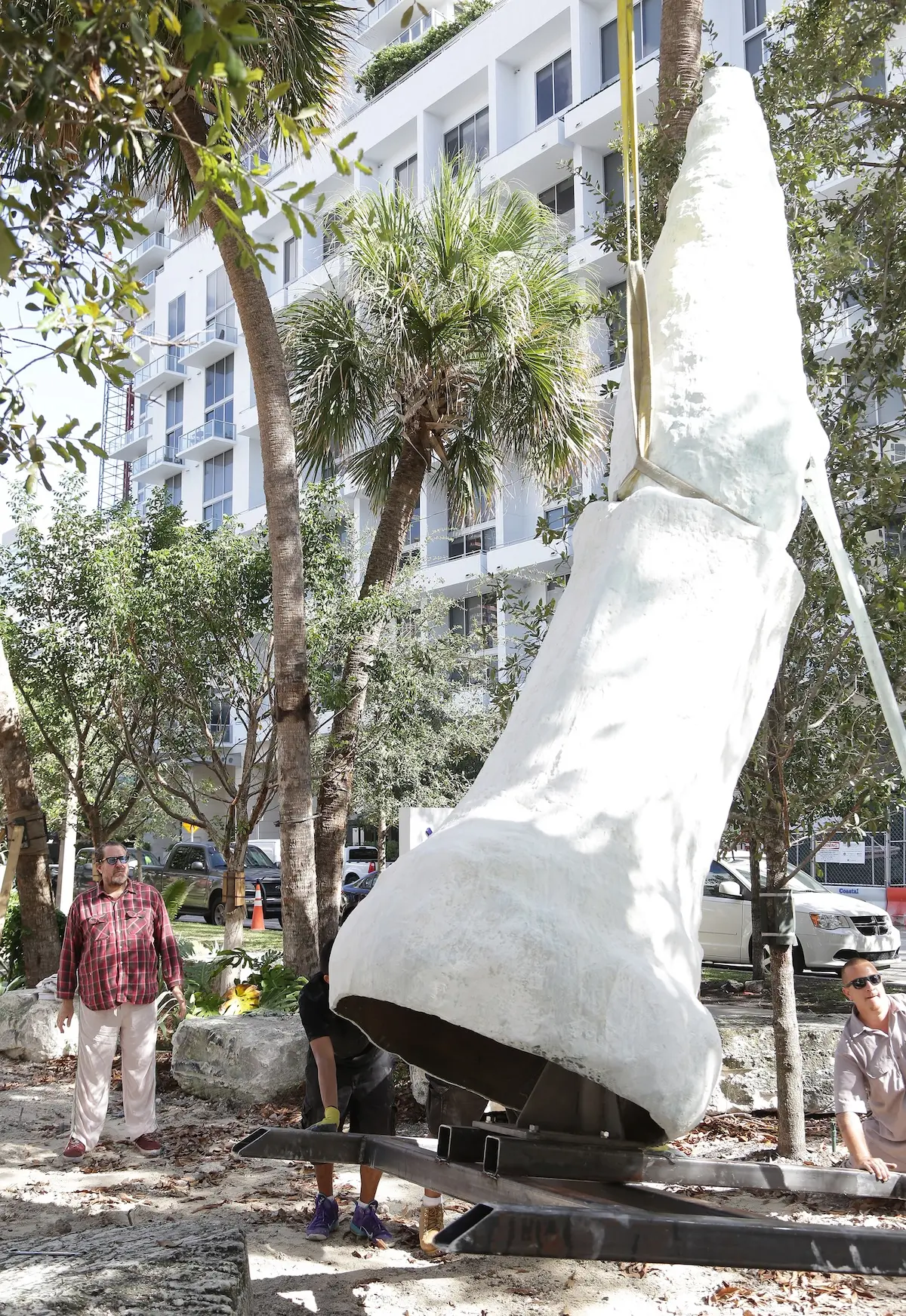
In the affluent coastal enclave of Montauk, New York, where sprawling oceanfront estates routinely trade for tens of millions of dollars, a high-stakes legal battle has erupted between prominent art dealer Adam Lindemann and The Nature Conservancy (TNC). Filed in the United States District Court for the Eastern District of New York, the lawsuit centers on an unexpected flashpoint: Ahab, a towering, 25-foot-tall sculpture created by renowned artist and filmmaker Julian Schnabel.
According to the civil complaint filed by the global environmental nonprofit, Lindemann—the founder of the now-defunct Venus Over Manhattan gallery—has allegedly encroached upon protected conservation land adjacent to his multi-million-dollar estate. The focal point of the trespass is the massive artwork, which Lindemann allegedly installed directly onto the grounds of the Andy Warhol Visual Arts Preserve without permission.
However, the legal friction extends far beyond a singular monumental sculpture. The Nature Conservancy’s lawsuit paints a broader picture of unauthorized land use, accusing the art dealer of treating the ecologically sensitive sanctuary as an extension of his private backyard. Allegations include unauthorized personal vehicle parking, landscape maintenance such as lawn mowing, and the unapproved planting of shrubs on property intended to serve as a critical ecological corridor for migratory wildlife.
Read Also
The conflict highlights an escalating friction point between private real estate ownership in ultra-luxury markets and the stringent mandates of environmental conservation trusts. As TNC pushes for a jury trial, an injunction, and the court-ordered removal of the Schnabel sculpture, the case serves as a cautionary tale of property lines, elite art world real estate maneuvers, and the unyielding protections required for fragile coastal ecosystems.
Detailed Chronology of a Property Dispute
The legal showdown in federal court is the culmination of years of escalating tensions, broken promises, and ignored warnings. To understand how a 25-foot sculpture became the centerpiece of a federal lawsuit, one must examine the timeline of events stretching from late 2024 to the formal filing of the complaint.
The Estate Acquisition and Historical Context
The roots of the dispute trace back to December 2015, when Adam Lindemann purchased Eothen—derived from the Greek phrase meaning “from the East”—a historic six-acre estate in Montauk. Formerly owned by iconic Pop artist Andy Warhol, the property includes a main house and six cottages. Lindemann acquired the historic compound from J.Crew CEO Millard Drexler for a staggering $50 million, though a neighboring 24-acre horse farm was left out of the transaction.
Eothen shares a direct border with the Andy Warhol Visual Arts Preserve. This neighboring land was generously donated to The Nature Conservancy in 1992 by the Andy Warhol Foundation for the Visual Arts. As a condition of the transfer, TNC entered into a binding agreement to safeguard a vital section of the ecologically significant Montauk Moorlands while simultaneously promoting the visual arts.
Escalation and the Initial Warnings (Late 2024 – Early 2025)
For years, the boundaries between the private luxury estate and the public-trust-adjacent preserve appeared to remain manageable. However, relations deteriorated after the conservancy discovered that Lindemann had erected Julian Schnabel’s imposing Ahab sculpture within the preserve’s boundaries.
In December 2024, following internal discussions and site inspections, TNC officials formally addressed the infraction. The nonprofit issued an initial letter demanding that Lindemann remove the sculpture within 90 days. Furthermore, the conservancy’s monitors documented additional unauthorized encroachments, including Lindemann parking personal vehicles in the preserve’s designated parking lot, mowing sections of the preserve’s native lawns, and introducing non-native landscaping shrubs.
Recognizing the potential for a contentious and expensive legal battle, TNC attempted to resolve the matter amicably. William H. Taft V, legal counsel for the conservancy, noted that TNC made repeated efforts to engage with Lindemann. In a show of good faith, the nonprofit even suggested that the art dealer might genuinely have been confused by the exact boundary lines separating his sprawling estate from the federally protected preserve, offering an on-site walkthrough with surveyors and officials.
False Starts and Broken Commitments (May 2025 – February 2026)
Following an on-site meeting between Lindemann and conservancy officials in May 2025, a tentative breakthrough occurred. Lindemann allegedly agreed to rectify the situation by removing the sculpture no later than August 31, 2025.
For a brief moment, it appeared the conflict was drawing to a close. On September 7, 2025, Lindemann sent an email to the nonprofit that seemed to confirm compliance. "As promised I’m moving the sculpture!" Lindemann wrote, adding:
"Sure hope that makes you happy as it’s expensive and disruptive but it’s happening as you wished and I agreed. All the best to you and I’ll send pics as soon as the move is completed, we are currently organizing this with the local artist, the famous local artist Julian Schnabel’s team."
Despite this optimistic correspondence, the August deadline came and went. The sculpture remained firmly in place. Months passed with no substantive action taken to relocate the towering artwork or restore the landscape.
Realizing that diplomatic channels had failed, TNC adopted a much firmer stance. On February 6, 2026, conservancy officials issued a formal cease-and-desist letter. The document demanded an immediate cessation of all unauthorized entry, a ban on parking personal vehicles on preserve grounds, and a complete halt to any unauthorized property maintenance, such as lawn mowing and shrub planting. Crucially, the cease-and-desist set a strict 30-day ultimatum for the total removal of Ahab.
The Lawsuit Filing (August 2026)
When the 30-day window expired and the sculpture remained unmoved—with Lindemann allegedly continuing his daily routines of utilizing the preserve’s parking lot and tending to its flora—The Nature Conservancy exhausted its administrative options.
On August 20, 2026, TNC officially filed a civil lawsuit against Adam Lindemann in the U.S. District Court for the Eastern District of New York. The local newspaper Newsday, which focuses heavily on Suffolk and Nassau counties, first broke the story to the public, throwing a spotlight on the intersection of high-end contemporary art collecting and federal environmental law.
Supporting Context & Metrics: Ecology, Art, and Real Estate
To fully grasp the gravity of the lawsuit, one must examine the intersection of the environmental value of the land, the cultural significance of the sculpture, and the exorbitant economics of the Hamptons real estate market.
The Ecological Importance of the Montauk Moorlands
While the media spotlight naturally gravitated toward the glamorous names involved—Andy Warhol, Julian Schnabel, and Adam Lindemann—The Nature Conservancy’s primary mandate is the protection of biodiversity.

The Andy Warhol Visual Arts Preserve is not merely an empty plot of land; it is a vital ecological anchor located directly along the Atlantic Flyway. The flyway serves as a major north-south avian migration superhighway spanning North America. Because of its unique geographic position at the tip of Long Island, the preserve provides an indispensable feeding ground, resting habitat, and critical stopover site for Neotropical migratory birds, as well as a range of rare and indigenous wildlife species.
Environmental scientists emphasize that unauthorized human activity—such as parking vehicles, altering soil chemistry through non-native plantings, and managing lawns with chemical fertilizers—disrupts delicate habitats. These actions can degrade native flora, introduce invasive plant species, and frighten sensitive migratory wildlife during critical seasonal transitions.
The Artwork: Ahab and Julian Schnabel
Standing at an imposing 25 feet tall, Ahab is a massive testament to the artistic vision of Julian Schnabel, one of the most prominent figures in contemporary painting and sculpture. Named after the obsessive captain in Herman Melville’s literary classic Moby-Dick, the sculpture possesses a commanding physical presence that is difficult to ignore.
Schnabel, celebrated globally for his large-scale paintings embedded with broken ceramic plates and his cinematic directional works (Basquiat, Before Night Falls, At Eternity’s Gate), often creates monumental installations that demand expansive spatial contexts. However, housing such a massive work requires precise engineering, structural permitting, and, crucially, undisputed territorial ownership.
Placing a 25-foot sculpture on land dedicated by the Warhol Foundation to environmental preservation and public art promotion—without formal authorization or adherence to municipal and environmental review boards—violated the core covenants governing the sanctuary.
The Real Estate Stakes in Montauk
The properties involved sit within one of the most expensive ZIP codes in the United States. Adam Lindemann’s 2015 purchase of Eothen for $50 million reflects the hyper-inflated nature of Hamptons real estate. In these elite neighborhoods, estate boundaries are often closely guarded, and historical pedigrees command immense market premiums.
However, the juxtaposition of a $50 million celebrity-pedigreed estate against a protected environmental trust underscores a growing tension in coastal communities. As ultra-wealthy buyers snap up historic coastal properties, local conservationists frequently find themselves playing defense against creeping private expansion into public or protected trust lands.
Official Statements and Legal Demands
The legal filings submitted by TNC’s legal team leave little room for ambiguity regarding the organization’s objectives. Represented by attorney William H. Taft V, the conservancy is pursuing a comprehensive legal remedy through the federal court system.
Core Allegations from Counsel
In the filed complaint, Taft detailed the persistent nature of the intrusion, emphasizing that good-faith negotiations were repeatedly undermined by inaction:
"Despite TNC’s repeated demands and efforts towards amicable resolution, Defendant has refused to remove the Sculpture and continues to enter the property without permission," Taft wrote in the court documents.
He further underscored the ongoing nature of the violations:
"To date, Defendant continues to park personal vehicles in the Preserve’s parking area, mow the Preserve adjacent to his property, and refuses to remove the Sculpture from the Preserve."
Legal Prayers for Relief
The Nature Conservancy is not seeking a mere monetary settlement; it is demanding structural and legal protections to permanently secure the integrity of the preserve. Specifically, the organization’s legal team has requested:
- A Jury Trial: A formal trial by jury to adjudicate the facts of the trespass and property misuse.
- A Permanent Injunction: A court-ordered injunction prohibiting Adam Lindemann, his agents, and his invitees from entering, trespassing, or utilizing the Andy Warhol Visual Arts Preserve.
- Declaratory Judgment on Control: A formal legal declaration affirming that The Nature Conservancy holds exclusive control, possession, and management rights over the preserve.
- Declaratory Judgment on Property Ownership: A court ruling clarifying that Lindemann holds no ownership rights, easements, or proprietary claims over the Ahab sculpture’s current footprint within the sanctuary.
- Removal Authorization: A legal declaration granting TNC the explicit authority to physically remove the 25-foot sculpture from the property at the defendant’s expense, should compliance continue to stall.
- Financial Restitution: Full recovery of all legal fees, investigative costs, and attorneys’ fees incurred by the nonprofit in enforcing its property rights.
Note: True to form within high-profile art world disputes, Adam Lindemann did not respond to multiple requests for comment from journalistic outlets, including ARTnews, prior to publication.
Future Outlook: What Lies Ahead for the Montauk Legal Battle?
As the lawsuit moves through the United States District Court for the Eastern District of New York, several critical questions remain regarding the outcome of this high-profile neighborhood dispute.
The Logistics of Removing Ahab
Should the federal court grant TNC’s motion for summary judgment or rule in favor of the conservancy at trial, the immediate physical challenge will be the extraction of the sculpture. Transporting and dismantling a 25-foot-tall artwork created by an artist of Julian Schnabel’s stature is no simple undertaking. It requires heavy machinery, specialized rigging teams, engineering oversight, and substantial financial expenditure—costs that TNC is actively seeking to shift onto Lindemann.
Precedent for Environmental Trusts and Private Owners
Beyond the immediate parties involved, the outcome of this federal case will be closely watched by environmental organizations and property owners alike across Long Island and other elite coastal enclaves. The lawsuit serves as a stark reminder that conservation easements and land trusts carry the full weight of federal law. Wealth, celebrity provenance, and historic art connections do not exempt property owners from respecting the boundaries of protected ecological zones.
For The Nature Conservancy, the litigation is an essential defense of its mission. Protecting the Atlantic Flyway from anthropogenic disruption remains paramount, especially in regions facing intense developmental pressures from luxury real estate expansion.
As the legal proceedings unfold in federal court, the fate of Julian Schnabel’s Ahab hangs in the balance—transforming from a private collector’s unauthorized landscape accent into a cautionary symbol of the boundaries where elite contemporary art collecting meets the unyielding rule of environmental law.

Comments
Facebook App ID not configured. Please add it in the Customizer.