
Executive Overview
In an era where celebrity media is routinely sanitized by public relations apparatuses and contractual promotional duties, Netflix’s original series Famous Last Words has introduced a radical, existential disruption to legacy journalism. Created and hosted by executive producer Brad Falchuk alongside Danish producing partner Mikkel Bondesen, the series operates on a singular, morbidly compelling premise: prominent cultural icons sit for deeply personal, exhaustive exit interviews under absolute confidentiality, with the explicit agreement that the footage will remain vaulted until after their death.
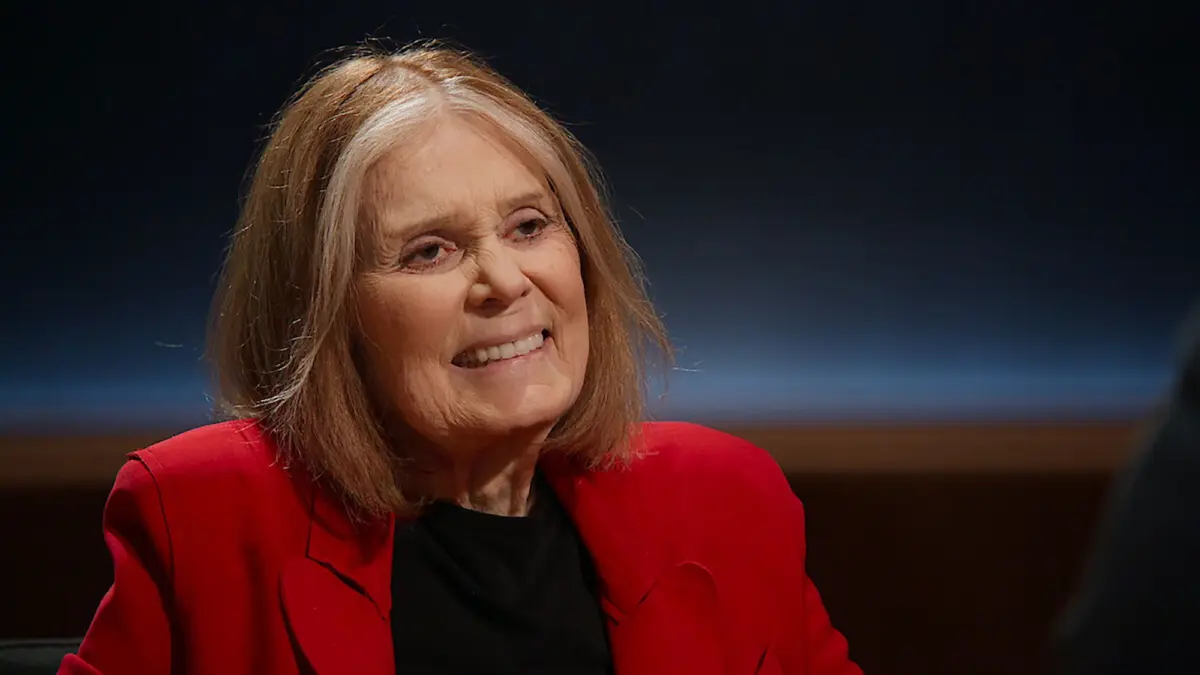
The format underwent its most high-profile validation to date following the passing of feminist pioneer Gloria Steinem at age ninety-two. Less than twelve hours after news of her death broke on a Thursday morning, Netflix deployed her pre-recorded episode to millions of global subscribers. Steinem’s appearance marked the third installment in a series that sits at the intersection of long-form biographical journalism, digital legacy archiving, and public mourning.
By removing the fear of social, legal, or professional repercussions, Famous Last Words functions as a digital vault of unfiltered truth. Combining elements of Inside the Actors Studio with the intimate catharsis of a video will, the show forces a cultural reckoning with death, fame, and the lingering power of the human voice from beyond the grave.
Read Also
Detailed Chronology
[3+ Years Ago] -------------- [Feb 2025] ----------------- [Oct 2025] --------------- [Feb 2026] ---------------- [Late Summer]
Series Conception &           Gloria Steinem              Jane Goodall                Eric Dane                   Gloria Steinem Dies;
First Secret Episode          Interview Recorded          Interview Released          Interview Released          Episode Dropped
Recorded (Vaulted)            (West Side, NYC)            (48 hrs post-death)         (Post-ALS Complications)    (5 P.M. EST)
Origins and Intellectual Property Adaptation
The conceptual framework for Famous Last Words originates in Denmark. Television creator Mikael Bertelsen developed the foundational series Det Sidste Ord (The Last Word), which featured exhaustive exit interviews with prominent Danish figures. Recognizing the universal resonance of the format, Brad Falchuk—co-creator of acclaimed television properties such as Glee, American Horror Story, and Pose—partnered with Danish producer Mikkel Bondesen to adapt the concept for a global audience through Netflix.
Production Protocol and Stealth Operations
The production infrastructure of Famous Last Words is designed to guarantee total secrecy and preserve the candor of its subjects. Taping occurs in isolated, non-traditional locations away from standard Hollywood soundstages.
- Architectural Setting: Filming takes place on a transportable, minimalist set characterized by warm, Zen-inspired wooden tones and planetarium-like ambient lighting. The physical space consists simply of two chairs elevated on a central platform.
- Technical Isolation: To ensure complete privacy, the studio relies on remotely operated, discreetly hidden cameras. Crucially, the on-site production crew has no live monitoring access to the audio feed, preventing leaks from crew members or technical operators.
- Vault Security & Distribution: Once recorded, episodes are rapidly edited by an ultra-restricted team and placed into an encrypted digital vault. Only a select group—including Falchuk and one or two high-level Netflix executives—knows the identity of the recorded roster.
- Bypassing Localization Lag: To ensure immediate release upon a subject’s passing, Netflix bypasses its standard multi-language subtitling protocol prior to publication. Transcripts are kept out of the hands of third-party translators until after the episode is live, ensuring the vault’s integrity remains uncompromised.
Production Sequence of Recorded Subjects
To date, Falchuk has recorded seven episodes, four of which remain strictly classified:
- Episode 1 (Unreleased): Filmed over three years ago with an undisclosed cultural figure who remains living.
- Episode 4 (Gloria Steinem): Conducted in February 2025 at a temporary studio location on the West Side of Manhattan after an initial exploratory meeting at Steinem’s residence.
- Episode 5 (Jane Goodall): Recorded in Los Angeles; released in October within forty-eight hours of her passing.
- Episode 6 (Eric Dane): Recorded in Los Angeles during the actor’s battle with Amyotrophic Lateral Sclerosis (ALS); released in February following his death at age fifty-three.
Supporting Context & Metrics
Comparative Matrix of Released Installments
| Feature / Subject | Jane Goodall | Eric Dane | Gloria Steinem |
|---|---|---|---|
| Field of Renown | Primatology & Conservation | Television & Film Actor | Feminist Leader & Journalist |
| Age at Death / Release | 91 | 53 | 92 |
| Cause of Death / Context | Natural Causes | ALS Complications | Natural Causes |
| Taping Location | Los Angeles, CA | Los Angeles, CA | West Side, Manhattan, NY |
| Primary Theme | Legacy, Nature, Spirituality | Reconciliation, Addiction, Fatherhood | Feminist History, Pragmatism, Action |
| Final Message Target | Global Humanity | Daughters (Billie & Georgia) | Future Organizers & Activists |
                 Vaulted vs. Released Episodes

  [Released]  ████████████ (3 Episodes: Goodall, Dane, Steinem)
  [Vaulted]   ████████████████ (4 Episodes: Subjects Confidential)

  0           1           2           3           4           5           6           7
Deconstructing the Vault Archives
Gloria Steinem: The Pragmatic Radical
Recorded in early 2025, Steinem’s interview presents a stark contrast to typical retrospective tributes. Dressed in a bold red longline blazer and navigating the set with a cane, Steinem resisted Falchuk’s attempts to frame her as the sole "face of the feminist movement," immediately crediting women of color for founding and sustaining the movement’s momentum.
When pressed on existential questions, Steinem exhibited a dry, unsentimental pragmatism. Rejecting emotional indulgence, she noted that human existence continues primarily through collective memory. Reflecting on the painful journey accompanying her late husband during his final illness, she recalled maintaining total composure, offering the sharp observation: "Crying connotes a solution."
Jane Goodall: Unvarnished Posthumous Candor
Pioneering primatologist Jane Goodall utilized her session to bypass the sanitized narratives of her public publicist-managed persona. Arriving on set wearing her signature turtleneck and Africa-shaped pendant while carrying a stuffed monkey, Goodall consumed whiskey during the taping to clear her throat before launching into wide-ranging reflections.
Free from public relations oversight, Goodall spoke openly about her personal life. She confessed that while she felt affection for her two late husbands, she was never fully in love with either. She revealed that the singular true love of her life was a man married to another woman—a secret she took to her grave without disclosing his identity to protect his surviving family, demonstrating that even posthumous freedom carries ethical boundaries.
Eric Dane: A Heartbreaking Reflection on Mortality
The most emotionally devastating installment published to date features actor Eric Dane, known for his prominent roles on Grey’s Anatomy and Euphoria. Recorded while Dane was confined to a wheelchair and experiencing advanced speech impairment due to ALS, the interview captures a figure stripped of Hollywood glamour facing immediate physical decline.
Dane confronted his tumultuous personal history, including his father’s suicide, his mother’s emotional displacement, his struggles with substance addiction, and his battle with self-loathing. Rather than addressing humanity at large, Dane utilized his final solo camera segment to speak directly to his young daughters, Billie and Georgia, urging them to embrace presence, choose companions wisely, and cultivate love. The screen faded to black alongside his lifespan metrics (1972–2026), marking one of the most raw documents of mortality ever broadcast on mainstream streaming media.
       [45-Minute Interview with Brad Falchuk]
                         │
                         ▼
        [Host Departs Planetarium Set]
                         │
                         ▼
   [Subject Addresses Camera Alone (Final Words)]
                         │
                         ▼
      [Fade to Black / Birth-Death Dates]
Cultural Environment and Public Mourning
The release of these episodes coincides with a prolonged period of public mourning for cultural figures across arts, political, and scientific spheres—including recent losses such as Hayden Panettiere, Dolly Parton, Tim Curry, and Yayoi Kusama. Famous Last Words serves a distinct psychological function in this environment: it transforms passive audience grief into an interactive, posthumous dialogue, allowing the deceased to participate directly in their own eulogy.
Official Statements
Brad Falchuk on Fame, Mortality, and Cultural Taboos
In extensive interviews regarding the show’s conceptual framework, creator and host Brad Falchuk outlined his motivation to challenge contemporary societal avoidance of death:
"My hope is that we’re changing the conversation around fame and around death. Imagine if we had the opportunity to hear from a cultural icon after they’ve passed away. The idea is that, for the first time, these very famous people are going to give a safe interview, where they don’t have to worry about what they say.
We are suffering with a culture of a lot of people refusing to face the fact that they’re not going to be here forever, and that they are wonderfully irrelevant. It’s been a transformative experience, because I’m intentionally bringing death into my life. I’m still grieving them as people that I care about. It’s weird to think they’re gone."
On-Camera Subject Testimony
The participating subjects explicitly noted the liberation provided by the show’s post-mortem release mechanism:
- Jane Goodall: "I’m dead, so I won’t have repercussions."
- Eric Dane: "It’s a weird concept to kind of grapple with. You and I are talking here, right now, and we’re both very alive. And, at the same time, when this exists—if it ever does—I won’t be here… It’s kind of a fucked-up way of realizing that you were enough the whole time, when everything gets taken away."
- Gloria Steinem: "I don’t know if we can contemplate our own nonexistence… [We are alive] whenever someone thinks of us."
Future Outlook
The Vault’s Unresolved Archive
With four completed episodes remaining locked in Netflix’s encrypted servers, Famous Last Words represents a unique media variable. Neither the host, the producers, nor studio executives control the broadcast calendar; the release schedule remains entirely dependent on natural mortality. This dynamic introduces a novel ethical and operational model for streaming television, where high-value content remains permanently banked until triggered by real-world events.
Impact on Legacy Media and Longevity Culture
As modern culture grows increasingly preoccupied with anti-aging biohacking and digital longevity, Famous Last Words offers a stark, counter-cultural counterweight. By compelling powerful and influential individuals to directly address their nonexistence, the series re-establishes death as an inevitable human baseline.
Industry analysts anticipate that the success of the series will spawn broader adoption of posthumous media archiving. Legal frameworks around digital rights, posthumous likeness, and confidential vault agreements are expected to adapt as more high-profile figures seek to control their final narrative. Ultimately, Famous Last Words has fundamentally altered the architecture of the celebrity interview, transforming the routine exit tour into a permanent, unvarnished historical record.




Comments
Facebook App ID not configured. Please add it in the Customizer.