
Executive Overview
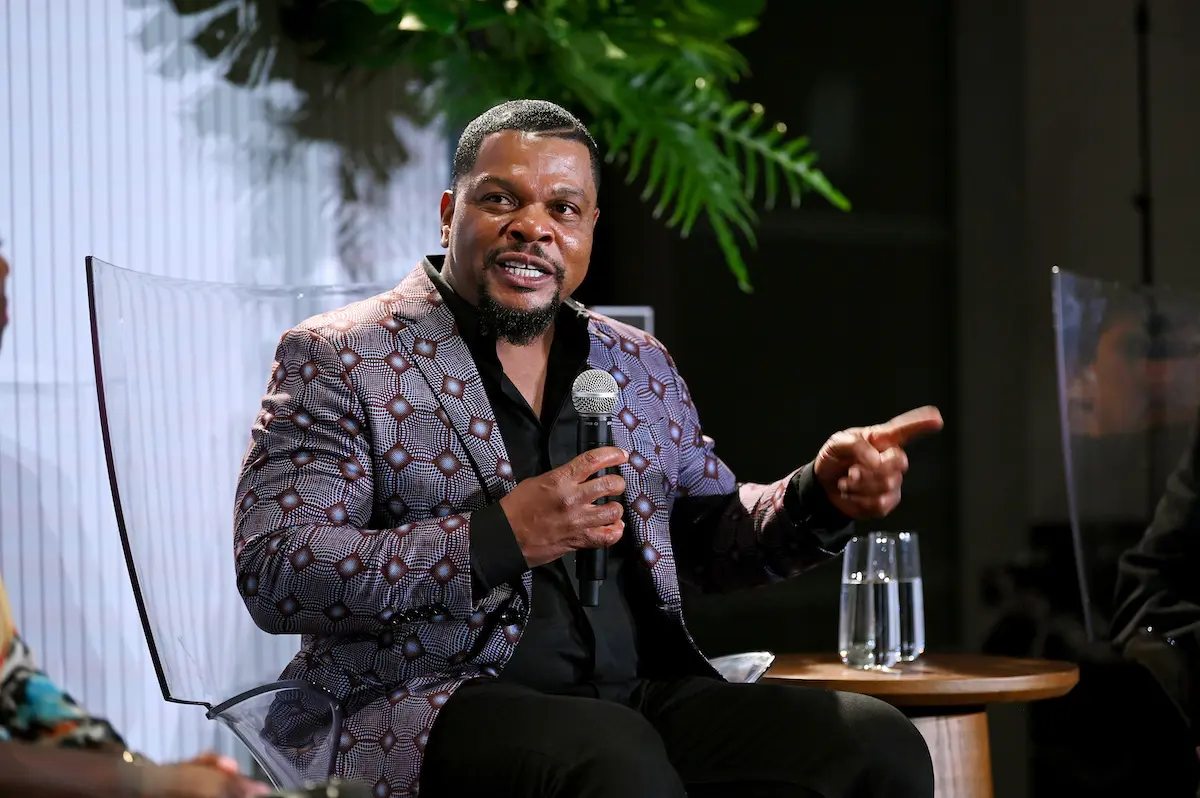
The intersection of contemporary art, international diplomacy, and domestic American politics has once again become a volatile flashpoint. At the center of this cultural storm is renowned artist Kehinde Wiley, whose 2013 painting Young Artists After Siamesas 1960 has ignited a fierce public controversy over representation, state-sponsored aesthetics, and ideological control at United States diplomatic outposts.
The artwork, currently housed—and recently contested—at the US Embassy in the Dominican Republic, has drawn sharp, public rebukes from high-ranking diplomatic and cultural figures aligned with the Trump administration. Labelled everything from "aesthetically terrifying" to a politically motivated "lesbian picnic," the painting has become a primary target in a broader administrative initiative to curate federal and international spaces to reflect a narrower, more traditional vision of American patriotism.
This controversy is far from an isolated incident. It mirrors a systematic, government-wide reassessment of public art collections, museum holdings, and federal installations. From the removal of progressive contemporary artworks in international embassies to the structural dismantling of monumental sculptures at the John F. Kennedy Center for the Performing Arts in Washington, D.C., a concerted effort is underway to reshape the visual landscape of American cultural institutions.
Read Also
While administration officials defend these aggressive changes as a return to traditional values and national pride, critics, artists, and art historians view the actions as a form of ideological censorship and historical revisionism. Wiley himself has responded with characteristic ingenuity, turning the administration’s own disparaging rhetoric into a high-fashion reclamation of artistic freedom. As legal battles brew and cultural institutions brace for further intervention, the debate over who controls the visual narrative of American democracy has reached a critical juncture.
Detailed Chronology of the Controversy
The unfolding drama surrounding Kehinde Wiley’s diplomatic placement is part of a multi-year narrative that traces back over a decade, accelerating sharply with recent shifts in the geopolitical and administrative landscape.
2013: Commission and Placement
The narrative begins during the Obama administration, when the US State Department’s Bureau of Educational and Cultural Affairs—specifically through its flagship Art in Embassies program—commissioned Young Artists After Siamesas 1960 from Kehinde Wiley. At the time, Wiley was already celebrated for his vibrant, monumental portraits that juxtaposed traditional European old-master compositions with contemporary African American and Afro-Latino subjects. The piece was subsequently shipped to the Dominican Republic to hang in the US Embassy, serving as a testament to cultural exchange, diversity, and contemporary American artistic innovation. For nearly a decade, the painting remained a standard fixture of the embassy’s interior collection, largely uncontroversial within standard diplomatic channels.
April 2024: The Spanish-Language Radio Interview
The ideological friction surrounding the painting first surfaced quietly in the spring. During a radio interview conducted in Spanish, US Ambassador Leah Campos offered a revealing and politically charged interpretation of Wiley’s work. Describing the piece to local listeners, Campos characterized it as a "huge painting of a picnic in a park with flowers and some lesbians." She further alleged that the artwork was a deliberate attempt by the Biden administration to export "that ideology here to the Dominican people." Observers quickly noted that Campos’s characterization ignored the actual historical lineage of the piece, misattributing its commissioning timeline and framing standard contemporary art through a partisan cultural lens.
August 2024: The Instagram Swap and Musical Cue
The rhetorical opposition to Wiley’s work escalated from diplomatic critique to direct executive action in late summer. In an August Instagram post, Ambassador Campos announced the physical removal and replacement of Young Artists After Siamesas 1960. In its place, the embassy installed a prominent image of the American flag. To emphasize the ideological victory of the swap, the post was accompanied by Twisted Sister’s iconic 1980s anthem of teenage rebellion and defiance, "We’re Not Gonna Take It." Campos framed the maneuver as part of a deliberate administrative pivot toward showcasing "American patriotism and the beauty of our great country."
September 2024: Podcasts, Public Outcry, and the "Aesthetically Terrifying" Label
The controversy burst into mainstream public awareness when Erin Scavino, the director of Art in Embassies, appeared on a podcast hosted by Sean Spicer. During the interview, Scavino doubled down on the administration’s disdain for Wiley’s aesthetic, explicitly describing Young Artists After Siamesas 1960 as "aesthetically terrifying." The phrase immediately caught the attention of media outlets, cultural commentators, and the art world at large, providing a succinct, highly quotable tagline for the administration’s broader war against contemporary artistic expressions that challenge traditional norms.
Late 2024 to Present: The Kennedy Center Takeover and Structural Removals
Simultaneously, the ideological purge expanded from overseas diplomatic posts to crown jewel cultural institutions on domestic soil. At the John F. Kennedy Center for the Performing Arts in Washington, D.C., structural changes mirrored the embassy swaps. In December, a newly constituted board of directors—led by Donald Trump and populated by his political allies—voted to officially inscribe Trump’s name onto the building’s facade.
Shortly thereafter, operational crews began the painstaking and controversial process of disassembling monumental modern works, most notably American sculptor Joel Shapiro’s 24-foot-tall sculpture Blue. Gifted to the center by the artist in 2019, Shapiro’s abstract masterpiece was targeted for elimination as part of the board’s sweeping overhaul of the center’s campus. This action has since triggered an ongoing, high-stakes legal battle winding its way through the federal court system, pitting institutional preservationists against executive-level appointees.
Supporting Context & Metrics: The Art in Embassies Program and Censorship
To fully understand the weight of the current controversy, one must examine the institutional framework of the Art in Embassies (AIE) program and the historical relationship between the US government and the visual arts.
Established formally in the early 1960s under the Kennedy administration—though informal antecedents date back to the late 1940s—AIE was designed to foster cross-cultural understanding through the universal language of art. Operating under the auspices of the US Department of State, the program curates temporary and permanent exhibitions in more 200 diplomatic outposts worldwide. Over its history, AIE has showcased thousands of American artists, reflecting the nation’s rich pluralism, racial diversity, and evolving aesthetic idioms. Historically, the selection of art for embassies has been insulated from partisan politics, relying instead on panels of esteemed curators, museum directors, and art historians who evaluate works based on artistic merit, historical significance, and diplomatic resonance.
+-------------------------------------------------------------------------+
|                  Evolution of US Diplomatic Art Policy                  |
+-------------------------------------------------------------------------+
| Era              | Primary Curatorial Focus | Notable Artistic Style    |
+------------------+--------------------------+---------------------------+
| Cold War (1950s) | Cultural Diplomacy       | Abstract Expressionism    |
| Late 20th Cent.  | Pluralism & Diversity    | Mixed Media, Multicultural|
| Obama Admin.     | Inclusion & Innovation   | Contemporary Figurative   |
| Trump Admin.     | Traditional Patriotism   | Classical Realism & Flags |
+-------------------------------------------------------------------------+
The pivot under the current administration represents a sharp departure from this curated autonomy. By evaluating embassy art through an explicitly ideological lens—demanding that visual displays conform to narrow definitions of traditional beauty and national pride—the administration has effectively politicized a program intended to project soft power through creative freedom.
Art historians note that state-sponsored censorship or mandated aesthetic conformity is historically aligned with authoritarian regimes rather than liberal democracies. When federal officials publicly denigrate globally recognized artists like Kehinde Wiley—who notably painted President Barack Obama’s official presidential portrait—it sends a chilling message to the international creative community regarding the security of artistic expression under shifting political tides.
Furthermore, the financial and logistical scale of these removals is substantial. Disassembling monumental sculptures like Joel Shapiro’s Blue involves specialized engineering, significant capital expenditure, and potential breaches of donor and artist agreements. The legal ramifications of altering or removing gift-in-kind sculptures from federal and semi-federal cultural centers remain largely untested, setting dangerous precedents for the future of philanthropic support for public arts.
Official Statements and Institutional Responses
The war of words surrounding the embassy artworks has laid bare the deep ideological fractures dividing the cultural elite, federal bureaucrats, and executive branch officials.
The Administration’s Stance
Representatives of the Trump administration have defended their curatorial changes as a necessary correction to what they perceive as years of cultural drift and institutional overreach.
In her public statements, Ambassador Leah Campos has consistently maintained that diplomatic posts should serve as unambiguous reflections of mainstream American values. Her radio comments in April—criticizing the "ideology" of the Biden-era acquisitions—were echoed by Erin Scavino on the Sean Spicer podcast. Scavino defended her "aesthetically terrifying" remark by arguing that federal spaces should not be utilized to alienate host countries or project niche, progressive identity politics under the guise of fine art.
In her August social media statement, Campos summarized the administration’s overarching philosophy regarding public displays:
"Our embassies are the face of America abroad. They must reflect American patriotism and the beauty of our great country, not the divisive ideological experiments of past administrations."
The Artistic Community and Kehinde Wiley’s Response
Kehinde Wiley himself has largely avoided traditional press interviews regarding the controversy, choosing instead to let his creative output and direct consumer channels do the talking. Rather than issuing a formal legal or PR statement, Wiley utilized his official e-commerce platform on Instagram to launch a brilliant act of cultural subversion.
Wiley released a limited-edition black T-shirt retailing for $120, emblazoned simply with the words "AESTHETICALLY TERRIFYING." Borrowing Scavino’s derogatory phrase directly, the artist transformed an insult into a badge of honor.
Accompanying the drop on social media, an official post from the artist’s studio read:
"A response. A reclamation. A reminder that art has never needed permission to be beautiful, provocative, or powerful."
The T-shirt quickly sold out, galvanizing support from collectors, fellow artists, and free-speech advocates worldwide. The move was widely praised by art critics as a masterclass in turning bureaucratic censorship into a lucrative and culturally resonant statement on the resilience of contemporary creators.
Future Outlook: The Intersection of Law, Culture, and Politics
As the dust settles on the immediate physical removals of works like Young Artists After Siamesas 1960 and Joel Shapiro’s Blue, the long-term implications for American arts policy, institutional governance, and diplomatic protocol remain deeply uncertain.
+-------------------------------------------------------------------------+
|                  Key Legal & Cultural Battles Ahead                     |
+-------------------------------------------------------------------------+
| Arena           | Central Conflict          | Potential Outcome         |
+-----------------+---------------------------+---------------------------+
| Federal Courts  | Renaming of Kennedy Ctr   | Injunctions / Settlements |
| Diplomatic Corps| Art selection guidelines  | Politicization of AIE     |
| Museum Philanthropy| Artist gifts & loans   | Reduced donor confidence  |
+-----------------+---------------------------+---------------------------+
1. The Legal Battleground at the Kennedy Center
The ongoing litigation surrounding the Kennedy Center board’s decision to rename the building and dismantle modern installations will likely establish vital legal precedents. If federal judges rule that politically appointed boards possess absolute authority to alter, remove, or destroy donated public artworks, it could trigger a chilling effect on future philanthropic donations. Major artists and collectors may hesitate to gift millions of dollars worth of art to public institutions if those works can be summarily discarded by incoming political administrations.
2. The Future of the Art in Embassies Program
The politicization of the AIE program threatens to permanently alter its function. If future administrations adopt a revolving-door policy toward embassy collections—swapping out artworks every four to eight years based on partisan tastes—the program’s credibility as a bridge for genuine cultural exchange will be severely compromised. Host nations may view embassy art not as an authentic reflection of American creative diversity, but as transient propaganda subject to the whims of the political party currently occupying the White House.
3. The Resilience of Provocative Art
Ultimately, history suggests that attempts to suppress challenging art often amplify its cultural impact. By transforming "aesthetically terrifying" into a wearable manifesto, Kehinde Wiley has demonstrated that contemporary artists possess the tools to bypass traditional institutional gatekeepers and connect directly with the public.
As the Trump administration continues its systematic campaign to reshape the visual vocabulary of American power, the broader cultural ecosystem is watching closely. The battle over embassy walls and Kennedy Center plazas is no longer just about a painting of a park or a monumental abstract sculpture—it is a high-stakes referendum on who holds the power to define the soul of American art for generations to come.

Comments
Facebook App ID not configured. Please add it in the Customizer.