
Executive Overview
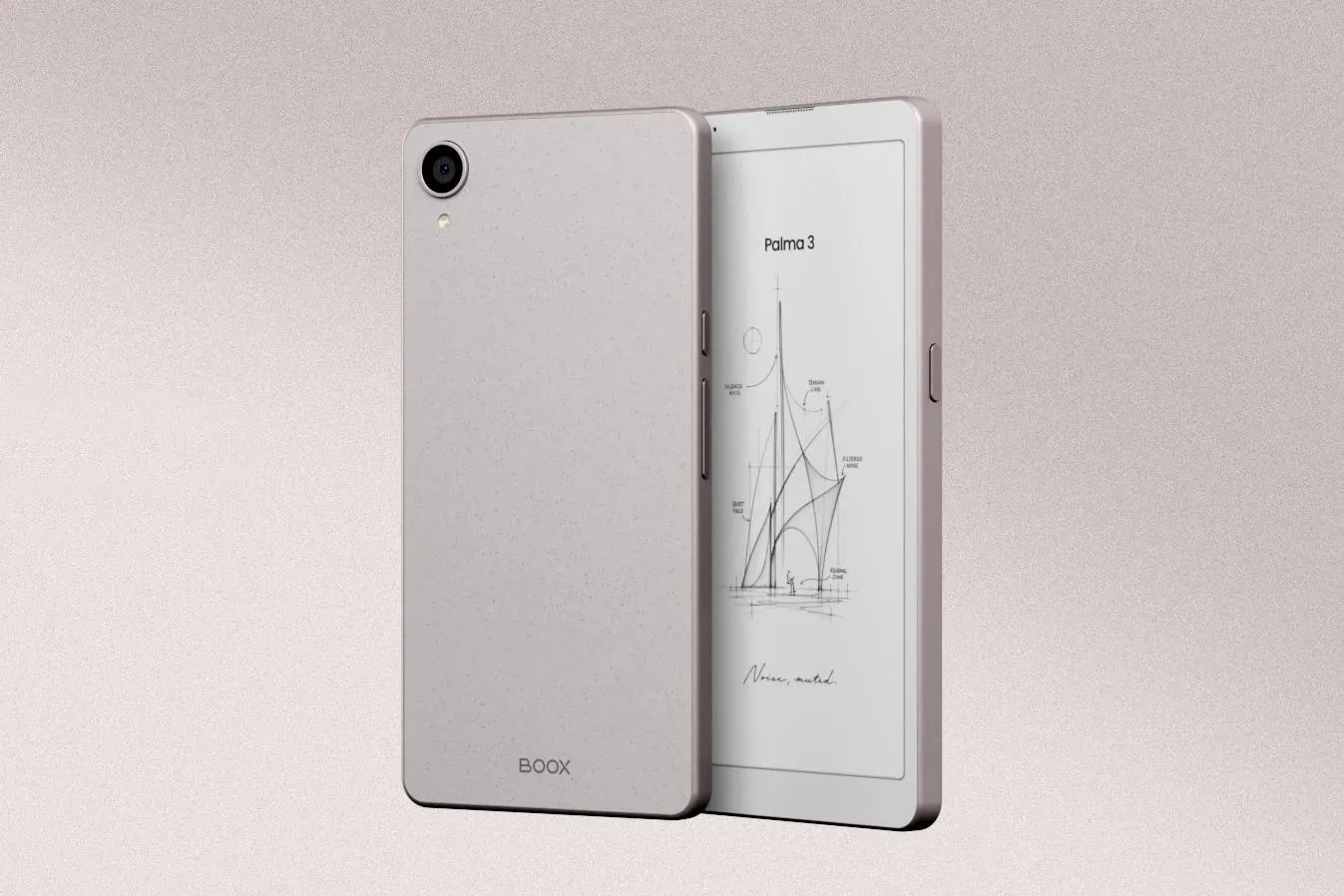
The portable e-reader landscape experienced a seismic shift on September 15, 2026, with Onyx BOOX’s official announcement of the BOOX Palma 3. As the direct successor to the critically acclaimed and highly sought-after Palma series, this latest iteration aims to redefine what consumers expect from a pocket-sized, smartphone-format electronic reading device. Priced at $339.99 USD and available for preview via the official BOOX storefront, the Palma 3 abandons its predecessor’s all-plastic chassis in favor of a sophisticated, premium build comprising an anodized aluminum frame and a textured fiberglass backplate.
Beyond its polished exterior, the Palma 3 introduces a suite of features previously unseen in this form factor. Most notably, the device incorporates active stylus support, allowing users to pair the e-reader with the specialized BOOX InkSense Plus stylus. This addition effectively transforms a compact reading tool into a hyper-portable digital notepad and sketching canvas. Under the hood, the Palma 3 is a technological powerhouse. Driven by an octa-core Qualcomm Q-6690 processor, 6GB of RAM, and 128GB of expandable internal storage via a microSD card slot, the device runs on the cutting-edge Android 16 operating system out of the box.
Enhanced by proprietary BOOX Super Refresh (BSR) technology to mitigate E Ink ghosting, and supported by a robust 3,950 mAh battery, a 16-megapixel rear document-scanning camera, and an integrated fingerprint sensor, the Palma 3 targets power users, minimalists, and digital nomads alike. Although initial official listings indicate the device is "coming soon" without a finalized shipping date, anticipation across the e-reader community has reached an all-time high. This comprehensive report explores the architectural design, technical specifications, competitive positioning, and future trajectory of the newly announced BOOX Palma 3.
Read Also
Detailed Chronology: The Journey to the Palma 3
To understand the engineering leap represented by the Palma 3, one must examine the evolutionary trajectory of BOOX’s smartphone-styled device category.
The Genesis of the Form Factor
For over a decade, the e-reader market was rigidly divided into two categories: large-format reading and note-taking devices (typically 7.8 inches to 13.3 inches) and traditional dedicated e-readers (6 to 7 inches) built specifically for literary consumption. However, a significant consumer demographic desired a device with the physical footprint, weight distribution, and one-handed ergonomics of a modern smartphone, combined with the eye-friendly, glare-free benefits of electronic paper.
Onyx BOOX capitalized on this latent demand with the original Palma series. Designed to fit effortlessly into a pocket, jacket, or small purse, the first-generation device won over users who wanted access to third-party Android applications—such as Kindle, Kobo, Libby, and RSS readers—without the eye strain, blue light exposure, and battery drain associated with conventional OLED or LCD mobile phones.
Refining the Blueprint
Building upon user feedback from the initial rollouts, the development cycle leading up to the September 2026 announcement focused heavily on three core pillars:
- Structural Integrity: Users loved the form factor of the original Palma but frequently requested a more premium, durable hand-feel that justified a higher-tier price point.
- Productivity Enhancement: While reading was the primary use case, owners increasingly desired annotation capabilities without having to carry a separate, larger tablet.
- Future-Proofing Software: As Android app requirements evolve, operating system longevity became paramount, necessitating an upgrade to a modern software architecture.
The culmination of these engineering directives is the Palma 3. Officially unveiled on September 15, 2026, the device bridges the gap between pocket utility and professional-grade digital productivity.
Technical Architecture & Specifications Breakdown
The BOOX Palma 3 is not merely a cosmetic refresh; it represents a comprehensive overhaul of both internal hardware and external industrial design.
Exterior Build and Ergonomics
The most immediate physical departure from past models is the material composition. The Palma 3 transitions away from a standard plastic shell to a refined anodized aluminum frame, imparting a rigid, premium structural skeleton. The rear panel utilizes a textured fiberglass backplate (available in distinct colorways such as the striking rose-gold finish), which offers subtle speckle texturing to significantly improve grip security during one-handed operation.
Despite these structural enhancements, the device maintains its signature pocket-friendly dimensions, anchored by a 6.13-inch monochrome E Ink Carta 1200 display panel. Boasting a sharp 300 ppi resolution, text rendering is crisp, mimicking the appearance of high-grade pressed paper. To ensure usability in diverse lighting conditions, the display is complemented by a customizable dual-tone front light system, allowing users to fine-tune color temperatures from cool daylight to warm amber for comfortable night-time reading.

Hardware Performance and Processing Power
Beneath its minimalist exterior lies a robust computing stack capable of handling demanding productivity tasks that typically bog down lower-end e-readers:
- Processor: An advanced octa-core Qualcomm Q-6690 chipset, ensuring snappy app launches and fluid multitasking.
- Memory and Storage: 6GB of LPDDR RAM paired with 128GB of onboard storage. Unlike many modern mobile devices, BOOX has retained expandability, incorporating a microSD card slot for virtually limitless media and document storage.
- BOOX Super Refresh (BSR) Technology: A proprietary hardware-software integration that optimizes refresh rates, substantially reducing the ghosting artifacts historically associated with E Ink screens. BSR enables smooth scrolling through web pages, social feeds, and long-form documents.
- Optics and Security: A 16-megapixel rear-facing camera specifically calibrated for document scanning, optical character recognition (OCR), and digitizing physical paperwork. Security and quick authentication are handled by a fingerprint sensor embedded directly into the power button.
- Power Delivery: A substantial 3,950 mAh battery, which, combined with the inherent energy efficiency of E Ink technology, promises multi-day or even multi-week endurance depending on usage patterns.
Software Ecosystem: Android 16
Running Android 16 straight out of the box, the Palma 3 secures its place at the technological forefront of the e-reader industry. Android 16 brings native performance optimizations, enhanced background app management, and extended security frameworks. More importantly, it guarantees seamless, unhindered compatibility with the Google Play Store. Users are free to download, install, and update virtually any productivity, reading, or news application without worrying about outdated API dependencies or software deprecation.
Active Stylus Integration
Perhaps the most transformative addition to the Palma 3 hardware lineup is active stylus support. By integrating digitizer technology into the 6.13-inch screen, the device can be paired with the BOOX InkSense Plus stylus. This enables users to handwrite notes, annotate PDFs, sketch ideas, and execute precision navigation on a pocket-sized canvas—a capability that redefines the utility of a smartphone-format device.
Supporting Context & Industry Metrics
To fully appreciate the significance of the Palma 3 launch, it is vital to analyze the broader trends shaping the e-reader and E Ink hardware markets in 2026.
The Rise of the "Phablet-Sized" E-Reader Market
Industry analysts note a distinct compound annual growth rate (CAGR) in the niche of pocket-sized electronic paper devices. While standard 6-inch to 7-inch e-readers remain staples of bedside reading, consumers increasingly demand hybrid devices that align with modern, fast-paced lifestyles. The smartphone format addresses key consumer pain points:
- Portability: Fits easily into standard pockets without requiring a bag or backpack.
- Discretion and Focus: Lacks the constant notification pings, bright color screens, and addictive feedback loops of standard smartphones, fostering deep-focus reading and working habits.
- Ergonomics: Enables comfortable, thumb-driven vertical scrolling, mimicking the reading posture of digital articles and e-books on mobile apps.
The Economics of Premium Materials
Priced at $339.99 USD, the Palma 3 occupies a higher price tier than standard entry-level e-readers. However, market research indicates that consumers are increasingly willing to pay a premium for robust build quality. The inclusion of anodized aluminum, a high-res Qualcomm processor, 128GB of storage, and active stylus hardware justifies the investment for professionals who view the device as a mission-critical tool rather than a casual leisure gadget.
Official Statements and Industry Perspectives
Although Onyx BOOX has maintained a measured rollout strategy, initial press releases and statements from company executives emphasize a commitment to merging smartphone convenience with professional paper-like workflows.
Industry analysts and reviewers have been quick to weigh in on the implications of the Palma 3’s feature set. Michael Kozlowski, editor-in-chief at Good e-Reader, noted in early evaluations that the inclusion of active stylus support on a 6.13-inch chassis represents a major engineering triumph. "For years, consumers have had to choose between ultra-portability and note-taking functionality," remarks Kozlowski. "By packing the Qualcomm Q-6690 processor, Android 16, and InkSense Plus compatibility into an aluminum frame the size of a modern smartphone, BOOX is effectively creating a brand-new sub-category of pocket productivity tools."
Future Outlook: What Lies Ahead for the Palma Series?
As the E Ink industry marches further into 2026 and beyond, the release of the BOOX Palma 3 sets a formidable benchmark for competitors. Several key questions remain as the device approaches its official shipping date:
- Global Availability and Release Timelines: While the device was officially unveiled on September 15, 2026, current listings on the BOOX store designate the status as "coming soon" without a fixed delivery date. Supply chain analysts predict that initial regional waves will hit North America and Europe by late Q4 2026.
- Stylus Bundling and Pricing Strategies: It remains to be seen whether retailers will offer bundle promotions incorporating the BOOX InkSense Plus stylus or if it will be sold strictly as a separate accessory.
- Competitive Response: Major competitors in the e-reader space—such as Amazon (Kindle), Kobo, and PocketBook—will undoubtedly monitor the market reception of the Palma 3. If consumer demand for stylus-enabled pocket e-readers surges, competing brands may accelerate their own smartphone-format developments.
Conclusion
The BOOX Palma 3 stands as a testament to the rapid maturation of electronic paper technology. By harmonizing a durable aluminum chassis, a crisp Carta 1200 E Ink display, active stylus compatibility, and the formidable processing power of Android 16, Onyx BOOX has crafted a device that transcends traditional categorization. Whether utilized as an unyielding focal tool for deep-dive reading, a portable journal for spontaneous note-taking, or a pocket-sized digital workstation, the Palma 3 is poised to leave an indelible mark on the mobile productivity landscape. Prospective buyers are encouraged to monitor the official BOOX website for impending availability updates as the shipping window approaches.



Comments
Facebook App ID not configured. Please add it in the Customizer.