

Executive Overview
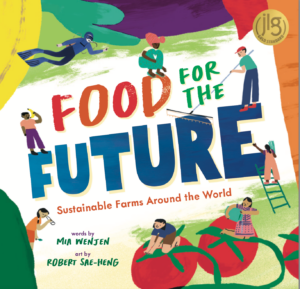
As the global community faces unprecedented ecological and demographic pressures—balancing the mandate to feed a rapidly expanding population against the critical need to preserve vulnerable ecosystems—literature for young minds is shifting toward deep environmental literacy. At the vanguard of this movement is Mia Wenjen’s acclaimed children’s non-fiction work, Food for sustainable Farms Around the World, brilliantly illustrated by Robert Sae-Heng and published by Barefoot Books.
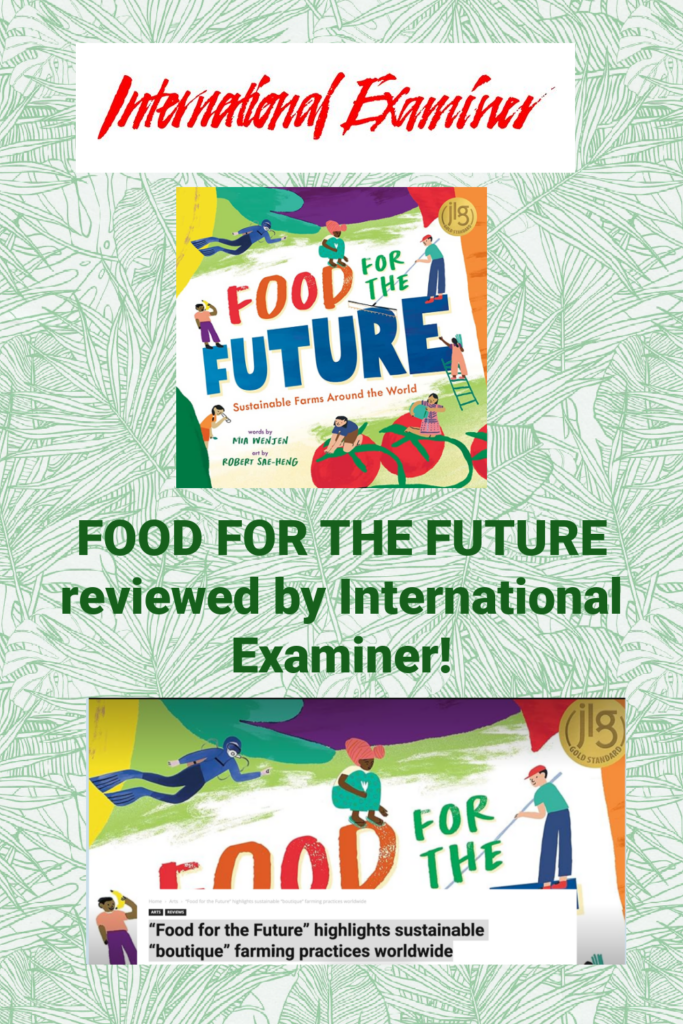
Recently spotlighted in a thoughtful critique by Shalin Hai-Yan in the International Examiner, Wenjen’s book expands the traditional boundaries of how we define "farming." Rather than focusing exclusively on industrialized, high-yield agrarian complexes, Food for the Future embraces a "big tent" approach. It explores a diverse array of international, indigenous, and "boutique" agricultural practices—ranging from seawater salt evaporation fields and underwater biospheres to ancient South American terrace-farming techniques for quinoa and sweet potatoes.
This comprehensive overview examines the cultural, ecological, and pedagogical significance of Wenjen’s work. By analyzing the book’s thematic framework, its artistic execution, its critical reception, and its place within the broader conversation of global food security, this article provides an authoritative look at how early childhood literature is shaping the next generation of environmental stewards.
Read Also
Detailed Chronology and Literary Context
The Genesis of Food for the Future
The journey of Food for the Future from concept to print reflects a growing appetite in children’s publishing for globally conscious, non-fiction narratives. Conceived by author Mia Wenjen—a prolific writer and advocate for multicultural children’s literature—the book was designed to demystify the origins of everyday foodstuffs.

- 2023: Food for the Future: Sustainable Farms Around the World hits bookshelves worldwide, quickly capturing the attention of educators, librarians, and young readers. Its release aligns with a heightened global focus on climate change, sustainable supply chains, and indigenous land management.
- 2023–2024: The book garners significant critical acclaim, securing positions on prestigious long-lists and becoming a finalist for multiple literary honors, including the 2023 INDIES Book of the Year and the Green Earth Book Award long-list, alongside a Nautilus Silver Book Award.
- 2024–2025: Educational institutions and state reading programs adopt the text into curricula. Notably, the book is selected for the Sunshine State Young Readers Award Orange Blossom List for Nonfiction and the Mass Book Award Long List, underscoring its pedagogical value.
- Present: Ongoing critical analyses, such as Shalin Hai-Jew’s review in the International Examiner, continue to evaluate the book’s expansive definition of agriculture, sparking vital public discourse about how children conceptualize food systems, ecology, and human labor.
Supporting Context and Metrics: Redefining "Farming" on a Global Scale
To understand the core thesis of Food for the Future, one must examine the specific agricultural innovations highlighted within its pages. The book spans continents—touching upon North America, South America, Europe, Africa, Asia, and Australia—while intentionally bypassing standard industrial models in favor of localized, resilient, and time-tested methodologies.

A Mosaic of Boutique and Indigenous Practices
Wenjen’s narrative structure organizes global food production into evocative, accessible vignettes, each supported by Robert Sae-Heng’s vibrant two-page spreads. Key practices featured include:

- Aquacultural and Oceanic Innovations:
- Underwater Biospheres: Highlighting cutting-edge controlled environments beneath the ocean waves where crops are cultivated independently of traditional land constraints.
- Oyster Farming: Showcasing sustainable aquaculture methods that filter water while providing protein-rich food sources.
- Traditional and Indigenous Harvest Systems:
- Log Dams and Handwoven Traps: Featuring indigenous communities like the Enawene-Nawe people, whose sustainable hunting, gathering, and fishing techniques harmonize with local river ecosystems rather than depleting them.
- Terrace Farming: Illustrating ancient Andean engineering methods used to grow resilient, nutrient-dense crops like quinoa and sweet potatoes along steep mountain slopes, preventing soil erosion.
- Arid and Resource-Scarce Adaptations:
- Salt Farming: Demonstrating the traditional solar evaporation of seawater to harvest essential minerals.
- Desert Regreening (e.g., Saharan Half-Moon Techniques): Capturing water collection methods that turn arid landscapes into arable patches of land.
- Urban and Vertical Integration:
- Vertical Solar Farms: Highlighting modern urban structures that harness solar energy while simultaneously capturing and recycling rainwater for indoor crop production.
Pedagogical Design and Structural Metrics
The book’s design is meticulously crafted to maximize educational impact:

- Visual Storytelling: Every double-page spread features active human participants engaged in real-world agricultural labor, dispelling the abstraction of grocery store shelves and highlighting the manual effort behind food production.
- Back-Matter Depth: Comprehensive notes at the conclusion of the book provide deeper scientific and cultural context for each method, explaining why these approaches are sustainable and how they protect topsoil, conserve water, and safeguard local ecosystems.
Critical Analysis and Professional Perspectives
While Food for the Future has been widely lauded for its inclusive worldview and artistic merit, literary and educational critics have also engaged in robust dialogue regarding its scope.

The "Big Tent" Definition of Agriculture
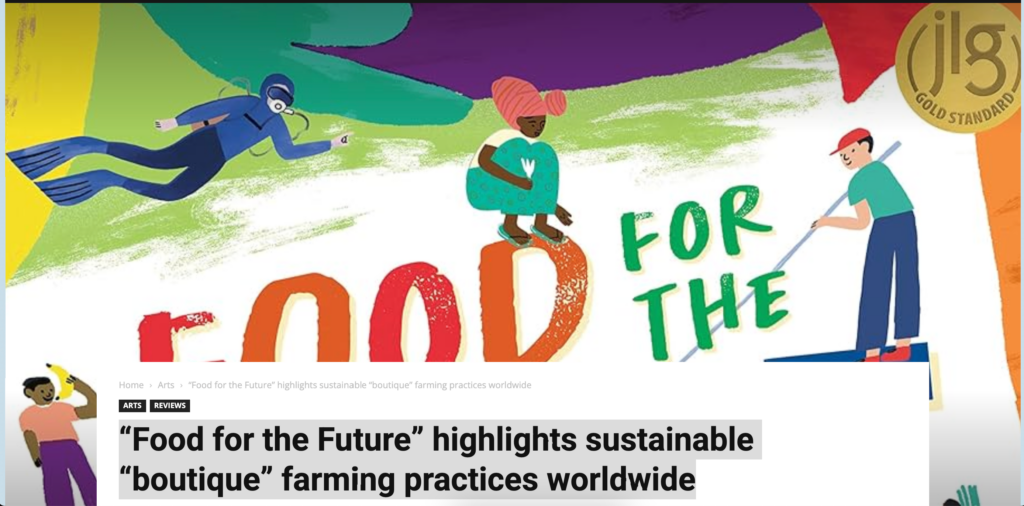
As Shalin Hai-Jew notes in the International Examiner, the book stretches the conventional definition of "farming" to encompass hunting, gathering, and maritime harvesting. This expansive framing encourages young readers to view human sustenance not merely as a mechanized industrial output, but as a dynamic, context-dependent relationship with the natural world.

However, scholarly reviews also point out notable omissions. Modern discussions on sustainable food futures frequently center around high-tech and alternative protein sources—such as insect farming for sustainable protein and cellular or lab-grown artificial meats. Furthermore, industrial-scale agricultural operations remain a dominant force in feeding the global population. Critics observe that while Food for the Future intentionally bypasses these industrial and futuristic paradigms to focus on human-scale, boutique, and indigenous practices, acknowledging these other facets could further round out a child’s understanding of global food logistics.

Despite these omissions, the consensus among educators is clear: the book succeeds brilliantly in its primary objective. It sparks deep curiosity, fosters empathy for indigenous land stewards, and cultivates an early awareness of food waste and the environmental costs associated with food transport and production.
Future Outlook: Implications for Food Literacy and Education
As global food systems face the compounding challenges of climate volatility, water scarcity, and population growth, the imperative to educate the next generation on sustainable resource management has never been more urgent.

Shaping the Next Generation of Eco-Citizens
Literature like Food for the Future serves as a foundational stepping stone for youth education. By bridging the gap between distant agricultural practices and daily nutritional consumption, the book equips young readers with critical inquiry skills. Future developments in educational publishing are expected to build upon this model, combining localized indigenous wisdom with discussions on technological innovations to provide a holistic view of Earth’s agricultural future.
Ultimately, Mia Wenjen’s work reminds readers that feeding humanity sustainably is not a monolithic challenge, but a multifaceted mosaic of local innovations. Whether through ancient Andean terracing, Hawaiian salt-making, or modern vertical urban farms, the path forward relies on respecting ecological boundaries while honoring the diverse cultural traditions that nourish our world.



Comments
Facebook App ID not configured. Please add it in the Customizer.