
Executive Overview
Thirteen years after the release of Grand Theft Auto V—an epoch in the hyper-accelerated timeline of modern entertainment—Rockstar Games has finally unleashed its successor. Grand Theft Auto VI has arrived, and as expected, the gaming landscape has convulsed. Across the globe, millions of players are diving back into the developer’s satirical, neon-soaked rendition of contemporary American excess. The initial launch window has delivered everything the franchise’s devoted base anticipated: adrenaline-fueled heists, intricately choreographed car thefts, sprawling satirical narratives, and an astonishingly deep, cinematic exploration of modern romance set against the backdrop of Leonida, a fictionalized, sun-scorched homage to Florida.
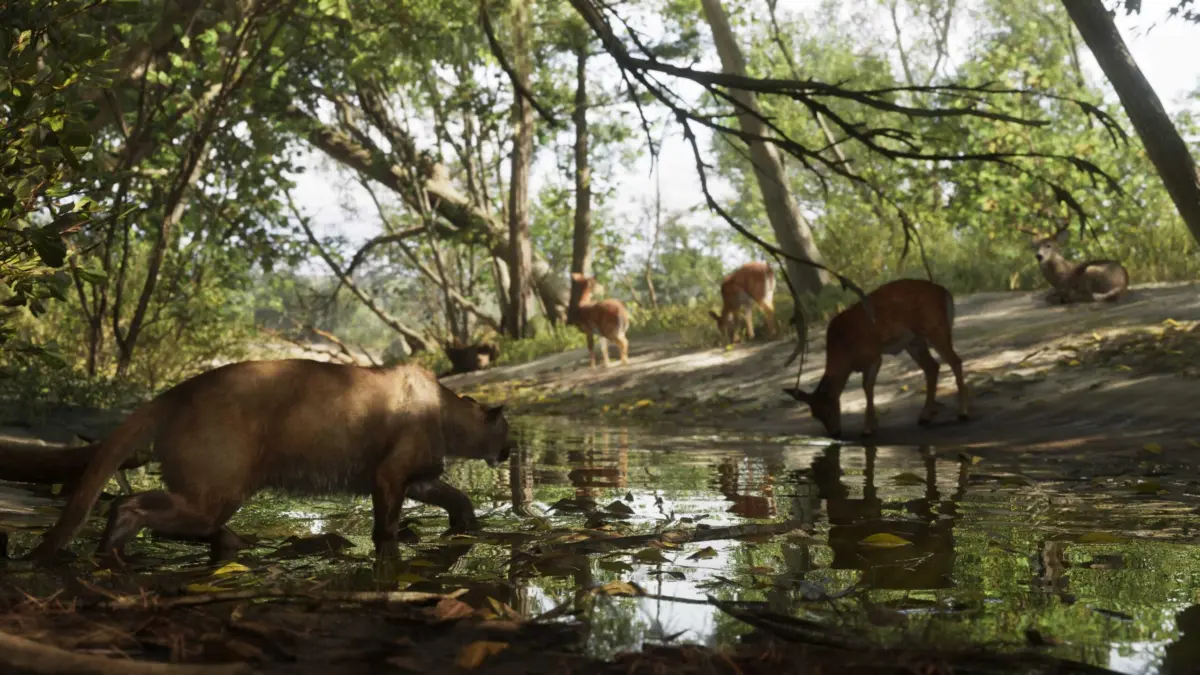
Yet, amid the cacophony of sirens, gunfire, and tire-shredding engine roars, an unexpected subculture has hijacked the discourse. Biodiversity researchers, environmental enthusiasts, and casual digital naturalists are finding themselves utterly transfixed by something entirely divorced from the criminal underworld: the flora and fauna.
According to promotional materials, early reviews, and pre-release developer insights, GTA VI features an unprecedented roster of more than 170 distinct animal species populating its sweeping biomes. From alligators sunning themselves on asphalt to manatees navigating murky inland canals, and from iguanas skittering across urban curbsides to pelicans slicing through coastal sunsets, Rockstar has constructed a fully realized, breathing ecosystem. Most astonishingly for a game explicitly centered on lawlessness, players can equip binoculars and systematically log over 62 distinct species of birds into an in-game field guide.
Read Also
This unexpected intersection of open-world mayhem and meticulous ecological simulation has sparked viral internet communities. Reddit boards dedicated to birding are currently flooded with users debating whether to abandon their crime sprees entirely in favor of ornithological field work. Mainstream critical reviews feature top-voted reader comments celebrating the game’s unexpected accessibility: "My roommate gets to play the actual game. I get to find all species of birds. Truly a game for everyone."
For environmental writers and ecologists, this level of environmental fidelity represents a watershed moment. Far from being mere background dressing, the digital wilderness of GTA VI is capturing the public imagination, proving that even within a hyper-violent, multi-billion-dollar blockbuster, the quiet wonder of the natural world retains an undeniable, universal pull.
Detailed Chronology: From Vice City to the Digital Everglades
To understand how a franchise synonymous with urban crime and automotive carnage cultivated one of the most sophisticated virtual ecosystems in gaming history, one must examine the developmental trajectory that led to Grand Theft Auto VI.
The Long Drought (2013–2023)
When Grand Theft Auto V launched in September 2013, the PlayStation 3 and Xbox 360 were the dominant gaming hardware platforms. Over the subsequent decade, that single title spanned three distinct console generations, evolving through technical iterations while feeding an insatiable global appetite for digital sandbox experimentation. For thirteen years, rumors, leaks, and speculative deep-dives dominated gaming forums, turning every whisper from Rockstar Games into international news. During this extended hiatus, the studio shifted its technical focus elsewhere, most notably with the 2018 release of Red Dead Redemption 2. That title served as a crucial technical stepping stone, pioneering advanced animal AI, dynamic weather systems, and visceral hunting mechanics that proved Rockstar’s engine could handle complex ecological simulations.
The Marketing Unveiling and Trailer Reveals (2023–2026)
The veil of secrecy began to lift in late 2023 when Rockstar dropped the game’s debut trailer, instantly shattering records for views and setting off a multi-year wave of frame-by-frame analysis by fans and media alike. However, it was the subsequent trailers and deep-dive features published throughout 2025 and 2026 that signaled a profound tonal and structural shift.
Rather than focusing exclusively on the criminal escapades of dual protagonists Lucia and her partner, promotional materials began highlighting the staggering geographical breadth of the state of Leonida. The game’s map expands far beyond the urban sprawl of Vice City (Rockstar’s satirical interpretation of Miami) to encompass a digital pastiche of the Florida Keys, the labyrinthine waterways of the Everglades, and sprawling national parks styled after real-world southern sanctuaries.

Launch Day and Cultural Saturation (November 2026)
The release of Grand Theft Auto VI marks the culmination of the most expensive and exhaustive development cycle in interactive entertainment history. As servers went live and physical discs spun up in millions of consoles worldwide, players quickly discovered that the marketing hype had understated the game’s environmental ambition. Within hours, community-driven wikis and social media feeds pivoted away from mission walkthroughs and weapon guides to focus on wildlife coordinates, migration patterns, and optimal vantage points for virtual birdwatching.
Supporting Context & Metrics: Decoding the Ecosystem of Leonida
To fully appreciate the technical and cultural footprint of GTA VI, it is necessary to examine the raw data underlying its design, as well as the real-world ecological baseline it attempts to emulate.
The Real-World Ecology of Florida
In the real world, Florida boasts one of the most vibrant, complex, and fragile ecosystems in North America. According to the Florida Fish and Wildlife Conservation Commission and the National Audubon Society, the state is home to:
- Over 700 species of terrestrial animals.
- Thousands of species of freshwater and marine fish.
- More than 500 species of birds, split between permanent residents and migratory populations utilizing the Atlantic Flyway.
- Unique biomes ranging from subtropical mangrove swamps and coral reefs to pine flatwoods and sawgrass marshes.
The Digital Menagerie of GTA VI
Rockstar Games has translated this biological diversity into the digital realm with astonishing granularity. Key metrics of the game’s environmental simulation include:
- 170+ Total Animal Species: Ranging from apex predators like alligators to fragile amphibians, marine mammals, and reptiles.
- 62 Bird Species: Accurately rendered with distinct plumage, flight behaviors, and audio cues, fully catalogable via an in-game binocular and journal system.
- Advanced Rendering Techniques: Surpassing even Red Dead Redemption 2, GTA VI introduces groundbreaking physics engines that simulate bioluminescence in aquatic environments, realistic feather aerodynamics, and complex follicular rendering for fur-bearing mammals.
| Ecological Feature | Red Dead Redemption 2 (2018) | Grand Theft Auto VI (2026) |
|---|---|---|
| Primary Setting | 1899 American Frontier (Great Plains, Swamps, Mountains) | Contemporary Leonida / Florida (Urban, Keys, Everglades) |
| Wildlife Focus | Survival hunting, pelts, legendary animals | Biodiversity logging, birdwatching, urban/rural coexistence |
| Cataloging System | Study/Tracking via scope and journal | Binocular logbook with specialized species tracking |
| Render Technology | Advanced fur and muscle deformation | Bioluminescence, advanced feather types, hyper-realistic fur physics |
Official Statements & Expert Perspectives
The unexpected marriage between a hyper-violent crime simulator and peaceful wildlife observation has drawn commentary from both game developers and professional ecologists, highlighting a fascinating bridge between pop culture and scientific engagement.
Inside Rockstar Games: The Vision for Leonida
Speaking with Game Informer in late 2025, Michael Kane, Rockstar’s vice president of dynamic art, shed light on the studio’s dedication to environmental fidelity.
"Florida has a diverse animal ecosystem that we wanted to faithfully include across all the different biomes in Leonida — urban and rural environs, aquatic life both inland and ocean, and the wetland habitats like the swamps and Everglades," Kane explained.
This commitment to environmental authenticity ensures that players traversing the neon-lit strips of Vice City can instantly transition into the suffocating, humid silence of a cypress swamp, where the ambient soundscape shifts from synth-pop radio tracks to the guttural bellow of an alligator and the piercing cry of an osprey.
The Academic Lens: Bridging Virtual Worlds and Real Science
For professionals dedicated to real-world biodiversity, the inclusion of robust ecological mechanics in a blockbuster game is not merely a novelty—it is a powerful educational vector. Dr. Ethan Linck, an assistant professor in the Department of Ecology at Montana State University who does not identify as a gamer, views the phenomenon through a historical and sociological lens.

"We’ve been painting birds on the walls of caves and writing songs about them for millennia," Linck notes. "It makes total sense to me that this sort of wonder that we get from birds would find an expression in the very contemporary form of art that is a video game."
Linck emphasizes the potential cascading benefits of such mechanics for conservation awareness:
"I could totally see someone who might not have any background in natural history or birdwatching get into this fun diversion in the game and then discover that they can basically do the exact same thing in real life using apps like eBird and iNaturalist. It’s no longer an old-person hobby."
This sentiment resonates deeply within online communities. Threads across Reddit feature players enthusiastically planning aesthetic outfits for protagonist Lucia specifically tailored for digital birding excursions, treating the Everglades region of the map not as a backdrop for evading police helicopters, but as a tranquil open-air laboratory.
Future Outlook: The New Standard for Open-World Design
As millions of players continue to unpack the contents of Grand Theft Auto VI in the weeks and months following its launch, the long-term cultural and design ramifications are already coming into focus.
For the video game industry at large, Rockstar’s success in weaving a complex ecological simulation into an action-heavy blockbuster establishes a formidable new benchmark. Historically, open-world maps have suffered from feeling like static theme park sets designed solely to facilitate player progression and combat encounters. By populating Leonida with autonomous, highly detailed wildlife that interacts dynamically with both the environment and the player—whether through hunting, observation, or accidental vehicular collision—GTA VI redefines what constitutes a living world.
More importantly, the game’s unexpected embrace by the birdwatching and conservation communities points toward a promising evolution in digital literacy. When blockbuster entertainment successfully drives curiosity toward real-world sciences, it breaks down the barriers that often keep specialized hobbies siloed from the mainstream.
As players log off their consoles and venture outside—perhaps downloading eBird or packing a pair of real binoculars for a weekend hike through a local marsh—it becomes clear that Grand Theft Auto VI has achieved something extraordinary. Beneath the satire, the high-speed chases, and the chaotic criminal enterprises lies a quiet invitation to look closer at the natural world, proving that even in a digital dystopia, there is always room to stop, watch, and appreciate the flight of a pelican at sunset.





Comments
Facebook App ID not configured. Please add it in the Customizer.