
Executive Overview
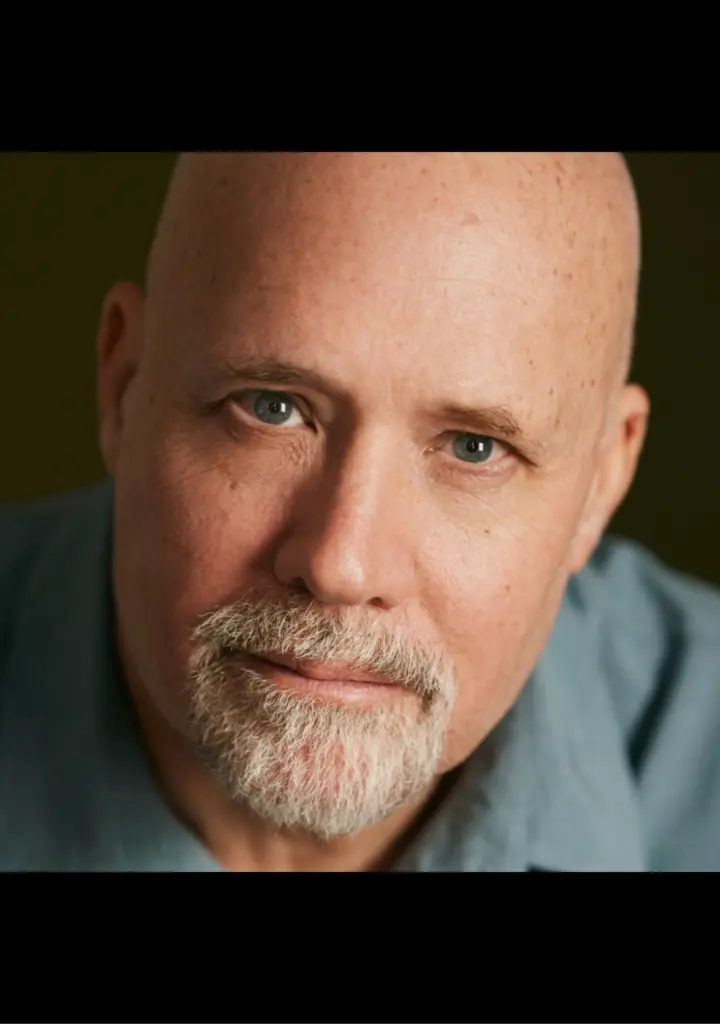
Nearly a decade after his acclaimed short story “Snow Angels” debuted in the summer 2015 edition of The Missouri Review, author Mitch Wieland is set to release his third novel, The Ghosts of Okuma. Earning a coveted Kirkus starred review and being named a Best Indie Book for March, the novel arrives on November 3—a date that marks the thirtieth anniversary of the publication of Wieland’s debut book, Willy Slater’s Lane.
In a wide-ranging, reflective interview with Scout Hudson, Wieland details the arduous, multi-year evolution of turning an 8,000-word short story into a sweeping, structurally complex narrative. Set against the haunting backdrop of post-Fukushima Japan, The Ghosts of Okuma is the product of meticulous research, personal grief, deep-seated institutional mentorship, and over 2,000 pages of discarded drafts. Beyond his literary achievements, Wieland reflects on his foundational role in establishing Boise State University’s Creative Writing MFA program and founding the award-winning Idaho Review, cementing a remarkable legacy as both an educator and an architect of contemporary American fiction.
Detailed Chronology: The Making of a Novel
The genesis of The Ghosts of Okuma spans decades, crossing continents, personal losses, and seismic historical events. Its timeline reveals a writer dedicated to rigorous revision and immersive world-building.
Read Also
The Spark: Japan and The Missouri Review
Wieland’s fascination with literary fiction took root during his residency in Japan from 1986 to 1991, where he immersed himself in the works of Raymond Carver and Joy Williams. Upon returning to the United States in 1991, he secured his very first literary magazine subscription: The Missouri Review.
Years later, while living on a farm near the Oregon border with his wife, Cindy, Wieland received a pivotal rejection letter from TMR editor Speer Morgan. Delivered amidst a scorching heatwave after a windstorm blew open their rural mailbox, Morgan’s letter offered unexpected encouragement on a story from Wieland’s Idaho-set collection, God’s Dogs. Morgan urged Wieland to submit again—paving the way for the publication of “Snow Angels” in 2015.
The Catalyst: The 2011 Tōhoku Earthquake and Tsunami
Before “Snow Angels” was conceived as a novel, Wieland spent years working on a 500-page manuscript centered on Japan, guided by legendary literary agent Wendy Weil (who famously represented Alice Walker). Everything changed in March 2011, when Wieland watched NHK news footage of the tsunami crashing ashore.
"I just realized instinctively at that moment that I couldn’t write about Japan without this," Wieland recalls.
Recognizing the monumental scale of the triple disaster—the earthquake, the tsunami, and the Fukushima Daiichi nuclear meltdown—Wieland set aside the entire 500-page draft. Tragically, his agent, Wendy Weil, passed away a year later. Undeterred, Wieland secured a National Endowment for the Arts (NEA) grant and a one-year fellowship from Boise State’s Arts and Humanities Institute. This funding allowed him to spend eight weeks in Japan conducting on-the-ground research, revisiting locations from his past, and interviewing locals and expatriates about the psychological fallout of the catastrophe.
Structuring and Refining: The Ten-Year Adaptation
To master narrative structure and plotting, Wieland traveled to Los Angeles in 2012 to study under story consultants Robert McKee and Christopher Vogler. By 2013 and 2014, he had finalized “Snow Angels,” realizing it held the core DNA of his long-awaited novel.
Writing through the COVID-19 pandemic, Wieland completed a draft by 2020. In 2021, literary agent Julie Stevenson of Massie & McQuilken took him on. Together, they underwent a rigorous editing process, cutting an additional 70 introductory pages set in San Diego to ensure the book opened with the exact scene that launched “Snow Angels.”
In total, Wieland generated roughly 2,000 pages of material to distill the final 275-page manuscript. The book was sold in 2024, culminating a ten-year journey from short story to novel.
Supporting Context & Metrics: Cultural Trauma and Sensory Architecture
Experiencing Japan Across Two Eras
Wieland’s connection to Japan bridges two starkly different economic and social realities. His initial five-year stay occurred during the height of Japan’s late-1980s economic superheating, an era characterized by conspicuous consumption and what locals called "Big Trash Day," when residents routinely discarded functional appliances onto the streets.
When he returned in 2012 for research, the country was navigating a decades-long recession compounded by national trauma. Secondhand stores had proliferated, and thrift had replaced disposable abundance. Despite these sweeping shifts, Wieland found that the foundational warmth of his relationships remained unchanged.
Sensory Detail and Neuroscience in Fiction
Drawing from his studies with renowned writer George Garrett, Wieland emphasizes the creation of a "sensuously effective texture." He aims to construct scenes that, to the mind’s eye, are virtually indistinguishable from reality.
This literary philosophy is increasingly backed by modern neuroscience. Functional MRI (fMRI) studies demonstrate that when readers process sensory language—such as a character smelling of "clove cigarettes and lavender"—the brain’s olfactory processing centers light up identically to real-world sensory experiences. For Wieland, Tokyo provided an inexhaustible canvas of sensory overload, making authentic world-building an organic byproduct of observation.
Translating National Grief
In examining the psychological aftermath of the Fukushima disaster, Wieland draws parallels to historical trauma, comparing the existential shock of earthquakes to terrorist events like September 11th, while noting the distinct nature of geological and technological disasters.
Wieland’s protagonist, Wyatt, travels to Japan to find his missing sister while carrying his late mother’s ashes. His outsider perspective mirrors Wieland’s own position as a foreign observer attempting to process institutional betrayal. The deep-seated public anger directed at Tokyo Electric Power Company (TEPCO) and the Japanese government—intensified by historical negligence and delayed evacuations—mirrors real-world acts of defiance, such as the young Tokyo artist collective Chim↑Pom, whose hazmat-suited protests near the smoldering power plant heavily inspired the fierce character of Yoshimi.
Official Statements & Key Excerpts
Mitch Wieland on the evolution of the novel:
"Writing ‘Snow Angels’ and having Yoshimi and Wyatt meet in the park, I realized those were the two characters I wanted to keep and tell the story with. That was the secret… It was pretty messy. I would say a lot of it was hit and miss."On the sensory mechanics of writing:
"You want to try to transport the reader into the scene with the characters so that the reader is actually taking it in as experience. Try to be locked into real time and go moment by moment and heartbeat by heartbeat."On the lasting legacy of his academic and editorial work:
"It’s been really rewarding to see students publish. We’ve come off a good run over the last several years… To see [George Garrett’s] teaching passed on to me, and then to watch the students take it and run: it’s kind of cool."
Future Outlook: Legacy, Retirement, and a Landmark Release
As Mitch Wieland prepares for the November 3 release of The Ghosts of Okuma, he is also approaching the twilight of his illustrious academic career at Boise State University. Having co-founded the university’s MFA program and guided The Idaho Review through 20 issues—launching the careers of acclaimed authors such as Mary Pauline Lowry, Ariel Delgado Dixon, Jackie Polzin, and Ayotola Tehingbola—Wieland’s influence on the American literary landscape is indelible.
With two years remaining before full retirement, Wieland reflects humbly on a legacy built on rigorous mentorship, deep empathy, and an unwavering commitment to the craft of storytelling. As The Ghosts of Okuma hits shelves on the thirtieth anniversary of his debut, readers and writers alike will witness the culmination of a master craftsman operating at the height of his powers.




Comments
Facebook App ID not configured. Please add it in the Customizer.