

Executive Overview
In the contemporary literary landscape, few achievements carry the quiet, resonant prestige of a "Poem of the Week" selection by leading literary institutions. For the week of October 19, 2026, that distinction has been awarded to acclaimed writer W. M. Lobko for his evocative, deeply introspective work, "I Was Braver Than I Thought." Published to critical acclaim, the poem captures a delicate intersection between childhood innocence, the stark incursions of adult reality, and the enduring mythologies we construct to survive our earliest psychological tremors.
Lobko, whose distinguished credits include appearances in prestigious journals such as the Iowa Review, Kenyon Review, Boston Review, Washington Square, and Guernica, brings a lifetime of formal mastery and narrative acuity to this piece. As a Pushcart Prize nominee and semi-finalist for the 92Y/Boston Review Discovery Prize, his voice occupies a vital space in American letters. "I Was Braver Than I Thought" serves as a masterclass in domestic archaeology, digging deep into the layers of memory, trauma, and the protective armor of childhood imagination.
This comprehensive report examines the anatomy of Lobko’s award-winning poem, explores his broader literary footprint, analyzes the structural and thematic components of the work, features insights from the author himself regarding the poem’s genesis, and evaluates the broader implications of this release within the modern poetry ecosystem.
Read Also
Detailed Chronology of the Release and Literary Reception
The trajectory leading to the October 19, 2026 feature is rooted in a decades-long evolution of Lobko’s craft, marked by steady publication in top-tier literary magazines and a reputation for lyrical precision.
The Path to Publication
- Early Foundations: Lobko honed his craft studying at the University of Oregon, a crucible known for producing narrative poets attuned to the American landscape and the psychological interiors of memory.
- Critical Acumen & Honors: Over the years, Lobko’s critical essays, book reviews, interviews, and original poetry caught the attention of editors nationwide. His nominations for the Pushcart Prize and recognition as a semi-finalist for the 92Y/Boston Review Discovery Prize cemented his status as a writer’s writer.
- Geographic and Artistic Shift: Relocating to teach north of New York City, Lobko embedded himself in the rich artistic tapestry of the Northeast, allowing his poetry to absorb both the vastness of his Western roots and the dense, historical anxieties of the Eastern Seaboard.
- The Selection (October 19, 2026): Selected as Poem of the Week, "I Was Braver Than I Thought" immediately sparked discussion across literary circles, drawing praise for its visceral imagery, tonal command, and emotional resonance.
Supporting Context & Metrics: The World of W. M. Lobko
To fully appreciate the weight of Lobko’s latest work, one must contextualize his output within the broader landscape of contemporary American poetry.
Publication Footprint
Lobko’s work has appeared in some of the most rigorous and selective literary journals in operation:
- The Iowa Review – Known for publishing intellectually challenging and stylistically adventurous work.
- Kenyon Review – A legendary quarterly that has shaped American letters for nearly a century.
- Boston Review – A political and literary forum dedicated to public discourse and bold artistic expression.
- Washington Square Review – A hub for innovative contemporary verse and prose.
- Guernica – An online magazine focusing on arts, politics, and global literature.
The Thematic Architecture of "I Was Braver Than I Thought"
The poem operates on a series of dualities: the microscopic domestic environment versus the infinite, indifferent cosmos of outer space; the clean, sterile scent of household disinfectants versus the lingering ghosts of trauma; the innocence of plastic toys versus the jagged edges of familial rupture.
The opening lines immediately anchor the reader in a posture of self-containment and vulnerability:
Cave of the crook of my arm.
Slick heat of my breath on the desk
Lysol would lift away.
Here, the desk becomes a bunker. The cleaning agent promises eradication of germs and invisible threats, yet the speaker acknowledges that memory cannot be so easily sanitized. The transition from physical illness to psychological awakening is swift and haunting: “Only lately having learned / the ghosts that would wake me at 2 a.m. / could be facts, germs in the chrome of the toy green motorcycle / I dropped in the toilet, say, / or the high twist in my mother’s voice / when she learned her mother was dead.”
This juxtaposition of mundane childhood mishaps (a toy in the toilet) with profound generational grief (a mother learning of her own mother’s passing) establishes the poem’s emotional register. The sound of grief is captured through a striking musical metaphor—“like / the high E-flat of a bough breaking, / song I was then decades from singing.”
The Myth-Making of Childhood
As the poem progresses, the speaker shifts from a passive observer of grief to an active architect of survival:
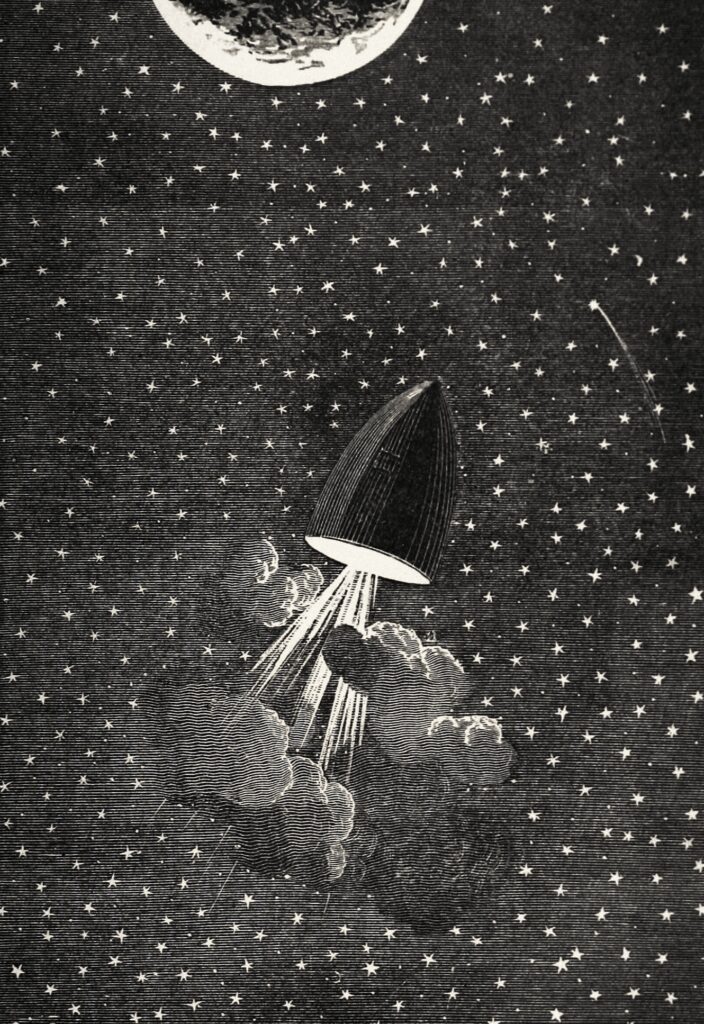
I was architect of an ice planet. I was a skull
hearing itself with every graham cracker’s
ashen reverberation.
The imagination becomes a freezing, distant world where the child can retreat. Yet, the physical reality of the household remains inescapable. The intrusion of adult conflict is rendered with cinematic violence:
The one fight
we caught my mother & father having
so heinous the sitcom characters stopped to watch,
axe through the bucket klieg lights,
axe through the snowbound door, axe through
the umbilical.
The poem concludes with a poignant meditation on space, distance, and endurance. The speaker confesses a deep affection for the cosmos—“how inaccessible it was, its famous silence”—and recognizes that human lives, much like the ships crossing the void, are fragile vessels held together by little more than hope and habit: “prayers could hold together.”
Official Statements and Author’s Note
In a revealing author’s note accompanying the publication, Lobko provided profound insight into the shift in perspective that governed the creation of the piece:
"At first, I thought this poem was about my family, my parents, me—but I’ve come to see it more as a devotional of sorts to the stories & myths that help us make meaning, whatever they might happen to be."
This statement reframes "I Was Braver Than I Thought" from a mere exercise in autobiographical confession into a universal exploration of human coping mechanisms. The toys, the spaceships, the desk bunkers, and the fictional ice planets are revealed as sacred instruments—temporary altars erected to ward off the chaos of an unpredictable world.
Literary critics have noted that this self-awareness elevates Lobko’s work. Instead of wallowing in nostalgia or resentment, the poem interrogates the very machinery of narrative construction. How do children process adult breakdown? They build armor out of plastic models, ozone, and quiet desperation. They tell themselves stories about distant galaxies because the galaxy unfolding in their living room is entirely unmanageable.
Future Outlook: The Ongoing Legacy of Lobko’s Work
As "I Was Braver Than I Thought" circulates among readers, students, and fellow writers, its selection as Poem of the Week highlights the enduring power of lyric poetry to articulate complex domestic truths.
For Lobko, this recognition points toward an active future in contemporary letters. Teaching north of New York City, he continues to influence a new generation of writers while pursuing his own rigorous writing schedule. Observers of the literary scene anticipate that this poem will serve as a cornerstone for a larger, forthcoming collection that will further solidify his reputation as one of the most perceptive chroniclers of memory and domestic mythology working today.
Readers wishing to explore more of his work, read his reviews, or track his ongoing literary contributions can visit his official digital home at wmlobko.com.
Conclusion
W. M. Lobko’s "I Was Braver Than I Thought" is a triumph of tonal control and emotional honesty. By mapping the vast distance between a child’s desk bunker and the silent reaches of outer space, Lobko has crafted a poem that speaks to the universal human impulse to survive our own histories through myth, imagination, and art. Its recognition as Poem of the Week is a well-deserved celebration of a writer operating at the absolute height of his powers.





Comments
Facebook App ID not configured. Please add it in the Customizer.