

Executive Overview
In a landscape where literary criticism often remains confined to academic journals or traditional print media, a fresh generation of voices is stepping forward to democratize and revitalize the evaluation of contemporary verse. The Poetry Society and the trustees of the prestigious T.S. Eliot Prize have officially announced the dynamic cohort of ten emerging reviewers selected for the fifth installment of the acclaimed Young Critics Scheme.
This flagship initiative brings together ten exceptionally talented young writers, poets, and cultural commentators from across the United Kingdom, Ireland, and beyond. Rather than producing traditional long-form print essays, these critics will create dynamic, engaging video reviews of the poetry collections shortlisted for the upcoming T.S. Eliot Prize. These digital critiques will be broadcast globally via the official YouTube channels and social media platforms of both The Poetry Society and the T.S. Eliot Prize.
The program bridges the generational gap between established literary institutions and youthful, digital-first audiences. By providing rigorous mentorship, exclusive access to high-profile industry events, and a global digital stage, the Young Critics Scheme acts as both a professional incubator and a vital catalyst for public engagement with contemporary poetry. As the literary world anticipates the announcement of the T.S. Eliot Prize winner early next year, this year’s cohort is poised to offer fresh, imaginative, and deeply analytical readings that challenge conventional modes of literary appraisal.
Read Also
Detailed Chronology: The Journey of the Fifth Cohort
The rollout of the fifth iteration of the Young Critics Scheme follows a meticulously structured timeline designed to transition participants from passionate readers into confident, articulate digital critics.
Foundation and Skill Development (Autumn 2026)
Following a competitive application process that drew submissions from across the British Isles and international writing communities, the ten successful candidates were finalized in September 2026. The scheme kicks off with a specialized series of online criticism workshops. These sessions are curated to equip the participants with the technical vocabulary, rhetorical strategies, and media skills required to translate complex poetic texts into compelling video formats.
Crucially, these masterclasses are facilitated by prominent contemporary critics Helen Bowell and Kadish Morris, both respected figures in modern literary journalism. Under their guidance, the young critics explore the ethics of reviewing, the nuances of performance and pacing in video essays, and the delicate art of balancing personal response with objective textual analysis.
Industry Immersion and Live Readings (January 2027)
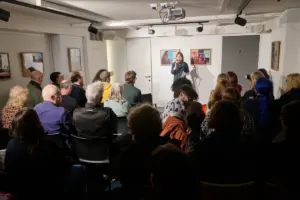
A cornerstone of the Young Critics Scheme is direct immersion into the beating heart of the British literary scene. In January 2027, the cohort will travel to London to attend the high-profile T.S. Eliot Shortlist Readings at the prestigious Southbank Centre. This landmark event brings together all shortlisted poets to read from their nominated works, offering the Young Critics a rare opportunity to experience the texts mediated through the living voices of their creators. This live engagement is instrumental in shaping the critical angles and emotive depth of the video reviews that follow.
Production, Launch, and the Winner Announcement (Early 2027)
Following the live readings in London, the critics will finalize and produce their individual video reviews. These multimedia projects will be systematically rolled out across the digital platforms of The Poetry Society, the T.S. Eliot Prize, and the Young Poets Network. The campaign builds critical momentum leading directly up to the announcement of the T.S. Eliot Prize winner, serving as a vital public forum that champions the entire shortlist and invites readers worldwide into the conversation.
Supporting Context & Metrics: The Anatomy of a Modern Literary Incubator
To understand the cultural significance of the Young Critics Scheme, one must examine its institutional roots and the broader landscape of youth literary engagement.
The Stakes of the T.S. Eliot Prize
Widely regarded as one of the most prestigious awards in the English-language literary sphere, the T.S. Eliot Prize honors the best new poetry collection published in the UK and Ireland each year. Established in 1993 to celebrate the poetry publishing centenary of T.S. Eliot and to raise funds for poetry charities, the prize carries immense commercial and critical weight. A nomination or a win can transform a poet’s career. However, the high-cultural gravity of the prize historically ran the risk of alienating younger demographics. The Young Critics Scheme directly counters this by empowering a diverse youth demographic to act as arbiters and guides to the shortlist.
Digital-First Criticism
The decision to mandate video reviews is a deliberate, strategic embrace of contemporary media consumption habits. In an era where book discovery is increasingly driven by platforms like TikTok (BookTok), YouTube, and Substack, textual criticism alone is no longer sufficient to capture the attention of Gen Z and younger millennial readers. By utilizing the dynamic capabilities of video—combining visual aesthetics, spoken word cadence, and digital editing—the Young Critics bridge the gap between high-art literature and accessible, modern media.
Mentorship and Professional Pathways
The scheme does not merely harvest content; it builds careers. Past participants have gone on to write for national newspapers, edit prominent literary magazines, and publish their own acclaimed poetry collections. By pairing emerging talent with mentors like Helen Bowell and Kadish Morris, the program ensures a high standard of critical discourse while passing down the institutional knowledge necessary to sustain arts journalism in the twenty-first century.
Official Statements and Institutional Vision
The launch of the 2026–2027 cohort has elicited widespread praise from leaders across the British poetry establishment, highlighting the program’s dual commitment to artistic excellence and democratic engagement.
Michael Sims, Director of the T.S. Eliot Prize, emphasized the transformative impact of the initiative on both the prize and its audience:
"The Young Critics Scheme has been brilliant in inspiring creative responses from young readers and writers who, in turn, inspire wider engagement with the T. S. Eliot Prize Shortlist through imaginative, often dazzling video reviews. We are delighted to be running the programme again this year in partnership with The Poetry Society and Young Poets Network."
Echoing these sentiments, representatives from The Poetry Society noted that the scheme embodies their core mission: fostering a lifelong love and deep critical understanding of poetry across all strata of society. By centering the voices of those at the beginning of their creative and critical journeys, the institution ensures that the conversation surrounding contemporary verse remains vibrant, challenging, and continuously renewed.
Meet the Cohort: Profiles of the 2026–2027 Young Critics
The ten individuals selected for this year’s cohort represent a breathtakingly diverse cross-section of geographic origins, stylistic interests, and cultural perspectives. Their collective biographies paint a picture of a flourishing, border-crossing generation of literary minds.
- Aisha Allinson (Sheffield / Leeds): Based in Sheffield and working at an independent publisher in Leeds after graduating from Manchester, Allinson brings a distinct northern perspective to the cohort. Her academic and creative interests center intensely on queerness, marginality, and diasporic identities, with critical and creative writing featured in PN Review.
- Caoilfhin Foley (Southwest Ireland): An acclaimed emerging voice from rural southwest Ireland, Foley is a recipient of the prestigious Irish Independent New Irish Writing Award (2024). Alongside publishing poetry in outlets like Southword, Swerve, and Ethereal Magazine, she actively shapes cultural conversations through her commentary pieces for The Medusa literary magazine.
- Elsie Hayward (North Dorset / Cambridge): A twenty-one-year-old poet from rural North Dorset and a recent English graduate from Cambridge University, Hayward’s poetic journey took flight when she was named a Foyle Young Poet in 2020. Her work is extensively anthologized through the Young Poets Network, Live Canon, and Never Such Innocence.
- Emmett Coleman (Dundee / St Andrews): Studying at the University of St Andrews, Coleman is a Scottish-based poet whose work has appeared in Propel and Guava Mag. Recognized as a shortlist nominee for the 2026 Edwin Morgan Poetry Award, he is also an active publisher, serving as the founder and editor of the independent poetry magazine Missed the Boat.
- Florence Hall (Yorkshire Dales / Norwich): Drawing inspiration from the rugged landscapes of the Yorkshire Dales, Hall explores themes of queerness, bodily autonomy, and the natural world. Her poetry has appeared in Pulp Poets Press, Popshot, and SINK. She is currently advancing her craft through an MA in Creative Writing at the University of East Anglia.
- Heather Chapman (Durham): A student at Durham University and a former Foyle Young Poet, Chapman has rapidly emerged as a formidable talent in contemporary poetry. Shortlisted for the 2025 Poetry Wales Award and the 2025 Oxford Poetry Prize, their work appears in Gutter, Oxford Poetry, and Bloodletter, complemented by a micro-chapbook published via The Braag.
- Jacob Burgess Rollo (Dorset): A Dorset-born poet whose sharp, resonant verses have graced the pages of The London Magazine, Oxford Poetry, Magma, Berlin Lit, and The Little Review. Rollo’s critical acumen was further underscored when he was named a runner-up in the highly competitive New Poets Prize 2026.
- Salma Reda (Substack): A third-year literature student and aspiring cultural critic, Reda’s intellectual curiosity spans an eclectic array of subjects, including literary modernism, eighteenth-century studies, multilingualism, film, fashion, and rap music. She documents her expansive cultural musings on her popular Substack platform.
- Tasneem Maher (Edinburgh): Based in Edinburgh, Maher is a writer and researcher whose work investigates the poetics, politics, and affect of Palestinian speculative writing. Winner of the 2026 Propel Cambridge Poetry Prize and published in Poetry Online and BAHR Magazine, Maher maintains a firm commitment to political solidarity and human rights through her artistic practice.
- Zeinab Elnemer (Durham): An Egyptian-born poet, illustrator, and student based in Durham, Elnemer bridges visual and textual art forms. She is currently developing her multimedia zine, The Last of the Cluster, which interrogates childhood memories and the immigrant diaspora. Her writing has appeared in Afkar9Fikra (2025), alongside her community-focused work in volunteer-run independent bookshops.
Future Outlook: The Legacy and Horizon of Literary Criticism
As the fifth cohort of the Young Critics Scheme embarks on its rigorous training and production schedule, the broader implications for arts journalism and poetry promotion are profound.
The traditional model of literary criticism—often criticized for its insularity, academic elitism, and slow turnaround times—is facing an existential reckoning. By investing in young, digitally fluent creators who speak the language of modern media, organizations like The Poetry Society and the T.S. Eliot Prize are demonstrating that deep, analytical engagement with literature does not need to be sacrificed for the sake of accessibility and digital reach.
Audiences can look forward to the release of the video reviews in the weeks leading up to the T.S. Eliot Prize winner announcement in early 2027. These reviews will not only serve as invaluable guideposts for readers navigating the shortlisted collections; they will also stand as a testament to the vitality, intellectual rigor, and creative fearlessness of a new generation shaping the future of global letters.
To explore the groundbreaking video reviews produced by last year’s cohort for the 2025 shortlisted collections, visit the official YouTube playlist provided by The Poetry Society.


Comments
Facebook App ID not configured. Please add it in the Customizer.