

Executive Overview
The contemporary art world continually seeks dialogues that bridge historical inquiry, contemporary identity, and the formal mechanics of painting and drawing. In Boston’s vibrant arts district, the Steven Zevitas Gallery has positioned itself at the center of this discourse with its presentation of Primary Sources. Running from September 4 through October 17, 2026, this compelling two-person exhibition brings together the distinct, yet harmoniously charged, artistic practices of Alex Jackson and Jordan Seaberry.
Primary Sources serves as an investigation into how artists build visual vocabularies, pulling from personal memory, cultural archives, and the raw mechanics of their respective mediums. While Jackson commands space through dynamic, narrative-driven compositions that challenge the boundaries of portraiture and space, Seaberry utilizes his mastery of line and form to interrogate sociopolitical histories, systemic architecture, and the emotional resonance of place.
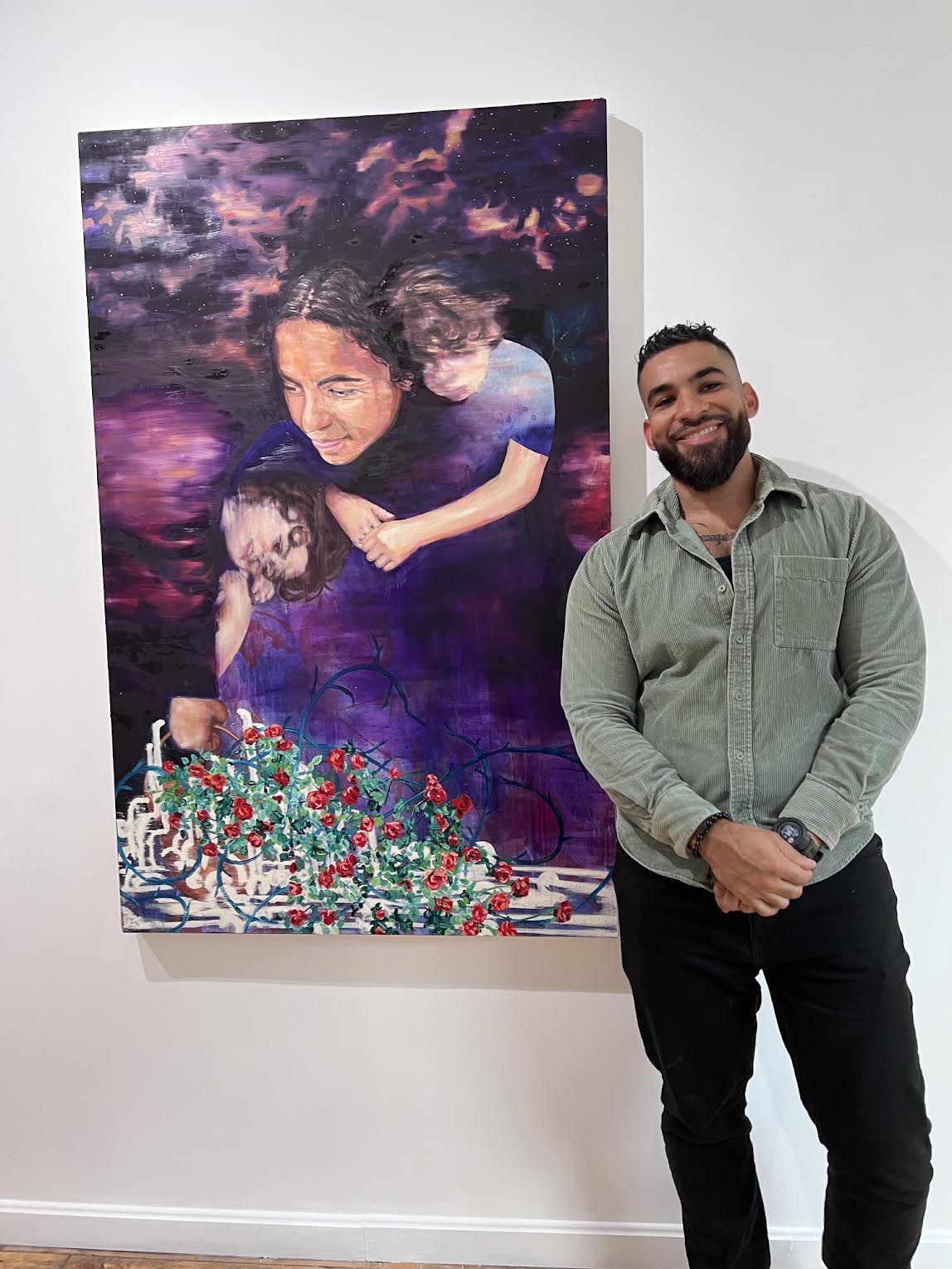
Beyond its curatorial merit within the gallery walls, the exhibition acts as a cultural touchstone, connecting the rigorous academic environment of the Rhode Island School of Design (RISD)—where Seaberry serves as a professor of drawing—with broader literary and community movements across New England. This report provides an exhaustive look into the exhibition, the backgrounds of its creators, the structural layout of the showcase, and the interconnected web of contemporary art and education that frames this landmark cultural event.
Read Also
Detailed Chronology and Exhibition Background
Setting the Stage: The Steven Zevitas Gallery
Located in Boston, the Steven Zevitas Gallery has long been recognized as a premier institution for showcasing contemporary painting, works on paper, and conceptual projects by emerging and mid-career artists. Known for its commitment to rigorous critique and bold curatorial choices, the gallery provides an ideal backdrop for Primary Sources. The exhibition was meticulously planned to capture the transition from the end of the summer season into the height of the fall academic and cultural calendar, running officially from September 4 to October 17, 2026.

The Conceptual Framework of "Primary Sources"
The title Primary Sources carries a double meaning. In academic and archival research, a primary source is an artifact, document, or firsthand account that provides direct evidence about a historical subject or time period. In the context of this exhibition, Jackson and Seaberry treat their respective mediums—painting and drawing—as primary sources of truth. They mine their personal histories, socio-political surroundings, and technical foundations to construct visual arguments that speak directly to the viewer without mediation.
- Alex Jackson’s Contribution: Jackson’s work is characterized by its vibrant palette, complex spatial arrangements, and a surrealist approach to figuration. His canvases often bend perspective, drawing the viewer into theatrical spaces where identity is constantly negotiated. By treating the canvas as a primary source of psychological space, Jackson challenges traditional modes of storytelling.
- Jordan Seaberry’s Contribution: Seaberry, deeply rooted in both fine arts and systemic advocacy, approaches drawing as an act of excavation. His works map out the intersections of race, labor, incarceration, and landscape. As a professor of drawing at the Rhode Island School of Design (RISD), Seaberry brings an unmatched technical precision and conceptual depth to his mark-making.
An Accidental Encounter: Bridging Literature and Fine Art
The intersection of local art scenes often happens away from white-walled galleries, rooted instead in neighborhood literary spaces and grassroots publishing. The connection to Jordan Seaberry’s broader cultural footprint was notably highlighted during the launch of the critically praised book Eating the Whole Fish, celebrated at RiffRaff Bookstore and Bar.

RiffRaff, a beloved community hub for literature, art, and discourse, served as the meeting ground where Seaberry’s community engagement outside the classroom was fully realized. Described by peers and attendees alike as a deeply engaging, charismatic figure, Seaberry’s presence at community events underscores his philosophy that art education and social consciousness are inextricably linked.
Supporting Context and Metrics: The RISD Ecosystem and Regional Art Hubs
To fully understand the weight of Primary Sources, one must examine the institutional ecosystem that nurtures talent in the Providence-Boston corridor. The Rhode Island School of Design (RISD) stands as a monumental pillar in this artistic geography, acting as a crucible for some of the most influential contemporary designers, fine artists, and educators working today.

The RISD Pipeline and Creative Leadership
Jordan Seaberry’s role as a professor of drawing at RISD places him at the forefront of contemporary art pedagogy. RISD’s influence extends far beyond studio walls, shaping industrial design, fine arts, and community-based innovation. Over recent years, the institution’s footprint has been highlighted by several key milestones:
- Academic Excellence and Alumni Success: Graduates from RISD’s prestigious programs—ranging from industrial design to fine arts—continually push the boundaries of material culture and global innovation. Notable milestones include alumni navigating high-profile careers in spatial design, sustainable product development, and fine art exhibitions worldwide.
- Student and Faculty Synergy: Programs such as the RISD Pre-College Student Art Show and student-led initiatives (including award-winning sustainable design projects like the BlueGreen Innovation competitions) demonstrate an institutional commitment to addressing real-world challenges through creative mediums.
- Interdisciplinary Reach: The crossover between fine arts (like Seaberry’s drawing classes) and applied design creates a rich ecosystem where conceptual fine art and functional design inform one another. This cross-pollination directly influences the rigorous intellectual rigor seen in exhibitions like Primary Sources.
Official Statements and Curatorial Insights
While exhibitions of this caliber are primarily experienced through visual engagement, the discourse surrounding Primary Sources has sparked critical commentary from curators, educators, and community organizers.

"Primary Sources challenges the viewer to look past the surface layer of paint and graphite, demanding an engagement with the foundational truths of the artists’ experiences. Jackson and Seaberry do not simply create objects of beauty; they construct archives of modern consciousness." — Curatorial Notes, Steven Zevitas Gallery
Furthermore, educators within the New England arts community have praised the pairing for its pedagogical value. Because Jordan Seaberry balances a rigorous studio practice with higher-education teaching at RISD, his work in the exhibition offers students and young artists a masterclass in how conceptual weight can coexist with technical mastery.

Colleagues note that Seaberry’s ability to translate complex socio-political histories into accessible, arresting visual forms makes him one of the most vital educator-artists of his generation. Paired with Alex Jackson’s playful yet profound deconstruction of traditional portraiture, the exhibition functions as a living seminar on the state of contemporary American art.
Future Outlook: The Legacy of "Primary Sources"
As Primary Sources concludes its run at the Steven Zevitas Gallery in October 2026, its impact will undoubtedly resonate through the broader contemporary art market and academic institutions.

1. Shifts in Contemporary Painting and Drawing Paradigms
The exhibition points toward a larger movement in contemporary art where artists are increasingly rejecting rigid categorization. By blending narrative surrealism (Jackson) with socio-political cartography and structural drawing (Seaberry), the show proves that traditional mediums remain potent vehicles for urgent, modern discourse. Collectors and institutions are taking note, signaling a strong market appetite for works that balance technical execution with deep conceptual narratives.
2. Expanding Community Engagement in the Arts
The synergy between commercial galleries like Steven Zevitas, educational institutions like RISD, and independent community spaces like RiffRaff Bookstore and Bar highlights a sustainable model for the arts. Future regional exhibitions are expected to adopt this holistic approach, breaking down the barriers between academic critique, gallery presentation, and grassroots community engagement.

3. Long-Term Trajectories for Jackson and Seaberry
For Alex Jackson, Primary Sources marks a significant chapter in solidifying his reputation as a visionary painter capable of reshaping spatial narratives. For Jordan Seaberry, the exhibition further bridges his dual identity as a dedicated educator shaping the next generation of artists at RISD and a formidable fine artist whose works demand permanent installation in major museum collections.
Ultimately, Primary Sources will be remembered not merely as a temporary pairing of two talented creators, but as a defining moment in Boston and Providence’s shared artistic landscape—a testament to the power of art to document our shared history, challenge our perspectives, and point toward new horizons.





Comments
Facebook App ID not configured. Please add it in the Customizer.