In the contemporary landscape of children’s and young adult literature, biographies addressing figures of radical social change have undergone a significant renaissance. Yet, critical gaps in publishing history have long obscured the interconnected, cross-cultural alliances that defined the mid-20th-century Civil Rights Movement. Among the most glaring of these omissions was the literary landscape surrounding Malcolm X and human rights activist Yuri Kochiyama prior to the inception of Mia Wenjen’s recent work, Postcards from Malcolm X: How Yuri Kochiyama Became a Human Rights Activist.
When Wenjen first embarked on drafting her manuscript, she encountered a stark scarcity of literature appropriate for younger readers. While young adult adaptations such as Ilyasah Shabazz and Kekla Magoon’s X: A Novel offered substantive coming-of-age accounts, and children’s depictions of Yuri Kochiyama remained virtually nonexistent outside of a few iconic photographs, the need for intersectional, accessible literature became glaringly apparent.
This analytical review examines the structural evolution of youth-targeted literature surrounding Malcolm X, tracing how modern children’s books bridge the gap between historical marginalization and contemporary sociopolitical awareness. Furthermore, this report highlights a curated selection of seminal biographies that unpack the systemic conditions of mid-century America, offering educators, parents, and young readers indispensable tools to combat entrenched negative stereotyping and foster deep historical literacy.
Detailed Chronology: From Malcolm Little to Global Icon
Understanding the trajectory of Malcolm X requires examining the structural forces that shaped his formative years—a narrative increasingly captured in illustrated biographies for young audiences.
The Seeds of Activism: Early Childhood and Systemic Displacement
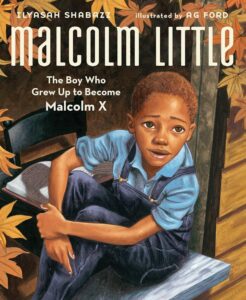
Born Malcolm Little on May 19, 1925, in Omaha, Nebraska, he was one of seven children born to Earl Little and Louise Norton Little. Both parents were ardent supporters of the Marcus Garvey-led Universal Negro Improvement Association (UNIA), advocating fiercely for human rights, self-reliance, and racial pride. Earl Little’s powerful, unyielding rhetoric made him an immediate target for white supremacist organizations such as the Black Legion.
When Malcolm was just four years old, the family home in Lansing, Michigan, was burned to the ground by arsonists. Shortly thereafter, when Malcolm was six, his father was brutally murdered, with local authorities and the Ku Klux Klan orchestrating a systematic cover-up that ruled the death a streetcar accident. These foundational tragedies exposed young Malcolm to the inescapable machinery of state-sanctioned racial violence and impunity. Despite these disruptions, Louise Little cultivated intellectual curiosity in her children, teaching them foreign languages, world news, and poetry, even as socioeconomic pressures eventually led to the fracturing of the family unit due to state intervention and institutionalized trauma.
The Prison Transformation and the Nation of Islam
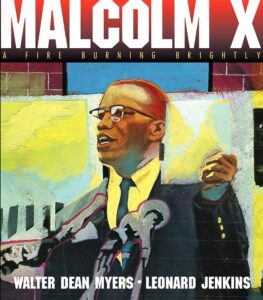
As chronicled in Walter Dean Myers’ acclaimed biography Malcolm X: Fire Burning Brightly, Malcolm’s early academic promise was derailed by systemic racism within the educational system, ultimately leading him down a path of petty crime and a subsequent prison sentence in the early 1940s.
It was behind bars that Malcolm underwent a profound intellectual and spiritual rebirth. Through voracious reading and correspondence with members of the Nation of Islam (NOI), he adopted the teachings of Elijah Muhammad. Upon his release, he emerged as Malcolm X—dropping his "slave name" in favor of the algebraic unknown "X" to signify his lost African heritage. His articulate, unapologetic condemnation of white supremacy propelled him to national prominence as the chief minister of Harlem’s Mosque No. 7 and the national spokesperson for the NOI.
The Intersectional Evolution and Global Legacy
Malcolm’s ideological evolution did not stall within the confines of the NOI. Following his historic split from the organization in 1964 and his pilgrimage to Mecca, his worldview expanded to connect African American liberation struggles directly with global anti-colonial movements. It was during this turbulent, visionary final phase of his life that his path intersected with Yuri Kochiyama, a Japanese American activist whose worldview was permanently altered by their brief, less-than-two-year friendship.
As explored in Postcards from Malcolm X, Kochiyama transitioned from an ordinary American citizen largely insulated from structural racism—partly due to the devastating internment of Japanese Americans during World War II—into a fierce global human rights advocate. Malcolm X’s assassination on February 21, 1965, at the Audubon Ballroom in New York City at the age of 39, cut short a life that had become an international catalyst for Black liberation. Yet, his murder did not extinguish his ideology; rather, it cemented his legacy as a primary architect of the Black Power Movement of the 1960s and 1970s.
Supporting Context & Metrics: Literature and Systemic Awareness
The publication of nuanced literature concerning civil rights leaders has taken on renewed urgency in the wake of modern racial justice reckonings, most notably catalyzed by the 2020 murder of George Floyd. For many contemporary authors and readers, systemic racism was previously treated as an abstraction rather than an institutional architecture.
Literary Work
Target Demographic
Core Thematic Focus
Primary Historical Figures
Malcolm Little: The Boy Who Grew Up to Be Malcolm X
Ages 6+
Early childhood, Garveyism, systemic violence
Malcolm X, Earl & Louise Little
Malcolm X: Fire Burning Brightly
Ages 4+
Intellectual awakening, prison reform, NOI leadership
Malcolm X, Walter Dean Myers
Postcards from Malcolm X
Ages 7+
Intersectional solidarity, global human rights
Malcolm X, Yuri Kochiyama
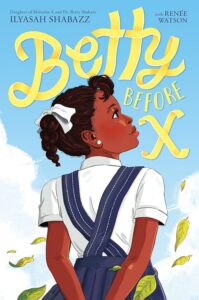
Betty Before X
Ages 8+
Grassroots community organizing, economic justice
Betty Shabazz, The Housewives’ League
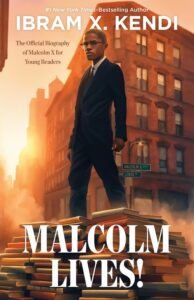
Malcolm Lives: The Official Bio for Young Readers
Ages 10+
Unvarnished political legacy, Black Power Movement
Malcolm X, Ibram X. Kendi
As author Mia Wenjen notes, reading works like Betty Before X—co-authored by Ilyasah Shabazz and Renee Watson—serves as an eye-opening corrective to sanitized historical curricula. The biography details the early life of Betty Shabazz (born Betty Sanders), who moved from the Jim Crow South to Detroit, Michigan, at age six. There, she found community in the Housewives’ League, an organization that leveraged economic power by supporting Black-owned businesses.
These texts provide young readers with the cognitive tools to trace a direct line from historical atrocities—such as the Ku Klux Klan’s infiltration of Michigan law enforcement in the 1930s—to contemporary instances of police brutality. By exposing youth to these foundational realities through age-appropriate picture books and middle-grade biographies, publishers are challenging long-standing negative stereotypes and encouraging a more sophisticated understanding of systemic inequity.
Official Statements & Educational Insights
Scholars, educators, and creators in the children’s literature space have increasingly emphasized the necessity of diverse biographical publishing. The movement away from Eurocentric hagiographies toward unvarnished, intersectional accounts represents a fundamental shift in pedagogical philosophy.
"When I read Malcolm’s words today, it strikes me how much he understood about systemic racism, something that I didn’t notice until George Floyd’s murder. But once it is revealed, it is hard not to see. I think that was perhaps what made Malcolm so threatening to white supremacists. But I think that as long as his words are accessible, his legacy lives on, so I hope people will take time to learn about him, his childhood, and his beliefs as a way to combat the negative stereotyping about him that is so prevalent."
— Mia Wenjen, Author and Creator
Educational experts note that introducing these texts at an early developmental stage encourages critical thinking. Biographies such as Ibram X. Kendi’s Malcolm Lives: The Official Biography of Malcolm X for Young Readers utilize a modular, 54-chapter structure designed specifically for tweens, offering a comprehensive look at Malcolm’s life without shying away from his political complexities. By providing children with access to these narratives, schools and libraries create spaces for empathetic cross-cultural solidarity—mirroring the profound bond shared by Malcolm X and Yuri Kochiyama.
Future Outlook: The Expanding Horizon of Civil Rights Literature
Looking forward, the publishing ecosystem surrounding Black history and intersectional activism is poised for continued expansion, though it faces distinct socio-political challenges. Efforts to censor curricula and restrict access to books addressing systemic racism in various school districts underscore the radical nature of these historical texts.
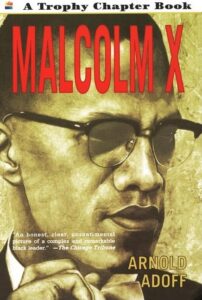
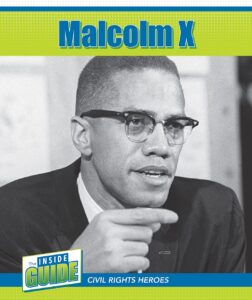
Despite these legislative hurdles, the proliferation of high-quality, illustrated biographies—ranging from Arnold Adoff’s classic concise chapter book Malcolm X to Amy B. Rogers’ reference-grade Malcolm X (The Inside Guide: Civil Rights Heroes)—ensures that younger generations will continue to find mirrors and windows within historical literature.
The enduring resonance of leaders like Malcolm X, Betty Shabazz, and Yuri Kochiyama lies in their insistence that human rights are globally interconnected. As contemporary authors continue to unearth and celebrate these narratives, the literary canon grows more robust, offering future generations an unshakeable foundation of truth, resilience, and intersectional solidarity.











Comments
Facebook App ID not configured. Please add it in the Customizer.