
Executive Overview
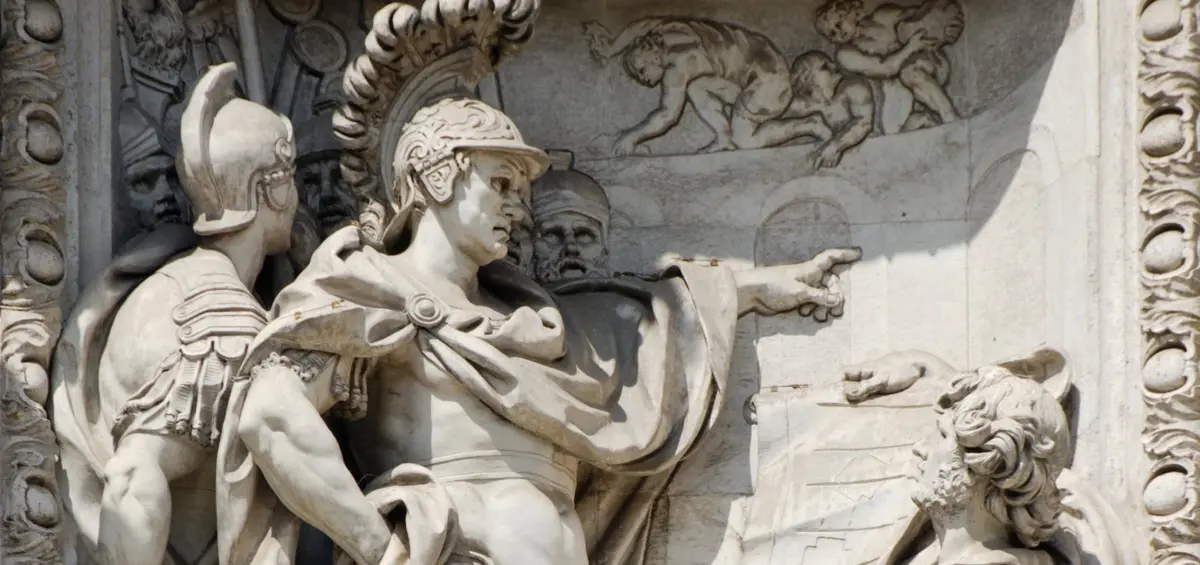
In the contemporary literary landscape, few authors command the historical imagination quite like Robert Harris. With seventeen acclaimed novels to his name—including the Roman-centric masterworks that preceded it and the cinematic blockbuster adaptation of Conclave—Harris has established himself as a premier chronicler of power, political decay, and systemic transformation. His latest release, Agrippa: A Novel of Ancient Rome’s Descent into Dictatorship (Doubleday, 384 pages, $32), invites readers back into the labyrinthine corridors of the late Republic and early Empire. Through the lens of Marcus Vipsanius Agrippa—the brilliant military tactician, victor of the Battle of Actium, and architect of the original Pantheon—Harris examines the agonizing mechanics by which a republic devours its own liberties to birth a supreme autocracy.
Yet, beyond its narrative momentum and meticulous historical reconstruction, Agrippa serves as a profound psychological and philosophical mirror. It arrives at a time when historians and cultural critics are increasingly reckoning with the deep ideological chasm separating the ancient pagan world from the modern West. By tracing Agrippa’s lifelong, unbreakable bond with his childhood friend Octavius—who would ascend to become Caesar Augustus—Harris forces readers to inhabit a worldview fundamentally devoid of mercy, egalitarianism, or institutionalized human rights.
This review-essay explores Agrippa not merely as a standalone historical thriller, but in provocative dialogue with English historian Tom Holland’s thesis in Dominion: How the Christian Revolution Remade the Western Mind. By juxtaposing Harris’s unvarnished depiction of Roman ruthlessness with Holland’s cultural archaeology, we uncover a chilling truth: the moral bedrock of the modern world is not an inevitable human baseline, but a radical, disruptive mutation catalyzed by Christianity. Through an exhaustive examination of Harris’s text, historical metrics, and the philosophical implications of pre-Christian autocracy, this article unpacks what Agrippa tells us about the descent into dictatorship—then and now.
Read Also
Detailed Chronology: From Republic to Autocracy in the Shadow of Actium
To understand the world of Robert Harris’s Agrippa, one must trace the dizzying, blood-soaked trajectory of the late Roman Republic’s collapse. The narrative timeline spans decades of civil strife, shifting alliances, and political assassinations that transformed the Mediterranean basin from a fractured oligarchy into a monolithic autocracy.
The Rise of the Triumers and the Ghost of Caesar
The foundational trauma of Agrippa’s world is the assassination of Julius Caesar on the Ides of March in 44 BC. For young Octavius—then a relatively obscure great-nephew and designated heir—survival required immediate, calculating ruthlessness. By his side stood Marcus Vipsanius Agrippa, a man of humbler origins whose genius for organization, engineering, and naval warfare would prove indispensable to Octavius’s survival.
The ensuing chronology is a masterclass in political survivalism:
- 43 BC: The formation of the Second Triumvirate (Octavian, Mark Antony, and Lepidus), accompanied by brutal proscriptions that legally sanctioned the murder and dispossession of political enemies in Rome.
- 42 BC: The crushing defeat of Caesar’s assassins, Brutus and Cassius, at the Battle of Philippi, cementing the Triumvirate’s military supremacy.
- 36 BC: Agrippa demonstrates his transcendent tactical mastery by defeating Sextus Pompey at the naval Battle of Naulochus, neutralizing the pirate threat that had blockaded Rome’s grain supply.
- 31 BC: The decisive clash at the Battle of Actium. Agrippa commands the fleet that outmaneuvers Mark Antony and Cleopatra, effectively securing undisputed mastery of the Roman world for Octavian.
- 27 BC: Octavian is officially granted the honorific Augustus by a submissive Senate, marking the formal birth of the Roman Empire and the institutionalization of dictatorial rule disguised as the restoration of the Republic.
Throughout this relentless march of history, Harris presents Agrippa not as a mindless brute, but as a tragic figure of immense competence who willingly hitched his wagon to an absolute tyrant. While Agrippa builds aqueducts, constructs the Pantheon, and stabilizes the imperial infrastructure, he does so fully cognizant of the rivers of blood upon which the Pax Romana is floated.
Supporting Context & Metrics: The Alien Morality of the Classical World
When modern readers consume historical fiction set in antiquity, they frequently fall prey to an imaginative bias: the assumption that human nature and fundamental moral intuitions are constant across millennia. Tom Holland, reflecting on the genesis of Dominion, famously noted that his childhood fascination with antiquity was driven by the "glamour" of big, swaggering empires. Like many, he initially found the mythology of Rome and Greece far more exciting than the austere ethics of the Judeo-Christian tradition.
However, writing mature histories of the ancient world forced Holland—and similarly rigorous novelists like Harris—to confront an unsettling realization: the Romans were radically, irreducibly alien.
Metrics of Imperial Violence and Human Disposability
To fully grasp the chasm between the Roman mind and modern ethical frameworks, one must examine the baseline metrics of classical civilization:
- The Calculus of Conquest: During Julius Caesar’s campaign in Gaul (58–50 BC), ancient sources estimate that approximately one million people were slaughtered and another million were reduced to chattel slavery. In Harris’s Rome, these human beings are treated with the clinical detachment of ledger entries.
- The Dispensability of Life: Political survival hinged entirely on proximity to power and the ability to find or sacrifice scapegoats. Executions, judicial murders, and the bloody purges of the Senate were standard operating procedures.
- The Status of the Marginalized: Slaves—who formed the literal economic engine of the Empire—existed in a state of absolute non-personhood. They could be tortured legally in judicial proceedings, executed en masse for the crimes of a single master, or discarded when no longer useful.
- The Instrumentalization of Relationships: Marriage among the elite was purely a transactional instrument for political consolidation and dynastic expansion, dissolved and reconstituted with a casual ruthlessness that scandalized later generations.
- Sexual Ethics: As evidenced by Mark Antony’s notorious public letters to Octavius—asking with casual indifference, "Does it really matter where or in whom you stick your cock?"—sexual morality in the Roman elite was defined exclusively by dominance and social hierarchy, utterly divorced from notions of bodily sanctity or mutual consent.
As Tom Holland observed, Roman men operated on the default assumption that their bodies and desires held sovereign dominion over any available vessel, free from the constraints of pity, mercy, or human rights. It was precisely this absolute callousness that Christianity shattered, introducing the revolutionary concept that every human body is a holy vessel imbued with inherent dignity.
Official & Critical Perspectives
Literary and historical analysts have widely praised Harris’s ability to render the ancient world without anachronistic moralizing. Agrippa avoids the twin traps of romanticizing Roman tyranny and retrofitting modern sensibilities onto classical actors.
In critical circles, the novel is increasingly viewed as a companion piece to historical theology and historiography. By maintaining an even hand—neither diminishing nor inflating Roman ferocity—Harris allows the terrifying logic of autocracy to speak for itself.
"It is quite stressful actually, trying to live inside their heads because they’re terrifying," Tom Holland has noted regarding the psychological profile of Roman commanders. "Julius Caesar… didn’t seem to have any trouble about this [slaughtering millions]. The conclusion I came to was that, essentially, it’s Christianity that changes everything."
Harris’s Agrippa embodies the tragedy of the capable technocrat working in service to an unmitigated despot. He possesses perennial virtues—courage, stoicism, modesty, and administrative brilliance—yet these virtues are harnessed entirely to build a machine of global subjugation. Reviewers have highlighted how Harris captures the chilling intimacy of the friendship between Octavius and Agrippa, illustrating how the consolidation of absolute power demands the systematic erosion of personal scruple.
Future Outlook & Historical Reveries
What makes Agrippa and its intellectual cousin Dominion essential reading for the present cultural moment is the invitation they extend toward historical introspection. They prompt what can only be described as profound historical reveries—exercises in counterfactual imagination that highlight the profound fragility of modern moral assumptions.
Consider a thought experiment inspired by Harris’s novel: What if the pre-Christian warrior Agrippa could be transported forward in time into the heart of medieval, Christianized Europe?
Imagine a general accustomed to the absolute disposal of captured enemies being confronted by a pale, tonsured monk invoking the Truce of God—a church decree forcing feudal knights to lay down their weapons from Wednesday evening until dawn on Monday. Imagine instructing a Roman warlord in the rituals of knighting, where a white belt is bound around his waist to signify his sacred duty to restrain his carnal lusts. Imagine introducing him to a canon lawyer explaining the indissolubility of marriage.
To the pragmatic, power-worshiping mind of a Roman commander, such strictures would appear utterly incomprehensible, perhaps even suicidal. Yet, within a few centuries, those exact notions became the undisputed architecture of Western civilization. They formed the cultural immune system that restrained raw power, elevated the weak, and protected the marginalized.
As contemporary society navigates an attention economy obsessed with the tyranny of the present—beset by geopolitical war, technological disruption, and ideological fracture—books like Robert Harris’s Agrippa offer an invaluable corrective. They remind us of what human civilization looks like when it abandons mercy, when power is worshipped as its own justification, and when human lives are reduced to columns on a ledger.
By staring directly into the abyss of Rome’s descent into dictatorship, Agrippa forces us to appreciate the hard-won, fragile boundaries of our own ethical world—and to recognize how easily those boundaries could be lost.





Comments
Facebook App ID not configured. Please add it in the Customizer.