
Executive Overview
Nearly two decades after his initial conviction in Florida and seven years after his controversial death inside a federal detention facility, Jeffrey Epstein remains an inescapable, disruptive force in American politics. As the United States approaches a pivotal midterm election cycle, the convicted sex offender’s ghost continues to haunt the national conversation, weaponized by political campaigns, legislative maneuvers, and an intensifying war of narratives between Democrats and Republicans.
What was once confined to the murky fringes of tabloid journalism and true-crime speculation has now migrated squarely into the center of the political mainstream. Scores of midterm campaign advertisements—increasingly lurid and emotionally charged—flood local airwaves across the country. On Capitol Hill, lawmakers are locked in high-stakes procedural battles regarding the mandated release of classified or withheld federal investigative files. Meanwhile, newly released congressional reports and fresh allegations of institutional cover-ups have thrust the Justice Department’s historical handling of Epstein’s powerful associates back into the glaring spotlight.
For the Republican Party, and particularly for allies of President Donald Trump, the Epstein saga represents a stubborn, multi-layered vulnerability. Despite Trump’s ability to weather countless political storms, scandals, and institutional friction, the Epstein narrative has struck a unique nerve with specific voter demographics—most notably, young voters and members of Generation Z. Disillusioned by broken campaign promises regarding transparency and increasingly resentful of political establishments, these voters have seized upon the administration’s handling of the Epstein files as emblematic of systemic corruption and elite protectionism.
Read Also
Sensing a formidable political opening, House and Senate Democrats have mounted a relentless offensive. Armed with data tracking hundreds of attack ads centered on terms like "pedophile" and "predator," the opposition is attempting to tie incumbent Republicans directly to the institutional failures surrounding Epstein. While the immediate catalyst for this onslaught is the looming midterm ballot, the long-term implications stretch far beyond election night. Should Democrats manage to flip either chamber of Congress, the resulting subpoena power could unleash an unprecedented wave of fresh legislative investigations, forever altering how the federal government accounts for its past failures in prosecuting institutional corruption.
Detailed Chronology: From Conviction to Congressional Investigations
To understand how Jeffrey Epstein’s shadow has grown so vast in contemporary politics, it is necessary to retrace the timeline of a scandal that has repeatedly tested the credibility of the American justice system.
The Foundation of a Scandal (2006–2019)
- July 2006: Palm Beach Police formally arrest Jeffrey Epstein, leading to an initial state-level indictment on solicitation of prostitution charges involving underage girls.
- June 2008: In a controversial move that would later spark national outrage, federal prosecutors in Florida orchestrate a non-prosecution agreement (NPA). This secret deal allows Epstein to plead guilty to state charges, serving a lenient sentence with extensive work-release privileges while insulating his co-conspirators from federal prosecution.
- July 2019: Following years of investigative reporting—most notably by The Miami Herald’s Julie K. Brown—Federal prosecutors in the Southern District of New York arrest Epstein on new sex trafficking charges.
- August 2019: Epstein is found dead in his cell at the Metropolitan Correctional Center in New York City, officially ruled a suicide, sparking widespread public skepticism and immediate conspiracy theories.
The Legislative and Administrative Battlegrounds (2020–2026)
- July 2024: Momentum builds on Capitol Hill for a bipartisan reckoning, as watchdog groups and survivors demand the complete declassification of all federal files pertaining to Epstein’s network, associates, and financial dealings.
- September 2025: Procedural gridlock takes hold in the Senate. A measure aimed at compelling the immediate release of the federal Epstein files faces stiff resistance, with key Republican incumbents—such as Kansas Senator Roger Marshall—voting to block the procedural vote. The measure eventually passes via unanimous consent, but the political damage is done.
- July 2026: Politifact and government watchdog groups release investigative timelines detailing the Trump administration’s repeated delays and policy shifts regarding the unredacted release of the investigative files, directly contradicting earlier campaign promises made by the president.
- October 2026:
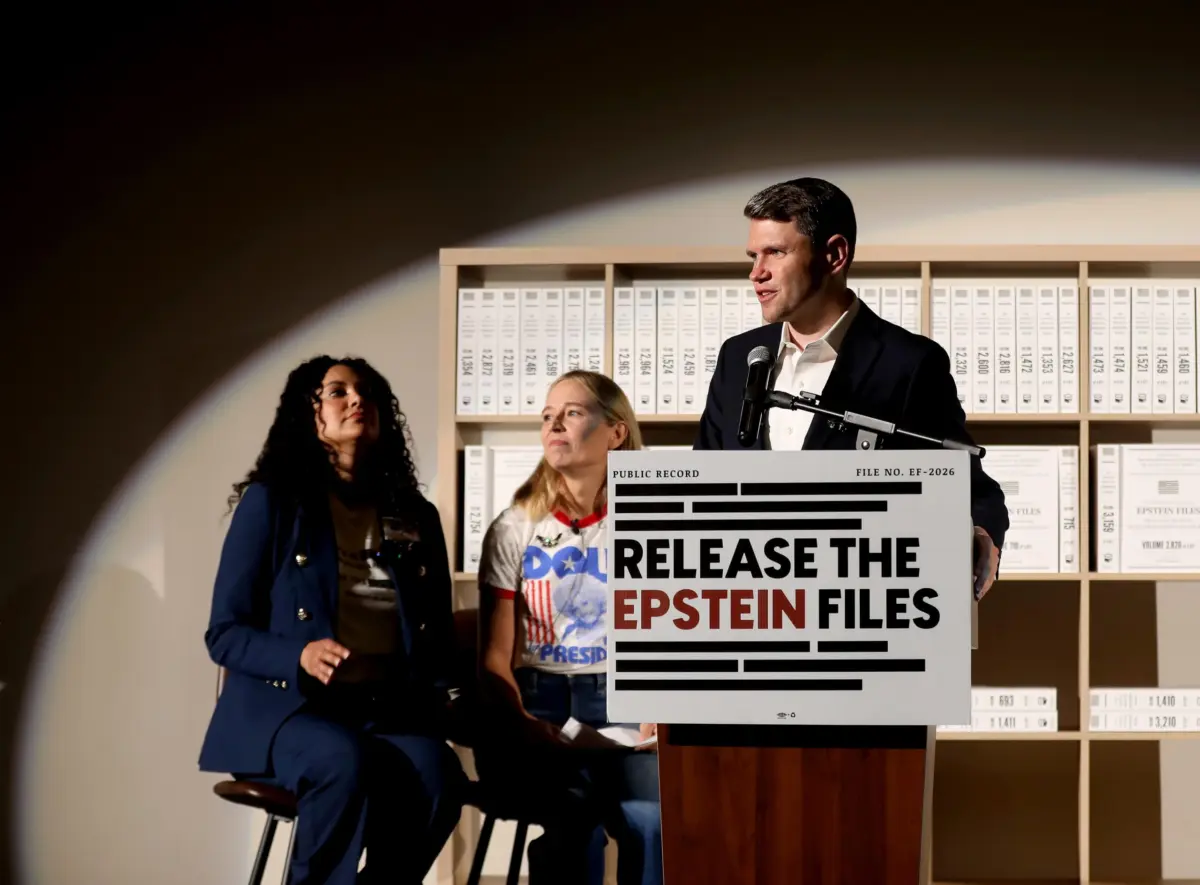
- October 9: Representative Thomas Massie spearheads a discharge petition in the House, forcing a second major legislative push to mandate the immediate, unredacted public release of all remaining government files concerning Epstein.
- October 26: House Democrats on the Judiciary Committee release a sweeping 50-page staff report alleging that the Department of Justice actively helped cover up details regarding Epstein’s historical relationship with President Donald Trump. The report formally calls for the appointment of an independent criminal investigation via a special counsel.
- October 27: White House spokespersons dismiss the Democratic report as a "desperate attempt by crazed Democrats to distract Americans," pointing to the transparently political timing just one week ahead of the midterms.
Supporting Context & Metrics: The Anatomy of a Political Weaponization
The transformation of the Epstein scandal from a legal tragedy into a potent midterm weapon is vividly illustrated by data tracking the modern American political media landscape.
According to data compiled by the media tracking firm AdImpact and cited by major news networks, the 2026 midterm election cycle has witnessed an unprecedented saturation of hostile advertising. Currently, more than 500 campaign ads are airing across local television and digital platforms nationwide that explicitly invoke terms like "pedophile," "predator," or direct references to Jeffrey Epstein and the elusive "Epstein files."
The Partisan Breakdown and Targeting Strategy
- Democratic Dominance in Ad Spend: Approximately 75% of these aggressive campaign ads are funded or backed directly by Democratic campaign committees, allied super PACs, and progressive advocacy groups.
- Geographic Reach: While the ads are concentrated in competitive battleground districts, they have also appeared in traditionally safe Republican states where vulnerable incumbents can be painted as obstructionists to government transparency.
- Case Study: Kansas: One prominent digital and television ad features a survivor of Epstein’s trafficking ring directly targeting Kansas Republican Senator Roger Marshall. The spot criticizes Marshall’s September 2025 vote to block the procedural measure designed to force the release of federal investigative files.
- Case Study: Maine: In Maine, campaign messaging alleges that a purported "business partner" of Epstein funneled millions of dollars into a super PAC supporting Senator Susan Collins. Independent watchdogs and local fact-checkers, such as The Maine Monitor, have noted that the connection between Epstein and the donor is exceptionally tenuous. Nevertheless, the political utility of establishing even a rhetorical link has proved irresistible for opposition strategists.
The Generational Shift: Gen Z and the "Establishment" Backlash
Perhaps the most surprising aspect of the Epstein narrative’s resurgence is its resonance among younger voters, particularly Generation Z. Political analysts tracking voter disillusionment point out that younger Americans—many of whom helped propel Donald Trump to victory in previous cycles—are experiencing a distinct sense of betrayal.
As political analyst Rachel Janfaza noted in recent commentary, many young voters "resent the fact that Trump’s basically become part of the establishment." For this demographic, the refusal of successive administrations to fully disclose the government’s investigative files on Epstein is not merely an archival grievance; it is tangible proof of a protective, self-serving political elite. Having been promised total transparency during campaign rallies, young voters who feel burned by the administration’s subsequent about-face are proving increasingly willing to punish incumbents at the ballot box, cutting across traditional ideological lines.
Official Statements and Institutional Responses
The release of the House Judiciary Committee Democrats’ 50-page staff report has ignited a fierce war of words between the executive branch and congressional investigators.
The Democratic Perspective
The Democratic staff report draws extensively from public records, congressional testimony, and interviews with anonymous survivors of Epstein’s abuse. Among its most explosive inclusions is testimony from a former beauty pageant contestant alleging that Donald Trump raped her in 1993—an accusation that echoes historical legal claims previously dismissed by Trump’s camp as fabrications.
Beyond individual allegations, the report targets the institutional apparatus of the federal government. It argues that high-ranking officials within the Department of Justice facilitated an environment of opacity, shielding powerful figures from thorough interrogation. Consequently, the report boldly calls for the appointment of an independent special counsel to investigate the historical ties between the executive branch and Epstein.
"The American people deserve absolute transparency regarding how the justice system was manipulated to protect the powerful," said a senior Democratic committee aide speaking on condition of anonymity. "The cover-up did not end with Epstein’s death; it has been maintained through institutional silence and broken promises of declassification."
The White House and Republican Defense
The administration and its congressional allies have roundly rejected the report, characterizing it as a transparent, last-minute political stunt designed to deflect attention from economic and domestic policy issues in the final days of the campaign.
In an official statement released by the White House press office, a spokesperson lambished the document:
"This report is nothing more than a desperate attempt by crazed Democrats to distract American families from their failed economic policies. It is a rehashed collection of debunked smears, timed precisely one week before the election to mislead voters who are focused on the issues that actually affect their daily lives."
Legal scholars and political pundits have largely echoed the administration’s skepticism regarding the feasibility of the report’s core demand. No political analyst seriously expects the sitting Attorney General to appoint a special counsel to investigate the executive branch that appointed them, rendering the call for an independent probe a purely aspirational—if politically damaging—legislative gesture.
Future Outlook: What Happens After Election Day?
As voters head to the polls, the immediate saturation of Epstein-themed campaign ads is guaranteed to subside. However, political scientists and Capitol Hill insiders agree that the underlying forces unleashed by this cycle will not dissipate when the ballots are counted.
The Subpoena Threat
The ultimate trajectory of the Epstein controversy depends heavily on the outcome of congressional races. Should Democrats succeed in capturing a majority in either the House of Representatives or the Senate, the institutional balance of power will shift dramatically.
With majority control comes committee chairmanships, and with chairmanships comes unilateral subpoena power. Democratic leaders have made little secret of their intentions: if granted congressional authority, they plan to launch fresh, expansive legislative investigations into the Justice Department, federal intelligence agencies, and the handling of the 2008 non-prosecution agreement.
Such probes could compel current and former federal officials to testify under oath, potentially dragging long-buried documents and internal communications into the public domain regardless of executive branch resistance.
A Permanent Stain on Institutional Trust
Even if legislative efforts stall due to divided government or executive privilege claims, the cultural and political impact of the Epstein saga has left a permanent mark. It has weaponized public cynicism, transforming a grotesque criminal conspiracy into a universal symbol of institutional impunity.
For future administrations, the lesson of the Epstein files is clear: public demand for accountability cannot be indefinitely managed through redactions, delays, or political dismissals. As long as questions remain unanswered, the ghost of Jeffrey Epstein will continue to haunt the corridors of American power—a persistent reminder of the accountability crises that define modern politics.





Comments
Facebook App ID not configured. Please add it in the Customizer.