
Executive Overview
For psychologists, psychiatrists, physicians, and licensed therapists venturing into the public literary space, a profound professional paradox emerges: How much of one’s personal life should be revealed to an audience seeking both rigorous scientific expertise and deep human empathy? Readers navigating self-help literature, clinical nonfiction, or public seminars demand a guide who possesses absolute mastery of empirical research. Simultaneously, they crave an authentic human being who understands the visceral, often messy reality of emotional distress, psychological friction, and human error.
Striking this delicate balance presents a formidable clinical credibility challenge. An author who projects an image of pristine, impenetrable professionalism risks appearing cold, academic, and emotionally detached—evoking the skeptical reader’s internal monologue: "This person has clearly never struggled with anything in their life." Conversely, an author who overshares personal trauma, ongoing struggles, or unresolved psychological vulnerabilities risks eroding trust entirely, prompting readers to wonder, "Shouldn’t this expert have figured this out by now?"
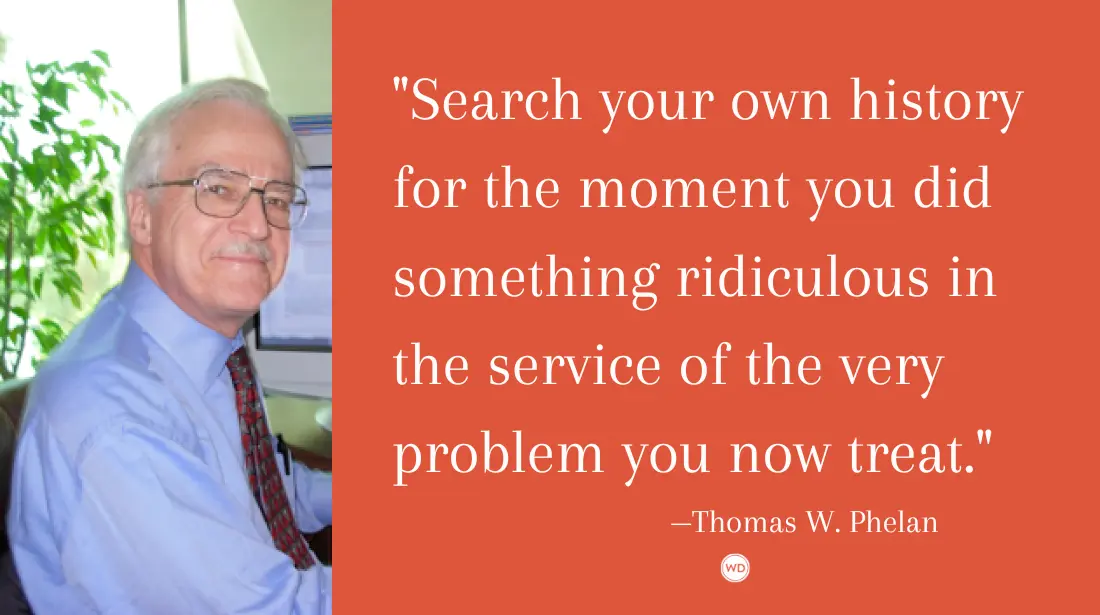
Drawing upon decades of empirical insight and the hard-earned lessons behind monumental publishing successes—such as Thomas W. Phelan’s multi-million-copy bestseller 1-2-3 Magic—this article explores the architecture of clinical credibility. By examining three core pillars: acknowledging universal human imperfection, strategically deploying self-deprecating humor, and anchoring personal narratives within a rigorous, systematic scientific framework, mental health professionals can master the art of writing authentically without sacrificing professional authority.
Read Also
Detailed Chronology & Evolution of the "Expert-Reader" Dynamic
The historical relationship between the clinical practitioner and the lay reader has undergone a dramatic transformation over the past century. Understanding this evolution is critical for modern authors seeking to connect with contemporary audiences.
The Era of the Untouchable Authority (Mid-20th Century)
For decades, medical and psychological literature operated from an ivory-tower model. Practitioners wrote from a position of absolute detachment. Authors utilized passive voice, highly technical jargon, and objective, third-person narratives. The implicit contract between author and reader was hierarchical: the doctor knew the diagnosis and the prescription, while the patient or reader was merely a passive recipient of expert wisdom. Personal anecdotes were virtually nonexistent, as vulnerability was historically viewed as a liability that could compromise a clinician’s perceived objectivity and competence.
The Rise of the Relatable Clinician (Late 20th Century to 2000s)
As the self-help genre expanded exponentially in the late 20th century, publishers and authors realized that clinical coldness alienated readers. The market shifted toward accessibility. Practitioners began incorporating case studies—composites of fictionalized patients—to illustrate therapeutic concepts. However, these third-party case studies often felt clinical and staged, failing to bridge the emotional gap between the reader’s lived experience and the clinician’s supposedly flawless existence.
The Modern Era of Strategic Vulnerability (Present Day)
Today, readers are increasingly sophisticated, skeptical, and weary of perfectionism cultivated on digital media platforms. In the current literary landscape, clinical credibility cannot be maintained behind a wall of academic impenetrability. Modern readers demand transparency, but they require it to be disciplined, purposeful, and systematically managed. Authors must now navigate the delicate space between the "ivory tower" and "oversharing," utilizing structured self-disclosure to build an authentic bridge of trust before delivering evidence-based solutions.
Supporting Context & Metrics: The Anatomy of a Bestseller
To understand how strategic vulnerability operates in practice, one can examine the publishing phenomenon of 1-2-3 Magic, a parenting guide that has sold approximately 2.5 million copies worldwide. Authored by clinical psychologist Dr. Thomas W. Phelan, the book’s enduring success is not merely a product of its clear behavioral management strategies; it is built upon a precise rhetorical architecture that instantly disarms readers.
Over the course of more than 2,500 live presentations and decades of clinical practice, Phelan identified a repeatable formula that transforms potential professional embarrassment into a powerful trust-building mechanism. The core metrics of this approach rely on three foundational components:
- Universal Imperfection ("We’re All a Little Crazy"): Recognizing that human beings share common developmental and emotional hurdles. Whether dealing with normative toddler defiance or adult sensory sensitivities like misophonia, the expert must establish parity with the audience.
- Strategic Humor: Deploying controlled, self-deprecating anecdotes that elicit shared laughter, thereby lowering cognitive defenses and signaling humility without inviting pity.
- Rigorous Scientific Foundation: Following up emotional disarming with an impeccably organized, systematic, research-backed framework (such as a Table of Contents structured entirely around the reader’s immediate psychological inquiries).
When these elements operate in tandem, the author transitions from an intimidating authority figure into a trusted companion on the journey of self-improvement.
Official Guidelines: The Four-Question Test and Four-Step Formula
For mental health professionals translating clinical insights into public writing, establishing boundaries around self-disclosure is paramount. Without a systematic filter, personal anecdotes can easily derail a manuscript, shifting the narrative spotlight away from the reader’s struggles and onto the author’s ego.
The Four-Question Test for Any Anecdote
Before incorporating a personal story into a book, article, or seminar, authors should subject the anecdote to a rigorous four-question diagnostic test. If any question yields a "no," the story risks illuminating the author rather than the topic:
- Does this story directly serve the reader’s understanding, or does it merely serve my need for expression?
- Does the anecdote illustrate a universal human struggle rather than an isolated, highly idiosyncratic trauma?
- Does the story resolve into a clear, actionable lesson that benefits the audience?
- Does the humor or vulnerability maintain my professional dignity while increasing my human relatability?
For instance, offering a three-page, deeply emotional retrospective on one’s personal struggles with severe anxiety fails all four criteria: it is self-indulgent, overly specific, lacks immediate utility, and threatens clinical authority. Conversely, a brief, well-placed acknowledgment—such as noting that an experienced speaker still occasionally feels "butterflies in the stomach" before taking the stage—passes all four tests effortlessly. It injects humanity without undermining expertise.
The Four-Step Formula for Humorous Self-Disclosure
To successfully execute a self-deprecating story without damaging professional credibility, authors can utilize a reliable four-step structural formula, exemplified by classic parenting seminars:
- Step 1: Confess an Absurd, Relatable Moment of Desperation. Share a genuine, highly human parenting or psychological failure from your own past. (For example, recalling the time you built makeshift wooden extensions out of scrap lumber and baling twine to keep an active 18-month-old from climbing out of his crib—despite holding a Ph.D. in psychology).
- Step 2: Allow the Audience to Laugh and Connect. Pause for the shared laughter. This mutual acknowledgment communicates a vital psychological truth: intelligence and irrational, desperate behavior frequently coexist. None of us operates at peak efficiency all the time.
- Step 3: Pivot Immediately Back to Business. Transition seamlessly from the humor back to the core clinical topic. Never linger too long in self-deprecation; the spotlight must quickly return to the reader’s needs.
- Step 4: Deliver the Systematic Solution. Present a clear, actionable methodology (such as the "Cut Them Off at the Pass Method" for bedtime management) while the audience’s minds are fully open, disarmed, and receptive.
Future Outlook: The Evolution of Clinical Writing and Public Trust
As the digital landscape continues to saturate public discourse with unvetted wellness advice, the demand for rigorously trained, clinically credible professionals in the public sphere will only intensify. However, the expectations placed upon these authors are evolving.
The future of self-help and psychological nonfiction will reject both the icy detachment of the 20th-century medical establishment and the boundary-free confessional culture of modern social media influencers. Readers are increasingly seeking what can be termed "Disciplined Authenticity"—the synthesis of rigorous empirical science with carefully calibrated, highly empathetic human storytelling.
Writers who master this triad—acknowledging universal human folly, utilizing strategic humor to lower cognitive defenses, and anchoring every insight in a logical, systematic scientific foundation—will define the gold standard of public mental health education. By structuring their tables of contents around the organic, pressing questions of the human experience (What is happening to me? Why does it happen? What can I do today?), clinicians can ensure that their work remains both scientifically authoritative and profoundly humane.
Ultimately, the most effective therapeutic writing does not position the author as a distant deity dispensing edicts from above. Instead, it invites reader and writer alike to take a deep breath, recognize that they are not uniquely defective, and step forward together as compatriots on the battlefield of human growth.




Comments
Facebook App ID not configured. Please add it in the Customizer.